Iran killed any delusions of US military domination over China

Delusional. I guess in your world Taiwan just sits there allowing China to "park" 2-3 battle groups around it and wish Taiwan's coastal anti ship missiles, navy and air force away? Brilliant strategic thinking. 🤪
In any kinetic war, and if the USA doesn't get involved, obviously China would win in the end.

But that win would be very costly, it would take heavy losses of its own.

And all that juicy tech The Taiwanese have would be destroyed deliberately before it would ever fall into the invasion force hands.
 
Last edited:
Iran is not fine. Iran has been set back by at least 20 years. In a matter of months. All it has is underground missiles and drones. Susceptible to detection and getting destroyed. Iran doesn't have the upper hand in this conflict.

Ofcourse missiles have been spent by US. That's why they are manufactured. That is agreeable. They can be repleinshed. That is not a loss. It just needs faster production.
No one knows how much damage Iran has sustained on its military, that 20 years set back is completely unsubstatiated.

Iran is militarily fine at the moment - not a single missile base was disabled.

When we talk about China, the US will run out of missiles before China will and will then be looking for an exit quickly. So I dont think your point on the US degrading the Chinese military to Iran holds or is realistically achieveable.

The US has degraded Irans weapons making capabiliy, its destroyed depo's, its destroyed some ships they had and some archaic airplanes - but they still have airplanes in their missile bases and look at the weapons they expended. Chinas is btw around 6 times bigger - has both an airforce, navy and plenty of missiles.
 
My point was, if in a conflict, they can degrade the capabilities of the Chinese military to the level of the Iranian military after the iran war, it would have achieved it's target.
Yeah, thats more like an Indian dream.
 
And all that juicy tech The Taiwanese have would be destroyed deliberately before it would ever fall into the invasion force hands.

Take that tech away and Taiwan is not as juicy to swallow anymore. The people of Taiwan will decide thier future as they wish.
 
I think you should learn about the various joint military exercises of China's land, sea, and air rocket forces since 2012.That statement might have made some sense 20 years ago.There may have been some prejudice ten years ago.To say such things today is simply ignoring the facts.
As for Taiwan, there was a few weeks' warning time.That is true.
No.

by Brandon Temple, opinion contributor - 09/16/25 11:30 AM ET
China’s recent and massive military parade commemorating the 80th anniversary of the end of World War II highlighted concerns around that nation’s “unprecedented military buildup.”

And yes, China is indeed building up its military equipment at a faster pace than the U.S. But there’s a twist.

China may have a lot of hardware, but the U.S. military enjoys three key asymmetric advantages over China that bode well for our chances in any conflict — the joint-mindedness of our forces, the unity of our command and our empowered non-commissioned officer corps.

Joint warfighting is hard. The U.S. learned hard lessons during Vietnam and subsequent operations, such the Iranian hostage rescue attempt, on how interservice rivalry can lead to defeat. The Goldwater-Nichols Act of 1986 was designed to create a truly joint fighting force.

The U.S. Armed Forces are now obsessively joint-minded. The U.S. has a functioning joint staff, led by the chairman and Joint Chiefs of Staff. The principal U.S. warfighting commands in each theater are inherently joint.

Joint exercises are routine. For those progressing through their military careers, joint professional military education is mandatory. There is no force that does joint warfare better than the U.S.

In contrast, as a January RAND report noted, Chinese sources admit they are way behind on joint integration, struggle to train joint warfighters and “lack competent joint commanders.”

Ironically, armed services in communist political systems are not characterized by their ability to work together toward a common objective. Rather, they exist in power-based systems where the Communist Party and its survival are supreme.

Everybody in the system is fighting to remain in the good graces of power and avoid the next purge.

M.I.T professor and China researcher M. Taylor Fravel has written that purges among China’s high command are creating an “insecurity dilemma” that will degrade unity of command and joint operations.

To be sure, joint force commanders have been relieved of command in the U.S. However, the joint systems and processes are so well indoctrinated in the U.S. that the joint war machine drives on. Once a new commander is in place, unity of command is unquestioned.

The purge factor that paralyzes the top ranks of militaries in authoritarian systems trickles down to all the forces below. It is risky to show initiative or make decisions, whether you are a general or a private.

Training for war is very different from fighting one. It’s a common military maxim that no plan survives first contact with the enemy.

When things do not go according to plan, militaries require empowered non-commissioned officers at the point of attack to make decisions and maintain tempo and the initiative.


The U.S. military’s non-commissioned officer corps may be its most lopsided advantage over China’s People’s Liberation Army. I tell anyone who will listen that non-commissioned officers form the backbone of the U.S. military, and that’s not hyperbole.

As a former enlisted troop myself, I have seen sergeants and corporals lead on the battlefield time and again. Even in times when they questioned their own empowerment, they were biased toward taking action.

In contrast, China’s non-commissioned officer corps has been called the “weak backbone” of China’s fighting forces. This is not because the individual soldiers are incompetent, but because authoritarian regimes are not comfortable with the concepts of empowerment or initiative.

When Russia invaded Ukraine in 2022, I was a defense legislative fellow advising a member of Congress on the House Armed Services Committee.

He asked me, “Why do you think Russia was unsuccessful in getting to Kyiv when we were briefed Kyiv would fall in a matter of days?” In response, I said three things.

First, we tend to assess military strength in terms of the quantity of hardware rather than on the people and processes required to wield it effectively.

Second, joint warfare is hard — Russia attempted an American-style, joint multi-access, shock-and-awe invasion and it failed.

Finally, authoritarian regimes bristle at the idea of empowering their non-commissioned officers.

I stand by my assessment, and I believe a similar situation exists with China. To be sure, I am not suggesting that a conflict with China would be easy. But I am not convinced that China can effectively wield the hardware it is developing so rapidly.

The first two Special Operations Forces truths are: “Humans are more important than hardware” and “Quality is better than quantity.” I believe these aphorisms both apply here.

China has a lot of hardware, no doubt. What they lack, however, are the empowered people and joint processes required to wield if effectively.

Lt. Col. Brandon Temple, Ph.D., is an Air Force special warfare officer currently serving in Air Force Futures. He was previously a defense legislative fellow serving as national security adviser to a member of Congress.

The issue with majority of chinese in here is they only see the shiny modern toys and not the integration, training and leadership it takes to make it work. PLA military branches are not integrated/united each head of those branches are CCP appointees people that Xi can trust. Now they've taken steps in the Joint-Command direction but they are a long way away.

When US trains/exercise with allies they go all out as in they don't hold back in the EM realm because they are not worried about allies knowing each others EM frequencies and also don't hold back on tactics. When US trains with non-ally nations they have restrictions on what is used and how it is used like when USAF and Indian air force had an air exercise where US F-15's weren't allow to us BVR missiles. When Russia and China train it's for show/display only. Both hold back since they don't fully trust each other. US has put their combine arms/Joint-Command fighting capabilities through real combat/wars unlike PLA.

@lightning f57 You should read this too.
 
Take that tech away and Taiwan is not as juicy to swallow anymore. The people of Taiwan will decide thier future as they wish.
True.. in any hot war most if not all Taiwanese tech will be purposely destroyed.

China can congratulate itself on obtaining a mostly destroyed Taiwanese industrial sector.
 
It's pointless to argue with someone that arrogant that believes the US can anytime readily end or destroy 5000 years old Chinese civilization in a Taiwan war without serious US damage just as Trump said about Iran in the Iran war.
I laughed when I saw the comment above.

An Indian pointed out the idea of weakening China's military strength to the level of Iran.

Who would weaken it? India?

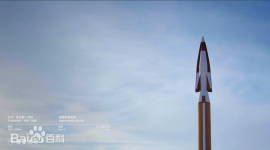
Look at this weapon, the Yukongji-1000, priced at $100,000, with a range of 500-1300 km, a speed of Mach 5-7, using a waverider warhead. It is already in mass production and used for interception tests in air defense systems. This is a product from a private company with military background, and this company also has other products that have not been disclosed.
1777654256726.png
A THAAD interceptor costs $12-15.5 million, a Patriot interceptor costs $3.7-4.2 million, and the FK-3 air defense system missiles China sold to Serbia cost $200,000. In interception missions, usually 2 or 3 interceptors are needed for one target. How many interceptors can three U.S. carrier groups carry? After they run out of interceptors, can the U.S. aircraft carriers pull out of the battlefield? Moreover, we have advantages in electronic warfare and firepower delivery.

We can launch large numbers of hypersonic missiles. The Epstein coalition cannot effectively intercept Iran's missiles, and facing missiles that are more advanced and numerous than Iran's, the Epstein coalition has no capacity to resist. As for the fighter jets taking off, the KJ-500, J-20, J-35, J-16, HQ-19, and HQ-29 will take care of them.

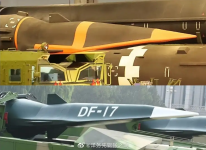
I forgot one thing: North Korea wants the U.S. to just die quickly. North Korea also has hypersonic missiles, and one of their missiles is similar to China's DF-17.
1777654302154.png
Let's look forward to how many countries will come, how many ships will come, and then how many ships can leave the battlefield.
 
I need to explain our attitude.

Taiwan Province is China's territory, which is China's internal affairs. As for how we resolve the Taiwan issue, other countries are not qualified to interfere.

In December 1943, China, the United States and Britain issued the Cairo Declaration, which clearly stipulated that Japan must return Taiwan, the territory it had stolen from China, to China after the war.

In July 1945, Article 8 of the Potsdam Proclamation, jointly signed by China, the United States and Britain and later joined by the Soviet Union, stipulated that the conditions of the Cairo Declaration would be implemented.

On August 15, 1945, Japan was defeated, and the Japanese emperor promised to faithfully fulfill the provisions of the Potsdam Proclamation and surrender unconditionally. On October 25, the Chinese government announced the resumption of the exercise of sovereignty over Taiwan and held a surrender ceremony for Taiwan Province in the Chinese theater in Taipei.

In 1949, the Central People's Government of the People's Republic of China replaced the Government of the Republic of China as the sole legitimate government representing the whole of China, and naturally exercised sovereignty over all territories, including Taiwan.

In 1971, the 26th session of the UN General Assembly adopted Resolution 2758, which decided to restore all rights of the People's Republic of China in the United Nations and immediately expel the "representatives" of the Taiwan authorities from the United Nations. The official legal opinion of the United Nations has determined that Taiwan is a province of China.

The 1972 Sino-Japanese Joint Declaration stipulates that the Government of Japan recognizes the Government of the People's Republic of China as the only legitimate government representing the whole of China, fully understands and respects the Chinese Government's position that Taiwan is an inalienable part of China's territory, and undertakes to adhere to the position of Article 8 of the Potsdam Proclamation.

Sino-US Joint Communiqué (February 28, 1972) The United States stated that the United States recognizes that all Chinese on both sides of the Taiwan Strait believe that there is only one China and that Taiwan is a part of China. The US government does not dispute this position.

Joint Communiqué of the People's Republic of China and the United States of America on the Establishment of Diplomatic Relations (January 1, 1979): The United States of America recognizes the Government of the People's Republic of China as the sole legitimate government of China. The Government of the United States of America recognizes China's position that there is only one China and that Taiwan is part of China.

Joint Communiqué of the People's Republic of China and the United States of America (August 17, 1982): The United States Government attaches great importance to its relationship with China. The US government reiterated that it does not intend to infringe on China's sovereignty and territorial integrity, interfere in China's internal affairs, or implement the "two Chinas" or "one China, one Taiwan" policy. All countries that have diplomatic relations with China have expressed support for the one-China policy and do not support separatist forces.

We know that the United States often violates the agreements it has concluded. The United States speaks like a fart, taking shamelessness as glory and reputation as a burden. In the 47 years since the establishment of diplomatic relations between China and the United States, we have understood the disgusting behavior of the United States very well. If the United States or other countries do not recognize the signed agreement and try to interfere in China's internal affairs, we welcome your troops. Any act of sending troops to interfere in China's internal affairs will be considered aggression. The Chinese army and people will resolutely exercise their right to self-defense.
 
The Chinese delegation responded in the Non-Proliferation Treaty: I have noticed that the U.S. representative has used the term 'good faith' the most over the past two days. The international community has a clear understanding of the U.S.'s sincerity. The actions taken by the United States in negotiations with other countries over the past two years have given a new definition to the term 'good faith.'

In September 2025, during discussions between the Qatari representative and the Hamas representative on a U.S.-proposed ceasefire plan, Israel bombed the negotiation site.

On February 26, 2026, the Epstein Coalition suddenly launched an aggressive action against Iran during negotiations with Iran.

The hypocritical, shameful, and anti-human Epstein Coalition.
 
In any kinetic war, and if the USA doesn't get involved, obviously China would win in the end.

But that win would be very costly, it would take heavy losses of its own.

And all that juicy tech The Taiwanese have would be destroyed deliberately before it would ever fall into the invasion force hands.
China doesn't has the reach to wage the war in the seven seas , however , in South China sea she rules the waves..
America will be utterly humiliated there.
 
China doesn't has the reach to wage the war in the seven seas , however , in South China sea she rules the waves..
America will be utterly humiliated there.
Doubt it, especially if it came to that point it would probably go nuclear.

Let's hope it never reaches that point.
 
I laughed when I saw the comment above.

An Indian pointed out the idea of weakening China's military strength to the level of Iran.

Who would weaken it? India?

Look at this weapon, the Yukongji-1000, priced at $100,000, with a range of 500-1300 km, a speed of Mach 5-7, using a waverider warhead. It is already in mass production and used for interception tests in air defense systems. This is a product from a private company with military background, and this company also has other products that have not been disclosed.
View attachment 195143
A THAAD interceptor costs $12-15.5 million, a Patriot interceptor costs $3.7-4.2 million, and the FK-3 air defense system missiles China sold to Serbia cost $200,000. In interception missions, usually 2 or 3 interceptors are needed for one target. How many interceptors can three U.S. carrier groups carry? After they run out of interceptors, can the U.S. aircraft carriers pull out of the battlefield? Moreover, we have advantages in electronic warfare and firepower delivery.

We can launch large numbers of hypersonic missiles. The Epstein coalition cannot effectively intercept Iran's missiles, and facing missiles that are more advanced and numerous than Iran's, the Epstein coalition has no capacity to resist. As for the fighter jets taking off, the KJ-500, J-20, J-35, J-16, HQ-19, and HQ-29 will take care of them.

I forgot one thing: North Korea wants the U.S. to just die quickly. North Korea also has hypersonic missiles, and one of their missiles is similar to China's DF-17.
View attachment 195144
Let's look forward to how many countries will come, how many ships will come, and then how many ships can leave the battlefield.
Haha, thats Indian dream to reduce China to a less middle power.
 
No.

by Brandon Temple, opinion contributor - 09/16/25 11:30 AM ET
China’s recent and massive military parade commemorating the 80th anniversary of the end of World War II highlighted concerns around that nation’s “unprecedented military buildup.”

And yes, China is indeed building up its military equipment at a faster pace than the U.S. But there’s a twist.

China may have a lot of hardware, but the U.S. military enjoys three key asymmetric advantages over China that bode well for our chances in any conflict — the joint-mindedness of our forces, the unity of our command and our empowered non-commissioned officer corps.

Joint warfighting is hard. The U.S. learned hard lessons during Vietnam and subsequent operations, such the Iranian hostage rescue attempt, on how interservice rivalry can lead to defeat. The Goldwater-Nichols Act of 1986 was designed to create a truly joint fighting force.

The U.S. Armed Forces are now obsessively joint-minded. The U.S. has a functioning joint staff, led by the chairman and Joint Chiefs of Staff. The principal U.S. warfighting commands in each theater are inherently joint.

Joint exercises are routine. For those progressing through their military careers, joint professional military education is mandatory. There is no force that does joint warfare better than the U.S.

In contrast, as a January RAND report noted, Chinese sources admit they are way behind on joint integration, struggle to train joint warfighters and “lack competent joint commanders.”

Ironically, armed services in communist political systems are not characterized by their ability to work together toward a common objective. Rather, they exist in power-based systems where the Communist Party and its survival are supreme.

Everybody in the system is fighting to remain in the good graces of power and avoid the next purge.

M.I.T professor and China researcher M. Taylor Fravel has written that purges among China’s high command are creating an “insecurity dilemma” that will degrade unity of command and joint operations.

To be sure, joint force commanders have been relieved of command in the U.S. However, the joint systems and processes are so well indoctrinated in the U.S. that the joint war machine drives on. Once a new commander is in place, unity of command is unquestioned.

The purge factor that paralyzes the top ranks of militaries in authoritarian systems trickles down to all the forces below. It is risky to show initiative or make decisions, whether you are a general or a private.

Training for war is very different from fighting one. It’s a common military maxim that no plan survives first contact with the enemy.

When things do not go according to plan, militaries require empowered non-commissioned officers at the point of attack to make decisions and maintain tempo and the initiative.


The U.S. military’s non-commissioned officer corps may be its most lopsided advantage over China’s People’s Liberation Army. I tell anyone who will listen that non-commissioned officers form the backbone of the U.S. military, and that’s not hyperbole.

As a former enlisted troop myself, I have seen sergeants and corporals lead on the battlefield time and again. Even in times when they questioned their own empowerment, they were biased toward taking action.

In contrast, China’s non-commissioned officer corps has been called the “weak backbone” of China’s fighting forces. This is not because the individual soldiers are incompetent, but because authoritarian regimes are not comfortable with the concepts of empowerment or initiative.

When Russia invaded Ukraine in 2022, I was a defense legislative fellow advising a member of Congress on the House Armed Services Committee.

He asked me, “Why do you think Russia was unsuccessful in getting to Kyiv when we were briefed Kyiv would fall in a matter of days?” In response, I said three things.

First, we tend to assess military strength in terms of the quantity of hardware rather than on the people and processes required to wield it effectively.

Second, joint warfare is hard — Russia attempted an American-style, joint multi-access, shock-and-awe invasion and it failed.

Finally, authoritarian regimes bristle at the idea of empowering their non-commissioned officers.

I stand by my assessment, and I believe a similar situation exists with China. To be sure, I am not suggesting that a conflict with China would be easy. But I am not convinced that China can effectively wield the hardware it is developing so rapidly.

The first two Special Operations Forces truths are: “Humans are more important than hardware” and “Quality is better than quantity.” I believe these aphorisms both apply here.

China has a lot of hardware, no doubt. What they lack, however, are the empowered people and joint processes required to wield if effectively.

Lt. Col. Brandon Temple, Ph.D., is an Air Force special warfare officer currently serving in Air Force Futures. He was previously a defense legislative fellow serving as national security adviser to a member of Congress.

The issue with majority of chinese in here is they only see the shiny modern toys and not the integration, training and leadership it takes to make it work. PLA military branches are not integrated/united each head of those branches are CCP appointees people that Xi can trust. Now they've taken steps in the Joint-Command direction but they are a long way away.

When US trains/exercise with allies they go all out as in they don't hold back in the EM realm because they are not worried about allies knowing each others EM frequencies and also don't hold back on tactics. When US trains with non-ally nations they have restrictions on what is used and how it is used like when USAF and Indian air force had an air exercise where US F-15's weren't allow to us BVR missiles. When Russia and China train it's for show/display only. Both hold back since they don't fully trust each other. US has put their combine arms/Joint-Command fighting capabilities through real combat/wars unlike PLA.

@lightning f57 You should read this too.
In simple terms, it's just this set of rhetoric, starting from the Cold War against the Soviet Union.
1. Officers in autocratic countries only serve their superiors and do not know how to fight, while officers in democratic countries have initiative.
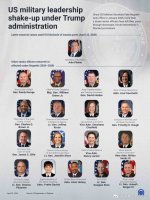
The rebuttal is simple. Just now, A defense secretary who had only served as a battalion commander fired the U.S. Navy secretary because he couldn't get the battleship built before Trump left office.A number of senior generals were also dismissed, and in simple terms, anyone with ties to the Democratic Party was fired.
IMG_2303.jpg
Is this what Americans call the political independence of the military? This is purely American propaganda. In fact, the military is the continuation of politics, and the military can never exist independently of politics.
 
No.

by Brandon Temple, opinion contributor - 09/16/25 11:30 AM ET
China’s recent and massive military parade commemorating the 80th anniversary of the end of World War II highlighted concerns around that nation’s “unprecedented military buildup.”

And yes, China is indeed building up its military equipment at a faster pace than the U.S. But there’s a twist.

China may have a lot of hardware, but the U.S. military enjoys three key asymmetric advantages over China that bode well for our chances in any conflict — the joint-mindedness of our forces, the unity of our command and our empowered non-commissioned officer corps.

Joint warfighting is hard. The U.S. learned hard lessons during Vietnam and subsequent operations, such the Iranian hostage rescue attempt, on how interservice rivalry can lead to defeat. The Goldwater-Nichols Act of 1986 was designed to create a truly joint fighting force.

The U.S. Armed Forces are now obsessively joint-minded. The U.S. has a functioning joint staff, led by the chairman and Joint Chiefs of Staff. The principal U.S. warfighting commands in each theater are inherently joint.

Joint exercises are routine. For those progressing through their military careers, joint professional military education is mandatory. There is no force that does joint warfare better than the U.S.

In contrast, as a January RAND report noted, Chinese sources admit they are way behind on joint integration, struggle to train joint warfighters and “lack competent joint commanders.”

Ironically, armed services in communist political systems are not characterized by their ability to work together toward a common objective. Rather, they exist in power-based systems where the Communist Party and its survival are supreme.

Everybody in the system is fighting to remain in the good graces of power and avoid the next purge.

M.I.T professor and China researcher M. Taylor Fravel has written that purges among China’s high command are creating an “insecurity dilemma” that will degrade unity of command and joint operations.

To be sure, joint force commanders have been relieved of command in the U.S. However, the joint systems and processes are so well indoctrinated in the U.S. that the joint war machine drives on. Once a new commander is in place, unity of command is unquestioned.

The purge factor that paralyzes the top ranks of militaries in authoritarian systems trickles down to all the forces below. It is risky to show initiative or make decisions, whether you are a general or a private.

Training for war is very different from fighting one. It’s a common military maxim that no plan survives first contact with the enemy.

When things do not go according to plan, militaries require empowered non-commissioned officers at the point of attack to make decisions and maintain tempo and the initiative.


The U.S. military’s non-commissioned officer corps may be its most lopsided advantage over China’s People’s Liberation Army. I tell anyone who will listen that non-commissioned officers form the backbone of the U.S. military, and that’s not hyperbole.

As a former enlisted troop myself, I have seen sergeants and corporals lead on the battlefield time and again. Even in times when they questioned their own empowerment, they were biased toward taking action.

In contrast, China’s non-commissioned officer corps has been called the “weak backbone” of China’s fighting forces. This is not because the individual soldiers are incompetent, but because authoritarian regimes are not comfortable with the concepts of empowerment or initiative.

When Russia invaded Ukraine in 2022, I was a defense legislative fellow advising a member of Congress on the House Armed Services Committee.

He asked me, “Why do you think Russia was unsuccessful in getting to Kyiv when we were briefed Kyiv would fall in a matter of days?” In response, I said three things.

First, we tend to assess military strength in terms of the quantity of hardware rather than on the people and processes required to wield it effectively.

Second, joint warfare is hard — Russia attempted an American-style, joint multi-access, shock-and-awe invasion and it failed.

Finally, authoritarian regimes bristle at the idea of empowering their non-commissioned officers.

I stand by my assessment, and I believe a similar situation exists with China. To be sure, I am not suggesting that a conflict with China would be easy. But I am not convinced that China can effectively wield the hardware it is developing so rapidly.

The first two Special Operations Forces truths are: “Humans are more important than hardware” and “Quality is better than quantity.” I believe these aphorisms both apply here.

China has a lot of hardware, no doubt. What they lack, however, are the empowered people and joint processes required to wield if effectively.

Lt. Col. Brandon Temple, Ph.D., is an Air Force special warfare officer currently serving in Air Force Futures. He was previously a defense legislative fellow serving as national security adviser to a member of Congress.

The issue with majority of chinese in here is they only see the shiny modern toys and not the integration, training and leadership it takes to make it work. PLA military branches are not integrated/united each head of those branches are CCP appointees people that Xi can trust. Now they've taken steps in the Joint-Command direction but they are a long way away.

When US trains/exercise with allies they go all out as in they don't hold back in the EM realm because they are not worried about allies knowing each others EM frequencies and also don't hold back on tactics. When US trains with non-ally nations they have restrictions on what is used and how it is used like when USAF and Indian air force had an air exercise where US F-15's weren't allow to us BVR missiles. When Russia and China train it's for show/display only. Both hold back since they don't fully trust each other. US has put their combine arms/Joint-Command fighting capabilities through real combat/wars unlike PLA.

@lightning f57 You should read this too.
This is another set of outdated propaganda rhetoric. The U.S. military's non-commissioned officer system is advanced, while China and the Soviet Union's non-commissioned officer culture is backward. This is pure nonsense.
In China, Senior non-commissioned officers are veterans with high technical skills, while U.S. non-commissioned officers are responsible for basic training, hygiene, discipline, and personal disputes.,And the officer is only responsible for command on the battlefield.
That's nonsense too.The command and management of the army cannot be separated. If a company or battalion commander does not know what his soldiers are thinking, what each person's personality is like, and how the morale of the troops is, how can he possibly have the ability to command them?
In China, most of the duties of U.S. military sergeants are handled by political officers.Moreover, the career path for Chinese soldiers also involves passing internal exams to enter military academies for study, and then returning to the unit as a platoon leader, rather than always serving as a non-commissioned officer.
 

Users who are viewing this thread

Pakistan Defence Latest

Back
Top