
Persian Gulf
INT'L MOD


We hear all the time about the incompetence of IR security stablishment .
if a Russian general is killed it somehow means IRI is not incompetent?
Follow along with the video below to see how to install our site as a web app on your home screen.
Note: This feature may not be available in some browsers.
We hear all the time about the incompetence of IR security stablishment .

also this is only the second instance of this happening , if i remember correctlyif a Russian general is killed it somehow means IRI is not incompetent?
Do you consider Israel a trustable source?Israeli estimate was Iran had 3,000 ballistic missiles before the 12 day war and 1500 by end of it. It fired 500 at Israel during that duration. So 1,000 were destroyed presumably.
But if they had 1500 they're likely going to save at least 1,000 as it's not easy to replenish that arsenal, takes more time.
It was more a deterrent program than being an offensive attack platform program.
It must be resource intensive and difficult to build production capacity of 3,000 such missiles a year. Doesn't appear realistic for Iran when other nations can't do such a thing.
If Iran had capacity to build 300 a month Israel would have certainly attacked. It was probably closer to 50-100 a month prior to war.
Even Israeli media will put quotations when it comes to intelligence or military feeding them information because yes they have to report it if the information is given to them doesn’t mean they trust the source how many times they have been fed deceptive information as a fake out seriously dozens of times during these warsDo you consider Israel a trustable source?

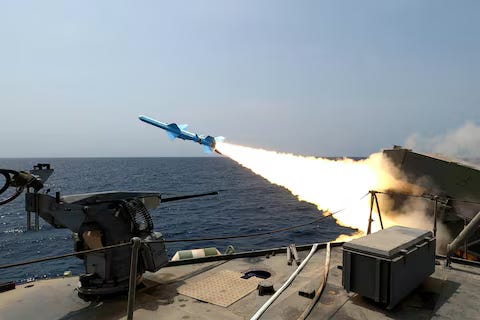
by definition every missile exercise is preparation to attack Israel
this is a normal part of combat readiness and does not indicate Iran is preparing to attack Israel
IRI is defensive in nature and would never initiate such a war. the new Chief of Staff confirmed this himself only a few months ago.
US intelligence estimates Iran had 2,000 Medium to Long Range Missiles.Do you consider Israel a trustable source?
 axesandatoms.substack.com
@Ibbi32 this is what i was talking about .Just months after a conflict that was supposed to permanently cripple Iran’s missile capabilities, intelligence assessments indicate that the Islamic Republic is expanding its inventory of missiles. According to multiple media reports, Israeli intelligence has observed Iran rebuilding key missile production facilities and repairing air-defense systems damaged during the June 2025 conflict at a pace that has surprised Western analysts and upended assumptions about the war’s lasting impact.
Within weeks of the ceasefire, Iranian authorities launched extensive cleanup and repair operations at heavily damaged sites. By late 2025, commercial satellite imagery documented active reconstruction at numerous targeted locations, often featuring redesigned structures incorporating additional hardening measures such as reinforced concrete, earth berms, and dispersed layouts intended to reduce vulnerability to future strikes.
The speed and comprehensiveness of this recovery effort have become a central preoccupation for Israeli and Western intelligence agencies. Rather than the months or years of reconstruction time that planners had hoped the strikes would impose, Iran demonstrated an ability to begin meaningful restoration within weeks and achieve partial operational capability within months.
The result is a more Iranian deterrent posture, one less dependent on ambiguous nuclear threshold threats and more anchored in punishment, including the demonstrated capacity to inflict tangible damage on adversaries through conventional means.
Iran’s ability to sustain a twelve-day, high-intensity missile campaign against Israel—and then pivot almost immediately toward comprehensive rebuilding—offers an unusually revealing window into the structural characteristics of its missile industrial base. The war imposed genuine costs on Iran’s production infrastructure, logistics networks, and operational basing practices, but critically, it did not break the overall system.
Within mere weeks of the ceasefire, Iranian authorities initiated extensive cleanup operations at heavily damaged sites. Satellite imagery analysis from late 2025 documented reconstruction underway at numerous locations, often featuring enhanced protective measures: thicker concrete walls, additional earth berms, more dispersed layouts, and in some cases entirely new underground components. Moreover, Iranian missile industry appears to maintain spare critical equipment, alternative production facilities, and a degree of geographic redistribution for manufacturing.
Parkin’s estimates, aggregating the likely throughput across Khojir, Parchin, and Shahroud, suggest Iran could possibly manufacture on the order of 217–240 medium-range solid-fuel missile motors per month under optimal conditions.
If mixers or casting halls are degraded, Iran’s ability to regenerate its missile force slows dramatically, even if much of the missile inventory survives. At the same time, the CNS analysis underscores a sobering point: industrial missile capacity is rebuildable. Facilities like Shahroud suggest Iran is planning not just to recover, but to scale.
Despite efforts toward self-sufficiency, Iran’s missile program retains critical dependencies on foreign-sourced materials, particularly for solid-fuel propellant production. Chief among these is ammonium perchlorate, the oxidizer that comprises 60-70% of most modern solid rocket propellants by weight. Iran does not produce this chemical domestically at a sufficient scale or consistently high quality and has historically relied on imports, especially from Chinese chemical suppliers operating through complex procurement networks.
Liquid-fuel missiles present fewer immediate supply chain challenges since Iran produces the necessary propellants (unsymmetric dimethylhydrazine and various kerosene formulations) domestically in adequate quantities.
Moving large transporter-erector-launchers under constant surveillance from reconnaissance satellites, high-altitude drones, and airborne radar systems proved extraordinarily difficult. Transporter-erector-launcher survivability will likely improve through more extensive use of sophisticated decoys—both inflatable physical decoys and thermal signature generators—designed to complicate satellite-based targeting and force adversaries to expend limited precision weapons against false targets. Iran’s targeting strategy during the war likely involved deliberately expending older missile systems first while preserving newer, more capable systems as a hedge against prolonged conflict.
Iran already maintains a network of underground “missile cities,” consisting of extensive tunnel complexes carved into mountainous terrain, particularly along the Persian Gulf coast and in the Zagros Mountains. Future development is likely to prioritize greater depth, redundancy, and alternative egress options. This could include genuinely deep underground silos capable of withstanding all but the most powerful bunker-penetrating munitions, as well as rail- or tunnel-based mobile systems designed to allow brief exposure for launch followed by rapid reentry into protected space.
Geographic dispersal is also likely to assume greater importance in Iranian operational doctrine. During the June war, the concentration of launch activity in western Iran reduced missile flight times but imposed significant operational costs by creating predictable spatial patterns that Israeli intelligence could exploit. In future contingencies, Iran may shift some launch activity deeper into its interior, including eastern provinces near the Afghan and Pakistani borders, accepting longer flight times in exchange for complicating adversary surveillance, targeting, and strike planning.
Intelligence assessments suggest Iran maintained substantial portions of its missile force in deep storage—reserve stocks held in hardened facilities or remote locations, deliberately kept back from forward deployment to preserve a credible residual deterrent even after significant wartime losses. This emphasis on deeper magazines fundamentally changes the character of Iran’s missile deterrent from a capability designed primarily for brief, intense retaliatory salvos toward something approaching sustained warfighting capacity.
The dominant interpretation within Iranian military and political circles seems to be that the war validated missile-centric deterrence while simultaneously revealing specific areas requiring improvement: larger peacetime stockpiles, deeper and more geographically dispersed reserves, enhanced production capacity to enable faster regeneration of depleted forces, more survivable basing infrastructure, and a missile force even better adapted to fighting, surviving, and rapidly rebuilding under sustained combat pressure.
Taken together, these dynamics suggest that Israel is unlikely to accept Iran’s post-war missile rebuilding as a fait accompli. Instead, Israeli decision-makers are likely to continue pressing for preemptive or preventive options aimed at degrading Iran’s missile production, storage, and launch infrastructure before expanded capacities fully come online. Given Iran’s demonstrated ability to regenerate missile forces within months rather than years, such strikes may offer only temporary disruption rather than lasting denial. The result could be a recurring cycle in which Israeli efforts to roll back Iran’s missile capabilities are followed by rapid Iranian reconstruction, raising the prospect that large-scale strikes against missile infrastructure become a periodic feature of the regional security environment rather than an exceptional event.
Why Israel Wants to Strike Again: Inside Iran's Expanding Missile Threat
Israeli officials are preparing to brief U.S.

Let’s hope they have doubled up pace and moved even farther beneath the yes of satellites and dronesJust months after a conflict that was supposed to permanently cripple Iran’s missile capabilities, intelligence assessments indicate that the Islamic Republic is expanding its inventory of missiles. According to multiple media reports, Israeli intelligence has observed Iran rebuilding key missile production facilities and repairing air-defense systems damaged during the June 2025 conflict at a pace that has surprised Western analysts and upended assumptions about the war’s lasting impact.
Within weeks of the ceasefire, Iranian authorities launched extensive cleanup and repair operations at heavily damaged sites. By late 2025, commercial satellite imagery documented active reconstruction at numerous targeted locations, often featuring redesigned structures incorporating additional hardening measures such as reinforced concrete, earth berms, and dispersed layouts intended to reduce vulnerability to future strikes.
The speed and comprehensiveness of this recovery effort have become a central preoccupation for Israeli and Western intelligence agencies. Rather than the months or years of reconstruction time that planners had hoped the strikes would impose, Iran demonstrated an ability to begin meaningful restoration within weeks and achieve partial operational capability within months.
The result is a more Iranian deterrent posture, one less dependent on ambiguous nuclear threshold threats and more anchored in punishment, including the demonstrated capacity to inflict tangible damage on adversaries through conventional means.
Iran’s ability to sustain a twelve-day, high-intensity missile campaign against Israel—and then pivot almost immediately toward comprehensive rebuilding—offers an unusually revealing window into the structural characteristics of its missile industrial base. The war imposed genuine costs on Iran’s production infrastructure, logistics networks, and operational basing practices, but critically, it did not break the overall system.
Within mere weeks of the ceasefire, Iranian authorities initiated extensive cleanup operations at heavily damaged sites. Satellite imagery analysis from late 2025 documented reconstruction underway at numerous locations, often featuring enhanced protective measures: thicker concrete walls, additional earth berms, more dispersed layouts, and in some cases entirely new underground components. Moreover, Iranian missile industry appears to maintain spare critical equipment, alternative production facilities, and a degree of geographic redistribution for manufacturing.
Parkin’s estimates, aggregating the likely throughput across Khojir, Parchin, and Shahroud, suggest Iran could possibly manufacture on the order of 217–240 medium-range solid-fuel missile motors per month under optimal conditions.
If mixers or casting halls are degraded, Iran’s ability to regenerate its missile force slows dramatically, even if much of the missile inventory survives. At the same time, the CNS analysis underscores a sobering point: industrial missile capacity is rebuildable. Facilities like Shahroud suggest Iran is planning not just to recover, but to scale.
Despite efforts toward self-sufficiency, Iran’s missile program retains critical dependencies on foreign-sourced materials, particularly for solid-fuel propellant production. Chief among these is ammonium perchlorate, the oxidizer that comprises 60-70% of most modern solid rocket propellants by weight. Iran does not produce this chemical domestically at a sufficient scale or consistently high quality and has historically relied on imports, especially from Chinese chemical suppliers operating through complex procurement networks.
Liquid-fuel missiles present fewer immediate supply chain challenges since Iran produces the necessary propellants (unsymmetric dimethylhydrazine and various kerosene formulations) domestically in adequate quantities.
Moving large transporter-erector-launchers under constant surveillance from reconnaissance satellites, high-altitude drones, and airborne radar systems proved extraordinarily difficult. Transporter-erector-launcher survivability will likely improve through more extensive use of sophisticated decoys—both inflatable physical decoys and thermal signature generators—designed to complicate satellite-based targeting and force adversaries to expend limited precision weapons against false targets. Iran’s targeting strategy during the war likely involved deliberately expending older missile systems first while preserving newer, more capable systems as a hedge against prolonged conflict.
Iran already maintains a network of underground “missile cities,” consisting of extensive tunnel complexes carved into mountainous terrain, particularly along the Persian Gulf coast and in the Zagros Mountains. Future development is likely to prioritize greater depth, redundancy, and alternative egress options. This could include genuinely deep underground silos capable of withstanding all but the most powerful bunker-penetrating munitions, as well as rail- or tunnel-based mobile systems designed to allow brief exposure for launch followed by rapid reentry into protected space.
Geographic dispersal is also likely to assume greater importance in Iranian operational doctrine. During the June war, the concentration of launch activity in western Iran reduced missile flight times but imposed significant operational costs by creating predictable spatial patterns that Israeli intelligence could exploit. In future contingencies, Iran may shift some launch activity deeper into its interior, including eastern provinces near the Afghan and Pakistani borders, accepting longer flight times in exchange for complicating adversary surveillance, targeting, and strike planning.
Intelligence assessments suggest Iran maintained substantial portions of its missile force in deep storage—reserve stocks held in hardened facilities or remote locations, deliberately kept back from forward deployment to preserve a credible residual deterrent even after significant wartime losses. This emphasis on deeper magazines fundamentally changes the character of Iran’s missile deterrent from a capability designed primarily for brief, intense retaliatory salvos toward something approaching sustained warfighting capacity.
The dominant interpretation within Iranian military and political circles seems to be that the war validated missile-centric deterrence while simultaneously revealing specific areas requiring improvement: larger peacetime stockpiles, deeper and more geographically dispersed reserves, enhanced production capacity to enable faster regeneration of depleted forces, more survivable basing infrastructure, and a missile force even better adapted to fighting, surviving, and rapidly rebuilding under sustained combat pressure.
Taken together, these dynamics suggest that Israel is unlikely to accept Iran’s post-war missile rebuilding as a fait accompli. Instead, Israeli decision-makers are likely to continue pressing for preemptive or preventive options aimed at degrading Iran’s missile production, storage, and launch infrastructure before expanded capacities fully come online. Given Iran’s demonstrated ability to regenerate missile forces within months rather than years, such strikes may offer only temporary disruption rather than lasting denial. The result could be a recurring cycle in which Israeli efforts to roll back Iran’s missile capabilities are followed by rapid Iranian reconstruction, raising the prospect that large-scale strikes against missile infrastructure become a periodic feature of the regional security environment rather than an exceptional event.
Why Israel Wants to Strike Again: Inside Iran's Expanding Missile Threat
Israeli officials are preparing to brief U.S.
Libyan Chief of Staff killed in plane crash in Ankara hours after meeting Turkish defence minister


