Iranian Missiles | News and Discussions

The first wave of attacks is going to be on the missile bases.....they can't execute their plan if Iran can still keep firing missiles.....Knowing this Iran should be planning to have options outside of missile bases.
second, every command and comm building will be targeted, knowing this Iran should move the entire brain network of the military to offsite or hardened bunkers.
 
sure, but I doubt they could do it without implicit approval of the Chinese government
We understand your assumption or speculation. However, the facts differ somewhat from your guess.

China has many "civilian" satellite imagery companies. The most famous is "Jilin-1," a subsidiary of Changguang Satellite Technology Co., Ltd. These companies operate or release information within the bounds of the law and do not require the permission or tacit approval of the Chinese government. They have the right to make their own decisions.

However, there are some issues to be aware of.

1. The Chinese government and laws have some technical regulations regarding this type of business. Different levels of satellite imagery have different levels of restrictions. Simply put, the PLA and other national research institutions can obtain the highest level of technically advanced imagery; state-owned civilian research institutions are next; and commercial organizations can use the lowest level of imagery precision. However, for many other countries, this commercial-grade imagery precision is higher than their military-grade imagery precision.

2. Chinese law imposes strict restrictions on commercial satellite imagery agencies releasing satellite imagery of mainland China, but not so many restrictions on satellite imagery of areas outside of China. They can release almost "unrestricted" satellite imagery of regions outside of China to showcase their satellite imagery capabilities. They do not need permission from the Chinese government.

3. Chinese commercial satellite imagery service companies offer services to clients worldwide. For example, the Iranian government can purchase VIP services from Changguang Satellite Technology Co., Ltd. Utilizing the capabilities of the "Jilin-1" satellite, they can obtain 24/7 uninterrupted civilian-grade (Chinese standard) satellite imagery services covering US military bases around Iran. This does not require approval from the Chinese government. This civilian-grade satellite imagery allows Iran to monitor the real-time movements of these military bases. However, this civilian-grade satellite imagery data cannot be used for missile navigation services; this is a capability only military-grade satellites possess.

For information on the performance of "Jilin-1," please consult online resources.

The Jilin-1 satellite constellation system can currently perform 35-37 scans of any location globally every day.
 
Last edited:
We understand your assumption or speculation. However, the facts differ somewhat from your guess.

China has many "civilian" satellite imagery companies. The most famous is "Jilin-1," a subsidiary of Changguang Satellite Technology Co., Ltd. These companies operate or release information within the bounds of the law and do not require the permission or tacit approval of the Chinese government. They have the right to make their own decisions.

However, there are some issues to be aware of.

1. The Chinese government and laws have some technical regulations regarding this type of business. Different levels of satellite imagery have different levels of restrictions. Simply put, the PLA and other national research institutions can obtain the highest level of technically advanced imagery; state-owned civilian research institutions are next; and commercial organizations can use the lowest level of imagery precision. However, for many other countries, this commercial-grade imagery precision is higher than their military-grade imagery precision.

2. Chinese law imposes strict restrictions on commercial satellite imagery agencies releasing satellite imagery of mainland China, but not so many restrictions on satellite imagery of areas outside of China. They can release almost "unrestricted" satellite imagery of regions outside of China to showcase their satellite imagery capabilities. They do not need permission from the Chinese government.

3. Chinese commercial satellite imagery service companies offer services to clients worldwide. For example, the Iranian government can purchase VIP services from Changguang Satellite Technology Co., Ltd. Utilizing the capabilities of the "Jilin-1" satellite, they can obtain 24/7 uninterrupted civilian-grade (Chinese standard) satellite imagery services covering US military bases around Iran. This does not require approval from the Chinese government. This civilian-grade satellite imagery allows Iran to monitor the real-time movements of these military bases. However, this civilian-grade satellite imagery data cannot be used for missile navigation services; this is a capability only military-grade satellites possess.

For information on the performance of "Jilin-1," please consult online resources.

The Jilin-1 satellite constellation system can currently perform 35-37 scans of any location globally every day.
If we were to assume Iran only has access to commercial and not any military Chinese satellites, then even having decent real-time or near real time information on US Israeli assets will be a big help, they will not be completely blind.
 
We understand your assumption or speculation. However, the facts differ somewhat from your guess.

China has many "civilian" satellite imagery companies. The most famous is "Jilin-1," a subsidiary of Changguang Satellite Technology Co., Ltd. These companies operate or release information within the bounds of the law and do not require the permission or tacit approval of the Chinese government. They have the right to make their own decisions.

However, there are some issues to be aware of.

1. The Chinese government and laws have some technical regulations regarding this type of business. Different levels of satellite imagery have different levels of restrictions. Simply put, the PLA and other national research institutions can obtain the highest level of technically advanced imagery; state-owned civilian research institutions are next; and commercial organizations can use the lowest level of imagery precision. However, for many other countries, this commercial-grade imagery precision is higher than their military-grade imagery precision.

2. Chinese law imposes strict restrictions on commercial satellite imagery agencies releasing satellite imagery of mainland China, but not so many restrictions on satellite imagery of areas outside of China. They can release almost "unrestricted" satellite imagery of regions outside of China to showcase their satellite imagery capabilities. They do not need permission from the Chinese government.

3. Chinese commercial satellite imagery service companies offer services to clients worldwide. For example, the Iranian government can purchase VIP services from Changguang Satellite Technology Co., Ltd. Utilizing the capabilities of the "Jilin-1" satellite, they can obtain 24/7 uninterrupted civilian-grade (Chinese standard) satellite imagery services covering US military bases around Iran. This does not require approval from the Chinese government. This civilian-grade satellite imagery allows Iran to monitor the real-time movements of these military bases. However, this civilian-grade satellite imagery data cannot be used for missile navigation services; this is a capability only military-grade satellites possess.

For information on the performance of "Jilin-1," please consult online resources.

The Jilin-1 satellite constellation system can currently perform 35-37 scans of any location globally every day.
in theory, sure

in theory, Jack Ma is free to continue his business
 
China has many "civilian" satellite imagery companies.
South China Morning post had an article which said an official Chinese military social media account called China military bugle posted a video called Siege of Iran with satellite images of US assets in the region.

Interesting they did that.
 
Screenshot 2026-02-21 at 15.55.05.png

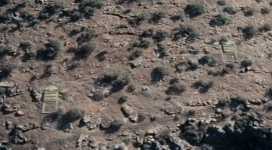
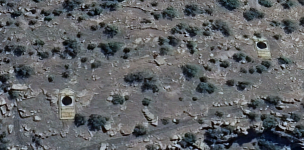
closed launch silos at SSM base in November 2022

Screenshot 2026-02-21 at 15.55.44.png

silo doors both open in May 2025 (prior to 12 Day War)

therefore, doors being open does not indicate they were hit by Israel, since they were already open prior to the war.
 
Screenshot 2026-02-21 at 16.21.17.png
Screenshot 2026-02-21 at 16.29.50.png
Screenshot 2026-02-21 at 16.30.06.png

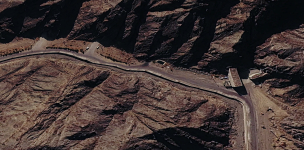
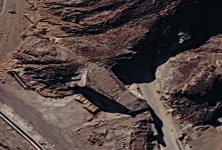
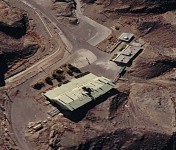
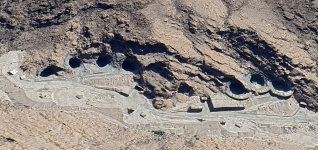
all images are from November 2025

the SSM base north of Kashan sustained very limited damage from the 12 day war, with only the main high bay hanger suffering minor damage

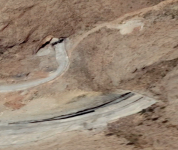
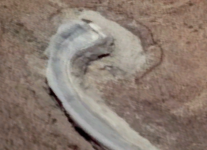
the first image shows three tunnel entrances (including one fortified entrance with two large passive defence walls around it), and the second image shows the fourth tunnel entrance
 
Screenshot 2026-02-21 at 16.43.25.png
Screenshot 2026-02-21 at 16.44.03.png

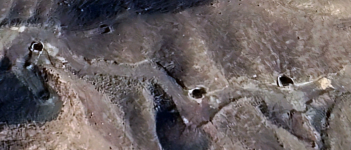
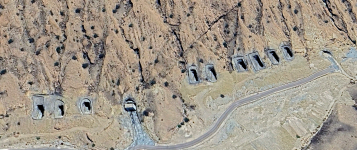
additional launch portals at two separate SSM bases in different parts of the country
 
Screenshot 2026-02-21 at 16.46.44.pngScreenshot 2026-02-21 at 16.46.57.png

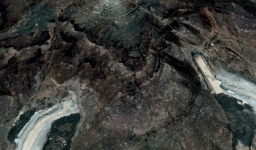
these tunnel entrances are on the opposite side of the same mountain

if we assume they connect, the distance between them is around 700 metres
 
I ask the IRGC-ASF to stop building football pitches near missile bases ... very easy to detect with AI software. though these missile bases have certain characteristics which make them easier to detect anyway: built into/near mountains, associated infrastructure, dirt spoils, etc.
 
To view this content we will need your consent to set third party cookies.
For more detailed information, see our cookies page.
 

Users who are viewing this thread

Country Watch Latest

Latest Posts

Back
Top