I'd like to point out an often-overlooked issue.
The Iranian side of the Persian Gulf is composed of fragile sandstone and limestone, which have weathered over the years, forming a shallow coastline.
As a result, there are no deep-sea rock formations jutting out, suitable for constructing underwater docks to protect ships and submarines. Such ideal terrain only exists on the Omani side, made of sturdy granite and basalt.
Unfortunately, this means that the Iranian Navy's prized submarines are destined to evaporate in a rain of guided bombs, along with their ports, as soon as war breaks out.
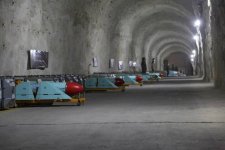
Consequently, the Iranian Navy has no choice but to build its bases deep inland.
In times of crisis, they would need to undertake the difficult task of transporting small vessels from underground to the coastline, evading US military surveillance - a scenario that is likely unrealistic.
The nearest terrain with suitable bedrock is at least 5 km inland from the coast.
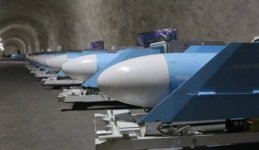
Therefore, Iran's maritime deterrence relies almost entirely on anti-ship ballistic missiles and anti-,ship cruise missiles hidden in underground bases inland.
It's a significant problem that these weapons couldn't even scratch the US military during the Red Sea conflict.






 Was hoping it was something new. It's been a while since we got something to brag about. They need to hurry up! I'm on abstinence mode.


