Iraqi Armed forces

During 80 and early 90s Iraq was the most powerful country in the middle east..... in those days Iraq had developed a full fledged air defense network.....

They were capable of forcing all neighbors behave barring Iran as per their wish...... they had the army to fight inflict heavy damage even against big armies like India and Pakistan.....

Iraq was very close to become a nuclear power too.... but osirak happened..... and the last mistake saddam did was to capture Kuwait.....

If Iraq had some wise leader imagine Iraq today......
 

Iraq Receives 4 Thales Radars and Anticipates the Arrival of 6 Caracal Drones ​


1748625595276.png

Baghdad – INA

The Ministry of Defense announced today, Friday, Iraq's most significant contracts in the fields of armament, air defense, and cybersecurity. While indicating the receipt of 6 Caracal drones in the middle of next month, it also confirmed the receipt of French Thales radars that cover wide areas of Iraqi airspace.

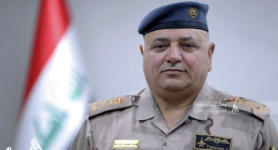
The Director of the Ministry's Media and Moral Guidance Directorate, Major General Tahseen Al-Khafaji, told the Iraqi News Agency (INA): "The Caracal drones, which were contracted as part of plans to strengthen the Iraqi Air Force, will arrive in the middle of next month," indicating that "Iraq will receive six aircraft this year, while 14 others will arrive during the next year."

He added, "Three advanced boats were received from Turkey this year, which represents a significant development in our naval capabilities," noting that "work is also continuing in the field of cybersecurity, particularly with regard to the anti-drone system, in cooperation with Spain."

He continued, "This system specializes in countering drones, as it monitors their hertzian frequencies and electronically shoots them down. It is part of modern cyber defense technologies."

Regarding military manufacturing, Al-Khafaji emphasized that "military manufacturing is witnessing tangible growth, especially in meeting the needs of ground forces for binoculars and weapons. Contracts have been signed with advanced entities in this field, which have proven highly efficient and provided the security forces with what they need."

He noted that "Iraq has extensive experience in the form of engineers and officers, and we have advanced international relationships that have enabled us to learn about the latest global systems in armament and organization."

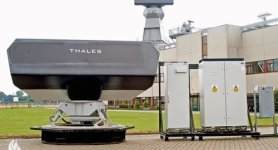
Regarding air defense, Al-Khafaji confirmed that "Iraq has obtained four French-made Thales radars that cover large areas of Iraq. Additional low-altitude radars have also been acquired, with three of them received so far as part of a larger batch awaiting delivery. This will contribute to meeting national air defense requirements."

He pointed out that "the armament process in Iraq is carried out according to integrated planning between the Air Force, Air Defense, Army Aviation, and the Ground Forces, to ensure the integration of the weapons system and to meet the needs of each military branch."

He stated that "the fundamental issue in armament is the availability of a financial budget, as armament is expensive and requires infrastructure and continuous maintenance, especially with the diversity of armament sources, which requires careful planning and an appropriate environment."

He explained that "the availability of funds allows us to keep pace with the times and keep pace with changing challenges, and develop the necessary plans to confront them and mitigate their impact."

He explained that "the Commander-in-Chief of the Armed Forces, during an important meeting held recently that included the Ministers of Defense and Interior and a number of security agencies, emphasized the importance of a strategic vision for future armament, in line with Iraq's defense and security requirements."

https://ina.iq/eng/40248-iraq-recei...icipates-the-arrival-of-6-caracal-drones.html
 

French Thales reveals the contents of the contract with Iraq on the radar system ​


1748625803464.jpeg

Baghdad-INA

The French company Thales revealed on Sunday, the contents of the contract concluded with Iraq regarding the radar system, while it disclosed the advantages of the GM403 radar.

The representative of the French company Thales, Emmanuel Younk Foy, said during the groundbreaking ceremony for the Air Defense Command Operations Center, which was attended by the Iraqi News Agency (INA), that "a strong relationship between Talence and Iraq dates back to many years," noting that "the operations center The new headquarters of the Air Defense Command is part of the extension of Thales' activities in Iraq and its commitment to developing high capabilities to protect Iraqi airspace."

He explained, "The project includes the first phase of providing Iraq with four GM403 long-range radars with a command and operations center for the benefit of the Air Defense Command," noting that "the project represents a cornerstone in strengthening Iraq's sovereignty over its airspace by protecting it from any threat.”

Foy added, "The GM403 radar is the most recent in terms of technological development, and it will constitute a basic solution that we will put in the hands of the Iraqi armed forces," stressing that "the program of the first phase includes providing Iraq with these radars, and later it will follow a second phase by equipping the same command with a number of 14 A GM200 radar, which will collectively form the main pillar of the Iraqi air defense capabilities in the future.

He said, "The contract includes a very important stage, which is to train Iraqi air defense cadres to maintain these radars independently and independently," noting that "Thales Company will organize intensive training to cover all levels of work for this new system, which will enable the Iraqi Ministry of Defense to possess a high level of training Very high independence.”

Foy continued, "The company will provide integrated capabilities to monitor the Iraqi airspace at the civil and military levels, as well as provide all capabilities related to safety and security at all levels," noting that "GM-403 tactical radars are known for their ease of deployment, and they are the best long-range radars in the world with their offering of Important and essential solutions at work.

Foy stressed, "The GM200 radar is multi-tasking in the medium term at the level of the world, as it provides ideal solutions in the face of current threats," noting that "Thales Company is the ideal partner to develop the Iraqi state's needs for solutions of this kind within the framework of securing national sovereignty for Iraqi airspace." .

He expressed "the company's pride in being the reliable partner of the Republic of Iraq."

https://ina.iq/eng/20918-french-tha...e-contract-with-iraq-on-the-radar-system.html
 
During 80 and early 90s Iraq was the most powerful country in the middle east..... in those days Iraq had developed a full fledged air defense network.....

They were capable of forcing all neighbors behave barring Iran as per their wish...... they had the army to fight inflict heavy damage even against big armies like India and Pakistan.....

Iraq was very close to become a nuclear power too.... but osirak happened..... and the last mistake saddam did was to capture Kuwait.....

If Iraq had some wise leader imagine Iraq today......
Ba'athists were essentially socialists, call it Islamic style communism, Madgad, Hafez (Bashar's dad), Sadam and crew. They kept the mazhabi crazies in check, in full commie dictator style.

Huge mistake kicking that anthill. The whole world is now paying the price for it.
 
Iraq negotiates with South Korea to purchase K2 tanks and K9 cannons

1759819348075.jpeg

There is a race against time to modernize its ground defense capabilities, in light of rapid security developments and a potential vacuum created by increasingly clear US withdrawal plans. The Iraqi Ministry of Defense is working diligently to accelerate the process of importing modern combat tanks, in a move that reflects an awareness of the importance of self-reliance in facing complex security challenges.

A new security reality imposed by the American positioning

These moves come as a direct response to the growing fears of the repercussions of the complete American withdrawal, as it has become certain that Washington is moving towards repositioning its forces away from Iraqi territory. With the departure of the forces that represented the main security guarantee for the government, Baghdad finds itself facing an urgent need to strengthen its self-defense capabilities to confront multiple internal and regional challenges.

Arms Highway: All eyes are on South Korea

Iraq's decision-makers realize that time has become crucial, as the country no longer has the luxury of entering into long-term tenders or complex testing programs. Therefore, Baghdad is expected to seek rapid delivery of K2 Black Panther (K2 Black Panther) tanks, similar to its previous urgent request to import Chungong 2 (Cheongung II) air defense systems from Seoul.

South Korea stands out as a prime candidate to meet these requirements, supported by its successful record of rapid export, as it was able to deliver 180 K2 tanks to Poland in just three years, reflecting its high capacity to produce and meet urgent contracts.
 
A huge Iraqi-Korean deal worth $6.5 billion to modernize the Iraqi army

1759820029356.webp

October 2025:

Iraq appears to be close to concluding one of the largest arms deals in its modern history with South Korea, in a move that reflects its relentless efforts to modernize its ground forces and enhance its defense capabilities in light of a delicate regional stage, and with the approaching American withdrawal from its territory.

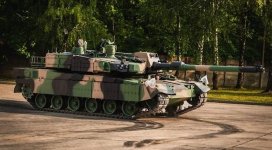
On September 25, 2025, the Korean website Daum published an extensive report based on a statement issued by Hyundai Rotem on the 20th of the same month, revealing that Iraq had officially informed the company of its intention to send a high-level military delegation headed by the Chief of Staff of the Iraqi Army to visit the production plants of the K2 "Black Panther" tank and examine its specifications in the field In preparation for contracting it as part of a huge deal worth about 9 trillion won (about 6.5 billion US dollars).

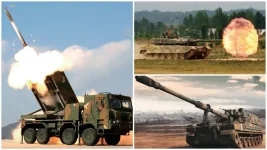
Under the expected deal, Iraq plans to purchase approximately 120 K2 tanks, 96 K9 "Thunder" howitzers, and 60 K239 "Chunmu" rocket launchers, which will give it advanced firepower that enhances the army's capabilities in ground combat, and opens the way for it to build a modern combat system based on advanced Korean technology.

The report indicates that a contract will be signed very soon for the K9 Thunder and K239 Chunmu launchers, following a visit by the Iraqi artillery class manager to the manufacturer's headquarters, reflecting the accelerating pace of defensive coordination between the two sides. The Iraqi side also expressed its desire to accelerate the implementation of the order, given the Hyundai Rotem plant's production capacity to manufacture up to 200 tanks annually, which is in line with the needs of the Iraqi army.

The report adds that transferring tank production technology and assembling it locally in Iraq represents an option on the table, similar to the Egyptian experience with Abrams tanks, which may allow Baghdad to build a defensive industrial base capable of supporting its military independence in the future.

In a related context, the website indicated that Iraq requested the delivery of IQMSAM-II air defense batteries as soon as possible, which reflects its endeavor to develop its multi-layered defenses to confront air and missile challenges in the region.

With these steps, Iraq confirms its move towards diversifying sources of armament and opening up to Asian partners, within the framework of a policy aimed at building a balanced military force capable of protecting its sovereignty and stabilizing its internal stability in the post-American presence phase.
 
Iraq strengthens its air arsenal with drones from South Africa and Pakistan: a strategic shift towards network warfare​


1763137490963.jpeg

Iraqi Defense Minister Thabet Al-Abbasi officially announced that his country had concluded a contract with South Africa to acquire a squadron of multi-mission drones, stressing that the planes would arrive in Iraq soon.

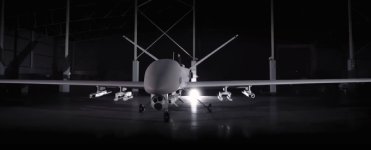
According to identical defense sources, the most likely model is the Milkor 380 produced by Milkor South Africa, an unmanned MALE (medium altitude long-range) aircraft designed to provide accurate reconnaissance and attack capabilities at a low operational cost compared to conventional fighters.
1763137935800.jpeg

This development comes within a new Iraqi policy aimed at diversifying sources of armament and developing local capabilities in the field of unmanned air systems, in line with the requirements of modern warfare, which has come to rely on drones to carry out intelligence missions and precise strikes in complex and complex environments.

Milkor 380 Capabilities: A Long-Range Reconnaissance and Attack Platform The Milkor 380 is one of the most prominent unmanned aircraft developed by the South African industry over the past decade.

According to the specifications published by the manufacturer, this platform is distinguished by its ability to fly at altitudes of up to 30,000 feet for more than 30 continuous hours, with an operational range of more than 4,000 kilometers, making it ideal for monitoring the Iraqi border extending from north to south.The aircraft's payload of 220 kg allows it to carry a combination of guided munitions and smart bombs, along with electro-optical sensors and laser identification systems, giving it the ability to carry out reconnaissance and offensive missions simultaneously.

Technical reports published in African defense patrols indicate that the platform is designed to integrate both Western and Eastern-origin weapons systems, giving it high flexibility in use and integration with existing Iraqi systems.

The Milkor 380 also supports an advanced digital architecture that allows real-time intelligence integration, via encrypted data links and automated ground control systems.

Military analysts believe that this type of capability will help Iraq secure its desert border areas and monitor the movements of armed groups in remote areas, especially in the Anbar-Nineveh-Salah al-Din triangle.

Shahpar II: The Pakistani female pilot heading towards Baghdad
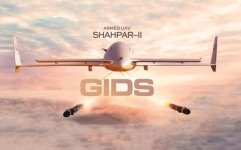
In parallel with the South African contract, Minister Al-Abbasi revealed very advanced negotiations with Pakistan to purchase the Shahpar II drone, produced by the Pakistan Defense Industries Authority GIDS (Global Industrial & Defense Solutions).

Sources in the Pakistani Ministry of Defense confirmed to Dawn newspaper that the talks with Baghdad have reached a "very advanced stage" and that the expected deal will be "the first of its kind with an Arab country."Shahpar II has been in active service in the Pakistan Army, Air Force and Navy since 2021, and made a public appearance during the Pakistan Day parade in March of the same year.

Published technical data from GIDS indicates that the aircraft is capable of flying at speeds of up to 222 km/h, with an operational range of 1,050 km, and a direct data correlation range of up to 300 km.

It can also carry out reconnaissance and day-night attack missions thanks to thermal imaging and laser guidance systems.

Technical Comparison: Milkor 380 vs Shahpar II

Technical Feature Milkor 380 (South Africa) Shahpar II (Pakistan)
Category MALE - Multi-mission Tactical - Offensive and reconnaissance
Operational range: +4000 km 1050 km
Flight time +30 hours 14 hours
Maximum load: 220 kg, approximately 60 kg
Connect SATCOM/LOS/Link Encryption SATCOM/LOS
Armament: Guided munitions/smart bombs and short-range laser missiles
Optimal use for border surveillance and long-range ISTAR missions, tactical field support and precision strikes

The comparison shows that Iraq is moving towards building a class-based drone system that combines long-range aircraft (Milkor 380) for strategic reconnaissance coverage, and medium-range aircraft (Shahpar II) for offensive tactical missions.

This combination represents a similar model to the UAE and Turkey's experience in combining surveillance and combat drones.

Operational and Technology Transfer Challenges

Defense experts believe that the success of this step depends on Iraq's ability to build an integrated control structure that includes secure ground stations and highly reliable communications networks, in addition to training technical teams specialized in maintenance and programming.
A report by the IISS Center in London indicates that one of the most prominent challenges facing pilot programs in the Middle East is excessive reliance on foreign suppliers in the field of spare parts and software, which can hinder operational readiness in the event of regional crises.

Therefore, Baghdad is expected to seek partial technology transfer (ToT) through joint manufacturing or local maintenance contracts, similar to what Egypt and Jordan have done in similar programs in recent years.

Strategic reading: from conventional defense to smart deterrence

The Iraqi trend towards possessing advanced unmanned systems represents a shift in military doctrine from reliance on traditional manned aviation to networked warfare that relies on real-time data and precise targeting.

This shift is explained by the need to confront asymmetric threats – from infiltration by armed groups to border smuggling, with flexible means and low operational costs.

Experts at Defense News Middle East also believe that Iraq seeks, through these contracts, to achieve a balance between Eastern and Western defense partnerships, after decades of reliance on American and Russian equipment, in an attempt to find a multi-directional arms policy that preserves the independence of the defense decision.

Conclusion: Baghdad's Drones… Towards Flexible Air Sovereignty

With this step, Iraq lays a solid foundation for a new era of smart warfare, where unmanned systems play the backbone of gathering information and carrying out precise strikes.

However, the success of this program will only be achieved through actual investment in the technical and human infrastructure, and a clear legislative and regulatory framework that ensures the rational use of this technology within the national environment.Strengthening operational capabilities not only means increasing deterrence efficiency, but also represents a deeper strategic shift in Iraqi defense thinking, from dependency to technical independence and autonomous control of the skies.


Sources and references:

Iraqi Ministry of Defense - Statements by Minister Thabet Al-Abbasi (2025)
Milkor South Africa – Official technical data for the Milkor 380
DefenseWeb South Africa – Analytical reports on South African unmanned aircraft projects
Global Industrial & Defense Solutions (GIDS) – Shahpar II Technical Manual
Pakistani newspaper Dawn - Statements of Defense Ministry officials about negotiations with Iraq
Asian Defense Review – Technical Reports on Shahpar II
The International Institute for Strategic Studies (IISS) – Middle East Defense Annual Report 2024
Defense News Middle East - Analysis of armament trends in Iraq
 
The cancellation of Iraqi visas for Egyptians has revealed a dangerous military and intelligence agreement behind it! 🇪🇬🇮🇶

✍️ 11 agreements between #Sisi and Baghdad... Iraq requests Egyptian military experts to maintain its weapons and train its officers, and intelligence coordination between Cairo and Baghdad... and, most dangerously, an Egyptian move to protect the Saudi-Iraqi border in coordination with the Iraqi army 🇸🇦👀

Is #Egypt preparing to fill the American vacuum in #Iraq... and will the Egyptian-Iraqi alliance be the new line of defense for #SaudiArabia? 🤔


Users who are viewing this thread

Country Watch Latest

Latest Posts

Back
Top