ghazi52
THINK TANK: CONSULTANT


- Thread starter
- #16
Brief history of Islamabad
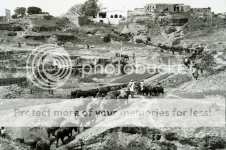
Islamabad Capital Territory is the capital of Pakistan. It is known for considered one of the earliest sites of human settlement in Asia. 500,000 to 100,000 years old Stone Age artifacts in this region was traced. Items of pottery and utensils dating back to prehistory have been found. Human skulls have been found dating back to 5000 BC that show this region was home to Neolithic people who settled on the banks of the Swaan River, who developed small communities in the region at around 3000 BC. Situated at one end of the Indus Valley Civilization, the area was an early settlement of the Aryan community. Their civilization flourished here between the 23rd and 18th centuries BC. A Buddhist town once existed in the region. Many great armies such as those of Zahiruddin Babur, Genghis Khan, Timur and Ahmad Shah Durrani used the corridor through Islamabad on their way to invade the rest of the Subcontinent. Modern Islamabad is based on the old settlement known as Saidpur. The British took control of the region in 1849 and built South Asia's largest cantonment in the region.
Construction and development of the city
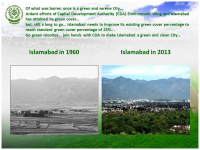
When Pakistan gained independence in 1947, Karachi was made first capital of Pakistan, but due to some reasons it was shifted to Islamabad in 1960 by
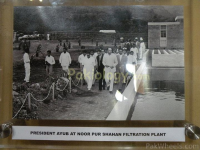
Ayub Khan.
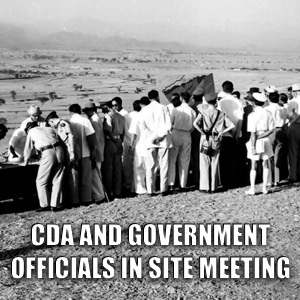
In 1958, a commission was made to select a suitable site for the national capital with particular emphasis on location, climate, logistics, and defence requirements along with other attributes. After extensive study, research, and a thorough review of potential sites, the commission recommended the area northeast of Rawalpindi in 1959.
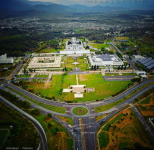
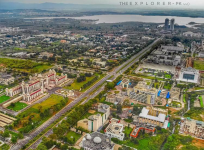
A Greek firm of architects, Konstantinos Apostolos Doxiadis, designed the master plan of the city based on a grid plan which was triangular in shape with its apex towards the Margalla Hills. The capital was not moved directly from Karachi to Islamabad; it was first shifted temporarily to Rawalpindi in the early sixties and then to Islamabad when the essential development work was completed in 1966.



....
Islamabad Capital Territory is the capital of Pakistan. It is known for considered one of the earliest sites of human settlement in Asia. 500,000 to 100,000 years old Stone Age artifacts in this region was traced. Items of pottery and utensils dating back to prehistory have been found. Human skulls have been found dating back to 5000 BC that show this region was home to Neolithic people who settled on the banks of the Swaan River, who developed small communities in the region at around 3000 BC. Situated at one end of the Indus Valley Civilization, the area was an early settlement of the Aryan community. Their civilization flourished here between the 23rd and 18th centuries BC. A Buddhist town once existed in the region. Many great armies such as those of Zahiruddin Babur, Genghis Khan, Timur and Ahmad Shah Durrani used the corridor through Islamabad on their way to invade the rest of the Subcontinent. Modern Islamabad is based on the old settlement known as Saidpur. The British took control of the region in 1849 and built South Asia's largest cantonment in the region.
Construction and development of the city
When Pakistan gained independence in 1947, Karachi was made first capital of Pakistan, but due to some reasons it was shifted to Islamabad in 1960 by
Ayub Khan.
In 1958, a commission was made to select a suitable site for the national capital with particular emphasis on location, climate, logistics, and defence requirements along with other attributes. After extensive study, research, and a thorough review of potential sites, the commission recommended the area northeast of Rawalpindi in 1959.
A Greek firm of architects, Konstantinos Apostolos Doxiadis, designed the master plan of the city based on a grid plan which was triangular in shape with its apex towards the Margalla Hills. The capital was not moved directly from Karachi to Islamabad; it was first shifted temporarily to Rawalpindi in the early sixties and then to Islamabad when the essential development work was completed in 1966.
....