Israel’s Genocide in Gaza | 2023- till present

Status
Not open for further replies.
This is 2024 and not 2004.

West is losing its dominance and Asia, especially China, is rapidly rising.

No point doing the bidding of those who soon cannot assist you even if they wanted to.

China is rising, but, it doesn't have the wide network of allies like the West. It's rising but with a handicap.
 
To view this content we will need your consent to set third party cookies.
For more detailed information, see our cookies page.

Iran might let Israel keep its military and security in this heightened state, which can lead to quicker exhaustion and depletion of resources. Iran might delay its attack for a bit, to keep Israel on its toes, while expending critical resources while just waiting for the Iranian attack.
 
Iran might let Israel keep its military and security in this heightened state, which can lead to quicker exhaustion and depletion of resources. Iran might delay its attack for a bit, to keep Israel on its toes, while expending critical resources while just waiting for the Iranian attack.
Cowardly Israelis will be buying airline tickets out of the country.
 
These zio animals don't deserve to live

Israel is eviscerating ecosystems in Gaza: Climate Defiance​

April 6, 2024 - 0:26


Climate Defiance, a climate activist group focused on young adults, says Israel’s devastating war on the Gaza Strip could make the besieged coastal enclave “uninhabitable not just for years but for generations”.
In a post on X, it says that up to 48 percent of tree cover and farmland in the strip has been torched and 23 percent of greenhouses have been destroyed in their entirety.
“This is a war crime. This is ecocide,” it says.
“This is not ‘just’ about nature. This is about the food and the air and the water and the land being deprived of life. It is about a whole population being denied its sustenance.”

 
Last edited:

Iraqi Resistance strikes key Israeli airbase, Ashdod with drones​

Thursday, 04 April 2024 2:01 AM [ Last Update: Thursday, 04 April 2024 2:03 AM ]


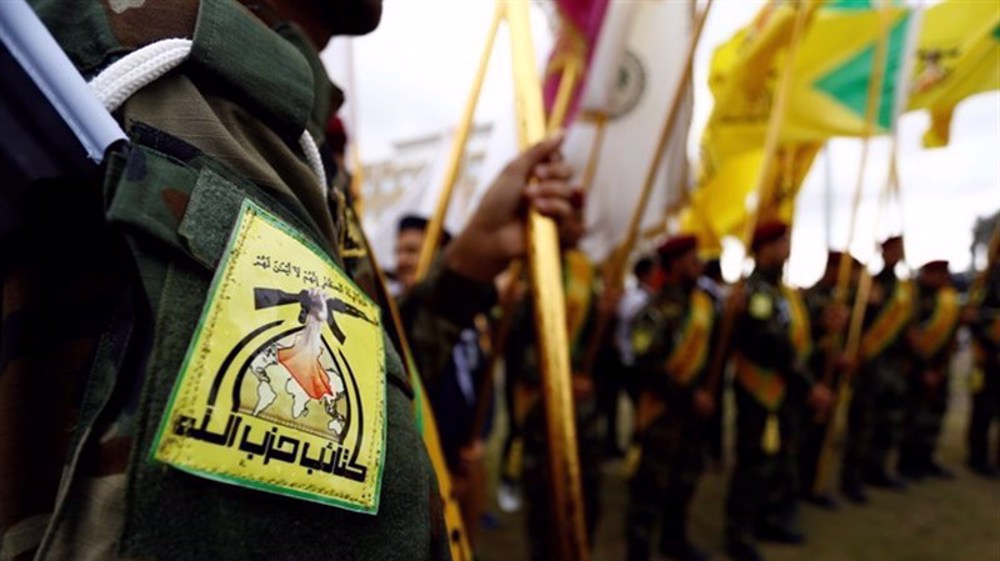
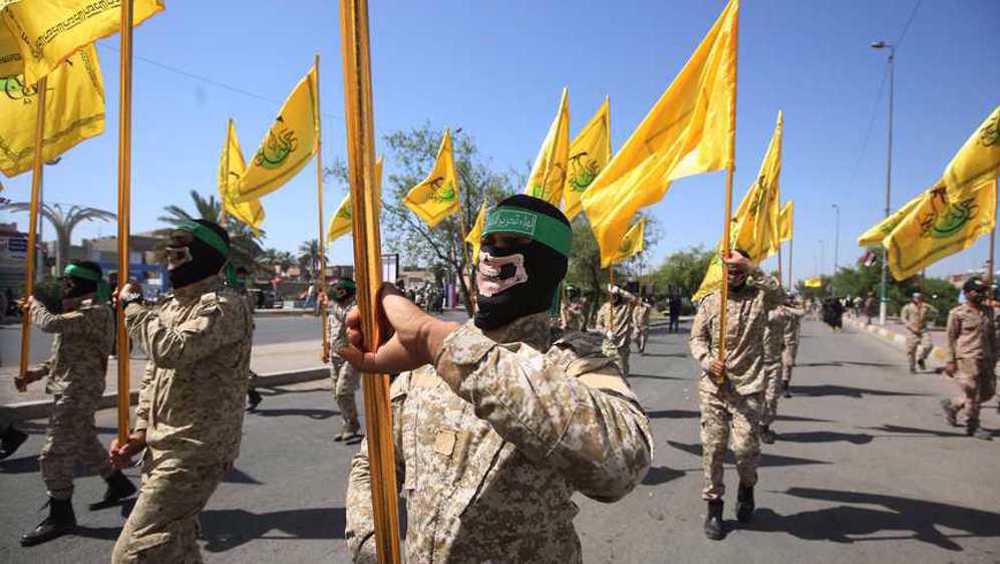
File photo of Iraqi resistance forces
Iraqi resistance forces have targeted a key Israeli airbase as well as the city of Ashdod in the central part of the occupied territories in support of Palestinians in the Gaza Strip, who are enduring a genocidal Israeli war.
The Islamic Resistance in Iraq, an umbrella group of anti-terror fighters, announced carrying out the attacks on Wednesday.
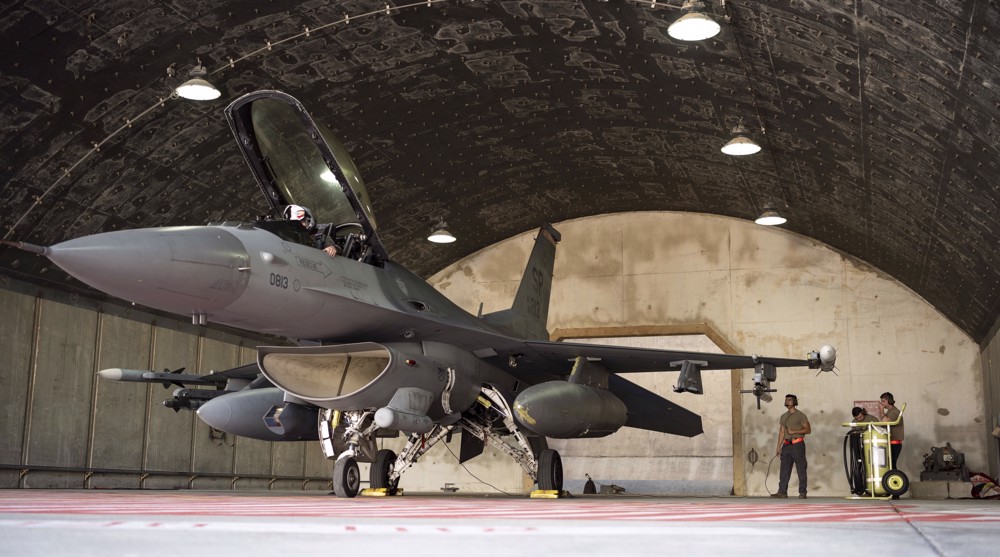
The first strike saw the forces using drones to hit the Ramat David Airbase -- the Israeli regime’s northernmost such outpost that houses warplanes and gunships.
The resistance noted that the attack had come “in support of our people in Gaza, and in response to the massacres committed by the usurping entity against Palestinian civilians including children, women, and the elderly.”
The Iraqi forces hit a “vital target” in Ashdod during the second attack, which was similarly conducted using unmanned aerial vehicles.
According to the resistance, the latter attack was part of “the second phase” of its pro-Palestinian operations against the Israeli regime.
The regime began the war on October 7 after Gaza’s resistance groups carried out a retaliatory operation against the usurping entity.
Since the start of the offensive, the Tel Aviv regime has killed around 33,000 Palestinians, most of them women and children.
Iraq’s Islamic Resistance has been conducting numerous operations against targets lying throughout the occupied territories ever since the onset of the warfare.
Iraqi resistance intensifies attacks against Israel
The Islamic Resistance in Iraq has carried out fresh attacks on Israeli positions.
Earlier on Wednesday, it struck the Haifa Airport in the northwestern part of the territories, asserting that it would continue to “destroy the enemy’s strongholds.”

Press TV’s website can also be accessed at the following alternate addresses:
www.presstv.co.uk
 

Iraqi Resistance strikes 'vital' Israeli military facility​

Sunday, 31 March 2024 3:38 AM [ Last Update: Sunday, 31 March 2024 3:38 AM ]


Play
File photo of Iraqi resistance fighters
The Islamic Resistance in Iraq has struck a "vital" Israeli military facility lying far north in the occupied territories in continued support for Palestinians in the Gaza Strip, who are enduring a genocidal Israeli war.
The Iraqi umbrella group of anti-terror factions made the announcement in a statement on Sunday.
It specified the whereabouts of the target as the village of Eilabun, saying the facility was hit with "a barrage of drones."
The Islamic Resistance concluded the statement by saying that the operation had been carried out "in solidarity with the people of Gaza."
The coalition has been staging many such attacks since October 7, when the regime launched the war in response to al-Aqsa Storm, a surprise retaliatory operation by Gaza's resistance movements against the occupied territories.
The military onslaught has so far killed more than 32,700 people, mostly women, children, and adolescents. Nearly 75,200 Palestinians have also been wounded.
Most recently, the Iraqi umbrella group said it had targeted the Ovda and Speer airbases in the occupied Palestinian territories, using drones.
Islamic Resistance in Iraq hit Israeli air base, military site with drones
The Islamic Resistance in Iraq has said it has carried out new operations against Israeli targets in solidarity with Palestinians in the Gaza Strip.
Last Sunday, the coalition announced conducting a similar drone attack against "the headquarters building” of the Israeli ministry for military affairs in the occupied territories.

Press TV’s website can also be accessed at the following alternate addresses:
www.presstv.co.uk
 
Iraq is upping the war:-


Iraqi Resistance targets Israel’s Haifa Airport in solidarity with Gaza​

Wednesday, 03 April 2024 6:13 AM [ Last Update: Wednesday, 03 April 2024 7:51 AM ]


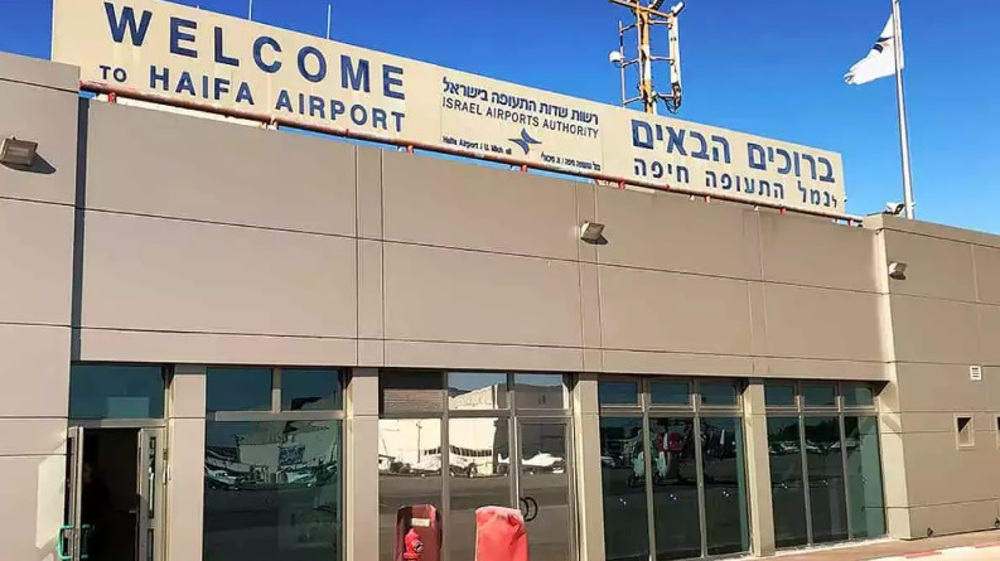
This file picture shows a view of entrance to Haifa Airport in the northwestern part of the 1948 Israeli-occupied territories. (Photo via social media)
Iraqi resistance forces have targeted Haifa Airport in the northwestern part of the 1948 Israeli-occupied territories in retaliation for the Tel Aviv regime’s war against Palestinians in the Gaza Strip.
The Islamic Resistance in Iraq, an umbrella group of anti-terror fighters, in a brief statement claimed responsibility for the early Wednesday drone strike against the facility.
The coalition said the airport came under attack by armed unmanned aerial vehicles.
It noted that that the attack “falls within the framework of the second phase of operations against the occupying Israeli regime. It was conducted in support of Palestinians in Gaza, and in retaliation for the Zionist entity’s massacres against defenseless Palestinian civilians.”
The Islamic Resistance in Iraq underscored it would continue to “destroy the enemy’s strongholds.”

Separately, the sound of explosions was heard close to Ovda Airbase, an Israeli Air Force (IAF) base located around 40 kilometers (24.8 miles) north of Eilat, Lebanon’s Arabic-language al-Mayadeen television news channel reported.
The Islamic Resistance in Iraq has carried out numerous attacks on Israeli targets since the start of a genocidal war on Gaza by the occupying regime in early October.
Israel unleashed its war on Gaza on October 7 after the Palestinian Hamas resistance group carried out Operation Al-Aqsa Storm against the usurping entity in retaliation for its intensified atrocities against the Palestinian people.
The Tel Aviv regime has enforced a “total siege” on the territory, severing the supply of fuel, electricity, food, and water to the more than two million Palestinians residing there.
The Israeli war has resulted in the death of 32,916 Palestinian lives and left another 75,494 wounded, painting a grim picture of the situation.
The Islamic Resistance in Iraq has also struck major American military bases in Syria and Iraq in retaliation for Washington’s singled out support for the bloody Israeli onslaught against the Gaza Strip, and in a show of strong solidarity with Palestinians.

Press TV’s website can also be accessed at the following alternate addresses:
www.presstv.co.uk
 

Resistance forces target key Israeli military positions, US-occupied base​

Tuesday, 02 April 2024 9:55 AM [ Last Update: Tuesday, 02 April 2024 9:55 AM ]


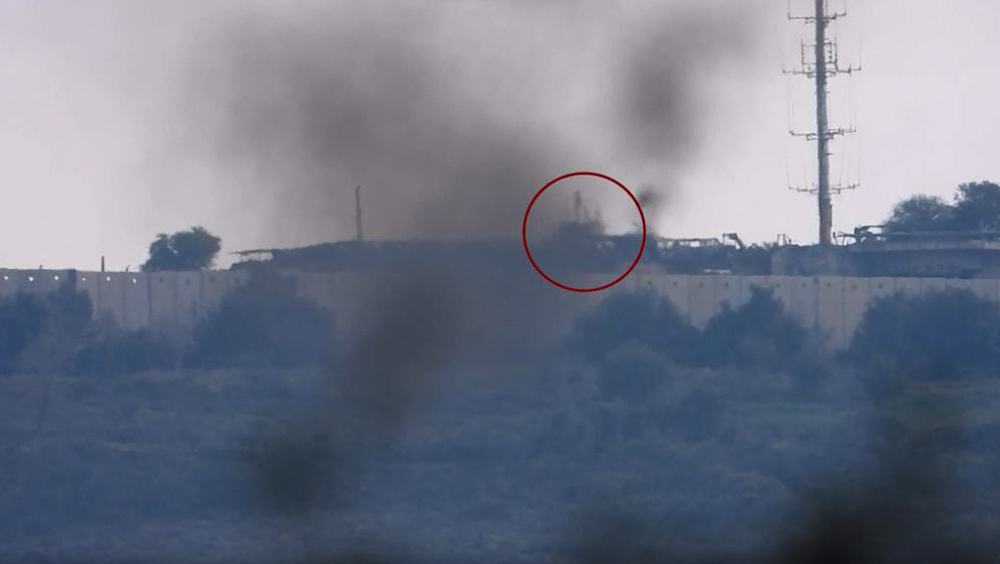
A screen grab shows the moment that Israeli espionage devices are targeted at the Israeli Birket Risha military site, in the northern part of the 1948-occupied territories, on February 22, 2024, following a missile attack by Hezbollah fighters. (Photo by al-Mayadeen)
Fighters from the Lebanese Hezbollah resistance movement and their fellow Iraqi comrades have conducted separate operations against Israeli military positions in the northern part of the 1948-occupied territories, and a military base in southeastern Syria where US occupation troops and their allied militants are stationed.
Lebanon’s Arabic-language al-Mayadeen television news channel, citing a brief Hezbollah statement, reported that the group struck the headquarters of the newly formed Liman Battalion with a barrage of artillery shells on Monday evening.
The Lebanese resistance fighters also fired a salvo of rockets and artillery rounds that targeted the Ruwaisat al-Alam site in the occupied Kfarchouba Hills.
Moreover, Hezbollah pummeled an Israeli military team as it was conducting maintenance on technical and espionage devices at the Baghdadi site opposite the Lebanese town of Meiss Ej Jabal.
Hezbollah announced in the statement that the strikes were in retaliation for the Israeli genocide war against Palestinians in the Gaza Strip, and in support of their resistance factions fighting off the relentless bloody onslaught.
A drone also struck an area close to Israel's Ramon military airport, authorities say. The Israeli military has not yet commented on the incident.
Hezbollah hits Israeli military sites in reprisal for attacks on southern Lebanon
Hezbollah resistance fighters have struck multiple Israeli military positions in retaliation for repeated attacks on southern Lebanon villages and in support of Palestinians in Gaza.
Meanwhile, a military base, which houses US occupation troops and allied militants in Syria’s Homs province near the border with Jordan and Iraq, has come under attack by an armed unmanned aerial vehicle.
Turkey’s official Anadolu news agency, quoting local sources speaking on condition of anonymity, said the al-Tanf base was targeted by a drone.
There were no immediate reports about possible casualties or the extent of damage caused.
In a related incident, the Islamic Resistance in Iraq, an umbrella group of anti-terror fighters, in a statement claimed responsibility for the early Tuesday drone strike against the Israeli Air Force (IAF)'s Tel Nof Airbase, located 5 kilometers south of Rehovot.
The coalition stated that the attack comes in line with resistance against the occupying Israeli regime, in support of Palestinians in Gaza, and in response to Israeli atrocities against Palestinian children, women and elderly.
The Islamic Resistance in Iraq has been staging many such attacks on Israeli targets since the occupying regime launched a genocidal war on Gaza in early October.
Israel unleashed its war on Gaza on October 7 after the Palestinian Hamas resistance group carried out Operation Al-Aqsa Storm against the usurping entity in retaliation for its intensified atrocities against the Palestinian people.
The Tel Aviv regime has also imposed a “complete siege” on the territory, cutting off fuel, electricity, food and water to the more than two million Palestinians living there.
Since the start of the offensive, the Tel Aviv regime has killed 32,782 Palestinians and injured nearly 75,298 others.
The Islamic Resistance in Iraq has also struck major American military bases in Syria and Iraq amid anger over the US support for Israel’s onslaught on Gaza.

Press TV’s website can also be accessed at the following alternate addresses:
www.presstv.co.uk
 

War First, Then Annexation: Is Israel Preparing to Permanently Occupy Gaza?​

While expectations rise that surging protests could bring down the Netanyahu government, the Bible-infused nationalists in power are consolidating plans to resettle Gaza, following a well-worn Israeli playbook. Who, or what, can stop them?
Share in Twitter

Share in WhatsApp

Gift this article


Send in e-mailSend in e-mail

Print article

SaveSave article to reading list

Zen Read

Open gallery view

A demonstration by right-wing settlers, the annexationist vanguard, protesting against the entry of humanitarian aid into Gaza, in February.Credit: Ilan Assayag

Dahlia Scheindlin

Dahlia Scheindlin

Get email notification for articles from Dahlia ScheindlinFollow
Apr 3, 2024 5:15 pm IDT


It's been a heady week in Jerusalem. Trains and public spaces have been flooded with protesters noisily calling for the government to go. This weekend, the protesters calling for the government to immediately prioritize a deal to release the hostages held by Hamas joined with anti-government protests calling for new elections, for a mass demonstration.

Both groups of protesters are hoping for the perfect storm to help boot the government out. Prime Minister Benjamin Netanyahu is facing the fury of the hostage families, having failed to secure a hostage release deal since the initial agreement in November. He's had plenty of help from Hamas in this failure, but Netanyahu is Israel's elected leader, and he's been lying to its citizens that his policies will get the hostages back. Instead, families have noticed that their loved ones are still not home.


Then the U.S.-Israel crisis appeared to hit breaking point last week. Worldwide opinion is sliding into Israel's global isolation. The ghastly IDF killing of seven workers from the international relief group World Central Kitchen has brought fresh and searing global condemnation.

Open gallery view
Protesters calling for an immediate hostage deal and new elections try to break through a police barricade near Prime Minister Netanyahu's Jerusalem residence last weekend

Protesters calling for an immediate hostage deal and new elections try to break through a police barricade near Prime Minister Netanyahu's Jerusalem residence last weekendCredit: Olivier Fitoussi
On the home front, the government has teetered due to a showdown between its own ruling coalition parties over proposed legislation to conscript ultra-Orthodox yeshiva students; there were no winners. The High Court of Justice ordered the state to begin drafting the Haredim posthaste, and to freeze funds to yeshivas that don't cooperate with the draft. After 75 years of a free ride (well, it cost the rest of us), the Haredi parties were thoroughly shocked, sending tremors through the government.


The various streams of protesters are hopeful that their pile-on of pressure could finally bring the edifice down. In conversations, more and more people say, "I smell elections."

Elections slip-sliding away


But it's a long road to Canaan, so to speak. In the immediate phase, there are plenty of factors working against the protesters' aim of toppling the Netanyahu government. And in the long term, there are numerous reasons to think the government can slog on while laying the groundwork for its most grandiose plans.


After their initial shock, the ultra-Orthodox parties remembered just how beneficial it is to be inside governing coalitions – especially one that is devoted to propping up their isolationist society and schools with public funds, and advancing theocratic aims. They may not get a better deal and they're not leaving just yet.

The global crisis, too, is more bark than bite. What looked like a high-stakes clash last week – the U.S. allowed the UN Security Council to pass a resolution calling for a cease-fire, and Netanyahu canceled a planned delegation to the White House to discuss a proposed Rafah ground offensive – has been swallowed up by love this week. Netanyahu reversed his decision to cancel the delegation. The Americans will reportedly continue stuffing Israel's military depots with munitions and its hangars with fighter jets, which speak much louder than words.


The last major crisis in U.S.-Israel relations in 2015 had a similar trajectory: Netanyahu addressed Congress, invited by Republicans behind President Barack Obama's back – an unprecedented insult. But it ended with a $38 billion 10-year military aid package as Obama's goodbye gift.

Open gallery view
Prime Minister Benjamin Netanyahu attending a cabinet meeting in Jerusalem. His core supporters apparently still view him as a savvy statesman.

Prime Minister Benjamin Netanyahu attending a cabinet meeting in Jerusalem. His core supporters apparently still view him as a savvy statesman.Credit: Abir Sultan,AP
Israelis have never faced true global isolation, and Netanyahu's core supporters apparently still view him as a savvy statesman. His numbers have actually stabilized somewhat in surveys of Israeli public opinion: he hit a floor in the first few months; now his ratings, his party and his government have stayed low but stable, or even recovered a smidge.


It's natural for the government to want elections later rather than sooner: the prewar coalition parties are still winning only 46-48 seats in serious polls, far from the 61-seat number they need and miles from their winning 64-seat tally in the last election. More time means potential poll recovery.


But the real reason this government wants to keep power is to advance its broad agenda: Inequality by law (Jewish supremacy); theocracy; annexation; gut the welfare state; legitimize corruption. To do these, the government is rapidly consolidating executive power, stacking the public sector with political loyalists and dismantling democratic institutions.

The anti-government protests and their perfect storm can't force elections. They may even act as an accelerator for the most coveted part of this plan: annexation. And this time we're talking not only about the West Bank; the big vision stretches into Gaza, too.


Open gallery view
Right-wing conference in Jerusalem in January promoting the establishment of settlements in a permanently occupied Gaza, with a map featuring their proposed communities

Right-wing conference in Jerusalem in January promoting the establishment of settlements in a permanently occupied Gaza, with a map featuring their proposed communitiesCredit: Olivier Fitoussi


The biggest prize, the historic precedent


Most of the parties in the original Netanyahu coalition believe in the cosmic right to a Jewish religious grip over all of historic Palestine. If they could, they'd even cross the Jordan (eastward), to the lands of the biblical tribes of Reuben, Gad and Manasseh. Historic distinctions between the traditionally anti-state theology of ultra-Orthodoxy versus the messianic, land- and Jewish-sovereignty-fetishizing followers of Rabbi Zvi Yehuda Kook have faded over the decades.


Haredi urban sprawl over the Green Line (the armistice demarcation line before the 1967 Six-Day War) blurred the geographic distinctions, while the Haredi-Nationalist groups bridged the sociological lines. In today's Knesset there are religious Likud ministers who defend a draft exemption for Haredim, and Haredim who hold that Gaza settlements would "correct a historical injustice." And when it came to settlements in land occupied in 1967, the state was never far behind.

Likud, once a mostly secular party that drove a nationalist ethos alongside a liberal constitutional order, has remade itself in the image of the ultranationalist religious parties, just with less bombastic religion. That matters for fighting over the conscription law – but it's a perfect storm in favor of annexation.

Open gallery view

Far-right minister Bezalel Smotrich addressing a faction meeting in Jerusalem earlier this year.Credit: Olivier Fitoussi
One of the government's first, but least headline-grabbing, actions of 2023 was to transfer powers once held by the Israel Defense Forces in the West Bank to far-right minister Bezalel Smotrich. He's been frantically employing bureaucratic mechanisms to advance permanent Israeli control: Last month he declared swaths of territory to be "state land," preventing Palestinians from ever using it. He can't get enough, and did it again this week.

It's impossible to keep up: As I was writing this, the Knesset passed another seemingly banal, technical law regarding local authority budgets that again erases the distinction between settlements and sovereign territory (along with other laws gouging democracy, such as the law giving the prime minister the power to shutter media outlets).

Enter Hamas, the worst leaders Palestinians have ever had. Hamas gave Israel the biggest possible prize: a chance to double its annexationist fantasies by expanding to Gaza. Before October 7, the government probably wouldn't even let itself dream of such a scenario. Now its members – Likud ministers included – have openly declared their intention to reoccupy Gaza permanently and rebuild settlements.

Open gallery view
Palestinians inspect the site of an Israeli airstrike on a building in Rafah, in the southern Gaza Strip this week

Palestinians inspect the site of an Israeli airstrike on a building in Rafah, in the southern Gaza Strip this weekCredit: Mohammed Salem/ REUTERS
The plans may sound wild, but the pieces are all there.

First, Netanyahu rejected the idea that anyone can run Gaza except the IDF. He still refuses all talk of a day-after plan or cease-fire, but then released a plan that includes indefinite Israeli security control.

Give that idea time to settle in (so to speak); Israel might propose an occupation of 10 years in Gaza, or 18 years, like the occupation of southern Lebanon. And Lebanese territory wasn't even part of Israel's ideology or theology; for some strange and unbiblical reason, Gaza is.

Back in 1967, the idea of 700,000 settlers in the West Bank and East Jerusalem would have sounded like a pipe dream. So would brazenly formalizing the annexation of both East Jerusalem and the Golan Heights in the early 1980s. But there have been no material consequences for either, other than giving Israel a bad image in the world. Most Israelis just slough that response off as a sign of the world's incurable antisemitism, or a prescription for better hasbara.

The limitations of demonstrations


Generations of Israeli leaders, consciously or instinctively, learned a winning technique: Let radical-looking elements in society – politicians, settlers or thugs – indulge in policies, and not just on a theoretical level, that could never fly at the time, even at home, like the first religious ideological Hebron settlers in 1968. Go through the motions of reining them in, release trial balloons, let them pop, then float them again.

This was not only the decades-old dance between settlers and the Mapai/Labor government (see Gershom Gorenberg's meticulous documentation of the process in "The Accidental Empire"). It was precisely the pattern for the creeping assault on Israel's independent judiciary (which I documented myself).

For over a decade, radical forces in Likud, Habayit Hayehudi and others were putting out rabid anti-judiciary testers, bills, policies and op-eds. They were softening up their target of public opinion, while all the while Netanyahu played at being good cop.

Open gallery view

Communications Minister Shlomo Karhi, National Security Minister Itamar Ben-Gvir, Heritage Minister Amihai Eliyahu and other Netanyahu coalition lawmakers at the 'Resettle Gaza' conferenceCredit: Olivier Fitoussi
Each trial, pop and new balloon bounces around in Israel's "lively democratic debate," which feeds familiarity and, ultimately, acceptance – happily by some, while others succumb, exhausted.

Israel's government is hardly troubled by demonstrations, even big ones. Israelis held mass demonstrations against their leadership for its collusion with the perpetrators of the Sabra and Shatila massacre during the first Lebanon war. They demonstrated for the Oslo Accords, and against Netanyahu's regime coup of 2023.

Demonstrations sometimes have an impact, but they can unwittingly play into the government's hands: They are evidence of Israel's "vibrant debate" while prompting the government to just slow down or change tactics to achieve its aims.

So, if the judicial reform didn't fly, break it down and snatch power anyway, in different ways. If West Bank annexation can't happen openly, overnight, do it bureaucratically, over time, inch-by-physical-inch; show off some setbacks, display willingness for concessions on constricted or impossible terms, and downplay the quiet, creeping victories.

Why not repeat the formula for Gaza? When the government floats ideas for the future, I advise testing them against this historic pattern; if they fit, occupation and annexation are on the horizon.

Open gallery view
Protesters against Israeli Prime Minister Benjamin Netanyahu's government and calls for the release of hostages held by Hamas outside of the Knesset in Jerusalem last month

Protesters against Israeli Prime Minister Benjamin Netanyahu's government and calls for the release of hostages held by Hamas outside of the Knesset in Jerusalem last monthCredit: Leo Correa,AP
Can anything stop the mad dance, or cause a change of course? Only the unprecedented or the unknown.

Mainstream Israelis never legitimized the refusal to serve in reserve duty before 2023. Most everyone rallied for the war after October 7, but when Israelis are stuck in the mud of Gaza, facing a new occupation, settlements and permanent Palestinian insurgency, reservists or even conscripts might make different choices.

Further, countries around the world have loudly proclaimed that this time, Israel truly must be reined in; a permanent political agreement must end this conflict for good. Too bad they won't say how they're planning to make it happen.

But there's one condition for any anti-annexationist alternative to come true: Netanyahu must go. He didn't invent most of these policies, but if he remains in power, we barely have to imagine the future. Just look at the last six months, the last year, the last 15 years, and ask if you want this, or worse, to be Israel's fate.

Click the alert icon to follow topics:​

 
Let this figure settle in for a moment - in less than six months the Israelis have killed or injured 107,000 Palestinians as per the United Nations.

To view this content we will need your consent to set third party cookies.
For more detailed information, see our cookies page.


107,000 victims!

In other news - the former director of the CIA during the Obama administration Leon Panetta has criticised Israeli tactics in Gaza on CNN.

Stating “Israelis shoot first and ask later, they seriously need to take some real and concrete steps to improve the standards of their military operations to avoid any more civilian casualties.
He further went on to state “Israelis reputation has been badly damaged in the security and diplomatic circles for its conduct against Palestinians in Gaza
 
Status
Not open for further replies.

Users who are viewing this thread

Country Watch Latest

Back
Top