Israel’s Genocide in Gaza | 2023- till present

Status
Not open for further replies.

Missile attack on Israel was intended as a show of Tehran’s military capabilities, experts say​


From CNN’s Abbas Al Lawati and Nadeen Ebrahim

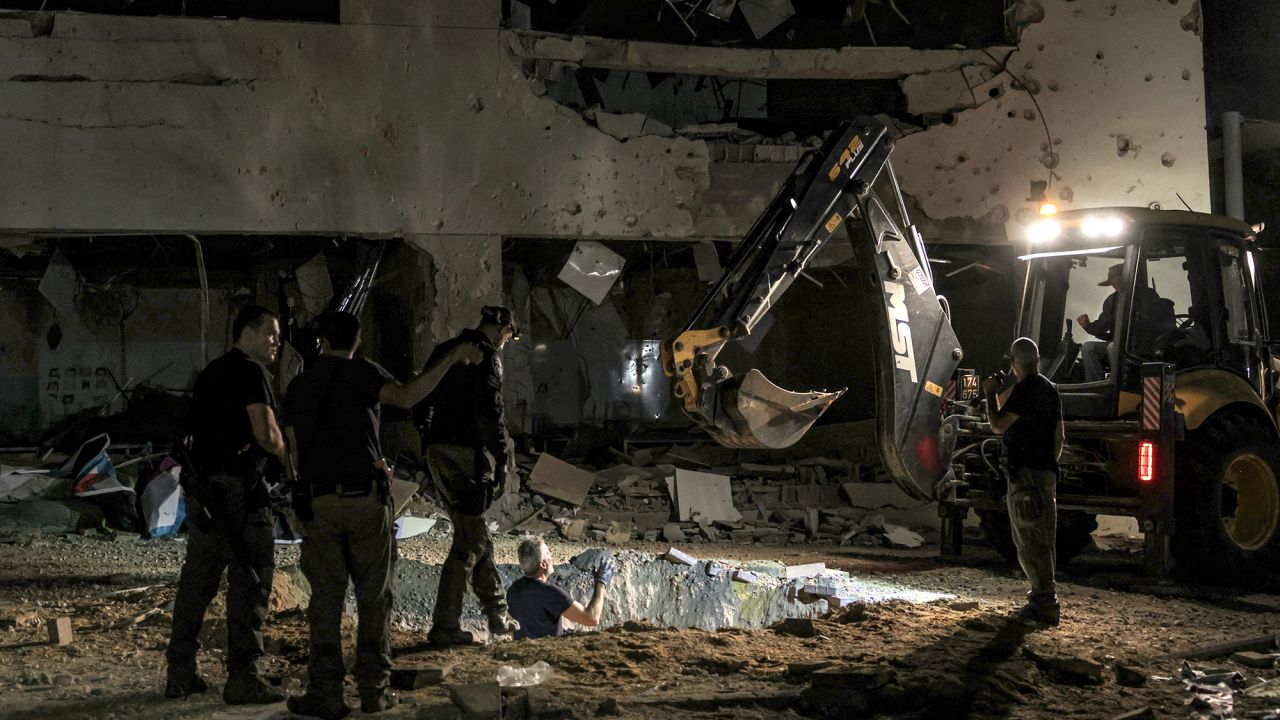
An excavator works by a crater left by an exploded projectile at a heavily-damaged school building in Israel's southern city of Gedera on October 1.


An excavator works by a crater left by an exploded projectile at a heavily-damaged school building in Israel's southern city of Gedera on October 1.
Menahem Kahana/AFP/Getty Images

Iran’s missile attack against Israel on Tuesday was intended to signal that Tehran’s arsenal is capable of inflicting mass casualties, Middle East experts say.

Mohammad Ali Shabani, editor of Amwaj.media, a London-based news site focused on covering the Middle East, said that unlike its attack on Israel in April — which was meant to merely showcase Iran’s capabilities and had been telegraphed in advance, allowing it to be largely thwarted — Tuesday’s barrage was intended to send the message that Iran can inflict significant damage if it chooses to.

“The (Iranian) response was measured and geared to send a message through accuracy and ability to bypass Israeli air defenses, rather than inflicting mass casualties,” Shabani said.

Ali Ahmadi, an executive fellow at the Geneva Centre for Security Policy, said that “Iran’s April attack was deliberately designed to be ineffective so as to not escalate,” but the feeling in Iran is that it was taken as a sign of weakness.

“Iran felt that it had to discredit Israeli and American air defenses,” Ahmadi told CNN, adding that even though Tuesday’s attack did not cause mass casualties, it “did establish that Israel can be made to take on serious cost.”

Others disagree, however. Behnam Ben Taleblu, a senior fellow at the Foundation for Defense of Democracies (FDD) think tank in Washington, DC, said Iran’s actions were meant to show that it is indeed responding to Israel’s recent assassinations of key Hezbollah and Hamas leaders, “both by domestic and foreign audiences for purposes of regime security and survival.”

He noted, however, that despite the lack of mass casualties, “we cannot assume that a desire to wash blood away with blood was not present.” The lack of damage had more to do with Israel’s defense systems as well as the US and other regional allies’ support, he said.
 
Israeli media shares footage showing IDF medical evacuation helicopters flying over the northern border.
 

Israeli military bases hit by Iranian missiles but remain functional, source tells CNN


From CNN’s Jeremy Diamond

Several Iranian missiles struck Israeli military bases on Tuesday night, an Israeli military source told CNN, but insisted there was no major damage to the facilities.

“There is no harm to the functionality of the IAF (Israeli Air Force),” the source said.

The source said there were “a few hits,” but that they failed to hit “essential infrastructure.”
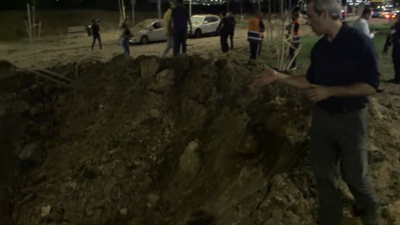
Take as example the crater near to Mossad HQ.

It doesnt seem to be a big thing.

113876541.jpg


You can have a dozen of that in a military base and no damage done if it falls in the right place.

Remembering...

To view this content we will need your consent to set third party cookies.
For more detailed information, see our cookies page.
 

Iran warns countries that helped intercept rockets targeting Israel

From CNN’s Mostafa Salem and Leila Gharagozlou

Countries that helped block missiles targeting Israel will “be held responsible,” Iran’s Foreign Minister Abbas Araghchi said Wednesday.

Araghchi was responding to a question from reporters on Jordan’s help in intercepting projectiles fired from Iran towards Israel on Tuesday. The US and UK were also involved in defending Israel.

Iran fired scores of missiles at Israel in response to the assassination of Hezbollah leader Hassan Nasrallah in Beirut last week.

Jordan’s military said in a statement following the Iranian attack that all units and formations in its armed forces’ general command have been put on “on high alert to confront any attempts that threaten the security and stability of the kingdom.”

“Jordan’s position has always been that it will not be a battleground for anyone, protecting Jordan and its people is our number one responsibility,” Mohammad al-Momani, Minister of Government Communication, told the state-funded al-Mamlaka TV channel on Wednesday.

Jordan, a US ally, helped intercept missiles during another Iranian attack targeting Israel in April, sparking warnings from Tehran.

Iran’s attack on Israel Tuesday injured three people in Jordan and missile fragments fell in different parts of the country, including the capital Amman.

Jordanian state media broadcasts showed damage in several locations including one report from Balqa governorate, northwest of Amman, where a reporter said a 2-meter (6′ 7″) missile fragment had landed.
 
The Israeli media is talking about a very difficult and major security event in northern occupied Palestine on the border with Lebanon. Helicopters evacuated the wounded amidst cover fire from Israeli forces.
There is also talk about an elaborate ambush set up by Hezbollah forces against Israeli soldiers

@s_alaraki

14 Israeli soldiers were killed, and we are still in the first two days of the Israeli ground invasion

@s_alaraki

Talk about 50 injured yesterday and 30 today..with half of them in very critical conditions..
Jews will refuse to fight as before. Cowards will run back across the border and claim victory. This is the opportunity for the world to unite and undo the Nazi Israeli regime and create a peaceful and democratic Palestinian state.
 
4 hr 52 min ago

Israel sending more troops to southern Lebanon despite claims of "limited" incursion​


From CNN’s James Legge and Mick Krever

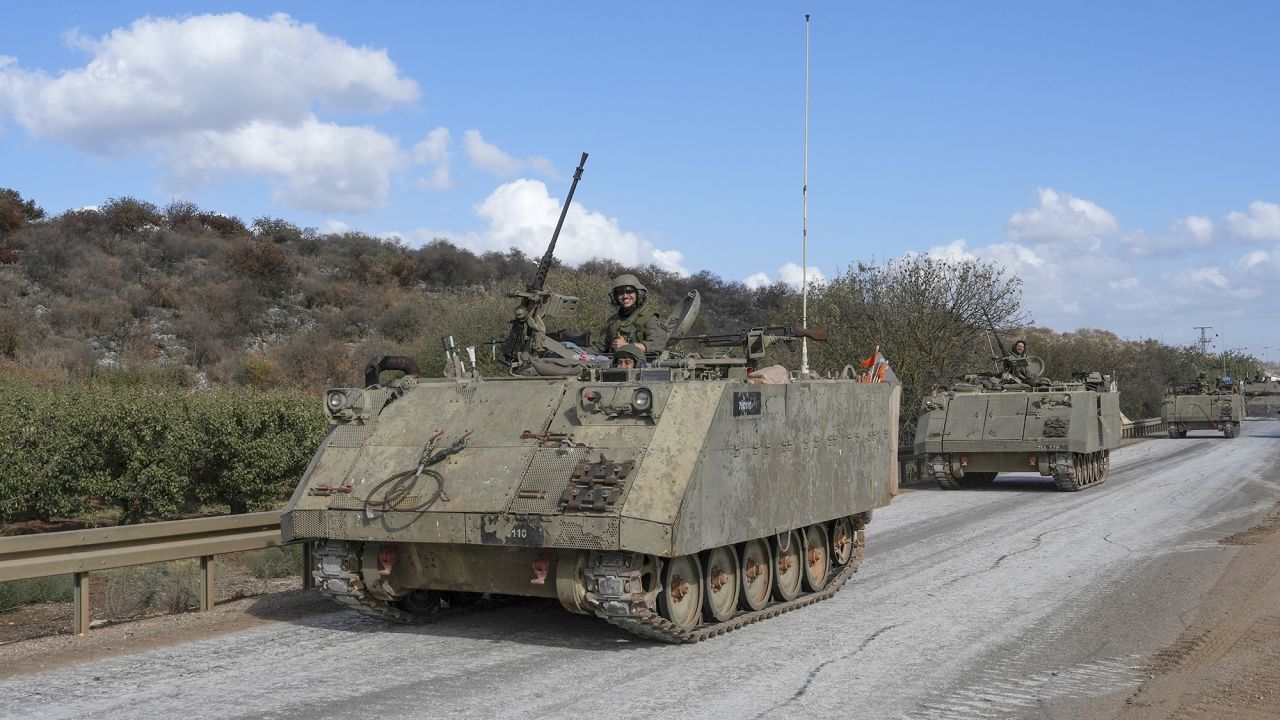
A convoy of Israeli army armoured personnel carriers moving on a road in northern Israel near the Israel-Lebanon border, on October 1.


A convoy of Israeli army armoured personnel carriers moving on a road in northern Israel near the Israel-Lebanon border, on October 1.
Baz Ratner/AP

The Israeli military is sending an additional division to participate in the ground war in southern Lebanon, it announced Wednesday.

The size of Israeli military units are classified, but a division typically consists of at least 10,000 troops.

The addition of such a large number of soldiers comes despite Israel’s claim that its operation in Lebanon is “limited, localized, targeted” –  a description it repeated today.

The Israel Defense Forces (IDF) has ordered Lebanese civilians in dozens of villages to leave their homes and move north of the Awali River, which is about 30 miles north of the border with Israel.

The military said the 36th Division of the IDF and additional forces were joining its operations targeting Iran-backed Hezbollah. The division includes soldiers from the Golani Brigade, 188th Armored Brigade and 6th Infantry Brigade, the IDF said. They are accompanied by the Israeli Air Force and the 282nd Artillery Brigade, it added.

The military last month moved the elite 98th division from Gaza to northern Israel.

The number of Israeli troops on the ground in southern Lebanon remains unclear following the military’s announcement Tuesday of an incursion across its northern border.

The Israeli military has staged some “sporadic raids” across the Lebanon-Israel border but its troops have not remained on Lebanese soil, a source from the UN Interim Forces in Lebanon said. The assessment that Israel has not yet launched a full-scale invasion was supported by two other high-level Lebanese security sources.

Israeli troops laid the groundwork for the incursion in recent days, ramping up airstrikes that have killed more than a thousand people, destroyed homes and displaced about 1 million in Lebanon.

Some context: Previous military operations initially declared by Israel to be limited in their goals have proved to be anything but. Examples include Israel’s years-long occupation of southern Lebanon that began in 1982 with the stated aim of a brief and limited mission to destroy the Palestinian Liberation Organization in the country.

More recently, Israel’s military declared a “limited” operation in Rafah, southern Gaza that has left the city in ruins.
 
A war involving Iran is a regional and existential threat to Pakistan and Pakistan must make sure that there is no regime change in Pakistan. The chessboard is getting more complicated and it is going to be a dirty war. Pakistan must open up supplies to Iran and ensure there is peace and stability in the region and Nazi colonialists are kept out who are working with India to undermine Pakistan's viability.

Per my observations for months since this conflict started, often when the Israeli nukes as an option against Iran come up, Pakistan's nukes come up. I know the followers of a certain political party in Pakistan are out to discredit the Pakistani military in this forum and seemingly uninformed foreign members of this forum have fallen for their propaganda, but I can assure you: Pakistan will NEVER betray the Palestinians and that the Pakistani military, politicians and the population is on the same page when it comes to Palestine.
But Pakistan has to be cautious because it has a long land border with a powerful enemy who wouldn't mind taking some territory from Pakistan in Kashmir in case of a regional war. That enemy would be duly assisted by Israel and even America. Plus Pakistan relies on trade with the West and the Western-block Arab countries. The Pakistani economy was already on the verge of collapse.
Anyway, this post was to the foreign members here who understandably don't know about the dynamics of the Pakistani internal situation and have been told lies by the followers of a certain political party who dominate this forum. I will stop at this.
 

How Iran's attack has shifted the dynamics of Israel's conflicts in the Middle East​

From CNN's Helen Regan

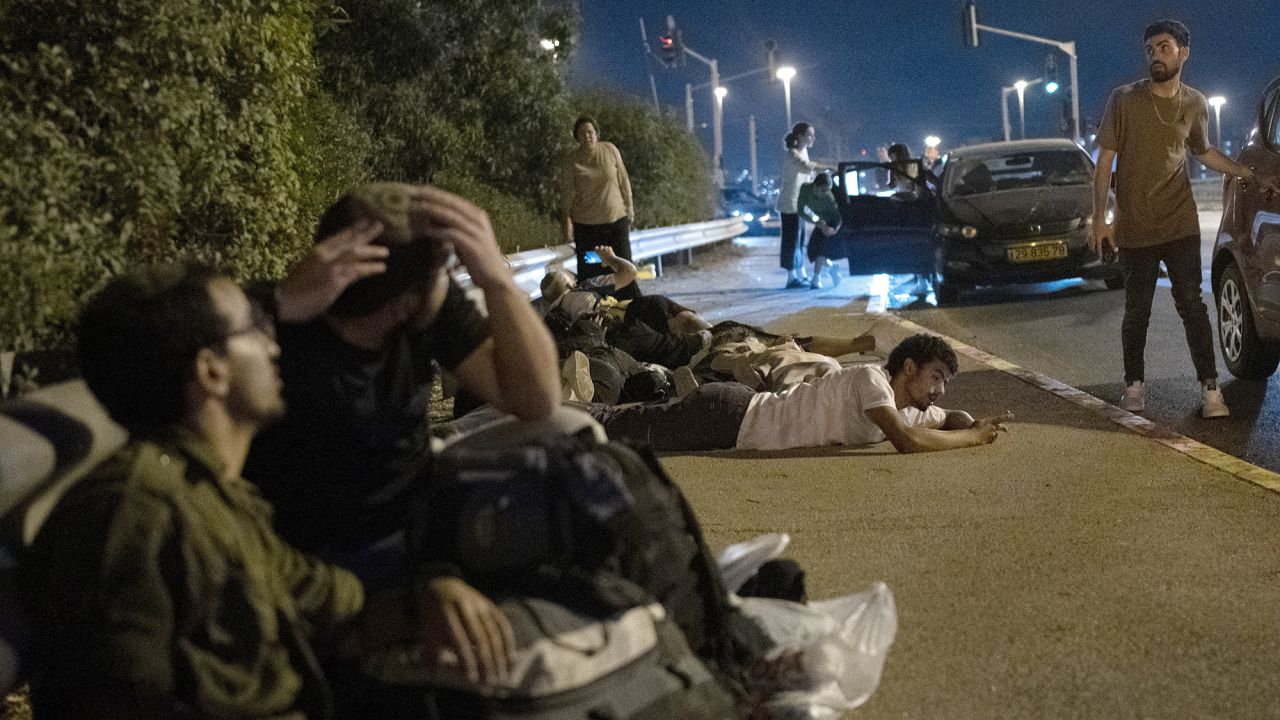
Israelis take cover as projectiles launched from Iran are being intercepted in the skies over in Rosh HaAyin, Israel, on October 1.


Israelis take cover as projectiles launched from Iran are being intercepted in the skies over in Rosh HaAyin, Israel, on October 1.
Maya Alleruzzo/AP

Iran’s attack has further changed the dynamics of Israel’s conflicts in the Middle East from a war involving Iran’s proxies toward a direct confrontation between two regional military powerhouses.

It’s the second time Iran has launched an aerial attack on Israel this year, but Tuesday’s barrage was of a different magnitude.

In April, Iran launched an unprecedented large-scale drone and missile attack at Israel – the first such direct assault on the country from its soil – in retaliation for a suspected Israeli strike on an Iranian diplomatic complex in Syria.

Iran gave 72 hours’ notice ahead of that attack, widely seen as designed to minimize casualties while maximizing spectacle with almost all projectiles intercepted. Israel responded with a limited strike on Iran.

This time, Israel learned about the threat just hours before.

Pentagon spokesperson Maj. Gen. Pat Ryder said Iran’s Tuesday barrage was twice as large as the April attack. It also included many more ballistic missiles, which are harder to shoot down, posing a real threat to Israeli citizens.

No place for diplomacy? Diplomacy has so far failed to broker a deal between Israel and Iran-backed Hezbollah. And the ceasefire and hostage negotiations between Iran-backed Hamas and Israel have floundered.

Until weeks ago, some senior US officials believed that Washington had helped to successfully thwart a large-scale Iranian attack against Israel, sources told CNN.

“I think Nasrallah was the final straw” for Iran, said Jonathan Panikoff, a former senior intelligence analyst specializing in the region.

With no off-ramp, and Israel appearing unwilling to compromise with its regional enemies, Tuesday’s attack is perhaps the clearest sign a much-feared regional war may be about to ignite.
 

Why Iran launched its largest-ever attack on Israel​

From CNN's Helen Regan

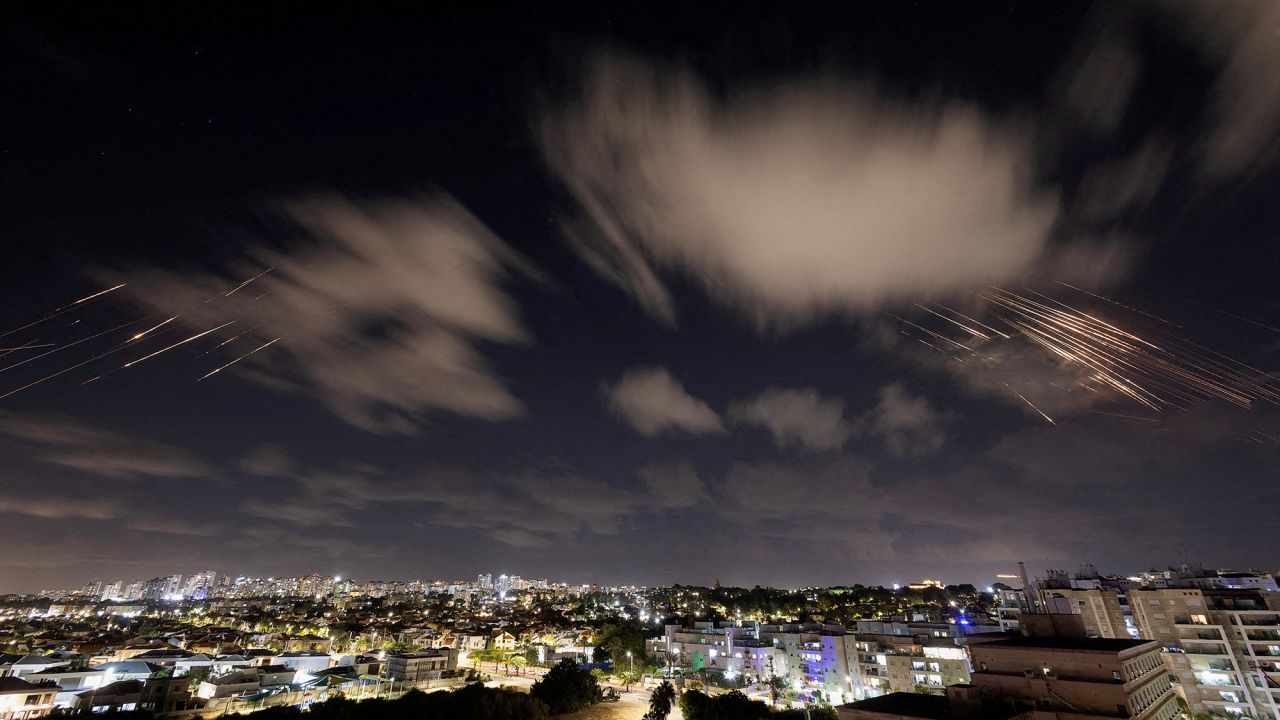
Israel's Iron Dome anti-missile system intercepts rockets after Iran fired a salvo of ballistic missiles, as seen from Ashkelon, Israel, on October 1.


Israel's Iron Dome anti-missile system intercepts rockets after Iran fired a salvo of ballistic missiles, as seen from Ashkelon, Israel, on October 1.
Amir Cohen/Reuters

Iran has described its Tuesday attack as a calibrated response to repeated escalations from Israel.

Iran’s Islamic Revolutionary Guard Corps said the missile strikes were in response to the killing of Hezbollah chief Hassan Nasrallah and other commanders, including Hamas political leader Ismail Haniyeh.

Along with Hamas, which attacked Israel on October 7, Hezbollah is part of Iran’s “Axis of Resistance” — an alliance of Islamist militias spanning Iraq, Syria, Lebanon, Gaza and Yemen. The proxies give Iran strategic depth against its enemies.

Following the assassination of Hamas’ most public figure after attending the inauguration of Iran’s new president in July, the world waited to see how Tehran would respond.

Then came Israel’s assassination of Nasrallah as it expanded its war with Hezbollah in Lebanon.

On Saturday, Israeli Prime Minister Benjamin Netanyahu gave a fiery speech directed at Iran, saying Israel was “changing the balance of power in the region” and that “there is no place in Iran or the Middle East that the long arm of Israel will not reach.”

Nasrallah’s death was necessary, he said, to returning thousands of residents to their homes along the Lebanon border displaced by Hezbollah rocket attacks, and to prevent the group from launching a large-scale attack on Israel.

US officials have long assessed that both Iran and senior Hezbollah leadership has wanted to avoid all-out war with Israel, even as both have exchanged fire.

But Iran has made clear that any response from Israel would result in further escalation. Iran’s President Masoud Pezeshkian said Tuesday’s operation was “only a portion of our power.”
 
To view this content we will need your consent to set third party cookies.
For more detailed information, see our cookies page.


Iran yesterday attack has not avoided a shit about Lebanon invasion.
 

Iran extends closure of airspace until Thursday morning​

From CNN’s Leila Gharagozlou

Iran will extend the closure of its airspace until Thursday morning, according to the semi-official outlet Mehr News on Wednesday.

“To maintain the safety of flights and conditions in the region, all flights across the country will be canceled until 5 am tomorrow,” Mehr reported, quoting a spokesperson of Iran’s Civil Aviation Organization.

The organization had announced late Tuesday that all flights nationwide would be canceled until Wednesday morning.
 

What are the missiles in Iran’s arsenal and how does Israel counter them?​


Analysis by Brad Lendon and Gianluca Mezzofiore, CNN

October 2, 2024


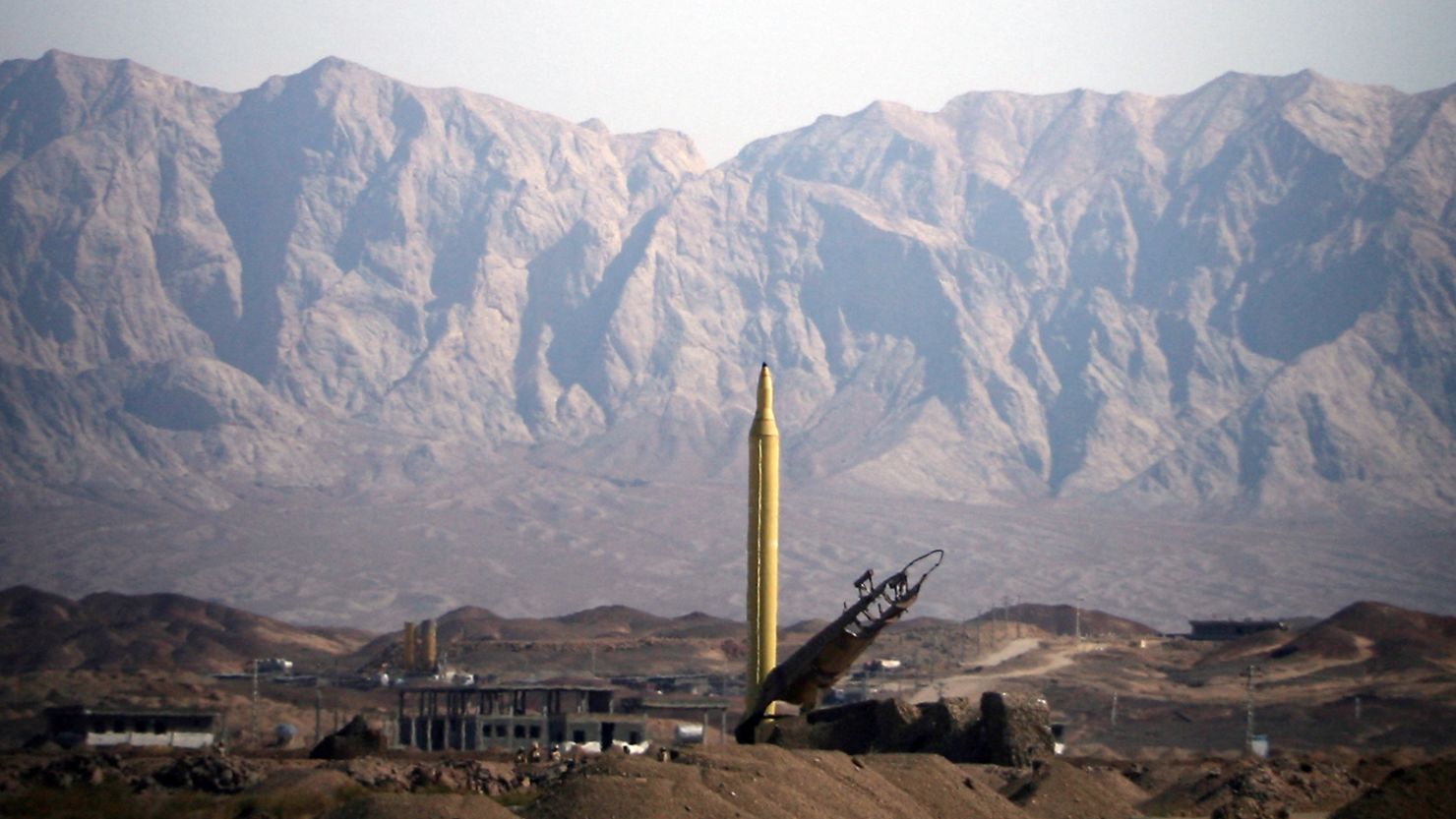
An Iranian Shahab-3 missile is seen before being tested from desert terrain at an unspecified location in Iran on September 28, 2009.


An Iranian Shahab-3 missile is seen before being tested from desert terrain at an unspecified location in Iran on September 28, 2009.
Shaiegan/FARS/AFP/Getty Images
CNN —

Iran has unleashed its largest ever attack on Israel, firing 180 ballistic missiles late Tuesday most of which were apparently intercepted by anti-missile defenses employed by Israel, the United States and Jordan, according to those countries’ governments.

The aerial assault, far more serious than a similar strike in April, has raised the stakes in what is already an extremely tense moment across the Middle East as a dangerous regional conflict spirals.

Here’s a look at Iran’s ballistic missile capabilities and the defensive systems employed by Israeli and other forces in the region.

Iran’s missiles​

Tehran has thousands of ballistic and cruise missiles with a variety of ranges, according to a 2021 report from the Missile Threat Project at the Center for Strategic and International Studies (CSIS).

Exact numbers for each type of missile are unknown. But US Air Force Gen. Kenneth McKenzie told Congress in 2023 that Iran had “over 3,000” ballistic missiles, according to a report this year from the Iran Watch website at the Wisconsin Project on Nuclear Arms Control.

Ballistic missiles’ trajectories carry them outside or near the limits of Earth’s atmosphere, before the warhead payload separates from the rocket that carried it aloft and plunges back into the atmosphere and onto its target.


Weapons experts who analyzed verified social media videos from the scene told CNN that Iran used variants of the Shahab-3 ballistic missile in the latest attack on Israel.

The Shahab-3 is the foundation for all Iran’s medium-range ballistic missiles using a liquid propellant, according to Patrick Senft, a research coordinator at Armament Research Services (ARES).

The Missile Threat Project says the Shahab-3 entered service in 2003, can carry a warhead of 760 to 1,200 kilograms (1,675 to 2,645 pounds) and can be fired from mobile launchers as well as silos.

Iran Watch says the newest variants of the Shahab-3, the Ghadr and Emad missiles, have accuracies of as close to 300 meters (almost 1,000 feet) of their intended targets.

Israeli soldiers work on tanks at a staging area in northern Israel near the Israel-Lebanon border, Tuesday, Oct. 1, 2024. (AP Photo/Baz Ratner)


Iranian media reported that Tehran used a new missile, the Fattah-1, in the attacks. Tehran describes the Fattah-1 as a “hypersonic” missile – meaning it travels at Mach 5, or five times the speed of sound (about 3,800 miles per hour, 6,100 kilometers per hour).

But analysts point out that almost all ballistic missiles reach hypersonic speed during their flights, especially as they dive towards their targets.

The term “hypersonic” is often used to refer to what are called hypersonic glide vehicles and hypersonic cruise missiles, highly advanced weapons that can maneuver at hypersonic speed inside Earth’s atmosphere. That makes such weapons extremely hard to shoot down.

Fattah-1 is neither of those, according to Fabian Hinz, a research fellow at the International Institute for Strategic Studies, who wrote on the subject last year.

Hinz says the Fattah-1 appears to have a warhead on a “maneuverable reentry vehicle,” which enables it to make adjustments to avoid missile defenses during a short portion of its dive to its target.

Still, this ability would be an improvement on Iran’s earlier missiles, Hinz says.

But analysts were skeptical that Iran would have used the new missile for the first time on Tuesday night.

“It’s one of their newest ballistic missiles, and they have a lot to lose from using it,” said Trevor Ball, a former senior explosive ordnance technician for the US Army.

“Israel would get an idea of its capabilities just from being used. There’s also the chance it could fail to function, giving Israel an even greater idea of its capabilities. They get free propaganda and risk nothing by saying it was used.”

Israel’s missile defenses​

Israel operates a range of systems to block attacks from everything from ballistic missiles with trajectories that take them out of the atmosphere to low-flying cruise missiles and rockets.

Much attention has been given to its highly effective Iron Dome system, which is used to combat incoming rockets and artillery weapons.

But the Iron Dome is the bottom layer of Israel’s missile defense and is not the system that would have been used to combat the ballistic missiles launched on Tuesday night, according to the country’s Missile Defense Organization (IMDO).

The next rung up the missile defense ladder is David’s Sling, which protects against short- and medium-range threats, according to the IMDO.


David’s Sling, a joint project of Israel’s RAFAEL Advanced Defense System and US defense giant Raytheon, uses Stunner and SkyCeptor kinetic hit-to-kill interceptors to take out targets as far as 186 miles away, according to the Missile Threat Project at the CSIS.

Above David’s Sling are Israel’s Arrow 2 and Arrow 3 systems, jointly developed with the United States.

The Arrow 2 uses fragmentation warheads to destroy incoming ballistic missiles in their terminal phase – as they dive toward their targets – in the upper atmosphere, according to the CSIS.

Some 180 ballistic missiles had been launched from Iran against Israel and intercepted in the sky across Israel on October 1, 2024.


Some 180 ballistic missiles had been launched from Iran against Israel and intercepted in the sky across Israel on October 1, 2024.
Matan Golan/SIPAPRE/AP

The Arrow 2 has a range of 56 miles and a maximum altitude of 32 miles, according to the Missile Defense Advocacy Alliance, which called the Arrow 2 an upgrade on the US Patriot missile defenses Israel once used in this role.

Meanwhile, the Arrow 3 uses hit-to-kill technology to intercept incoming ballistic missiles in space, before they reenter the atmosphere on their way to targets.

During Tuesday night’s attack, the US military said it fired at least 12 anti-missile munitions against the incoming Iranian missiles.

The US response came from the Navy guided-missile destroyers USS Cole and USS Bulkeley which were operating in the eastern Mediterranean Sea, Pentagon spokesperson Maj. Gen. Pat Ryder said.

The Pentagon did not specify the interceptors used, but the US destroyers are equipped with the Aegis ballistic missile defense system, with interceptor missiles that can strike and destroy incoming ballistic missiles in their mid-course or terminal phases.

Jordan’s air force also intercepted Iranian missiles on Tuesday night, a Jordanian official said, but no specifics were given.

During an Iranian attack on Israel in April, Israeli and US warplanes shot down a large number of the incoming Iranian munitions. But Iran carried out that attack largely with slower-moving drones, which were much easier intercepts for the fighter jets than the ballistic warheads falling vertically on targets in Israel.
 
Do the Hezbollah fighters have any man pads to bring down helicopters?
 
Hezbollah is shelling the border throughout the day. They're able to identify Israeli forces and direct strikes at them while they're trying to cross.

Israel has confirmed 8 KIA so far. It is probably up to 25-30 by end of night. Hezbollah has high quality mortars and is able to set up ambushes despite the villages on the border having been heavily damaged in strikes over the last 11 months.

To view this content we will need your consent to set third party cookies.
For more detailed information, see our cookies page.
 
Status
Not open for further replies.

Users who are viewing this thread

Country Watch Latest

Back
Top