Israel’s Genocide in Gaza | 2023- till present

Status
Not open for further replies.

Most weapon smuggling does not take place through the crossing Israel struck, Lebanese minister says


From CNN's Mitchell McCluskey


Lebanon’s Minister of Economy and Trade said most weapon smuggling does not take place through the Masnaa border crossing with Syria, which Israel struck on Thursday.

The Israel Defense Forces said it hit an “underground tunnel crossing” at that location to prevent weapons from being smuggled into Lebanon. Amin Salam told CNN’s Isa Soares on Friday that Lebanon intends to inspect the site after the rubble is cleared but that most smuggling takes place through illegal channels rather than the official entry point at Masnaa.

“Smuggling weapons into Lebanon or smuggling anything inside or outside Lebanon mostly is not done through this channel. Mostly it is done through illegal channels, illegal roads, in Lebanon that are not like this one,” he said.

The Masnaa border crossing lies in the Bekaa Valley on the Beirut-Damascus international highway, a major transport link for people and goods between Lebanon and Syria. Tens of thousands of people have used the highway to flee Israeli bombardment in recent days.
 

Hezbollah has yet to decide when and where to bury Nasrallah, source says​


From CNN's Tamara Qiblawi in Beirut


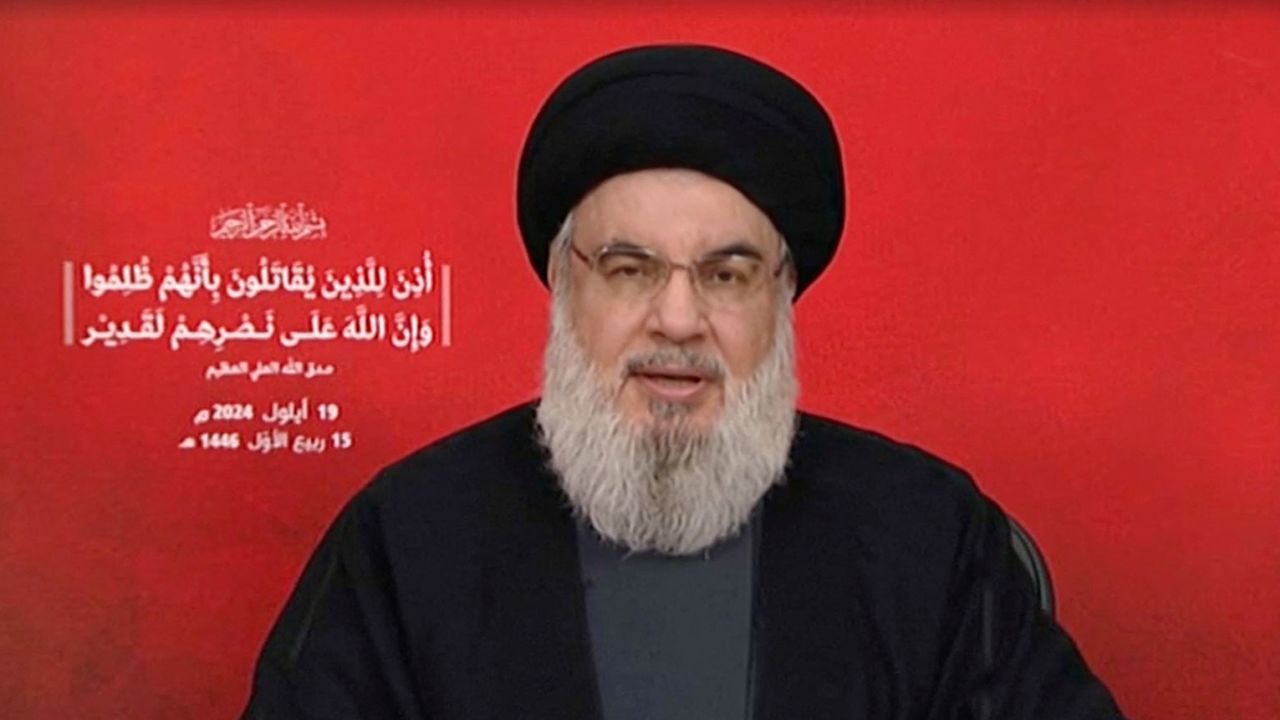
Hezbollah chief Hassan Nasrallah gives a televised address in Lebanon on September 19.


Hezbollah chief Hassan Nasrallah gives a televised address in Lebanon on September 19.

Al-Manar TV/Reuters

Israel’s assassination of Hezbollah chief Hassan Nasrallah last Friday has driven the Iran-backed group even deeper underground. A successor has not yet been named. And perhaps most unusually, a funeral — at least a public one — has not yet been held.

Why this matters:
According to Islamic norms, the dead must be laid to rest at the soonest opportunity, normally within 24 hours. That is especially true for Muslims slain by an enemy state. Questions swirled and reports emerged on Friday morning that the late leader had been buried in secret. But a source close to Hezbollah told CNN this was not true. “Nothing has been decided,” the source said, about the time and place of the burial.

Coupled with the lack of a clear successor, this has shrouded the group in more secrecy. For a week, Hezbollah’s public statements have been cursory at best. This strikes a sharp contrast with the Iran-backed Shia group’s practice of shoring up community support with public gatherings, and Nasrallah’s long and rousing speeches.
 
More background:
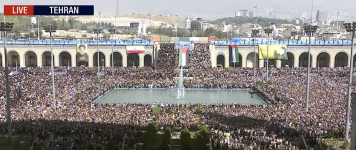
On Friday, Iran’s Supreme Leader Ayatollah Ali Khamenei commemorated Nasrallah in Friday prayers, which, in a rare move, he led. Yet there was no public gathering to mark this in Lebanon.

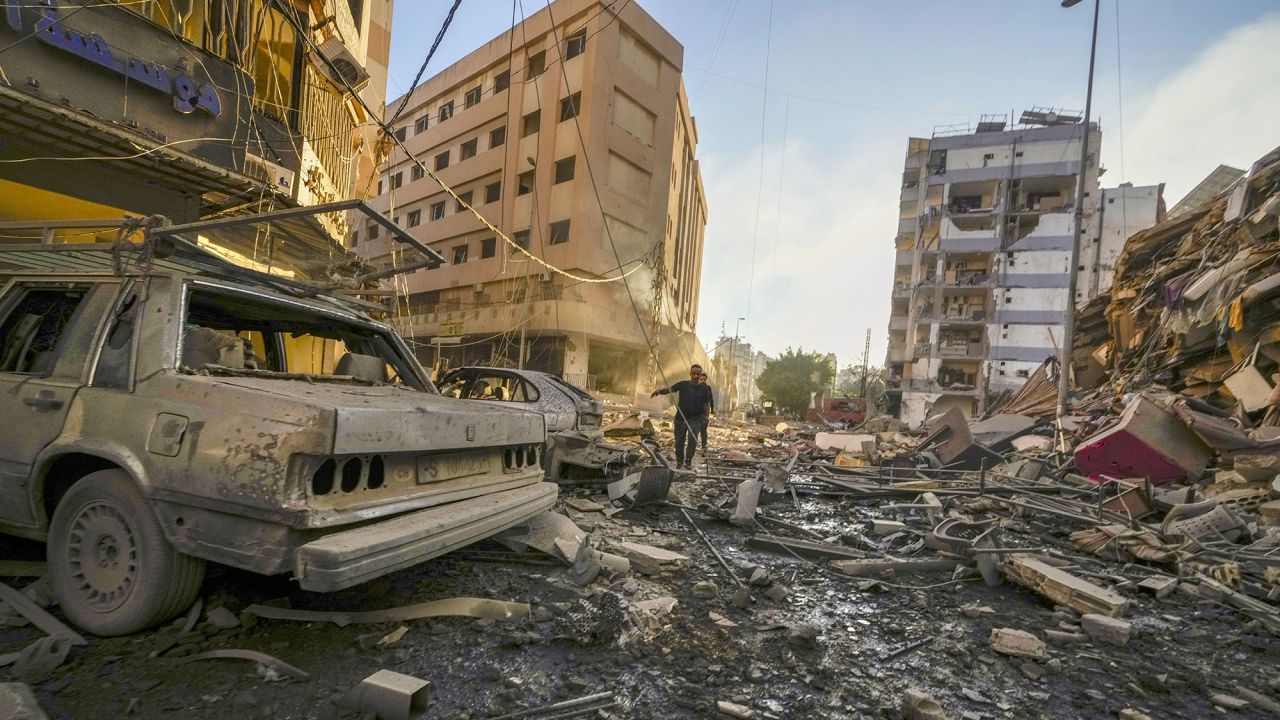
There are security reasons for that, as well as for the lack of a public funeral. Israel’s intensive bombing campaign has battered many Shia-majority neighborhoods and towns, so there is no conceivably safe place to hold it.

Israel’s airstrikes have decimated its command and control and have also killed a large number of civilians, according to the Ministry of Health, and displaced over a million. More than 100 children have been killed in Israeli strikes in the last 11 days alone, according to UNICEF.

Still, this all underscores the fact that this is a very different war. During the last all-out war with Israel in 2006, Nasrallah gave televised speeches nearly every day. The leadership is operating more clandestinely than ever before, after having been confronted by the most extensive Israeli infiltration of its ranks in its history.
 

Israel says it has killed about 250 Hezbollah fighters since ground operations in Lebanon began


From Tamar Michaelis, CNN's Jeremy Diamond and Pauline Lockwood


Residents run for cover following an Israeli airstrike in Beirut on Friday.


Residents run for cover following an Israeli airstrike in Beirut on Friday.
Hassan Ammar/AP

Israel’s military says it has killed “approximately 250” Hezbollah militants since launching a ground offensive in southern Lebanon earlier this week.

About 100 of the Iran-backed group’s fighters have been killed in the last 24 hours, the Israel Defense Forces said in a briefing Friday.

“What we have seen in these days of more intense fighting … I can tell you that alongside our casualties we’ve been able to inflict a serious blow to Hezbollah, to its senior level and to its tactical level commanders,” the IDF’s international spokesperson, Lt. Col. Nadav Shoshani, told reporters.

Israel has described its operations in southern Lebanon as “limited, localized and targeted.”

In response to a CNN question about the disparity between such statements and the large number of southern Lebanese villages being asked the evacuate, Shoshani said, “Sadly, Hezbollah has embedded widely and deeply into Lebanon.”
 
Looks as though you both want to live in your own false realities and attack me personally on top of it. That’s a coping mechanism.

That still doesn’t change the fact the attack was a failure, with minimal damage to Israeli infrastructure , and no effect on Israeli military operations.

From a military and deterrence standpoint, that’s a failure.
After more than 40 years of Islamic Revolution without being disturbed by Evil forces that statement talks frankly about the 4th dimension US and Israel are living. Really. I even doubt you can believe your own words.
 

Hashem Safieddine is rumored to be the next leader of Hezbollah. Here's what we know​


From CNN's Nadeen Ebrahim


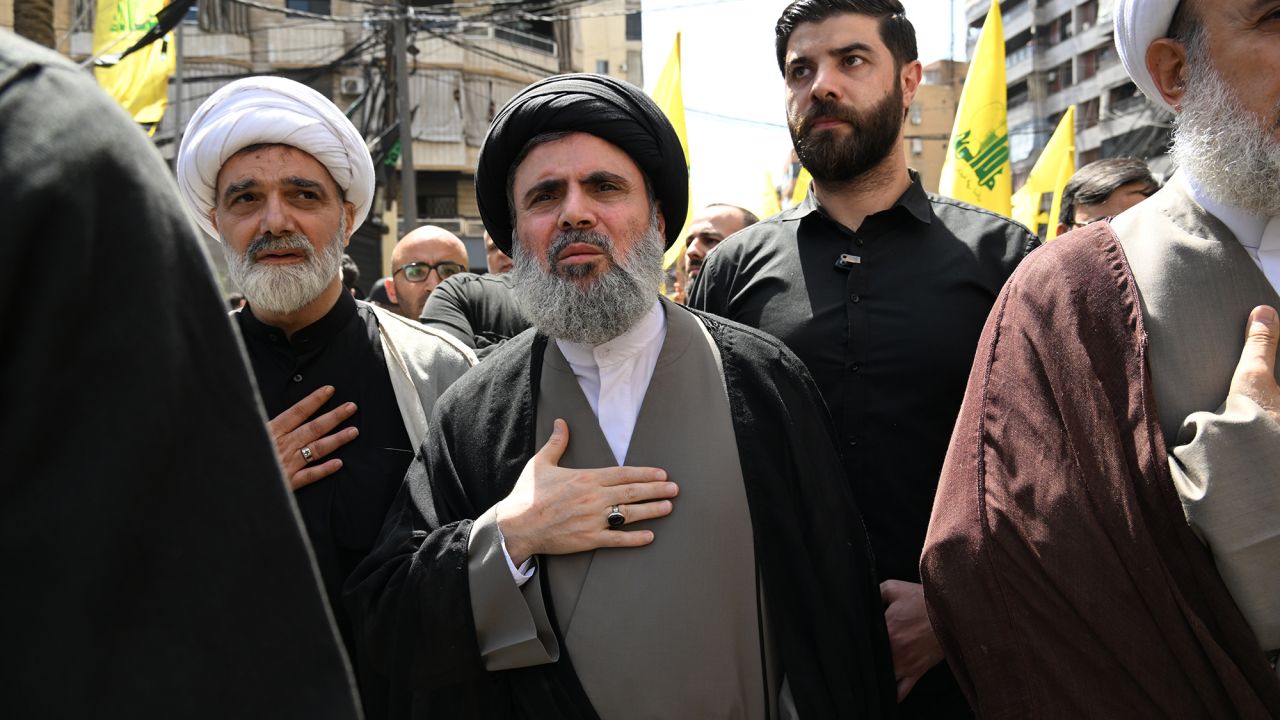
Hashem Safieddine, center, attends the funeral ceremony of Hezbollah military commander Mohamed Naim Nasser in Beirut, in July.


Hashem Safieddine, center, attends the funeral ceremony of Hezbollah military commander Mohamed Naim Nasser in Beirut, in July.

Houssam Shbaro/Anadolu/Getty Images

The fate of a possible successor to Hezbollah leader Hassan Nasrallah is unclear following an Israeli airstrike on Beirut.

An Israeli official told CNN that Hashem Safieddine was the target of the strike, but it is unclear if he was killed.

Safieddine is a maternal cousin of Nasrallah – the two studied in Iran together in the early 1980s. Just like Nasrallah, Safieddine is a staunch critic of Israel and the West, with deep alliances with the Iranian leadership.

Safieddine served as head of Hezbollah’s executive council and, until his predecessor’s death, was seen as one of the most likely heirs to the organization’s highest-ranking seat. The group has yet to name a successor to Nasrallah.
 

Who is Hashem Safieddine, rumored to be the next Hezbollah chief?​


By Nadeen Ebrahim, CNN
October 4, 2024


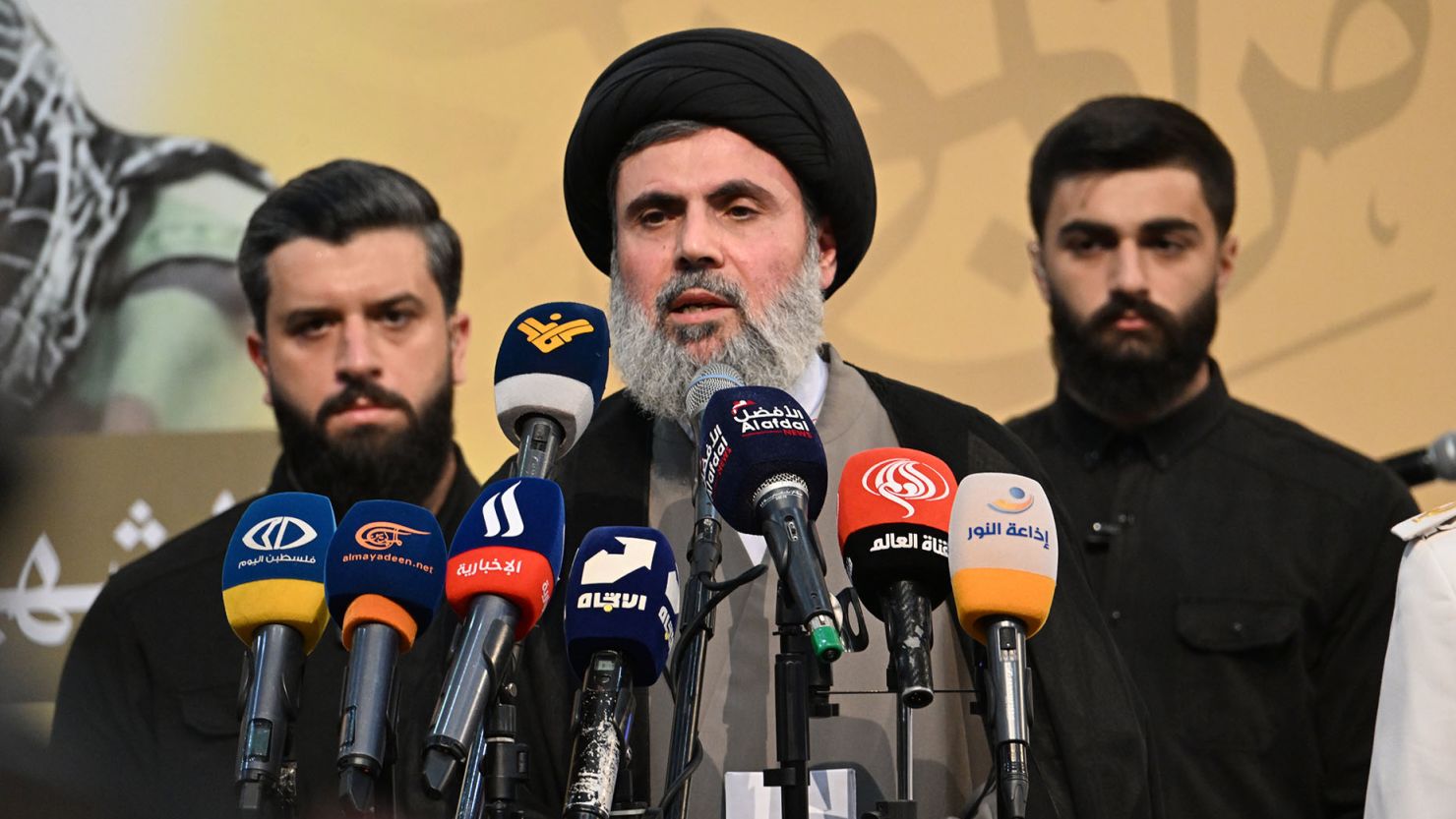
Hashem Safieddine speaking at a funeral earlier this year.


Hashem Safieddine speaking at a funeral earlier this year.

Houssam Shbaro/Anadolu/Getty Images


The fate of a possible successor to Hezbollah leader Hassan Nasrallah is unclear following an Israeli airstrike on Beirut.

An Israeli official told CNN that Hashem Safieddine was the target of the strike, but it is unclear if he was killed.

Safieddine is a maternal cousin of Nasrallah – the two studied in Iran together in the early 1980s. Just like Nasrallah, Safieddine is a staunch critic of Israel and the West, with deep alliances with the Iranian leadership.

Safieddine served as head of Hezbollah’s executive council and, until his predecessor’s death, was seen as one of the most likely heirs to the organization’s highest-ranking seat. The group has yet to name a successor to Nasrallah.

The executive council is one of five bodies that make up the Shura Council, which is the organization’s decision-making body. The executive council oversees political matters, as opposed to the Jihad Council which is the group’s military body, which Safieddine is a member of.

Safieddine has previously spoken of the “strong relationship” between Hezbollah and Iran’s Revolutionary Guard Corps (IRGC), and especially Iranian general Qasem Soleimani, who was killed in US airstrike at Baghdad airport in 2020. Safieddine’s son is married to Soleimani’s daughter.

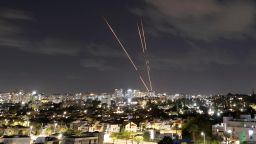
Israel's Iron Dome anti-missile system intercepts rockets after Iran fired a salvo of ballistic missiles, as seen from Ashkelon, Israel, on October 1, 2024.


The Shiite cleric was born in 1964 in the southern Lebanese village of Deir Qanoun En Nahr. Like the late Hezbollah leader, he wears the black turban signaling that he is a “Sayyid,” a Shiite honorific title denoting descent from Prophet Mohammed.

The 60-year-old cleric has had a visible presence across Hezbollah’s political stage, especially over the past year. Throughout the Gaza war, Safieddine would make statements denouncing Israel’s actions in the enclave and on his country’s southern border.
 
Nasrallah “started tailoring positions for him within a variety of different councils within Lebanese Hezbollah. Some of them were more opaque than others. They’ve had him come, go out and speak,” Phillip Smyth, an expert who studies Iran-backed Shiite militias, told Reuters.

Speaking at the funeral ceremony of one of the slain Hezbollah members in May, Safieddine boasted that his group is nonetheless strong and resilient, prioritizing – along with their Iranian allies – the Palestinian cause and the need to liberate the Palestinian people.
 
Following the back-to-back explosions that targeted Hezbollah pagers and walkie-talkies, Safieddine said that his organization “will not back down until the end.”

Saffiedine has long been a hawkish critic of US policy, which he sees as aiding and abetting Israel’s actions in Gaza and southern Lebanon.

In 2021, he accused Washington of “interfering” in Lebanese domestic politics, saying that “American tyranny” is “sabotaging” the region’s nations, citing Iraq and Afghanistan among examples.

The United States designated Hezbollah a foreign terrorist organization in 1997, and in 2017 designated Safieddine a foreign terrorist.
 

Gulf Arab states fear targeting of region’s oil facilities as war escalates, expert says​


From CNN’s Nadeen Ebrahim and Mostafa Salem


Oil producing Gulf Arab states are likely concerned about implications of an Israeli retaliation against Iran, especially if Israel targets Iran’s oil installations, a regional expert told CNN.

Such an attack would cause significant economic damage, threaten other oil facilities in the region, and create an ecological disaster, with oil potentially spilling into the Persian Gulf from damaged Iranian pipelines, said Hasan Alhasan, a senior fellow for Middle East Policy at the International Institute for Strategic Studies (IISS).

Concern of a wider war that could involve the targeting of the region’s oil facilities has already sparked a jolt in oil prices.

Iran has signaled in the past that if it can’t sell its oil, then no one else in the region can either, Alhasan said, raising questions about the safety of Gulf Arab oil installations if Iran’s are hit by Israel.

“There are real concerns about the first-order and second-order implications of such an Israeli attack,” he told CNN, noting that as long as Gulf states maintain a line of neutrality, Iran is unlikely to resurface past hostilities that directly target Gulf Arab states.
 
To view this content we will need your consent to set third party cookies.
For more detailed information, see our cookies page.

To view this content we will need your consent to set third party cookies.
For more detailed information, see our cookies page.
 
Status
Not open for further replies.

Users who are viewing this thread

Country Watch Latest

Back
Top