Navigation
Install the app
How to install the app on iOS
Follow along with the video below to see how to install our site as a web app on your home screen.
Note: This feature may not be available in some browsers.
More options
Style variation
You are using an out of date browser. It may not display this or other websites correctly.
You should upgrade or use an alternative browser.
You should upgrade or use an alternative browser.
J-15 - PLAN carrierborne fighter
- Thread starter Deino
- Start date
More options
Who Replied?




Hendarto
Registered Member

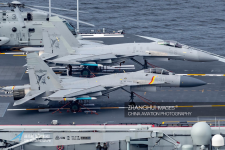
China Upgrades J-15t Carrier Jet for Catapult Launches on Next-Gen Carriers
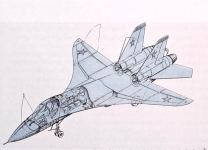
Chinese engineers have overhauled the J-15T carrier-based fighter with reinforced landing gear and a catapult tow bar, optimizing it for the electromagnetic catapults aboard the soon-to-be-commissioned Fujian aircraft carrier. Not only that, but J 15T also features better AESA radar, a more advanced missile, PL-15, and a greater use of carbon fiber, resulting in a higher takeoff weight and a more powerful engine, WS-10 B.So J 15 T is the real McCoy, that is why you see more and more J 15 T on all three carriers, replacing J 15, now relegated to training purposes

iblini
Trusted Member

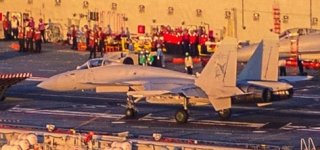
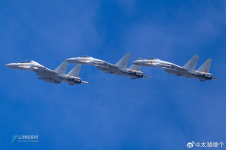
What a beauty, J-15T is much underestimated, it is no longer the hasty project J-15 anymore, largely overhauled and having one of if not the best sensor and avionic among all Chinese 4.5th gen jets.

Faithfulguy
Elite Member

Chinese People’s Liberation Army Navy J-15 carrier based fighter operating from the aircraft carrier Liaoning formed a radar lock on a Japanese F-15 fighter over international waters southeast of Okinawa Island on December 6. Japanese Defence Minister Shinjiro Koizumi quickly confirmed the incident, with the Japanese government issuing a protest through diplomatic and defence channels. This was the first time Japan publicly disclosed an incident in which a Chinese military aircraft directed its radar at a Japanese aircraft. The incident follows a significant rise in tensions between Tokyo and Beijing, after Japan’s new prime minister, Sanae Takaichi, threatened to intervene militarily in the ongoing conflict between the People’s Republic of China on the Chinese mainland, and the Republic of China based on Taiwan, which have for decades remained in a state of civil war.
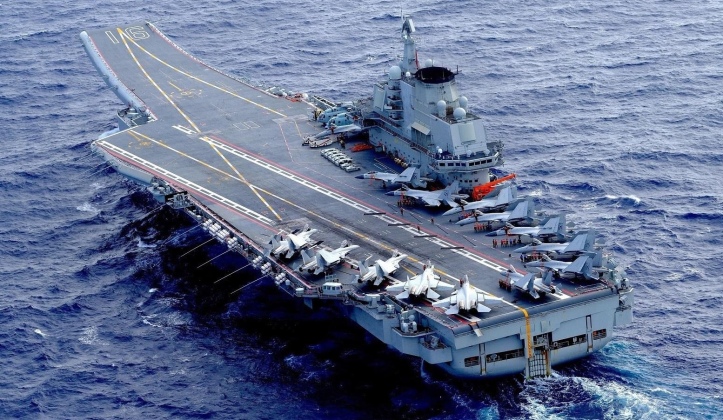
J-15B Fighters and J-15D Electronic Attack Jets on Chinese Carrier Liaoning
The Liaoning is one of three aircraft carries currently in service in the People’s Liberation Army Navy, and was confirmed to be sailing near Kubashima Island, west of Okinawa, on December 5. The following day the aircraft carrier passed between Okinawa and Miyakojima Island along with three destroyers, before proceeding into the Pacific Ocean. The Liaoning and its sister ship the Shandong were revealed in November 2024 to have significantly improved the capabilities of their air wings with the integration of new J-15B ‘4+ generation’ fighters and supporting J-15D electronic attack jets. The J-15B is far superior to the baseline J-15s that first joined the fleet in the early 2010s, with improvements including higher use of more advanced composite materials for a lighter and more durable airframe, use of a more advanced AESA radar, and integration of advanced stealth coatings, and use of some of the world's most sophisticated avionics and electronic warfare systems.
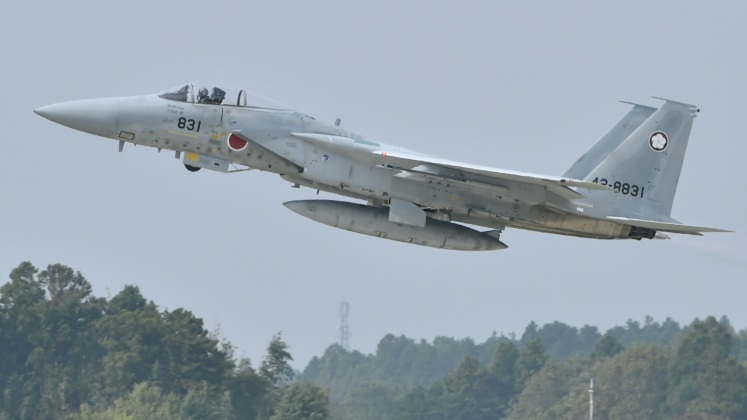
While the J-15B a close contender for the title of the world’s most capable pre-fifth generation fighter class, the F-15J by contrast is one of the oldest fourth generation fighter types still in service anywhere in the world. The fighters first entered service in 1981, and were based closely a design that first joined the U.S. Air Force six years prior in 1975. The Japanese fleet still largely relies on AIM-7 air-to-air missiles for beyond visual range combat, which are considered close to three decades beyond the Chinese PL-15 and PL-16 that equip the J-15B in their sophistication. The Japanese aircraft not only carry much smaller radars, but these rely on mechanically scanned arrays that have long since been considered obsolete, and are relatively straightforward to jam for modern electronic warfare suites.
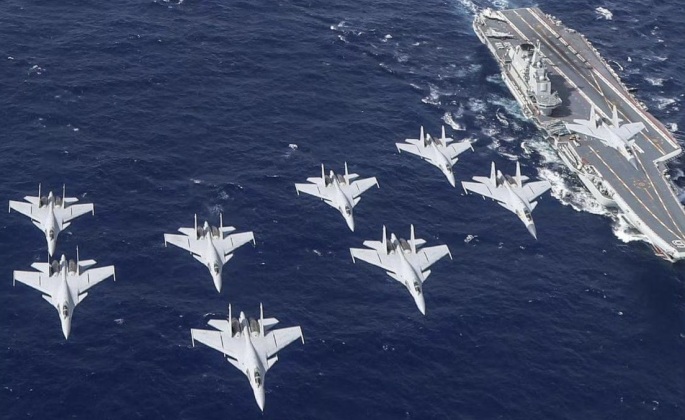
J-15, J-15B and J-15D Fighters Operating From the Carriers Liaoning and Shandong
The outcome of a clash between Chinese J-15B and Japanese F-15J fighters over the Pacific would be highly one sided, although Japan could potentially seek to counterbalance Chinese advantages by deploying E-767 Airborne Warning and Control Systems to bridge the discrepancy in situations awareness. Although China’s new aircraft carrier the Fujian deploys KJ-600 Airborne Warning and Control Systems, the air wing of the Liaoning does not. Nevertheless, the age of the E-767, which uses a radar from the 1980s, seriously limits the degree of support it can provide, particularly compared to modern systems such as the E-7 and Chinese KJ-500. The system is expected to be relatively straightforward to evade should the Chinese fighters be deployed with support from J-15D electronic attack jets, which were developed specifically to conceal fighter units from radar detection in much the same way as the latest variants of the U.S. Navy E/A-18G.
J-15B Fighters and J-15D Electronic Attack Jets on Chinese Carrier Liaoning
The Liaoning is one of three aircraft carries currently in service in the People’s Liberation Army Navy, and was confirmed to be sailing near Kubashima Island, west of Okinawa, on December 5. The following day the aircraft carrier passed between Okinawa and Miyakojima Island along with three destroyers, before proceeding into the Pacific Ocean. The Liaoning and its sister ship the Shandong were revealed in November 2024 to have significantly improved the capabilities of their air wings with the integration of new J-15B ‘4+ generation’ fighters and supporting J-15D electronic attack jets. The J-15B is far superior to the baseline J-15s that first joined the fleet in the early 2010s, with improvements including higher use of more advanced composite materials for a lighter and more durable airframe, use of a more advanced AESA radar, and integration of advanced stealth coatings, and use of some of the world's most sophisticated avionics and electronic warfare systems.
While the J-15B a close contender for the title of the world’s most capable pre-fifth generation fighter class, the F-15J by contrast is one of the oldest fourth generation fighter types still in service anywhere in the world. The fighters first entered service in 1981, and were based closely a design that first joined the U.S. Air Force six years prior in 1975. The Japanese fleet still largely relies on AIM-7 air-to-air missiles for beyond visual range combat, which are considered close to three decades beyond the Chinese PL-15 and PL-16 that equip the J-15B in their sophistication. The Japanese aircraft not only carry much smaller radars, but these rely on mechanically scanned arrays that have long since been considered obsolete, and are relatively straightforward to jam for modern electronic warfare suites.
J-15, J-15B and J-15D Fighters Operating From the Carriers Liaoning and Shandong
The outcome of a clash between Chinese J-15B and Japanese F-15J fighters over the Pacific would be highly one sided, although Japan could potentially seek to counterbalance Chinese advantages by deploying E-767 Airborne Warning and Control Systems to bridge the discrepancy in situations awareness. Although China’s new aircraft carrier the Fujian deploys KJ-600 Airborne Warning and Control Systems, the air wing of the Liaoning does not. Nevertheless, the age of the E-767, which uses a radar from the 1980s, seriously limits the degree of support it can provide, particularly compared to modern systems such as the E-7 and Chinese KJ-500. The system is expected to be relatively straightforward to evade should the Chinese fighters be deployed with support from J-15D electronic attack jets, which were developed specifically to conceal fighter units from radar detection in much the same way as the latest variants of the U.S. Navy E/A-18G.


SolarWarden
Trusted Member
Oh goodie we now have EM frequency J-15's use to lock on aircraft.
Pakistanithinktank
Registered Member
its too bad they didn't shoot the japanese jet down, that would've really upped the ante in the region.
Nevertheless, a lesson for everyone in the region, DO NOT mess with China.
China will never shot-down Japanese fighter jet during peace time. Chinese will not play aggressive role.

kankan326
Registered Member
Reminds me after India-Pakistan figher jets war, India said they have Chinese PL-15 air-to-air missile.Oh goodie we now have EM frequency J-15's use to lock on aircraft.

东风夜放花千树
Registered Member
This is just a warning. China is training together with Pakistan. During the May war, Pakistan shot down Indian aircraft, and the Indian planes received no lock-on warning. This proves that if the Chinese military wanted to shoot down Japanese planes, the Japanese planes would not detect being targeted. The Chinese military is conducting training, and the training locations have already been announced. If Japanese planes fly into the warning zones to spy on the Chinese military exercises, it is a dangerous action.
东风夜放花千树
Registered Member
That's right. This American friend may not know, there is a technology called electronic frequency hopping and a tactic called A shoots, B guides. It's impossible to determine whether the Japanese plane was locked onto by a J-15. What use is it to obtain the electromagnetic frequency of a J-15? By the time you realize you are being locked onto, you might have already been shot down. The only function is that the pilot knows they were shot down by a J-15.Reminds me after India-Pakistan figher jets war, India said they have Chinese PL-15 air-to-air missile.


The Chinese most likely use the same frequency band as other: 8-12 GHz (3.75-2.5cm). That’s why the Japanese pilot knows when his jet is locked on.Oh goodie we now have EM frequency J-15's use to lock on aircraft.

- Thread starter
- #180
Chinese People’s Liberation Army Navy J-15 carrier based fighter operating from the aircraft carrier Liaoning formed a radar lock on a Japanese F-15 fighter over international waters southeast of Okinawa Island on December 6. Japanese Defence Minister Shinjiro Koizumi quickly confirmed the incident, with the Japanese government issuing a protest through diplomatic and defence channels. This was the first time Japan publicly disclosed an incident in which a Chinese military aircraft directed its radar at a Japanese aircraft. The incident follows a significant rise in tensions between Tokyo and Beijing, after Japan’s new prime minister, Sanae Takaichi, threatened to intervene militarily in the ongoing conflict between the People’s Republic of China on the Chinese mainland, and the Republic of China based on Taiwan, which have for decades remained in a state of civil war.
J-15B Fighters and J-15D Electronic Attack Jets on Chinese Carrier Liaoning
The Liaoning is one of three aircraft carries currently in service in the People’s Liberation Army Navy, and was confirmed to be sailing near Kubashima Island, west of Okinawa, on December 5. The following day the aircraft carrier passed between Okinawa and Miyakojima Island along with three destroyers, before proceeding into the Pacific Ocean. The Liaoning and its sister ship the Shandong were revealed in November 2024 to have significantly improved the capabilities of their air wings with the integration of new J-15B ‘4+ generation’ fighters and supporting J-15D electronic attack jets. The J-15B is far superior to the baseline J-15s that first joined the fleet in the early 2010s, with improvements including higher use of more advanced composite materials for a lighter and more durable airframe, use of a more advanced AESA radar, and integration of advanced stealth coatings, and use of some of the world's most sophisticated avionics and electronic warfare systems.
While the J-15B a close contender for the title of the world’s most capable pre-fifth generation fighter class, the F-15J by contrast is one of the oldest fourth generation fighter types still in service anywhere in the world. The fighters first entered service in 1981, and were based closely a design that first joined the U.S. Air Force six years prior in 1975. The Japanese fleet still largely relies on AIM-7 air-to-air missiles for beyond visual range combat, which are considered close to three decades beyond the Chinese PL-15 and PL-16 that equip the J-15B in their sophistication. The Japanese aircraft not only carry much smaller radars, but these rely on mechanically scanned arrays that have long since been considered obsolete, and are relatively straightforward to jam for modern electronic warfare suites.
J-15, J-15B and J-15D Fighters Operating From the Carriers Liaoning and Shandong
The outcome of a clash between Chinese J-15B and Japanese F-15J fighters over the Pacific would be highly one sided, although Japan could potentially seek to counterbalance Chinese advantages by deploying E-767 Airborne Warning and Control Systems to bridge the discrepancy in situations awareness. Although China’s new aircraft carrier the Fujian deploys KJ-600 Airborne Warning and Control Systems, the air wing of the Liaoning does not. Nevertheless, the age of the E-767, which uses a radar from the 1980s, seriously limits the degree of support it can provide, particularly compared to modern systems such as the E-7 and Chinese KJ-500. The system is expected to be relatively straightforward to evade should the Chinese fighters be deployed with support from J-15D electronic attack jets, which were developed specifically to conceal fighter units from radar detection in much the same way as the latest variants of the U.S. Navy E/A-18G.
MilitaryWatchMagazine is a shitty site, pure Click-bait and Even Basic Facts are wrong
Users who are viewing this thread
Total: 15 (members: 4, guests: 11)


