China, South Korea protest Japanese ministers' visits to controversial Yasukuni Shrine
Anadolu Agency
Published August 15,2026 04:47 PM
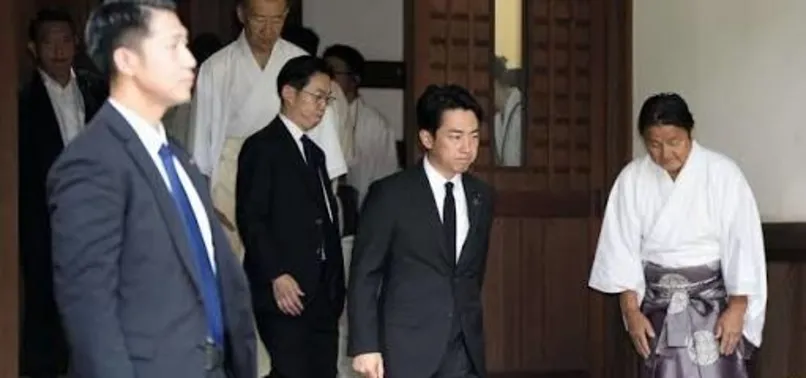
China and South Korea on Saturday protested visits by Japanese ministers and a ritual offering by Prime Minister Sanae Takaichi to Tokyo's controversial Yasukuni Shrine, which honors Japan's war dead, including convicted World War II war criminals.
A Chinese Foreign Ministry spokesperson said Beijing "strongly deplores" Japan's latest moves related to the shrine and had lodged "serious protests" with Tokyo, the state-run Global Times reported.
"The Yasukuni war shrine is a spiritual tool and symbol of Japanese militarism," the spokesperson said, noting that it honors 14 Class-A war criminals convicted after World War II.
"No pretext whatsoever can hide the Japanese politicians' true intention which is to change the verdict on the war criminals, cover up Japan's war crimes, distort the historical facts, and pave the way for accelerating remilitarization," the statement said.
Beijing called the actions "an affront to historical justice, a challenge to the foundational norms of civilization, and a provocation against the postwar international order," adding that such behavior has been rejected by the overwhelming majority of the international community.
South Korea also denounced the Japanese ministers' visits to the shrine and urged Tokyo to face its history and show remorse to develop bilateral relations based on mutual trust, according to Yonhap News.
"The government cannot but deplore the anachronistic and historically oblivious acts of responsible Japanese leaders who have once again made ritual offerings or paid visits to the Yasukuni Shrine, which glorifies Japan's past wars of aggression and honors convicted war criminals," the South Korean Foreign Ministry said.
The statements came after Japanese Defense Minister Shinjiro Koizumi visited Yasukuni on Saturday, marking the 81st anniversary of the end of World War II. Takaichi did not visit the shrine but sent a ritual offering.
Koizumi was joined by Economic Security Minister Kimi Onoda and other Cabinet members, according to Kyodo News.
Takaichi pledges peace but makes no reference to wartime 'remorse'
Marking the 81st anniversary of Japan's surrender in World War II, Takaichi pledged to uphold peace but made no reference to Japan's wartime "remorse" in her speech.
Emperor Naruhito and Empress Masako joined Takaichi and bereaved families at a government-sponsored memorial in Tokyo, attended by about 4,180 people, to mourn approximately 3.1 million Japanese military personnel and civilians who died in the war.
Takaichi, who took office last October, said Japan had consistently followed the path of a peace-loving nation and worked for global peace and prosperity.
Her remarks differed from those of her predecessor, Shigeru Ishiba, who last year explicitly expressed Japan's "remorse" over the war and pledged to renounce war, according to the report.
The Yasukuni Shrine was built in 1869 by Emperor Meiji and dedicated to Japanese soldiers who died in wars since the Meiji Restoration. It now honors about 2.5 million war dead, including 14 convicted Class-A war criminals from World War II.
The shrine has long been a source of diplomatic tension between Japan and its neighbors, particularly South Korea and China, which view visits by Japanese leaders as a sign of Tokyo's failure to fully acknowledge its wartime past.
Japan colonized the Korean Peninsula before World War II and launched a military invasion of China.
Conservative Japanese politicians have faced criticism for allegedly downplaying previous government statements of remorse.
China, South Korea protest Japanese ministers visits to controversial Yasukuni Shrine

www.anews.com.tr