
K2RULEZ
Elite Member


Delivery certainty, lifecycle costs and supply-chain resilience are sharpening the JF-17–Tejas rivalry, with consequences for Pakistan, China and India’s defence export ambitions.
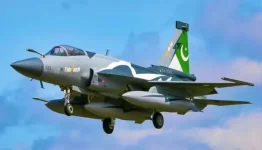
The accelerating divergence between JF-17 Thunder export momentum and HAL Tejas stagnation is reshaping procurement calculations across budget-constrained air forces, where immediate operational readiness now outweighs theoretical performance advantages in increasingly volatile regional security environments.
Senior defence procurement officials evaluating lightweight multirole platforms are increasingly prioritising delivery certainty, lifecycle affordability, and sanction resilience, with multiple reported export contracts and negotiations reinforcing the JF-17’s positioning as a deployable capability rather than a developmental risk.
This structural shift in buyer psychology—combined with production asymmetry and supply chain reliability concerns—has elevated the JF-17 from a niche joint venture into a strategically disruptive export platform, while the Tejas continues to struggle converting technical promise into market credibility.
This divergence is being driven less by abstract platform potential than by the hard arithmetic of fleet recapitalisation, where air forces confronting ageing combat inventories cannot align procurement strategies with programmes still constrained by industrial bottlenecks and delayed induction schedules.
For prospective buyers, the central issue is not whether the Tejas can eventually mature into a highly competitive export fighter, but whether it can be delivered at scale, supported reliably, and sustained without the uncertainty that now shadows its production pipeline.
The JF-17 benefits from a market position shaped by serial output, integrated weapons availability, and a lower-risk acquisition model that allows governments to convert procurement intent into operational capability without enduring prolonged developmental or logistical exposure.
By contrast, the Tejas remains burdened by the perception that its export proposition is still subordinate to domestic force-generation pressures, a reality that weakens confidence among foreign customers seeking immediate force posture reinforcement rather than participation in a maturing aerospace project.
In export markets where affordability, delivery speed, and strategic autonomy increasingly determine purchasing behaviour, the JF-17’s advantage lies in having aligned industrial execution with buyer urgency, while the Tejas continues to ask the market for patience it may no longer be willing to give.
Production Timelines Define Export Credibility
The JF-17 programme achieved early operational maturity through a China-Pakistan co-development model that prioritised serial production from inception, enabling consistent output exceeding 20 aircraft annually and establishing a fleet base of more than 140 units across multiple operational blocks.
By contrast, the Tejas programme experienced prolonged development cycles driven by sanctions exposure, iterative design modifications, and technological bottlenecks, resulting in limited delivery of approximately 38 Mk1 aircraft by early 2026 and constrained Mk1A rollout due to engine supply delays.
This production disparity directly influences export credibility because prospective buyers interpret sustained output as evidence of industrial reliability, while delayed delivery timelines signal programme risk, particularly for air forces requiring rapid fleet replacement to maintain operational readiness.
The JF-17’s dual production ecosystem—spanning Pakistan Aeronautical Complex and Chinese industrial capacity—enables scalable manufacturing flexibility, allowing rapid fulfilment of export orders without compromising domestic fleet expansion or operational tempo.
In contrast, Tejas production remains constrained by Hindustan Aeronautics Limited’s limited throughput and dependency on foreign engine supply chains, which introduces external vulnerabilities that complicate export assurance and delivery predictability.
Export customers assessing procurement timelines therefore perceive the JF-17 as a “ready-now” capability, whereas the Tejas is frequently categorised as a “future-ready” platform, fundamentally altering procurement decision matrices in time-sensitive defence environments.
This divergence is reinforced by visible delivery performance, where JF-17 exports to Myanmar, Nigeria, and Azerbaijan have progressed within defined timelines, while Tejas export discussions remain unconverted due to concerns over production backlog and delayed induction within the Indian Air Force itself.
The cumulative effect is a structural credibility gap, where industrial execution—not aerodynamic performance—becomes the decisive factor shaping global procurement outcomes in the lightweight fighter segment.
Cost Architecture and Lifecycle
Economics Drive Market Preference
The JF-17’s export success is underpinned by a pricing architecture that aligns with the fiscal constraints of developing air forces, offering flyaway costs between USD25–40 million (RM95–152 million) and complete packages reaching USD30–55 million (RM114–209 million) per aircraft.
This pricing strategy is reinforced by bundled support ecosystems—including training aircraft, maintenance infrastructure, and munitions—which reduce total ownership complexity and enable buyers to field operational capability without extensive supplementary procurement.
By comparison, the Tejas Mk1A’s cost structure, estimated between USD39–52 million (RM148–198 million), reflects higher research and development amortisation and lower production scale, increasing entry barriers for cost-sensitive buyers seeking immediate operational value.
The JF-17’s lower operating costs—estimated between USD3,000–5,000 (RM11,400–19,000) per flight hour—further enhance its attractiveness by reducing long-term budgetary strain, particularly for air forces operating within constrained defence expenditure frameworks.
Tejas, while designed for long-term efficiency through advanced composites and indigenous systems, faces early-stage serviceability challenges and higher initial integration costs, which introduce operational uncertainty for first-time export customers.
This economic asymmetry is critical because procurement decisions increasingly prioritise lifecycle affordability over peak performance metrics, especially among nations balancing defence modernisation with broader fiscal pressures.
The Azerbaijan deal—valued at approximately USD4.6 billion (RM17.48 billion) for 40 JF-17 Block 3 aircraft—illustrates how integrated packages deliver perceived value even at higher per-unit averages when training, weapons, and support are included.
Tejas, lacking comparable export contracts, has yet to demonstrate equivalent cost-to-capability ratios in real-world deals, limiting its ability to establish pricing credibility in competitive international tenders.
Consequently, cost leadership—combined with turnkey delivery—positions the JF-17 as a financially viable solution in a segment where affordability remains the dominant procurement driver.
Supply Chain Resilience and Sanction Immunity Shape Strategic Appeal
The JF-17’s reliance on Chinese and Russian-origin components provides a sanction-resistant supply chain architecture that enables uninterrupted production, export, and sustainment even in politically sensitive procurement environments.
This structural independence from Western export control regimes allows buyer nations to avoid constraints associated with International Traffic in Arms Regulations (ITAR), which can restrict usage, upgrades, and re-export permissions.
In contrast, the Tejas programme’s dependence on U.S.-supplied GE F404 engines and Israeli-origin subsystems introduces geopolitical exposure, where export approvals and supply continuity are subject to external political considerations.
These dependencies create perceived risk for potential buyers, particularly those seeking strategic autonomy or operating within regions where Western sanctions or export restrictions could disrupt operational readiness.
The JF-17’s supply chain model therefore aligns with non-aligned and developing nations that prioritise sovereign control over defence assets, reinforcing its appeal in regions such as Africa, the Middle East, and Southeast Asia.
Engine supply reliability further differentiates the platforms, as delays in GE engine deliveries have directly impacted Tejas production schedules, while JF-17 engine sourcing has remained comparatively stable.
This reliability translates into operational assurance, where buyers can confidently plan fleet induction timelines without exposure to external supply disruptions.
The geopolitical neutrality embedded in the JF-17’s supply chain effectively transforms it into a “low-risk acquisition platform,” a critical factor in procurement decisions where political volatility intersects with defence planning.
As a result, sanction immunity becomes a strategic advantage rather than a secondary consideration, amplifying the JF-17’s competitiveness in politically complex procurement environments.
Operational Maturity and Combat Readiness Influence Buyer Confidence
The JF-17 Block 3 configuration delivers a fully integrated 4.5-generation capability set, including AESA radar, helmet-mounted display systems, electronic warfare suites, and compatibility with long-range beyond-visual-range missiles such as the PL-15E.
This integrated capability is already operational within the Pakistan Air Force, providing demonstrable evidence of system maturity, mission readiness, and real-world deployment capability that resonates with export customers.
Tejas Mk1A, while technologically advanced on paper, remains in early deployment phases with limited operational data, reducing its perceived reliability in high-threat operational environments.
The JF-17’s ability to integrate long-range missile systems into a fully operational kill chain enhances its deterrence value, particularly for air forces seeking credible beyond-visual-range engagement capability without extensive integration delays.
In contrast, Tejas reliance on evolving missile ecosystems—such as Derby and Astra—introduces uncertainty regarding full-spectrum operational integration, particularly for export customers evaluating immediate combat readiness.
Maintenance architecture further reinforces JF-17’s operational appeal, as its design emphasises simplicity, ease of access, and compatibility with limited technical infrastructure, reducing maintenance downtime and increasing sortie generation rates.
Tejas, with its advanced materials and systems, requires more sophisticated maintenance ecosystems, potentially increasing logistical complexity for buyers with limited technical capacity.
Operational maturity is therefore not defined solely by platform capability but by the ability to sustain consistent mission readiness under varied operational conditions.
The JF-17’s proven service record, combined with continuous upgrades across production blocks, provides a level of confidence that developmental platforms cannot yet match.
This confidence directly translates into procurement decisions, where buyers prioritise platforms that have demonstrated operational reliability over those still undergoing capability maturation.
Export Strategy, Diplomacy, and Market Positioning Drive Momentum
The JF-17’s export success is reinforced by coordinated Pakistan-China diplomatic engagement, which aligns defence sales with broader strategic partnerships across regions including Africa, the Middle East, and Southeast Asia.
Confirmed exports to Myanmar, Nigeria, and Azerbaijan—alongside reported deals with Libya—demonstrate a consistent pattern of market penetration supported by flexible financing, political alignment, and integrated defence cooperation frameworks.
Ongoing interest from countries such as Bangladesh, Saudi Arabia, Indonesia, Iraq, and Sudan indicates expanding demand driven by the platform’s affordability, availability, and geopolitical flexibility.
Tejas export efforts, while targeting similar regions, remain constrained by domestic production priorities and the absence of operational export precedents, limiting its ability to build momentum in competitive markets.
The JF-17’s success is further amplified by its positioning as a “complete solution,” where aircraft, training, weapons, and maintenance support are delivered as a unified package, reducing procurement complexity for buyers.
Tejas, by comparison, offers long-term technological sovereignty but lacks the immediate operational ecosystem that many buyers prioritise in urgent procurement scenarios.
Buyer psychology plays a decisive role, as developing air forces favour platforms that can be rapidly integrated into existing force structures without extensive adaptation or risk exposure.
The JF-17’s alignment with China’s broader defence export ecosystem enhances its strategic reach, enabling it to leverage established diplomatic and economic relationships to secure deals.
This integrated approach transforms the aircraft from a standalone product into a component of a broader geopolitical strategy, reinforcing its competitive advantage in the global arms market.
Conclusion: Execution Over Aspiration Defines Export Dominance
The JF-17’s dominance in the export market reflects a convergence of production efficiency, cost competitiveness, supply chain resilience, and operational maturity, all of which align with the immediate requirements of budget-constrained air forces.
Tejas, despite its technological ambition and long-term potential, remains constrained by production delays, supply chain dependencies, and the absence of export track record, limiting its competitiveness in time-sensitive procurement environments.
The strategic lesson emerging from this comparison is that in the global defence market, availability and reliability outweigh marginal performance advantages, particularly when buyers face urgent capability gaps.
The JF-17’s ability to deliver a “good enough, ready-now” solution positions it as the benchmark for lightweight fighter exports, while Tejas must overcome structural challenges to re-enter the competitive landscape.
Future developments—particularly the maturation of Tejas Mk2—may alter this balance, but current market dynamics indicate that the JF-17 has already secured a decisive lead.
As global demand for affordable multirole fighters intensifies, the platform that can combine capability, cost efficiency, and delivery certainty will continue to dominate procurement decisions.
In this evolving landscape, the JF-17’s export momentum illustrates how industrial execution, geopolitical alignment, and operational readiness collectively define success in the modern defence market.
The accelerating divergence between JF-17 Thunder export momentum and HAL Tejas stagnation is reshaping procurement calculations across budget-constrained air forces, where immediate operational readiness now outweighs theoretical performance advantages in increasingly volatile regional security environments.
Senior defence procurement officials evaluating lightweight multirole platforms are increasingly prioritising delivery certainty, lifecycle affordability, and sanction resilience, with multiple reported export contracts and negotiations reinforcing the JF-17’s positioning as a deployable capability rather than a developmental risk.
This structural shift in buyer psychology—combined with production asymmetry and supply chain reliability concerns—has elevated the JF-17 from a niche joint venture into a strategically disruptive export platform, while the Tejas continues to struggle converting technical promise into market credibility.
This divergence is being driven less by abstract platform potential than by the hard arithmetic of fleet recapitalisation, where air forces confronting ageing combat inventories cannot align procurement strategies with programmes still constrained by industrial bottlenecks and delayed induction schedules.
For prospective buyers, the central issue is not whether the Tejas can eventually mature into a highly competitive export fighter, but whether it can be delivered at scale, supported reliably, and sustained without the uncertainty that now shadows its production pipeline.
The JF-17 benefits from a market position shaped by serial output, integrated weapons availability, and a lower-risk acquisition model that allows governments to convert procurement intent into operational capability without enduring prolonged developmental or logistical exposure.
By contrast, the Tejas remains burdened by the perception that its export proposition is still subordinate to domestic force-generation pressures, a reality that weakens confidence among foreign customers seeking immediate force posture reinforcement rather than participation in a maturing aerospace project.
In export markets where affordability, delivery speed, and strategic autonomy increasingly determine purchasing behaviour, the JF-17’s advantage lies in having aligned industrial execution with buyer urgency, while the Tejas continues to ask the market for patience it may no longer be willing to give.
Production Timelines Define Export Credibility
The JF-17 programme achieved early operational maturity through a China-Pakistan co-development model that prioritised serial production from inception, enabling consistent output exceeding 20 aircraft annually and establishing a fleet base of more than 140 units across multiple operational blocks.
By contrast, the Tejas programme experienced prolonged development cycles driven by sanctions exposure, iterative design modifications, and technological bottlenecks, resulting in limited delivery of approximately 38 Mk1 aircraft by early 2026 and constrained Mk1A rollout due to engine supply delays.
This production disparity directly influences export credibility because prospective buyers interpret sustained output as evidence of industrial reliability, while delayed delivery timelines signal programme risk, particularly for air forces requiring rapid fleet replacement to maintain operational readiness.
The JF-17’s dual production ecosystem—spanning Pakistan Aeronautical Complex and Chinese industrial capacity—enables scalable manufacturing flexibility, allowing rapid fulfilment of export orders without compromising domestic fleet expansion or operational tempo.
In contrast, Tejas production remains constrained by Hindustan Aeronautics Limited’s limited throughput and dependency on foreign engine supply chains, which introduces external vulnerabilities that complicate export assurance and delivery predictability.
Export customers assessing procurement timelines therefore perceive the JF-17 as a “ready-now” capability, whereas the Tejas is frequently categorised as a “future-ready” platform, fundamentally altering procurement decision matrices in time-sensitive defence environments.
This divergence is reinforced by visible delivery performance, where JF-17 exports to Myanmar, Nigeria, and Azerbaijan have progressed within defined timelines, while Tejas export discussions remain unconverted due to concerns over production backlog and delayed induction within the Indian Air Force itself.
The cumulative effect is a structural credibility gap, where industrial execution—not aerodynamic performance—becomes the decisive factor shaping global procurement outcomes in the lightweight fighter segment.
Cost Architecture and Lifecycle
Economics Drive Market Preference
The JF-17’s export success is underpinned by a pricing architecture that aligns with the fiscal constraints of developing air forces, offering flyaway costs between USD25–40 million (RM95–152 million) and complete packages reaching USD30–55 million (RM114–209 million) per aircraft.
This pricing strategy is reinforced by bundled support ecosystems—including training aircraft, maintenance infrastructure, and munitions—which reduce total ownership complexity and enable buyers to field operational capability without extensive supplementary procurement.
By comparison, the Tejas Mk1A’s cost structure, estimated between USD39–52 million (RM148–198 million), reflects higher research and development amortisation and lower production scale, increasing entry barriers for cost-sensitive buyers seeking immediate operational value.
The JF-17’s lower operating costs—estimated between USD3,000–5,000 (RM11,400–19,000) per flight hour—further enhance its attractiveness by reducing long-term budgetary strain, particularly for air forces operating within constrained defence expenditure frameworks.
Tejas, while designed for long-term efficiency through advanced composites and indigenous systems, faces early-stage serviceability challenges and higher initial integration costs, which introduce operational uncertainty for first-time export customers.
This economic asymmetry is critical because procurement decisions increasingly prioritise lifecycle affordability over peak performance metrics, especially among nations balancing defence modernisation with broader fiscal pressures.
The Azerbaijan deal—valued at approximately USD4.6 billion (RM17.48 billion) for 40 JF-17 Block 3 aircraft—illustrates how integrated packages deliver perceived value even at higher per-unit averages when training, weapons, and support are included.
Tejas, lacking comparable export contracts, has yet to demonstrate equivalent cost-to-capability ratios in real-world deals, limiting its ability to establish pricing credibility in competitive international tenders.
Consequently, cost leadership—combined with turnkey delivery—positions the JF-17 as a financially viable solution in a segment where affordability remains the dominant procurement driver.
Supply Chain Resilience and Sanction Immunity Shape Strategic Appeal
The JF-17’s reliance on Chinese and Russian-origin components provides a sanction-resistant supply chain architecture that enables uninterrupted production, export, and sustainment even in politically sensitive procurement environments.
This structural independence from Western export control regimes allows buyer nations to avoid constraints associated with International Traffic in Arms Regulations (ITAR), which can restrict usage, upgrades, and re-export permissions.
In contrast, the Tejas programme’s dependence on U.S.-supplied GE F404 engines and Israeli-origin subsystems introduces geopolitical exposure, where export approvals and supply continuity are subject to external political considerations.
These dependencies create perceived risk for potential buyers, particularly those seeking strategic autonomy or operating within regions where Western sanctions or export restrictions could disrupt operational readiness.
The JF-17’s supply chain model therefore aligns with non-aligned and developing nations that prioritise sovereign control over defence assets, reinforcing its appeal in regions such as Africa, the Middle East, and Southeast Asia.
Engine supply reliability further differentiates the platforms, as delays in GE engine deliveries have directly impacted Tejas production schedules, while JF-17 engine sourcing has remained comparatively stable.
This reliability translates into operational assurance, where buyers can confidently plan fleet induction timelines without exposure to external supply disruptions.
The geopolitical neutrality embedded in the JF-17’s supply chain effectively transforms it into a “low-risk acquisition platform,” a critical factor in procurement decisions where political volatility intersects with defence planning.
As a result, sanction immunity becomes a strategic advantage rather than a secondary consideration, amplifying the JF-17’s competitiveness in politically complex procurement environments.
Operational Maturity and Combat Readiness Influence Buyer Confidence
The JF-17 Block 3 configuration delivers a fully integrated 4.5-generation capability set, including AESA radar, helmet-mounted display systems, electronic warfare suites, and compatibility with long-range beyond-visual-range missiles such as the PL-15E.
This integrated capability is already operational within the Pakistan Air Force, providing demonstrable evidence of system maturity, mission readiness, and real-world deployment capability that resonates with export customers.
Tejas Mk1A, while technologically advanced on paper, remains in early deployment phases with limited operational data, reducing its perceived reliability in high-threat operational environments.
The JF-17’s ability to integrate long-range missile systems into a fully operational kill chain enhances its deterrence value, particularly for air forces seeking credible beyond-visual-range engagement capability without extensive integration delays.
In contrast, Tejas reliance on evolving missile ecosystems—such as Derby and Astra—introduces uncertainty regarding full-spectrum operational integration, particularly for export customers evaluating immediate combat readiness.
Maintenance architecture further reinforces JF-17’s operational appeal, as its design emphasises simplicity, ease of access, and compatibility with limited technical infrastructure, reducing maintenance downtime and increasing sortie generation rates.
Tejas, with its advanced materials and systems, requires more sophisticated maintenance ecosystems, potentially increasing logistical complexity for buyers with limited technical capacity.
Operational maturity is therefore not defined solely by platform capability but by the ability to sustain consistent mission readiness under varied operational conditions.
The JF-17’s proven service record, combined with continuous upgrades across production blocks, provides a level of confidence that developmental platforms cannot yet match.
This confidence directly translates into procurement decisions, where buyers prioritise platforms that have demonstrated operational reliability over those still undergoing capability maturation.
Export Strategy, Diplomacy, and Market Positioning Drive Momentum
The JF-17’s export success is reinforced by coordinated Pakistan-China diplomatic engagement, which aligns defence sales with broader strategic partnerships across regions including Africa, the Middle East, and Southeast Asia.
Confirmed exports to Myanmar, Nigeria, and Azerbaijan—alongside reported deals with Libya—demonstrate a consistent pattern of market penetration supported by flexible financing, political alignment, and integrated defence cooperation frameworks.
Ongoing interest from countries such as Bangladesh, Saudi Arabia, Indonesia, Iraq, and Sudan indicates expanding demand driven by the platform’s affordability, availability, and geopolitical flexibility.
Tejas export efforts, while targeting similar regions, remain constrained by domestic production priorities and the absence of operational export precedents, limiting its ability to build momentum in competitive markets.
The JF-17’s success is further amplified by its positioning as a “complete solution,” where aircraft, training, weapons, and maintenance support are delivered as a unified package, reducing procurement complexity for buyers.
Tejas, by comparison, offers long-term technological sovereignty but lacks the immediate operational ecosystem that many buyers prioritise in urgent procurement scenarios.
Buyer psychology plays a decisive role, as developing air forces favour platforms that can be rapidly integrated into existing force structures without extensive adaptation or risk exposure.
The JF-17’s alignment with China’s broader defence export ecosystem enhances its strategic reach, enabling it to leverage established diplomatic and economic relationships to secure deals.
This integrated approach transforms the aircraft from a standalone product into a component of a broader geopolitical strategy, reinforcing its competitive advantage in the global arms market.
Conclusion: Execution Over Aspiration Defines Export Dominance
The JF-17’s dominance in the export market reflects a convergence of production efficiency, cost competitiveness, supply chain resilience, and operational maturity, all of which align with the immediate requirements of budget-constrained air forces.
Tejas, despite its technological ambition and long-term potential, remains constrained by production delays, supply chain dependencies, and the absence of export track record, limiting its competitiveness in time-sensitive procurement environments.
The strategic lesson emerging from this comparison is that in the global defence market, availability and reliability outweigh marginal performance advantages, particularly when buyers face urgent capability gaps.
The JF-17’s ability to deliver a “good enough, ready-now” solution positions it as the benchmark for lightweight fighter exports, while Tejas must overcome structural challenges to re-enter the competitive landscape.
Future developments—particularly the maturation of Tejas Mk2—may alter this balance, but current market dynamics indicate that the JF-17 has already secured a decisive lead.
As global demand for affordable multirole fighters intensifies, the platform that can combine capability, cost efficiency, and delivery certainty will continue to dominate procurement decisions.
In this evolving landscape, the JF-17’s export momentum illustrates how industrial execution, geopolitical alignment, and operational readiness collectively define success in the modern defence market.
Last edited:


