JF-17 PFX program

I agree with @JamD

There's no "JF-17 PFX." It's the PAF's last-ditch attempt to give the JF-17 production line more life, and it likely won't succeed. Why? Well, it's not because of the JF-17, but because AHQ is now looking towards J-10CE, J-31, and KAAN; where's JF-17 going to fit?

Personally, I believed - and still do - that the JF-17 should continue. The PAF should look at replacing the Block-Is with a Block-III/B-based system equipped with improved subsystems and next-gen interoperability (E.g., MUM-T).

No matter what, we should maintain a large fleet of lightweight fighters to defend our airspace, even if we induct many larger designs, like the J-31 and KAAN. Dedicate the latter for offensive operations, retain and upgrade the JF-17s for defensive measures.

Stop thinking about export. The truth is that the JF-17 is a niche concept. Not many air forces needed that type of fighter and the ones who did all designed and built their own (i.e., Sweden, South Korea, and India). Thus, you're left with a tiny market and quite a few options. The concept is starting to catch on now, but most buyers are leaning toward the Korean F/A-50, which provides a great balance of cost, capability, and manageable Western integration.

This isn't to indict the JF-17. It gave the PAF the fighter it needed at a critical time, and even with zero exports, I'd call it a success. Unfortunately, the PAF isn't equipped to manage the program for its next chapter.

The PAF leadership is trying to be a warfighting force, business, gentleman's club, tech startup, and foreign affairs ministry all in one. However, the institution isn't equipped to manage any of that non-warfighting work efficiently, nor should it be...

IMO, in the late 2000s, entities such as PAC (alongside HIT, POF, KSEW, etc) should have been reorganized into a separate force focused on defence R&D and production.

Okay, you don't want to trust the politicians and civilians - fine! - then at least set up another military service arm focused on R&D and production.

Put a 3-star/4-star general at the top alongside 1-star/2-stars to form a board of directors, and then delegate, delegate, and delegate the management of the R&D arm to scientists, engineers, business experts, etc. Basically, adopt a similar model to what the Turkish Armed Forces Foundation does with Turkiye's state-owned defence industry players, like TAI.

These experts would've seen the JF-17's market problems many years in advance and, in turn, could've pivoted to a succession program sooner. For example, they might have flagged the J-31 and TFX earlier on in their development cycles and, in turn, pushed for advance funding towards both to secure valuable co-production work, tech transfer, etc, later. They may spot and leverage opportunities (e.g., South Africa's Marlin AAM/SAM program, Ukraine's AI-9500F turbofan, etc.,) to build our domestic capability base.


Rather than the PFX project which to me is not that achievable as an airframe enlargement, why doesn't Pakistan start the design work on a K8 replacement instead now? It would be more achievable for Pakistan and the line can be repurposed to build that? Tick along with low level JF17C production, and once the new platform is ready, use the line to build that? The same applies to the Mushshak replacement which is required eventually too.

That would give Pakistan the design skills it is looking to develop on a much simpler technologically platform and provide a pathway for all the infrastructure to be utilised, and a trained pool of engineers that then can work on more complex projects like "Azm" in the future.

The question is, "who" is pushing for indigenous manufacturing capability of jets in Pakistan ? If AHQ, then they need to get their backs into viable projects. Right now, it feels like they don't have their thinking hats on ( mostly because deep down all they want to be, is a fighting force).
 
Last edited:
Rather than the PFX project which to me is not that achievable as an airframe enlargement, why doesn't Pakistan start the design work on a K8 replacement instead now? It would be more achievable for Pakistan and the line can be repurposed to build that? Tick along with low level JF17C production, and once the new platform is ready, use the line to build that? The same applies to the Mushshak replacement which is required eventually too.

That would give Pakistan the design skills it is looking to develop on a much simpler technologically platform and provide a pathway for all the infrastructure to be utilised, and a trained pool of engineers that then can work on more complex projects like "Azm" in the future.

The question is, "who" is pushing for indigenous manufacturing capability of jets in Pakistan ? If AHQ, then they need to get their backs into viable projects. Right now, it feels like they don't have their thinking hats on ( mostly because deep down all they want to be, is a fighting force).

Even a K8 trainer is no easy feat imo. It will take alot of expertise and time.

the best bet is start a replacement for the SMK. Its a crap aircraft, its a very, very basic trainer. Crews going from this to the K8 and then on will certainly be at a disadvantage. Imagine going from a 500cc bike to a superbike. The SMK can teach basic flying skills, but the world is moving to, and rightfully so, larger, more agile turboprop based designs. These have serious merit and introduce the crews to far more powerful and capable aircraft, maybe not necessarily lowering the difficulty of transition, however, exposing the crews to much more intense scenarios will assist in reducing the cognitive load that comes with the increased performance and systems that come with the K8.

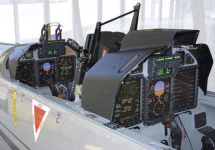
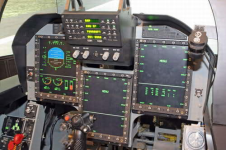
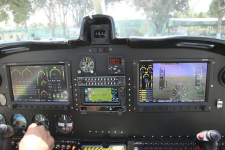
Not only that, the modern trainers are designed to emulate a fighter in terms of its cockpit layout and controls too. Again, cant do this with the SMK. You get in there, flip on the master, prime the engine, mixture rich and crank it. Easy as.

You wont be doing that with a turbine for sure, it seems subtle, but it really helps ease the transition.

1768908664365.png
1768908692322.png

If it wasnt for the HUD, i could probably trick people into thinking the PC21 is a JF-17.

1768908811500.png


The PAF's training fleet is actually a real issue. Its a very poor fleet, neglected heavily.

Most of the world is streamlined into two trainer types, the PAF wanted to induct a LIFT too, imagine. Before you touch a fighter, you must go through 3 different types, vastly different types at that too.

Its poor, before the PAF even considers moving towards NGF's, this mess of the training fleet needs to be sorted. Thats where the project comes in. Build a PC-21, Build a HURKUS, Build a DART. Its all mostly commercial off the shelf bits, the flight controls are all mechanical linkages, the airframe itself would be something far more basic vs something like an AJT, etc etc
 
SMK->T37->K8->LIFT->...

Do you see how complicated and expensive this pipeline sounds

Or instead you could have for example,

PC-21->Hurjet (or JF-17 LIFT)

The training pipeline does seem complicated for sure, and I do think that a PC-21 type replacement designed in Pakistan as you have said is the way to go to build the capability to design airframes in Pakistan and source everything you need until you can build local substitutes.

One hopes(and crosses their fingers) for some real non bombastic strategic thought in AHQ of what Pakistan can actually achieve, and on how to build an incremental approach to building the appropriate industry in Pakistan, rather than attempting Azm which was a failure, and then "withdrawing" to PFX which may go the same way as a failure. What happened to the KISS approach and why does AHQ struggle with that?

They may finally withdrawing to a Hurjet type project and then where they should have started, which is the PC-21 type project. India did it backwards from Tejas-> HJT-36-> HAL HTT-40 and got it all very wrong and paid a price for it.

AHQ needs to learn to differentiate and seperate "current" operational requirements, from the strategic buildout of capability in the country and run them as twin tracks with the hope that the strategic projects may mature at some point in the near future.
 
WoW... 166 pages on a project about which no one has complete idea what it's. PAF is playing with us, lolz.
Measure twice cut once, the PAF has a lot to consider, as the PFX is set to become the future backbone of the PAF.

The last 13 months have given a lot of data and geo-strategic Realignments to consider. How the PAF was employed to combat the strategy of the Indians in OP Sindoor, the Saudi-Pak defense agreement and how the Saudis may come into the PFX, the use of the F-35 against the Iranian IADS, India’s military modernization, especially their IADS, the economy of Pakistan, the evolution of UCAV technology and the UCAV shown at the Chinese parade in Beijing, as well as what ORBAT the PAF things fits best with its doctrine.

If the PFX is just a “Block 4” JF-17, then it may not justify a $15-20 million WS-19 engine, when it’s cleared for export, and the PAF has to choose a more modest evolution. On the other hand will that evolution be competitive, considering the modernization the IAF, expected to come to fruition in just 5-8 years.

In the interim, the PAF can start to field modest upgrades to the Block 3 JF-17, and call it the PFX-Alpha, to get more bang for its buck:

1. A Towed Decoy
2. Light EW decoy missiles so at least 2 can be carried at all times
3. Jamming pods to cover each of the major bands to be carried across a multi- JF-17 formation
4. Ram paint that lowers RCS, with minimal maintenance (no special hanger required)
5. Liquid cooled GaN radar on a swashplate
6. IRST pod or IRST on the nose
7. A better Gun; optimized for A2A such as a 27mm Mauser revolver cannon, or the Gsh-30-1
8. Higher bandwidth datalinks
9. APU
10. OBOGS
11. Retractable IFR probe design modification
12. Improved landing gear to increase clearance, improve operations from rougher Runways.
13. Some modest airframe improvements to minimize RCS, IR, EM signatures.

Can anyone estimate what the above 13 modifications add to the cost of a JF-17. IMHO, if it’s within $5 Million, it would be worth the cost to push the jet to its design limits; visualize it akin to the Gripen NG.

Beyond these features, we are looking at a clean sheet design to optimize around the more powerful WS-19 engine at 110-120 kn. Because if the goal of the PFX, is a single engine mini-J-35, then the PAF will have to either justify the cost, or find a partner to help fund the development and probably even the procurement.
 
Last edited:
Measure twice cut once, the PAF has a lot to consider, as the PFX is set to become the future backbone of the PAF.

The last 13 months have given a lot of data and geo-strategic Realignments to consider. How the PAF was employed to combat the strategy of the Indians in OP Sindoor, the Saudi-Pak defense agreement and how the Saudis may come into the PFX, the use of the F-35 against the Iranian IADS, India’s military modernization, especially their IADS, the economy of Pakistan, the evolution of UCAV technology and the UCAV shown at the Chinese parade in Beijing, as well as what ORBAT the PAF things fits best with its doctrine.

If the PFX is just a “Block 4” JF-17, then it may not justify a $15-20 million WS-19 engine, when it’s cleared for export, and the PAF has to choose a more modest evolution. On the other hand will that evolution be competitive, considering the modernization the IAF, expected to come to fruition in just 5-8 years.

In the interim, the PAF can start to field modest upgrades to the Block 3 JF-17, and call it the PFX-Alpha, to get more bang for its buck:

A Towed Decoy
Light EW decoy missiles so at least 2 can be carried at all times
Jamming pods to cover each of the major bands to be carried across a multi- JF-17 formation
Ram paint that lowers RCS, with minimal maintenance (no special hanger required)
Liquid cooled GaN radar on a swashplate
IRST pod or IRST on the nose
A better Gun; optimized for A2A such as a 27mm Mauser revolver cannon, or the Gsh-30-1
Higher bandwidth datalinks
APU
OBOGS
Retractable IFR probe design modification
Completely agree with starting part. There are countless variables which require fine balance before moving onwards and PAF is in a tough place in that regard. But project clarity is something else which takes us to bold part. Now, I have no idea from where WS-19 entered in this discussion? This is why I said, we are discussing things without knowing the end-goal. OCU means PAF is looking to enhance the each sub-system of JF-17 which is more practical approach then trying to make a 4.5 gen fighter on our own. PAF can only scale up Thunder if it has got complete blueprint of the fighter along with complete access to manufacturing cycle. This is just wishful thinking (though Wajahat Saeed Khan in one of his podcast quoted some PAF official saying exactly this.)
 
Completely agree with starting part. There are countless variables which require fine balance before moving onwards and PAF is in a tough place in that regard. But project clarity is something else which takes us to bold part. Now, I have no idea from where WS-19 entered in this discussion? This is why I said, we are discussing things without knowing the end-goal. OCU means PAF is looking to enhance the each sub-system of JF-17 which is more practical approach then trying to make a 4.5 gen fighter on our own. PAF can only scale up Thunder if it has got complete blueprint of the fighter along with complete access to manufacturing cycle. This is just wishful thinking (though Wajahat Saeed Khan in one of his podcast quoted some PAF official saying exactly this.)

Of the variables; we have to first look at the budget. if we can get the finances, buying the full manufacturing cycle, as some would desire, including a replacement engine for the RD-93, regardless of the initial impracticality, could be something our more visionary PAF brass may understand better. This is a point if finances are taken care of.

The initial engine desired would probably be the WS-21, as it would also be the engine on the J-35A sold to Pakistan.

Where the WS-19 engine comes in, is with regards to more electrical power for more powerful sensors to see further, even beyond what the J-10CE maybe able to detect, while also powering a more capable EW suite, and giving the thrust to weight ratio to keep the plane in an advantageous position in any fight. We are talking about a 35-45% improvement in thrust, which also opens up the ability of the plane potentially carrying heavier munitions.

We are talking about a design that could nearly replace all but the 5th gen aircraft in the PAF inventory for under the cost of the J-10CE. A workhorse, which could endure in the PAF, and other air forces for decades, and still be competitive enough in a world of 5th gen aircraft.

With this approach, I assume the PAF expects to meet its needs, without overburdening the government’s finances. This could also be an approach to offer a midlife ungrade down the line to all the countries that have bought or intend to by the Block 3, similar to the V upgrade for operators of the C/D F-16s.

So I assume a key requirement would be to try to take sure the PFX-Alpha design is a modification that can be applied to all current JF-17. Btw, the WS-21 may only be a ~93 kn max engine; a 13% thrust improvement, lower IR signature, but perhaps the improve in electrical power maybe the key improvement, allowing the plane to be good enough to fit the strategy; utilize other sensors and platforms to guide the JF-17 as the shooter. This maybe enough to have this evolution of the JF-17 still be competitive against all variants of the Tejas, the planned super sukhoi upgrade of the Su-30MKI, and even the Rafale.

If this can be done economically, and the price of the J-35A is offered at a relatively affordable price, perhaps the PAF will stop at this point for the PFX/PFX-Alpha and go for procurement of more J-35A, off the shelf, to maintain the regional balance.
 
Last edited:
Of the variables; we have to first look at the budget. if we can get the finances, buying the full manufacturing cycle, as some would desire, including a replacement engine for the RD-93, regardless of the initial impracticality, could be something our more visionary PAF brass may understand better. This is a point if finances are taken care of.

The initial engine desired would probably be the WS-21, as it would also be the engine on the J-35A sold to Pakistan.

Where the WS-19 engine comes in, is with regards to more electrical power for more powerful sensors to see further, even beyond what the J-10CE maybe able to detect, while also powering a more capable EW suite, and giving the thrust to weight ratio to keep the plane in an advantageous position in any fight. We are talking about a 35-45% improvement in thrust, which also opens up the ability of the plane potentially carrying heavier munitions.

We are talking about a design that could nearly replace all but the 5th gen aircraft in the PAF inventory for under the cost of the J-10CE. A workhorse, which could endure in the PAF, and other air forces for decades, and still be competitive enough in a world of 5th gen aircraft.

With this approach, I assume the PAF expects to meet its needs, without overburdening the government’s finances. This could also be an approach to offer a midlife ungrade down the line to all the countries that have bought or intend to by the Block 3, similar to the V upgrade for operators of the C/D F-16s.

So I assume a key requirement would be to try to take sure the PFX-Alpha design is a modification that can be applied to all current JF-17. Btw, the WS-21 may only be a ~93 kn max engine; a 13% thrust improvement, lower IR signature, but perhaps the improve in electrical power maybe the key improvement, allowing the plane to be good enough to fit the strategy; utilize other sensors and platforms to guide the JF-17 as the shooter. This maybe enough to have this evolution of the JF-17 still be competitive against all variants of the Tejas, the planned super sukhoi upgrade of the Su-30MKI, and even the Rafale.

If this can be done economically, and the price of the J-35A is offered at a relatively affordable price, perhaps the PAF will stop at this point for the PFX/PFX-Alpha and go for procurement of more J-35A, off the shelf, to maintain the regional balance.
As for the finances for MIC, I don't know how but the Pak Deep State always manages it.....
 
Of the variables; we have to first look at the budget. if we can get the finances, buying the full manufacturing cycle, as some would desire, including a replacement engine for the RD-93, regardless of the initial impracticality, could be something our more visionary PAF brass may understand better. This is a point if finances are taken care of.

The initial engine desired would probably be the WS-21, as it would also be the engine on the J-35A sold to Pakistan.

Where the WS-19 engine comes in, is with regards to more electrical power for more powerful sensors to see further, even beyond what the J-10CE maybe able to detect, while also powering a more capable EW suite, and giving the thrust to weight ratio to keep the plane in an advantageous position in any fight. We are talking about a 35-45% improvement in thrust, which also opens up the ability of the plane potentially carrying heavier munitions.

We are talking about a design that could nearly replace all but the 5th gen aircraft in the PAF inventory for under the cost of the J-10CE. A workhorse, which could endure in the PAF, and other air forces for decades, and still be competitive enough in a world of 5th gen aircraft.

With this approach, I assume the PAF expects to meet its needs, without overburdening the government’s finances. This could also be an approach to offer a midlife ungrade down the line to all the countries that have bought or intend to by the Block 3, similar to the V upgrade for operators of the C/D F-16s.

So I assume a key requirement would be to try to take sure the PFX-Alpha design is a modification that can be applied to all current JF-17. Btw, the WS-21 may only be a ~93 kn max engine; a 13% thrust improvement, lower IR signature, but perhaps the improve in electrical power maybe the key improvement, allowing the plane to be good enough to fit the strategy; utilize other sensors and platforms to guide the JF-17 as the shooter. This maybe enough to have this evolution of the JF-17 still be competitive against all variants of the Tejas, the planned super sukhoi upgrade of the Su-30MKI, and even the Rafale.

If this can be done economically, and the price of the J-35A is offered at a relatively affordable price, perhaps the PAF will stop at this point for the PFX/PFX-Alpha and go for procurement of more J-35A, off the shelf, to maintain the regional balance.
Well, finances must not be a problem if it can get political ownership by national leadership the way JF-17 once got, missile program once got, or before that our nuclear program.
 
1. A Towed Decoy
2. Light EW decoy missiles so at least 2 can be carried at all times
3. Jamming pods to cover each of the major bands to be carried across a multi- JF-17 formation
4. Ram paint that lowers RCS, with minimal maintenance (no special hanger required)
5. Liquid cooled GaN radar on a swashplate
6. IRST pod or IRST on the nose
7. A better Gun; optimized for A2A such as a 27mm Mauser revolver cannon, or the Gsh-30-1
8. Higher bandwidth datalinks
9. APU
10. OBOGS
11. Retractable IFR probe design modification
12. Improved landing gear to increase clearance, improve operations from rougher Runways.
13. Some modest airframe improvements to minimize RCS, IR, EM signatures.
Most of your points are based on the air-to-air (A2A) priority theory. This doesn't quite align with China's direction for future fighter jet development. The future direction of Chinese fighter jet development is towards all-electric fighter aircraft.

1. The strengthening and upgrading of the JF-17 series fighter's avionics system requires a significant increase in power supply capacity. After obtaining greater power supply capacity, the existing radar will be pushed to its limits, and the missing IRST system will be added. This has essentially exhausted the surplus power supply capacity.

2. "Higher bandwidth datalinks." This is essential. This is equivalent to rebuilding a completely new data link system. It can be compatible with the original Link-17, but it cannot be directly upgraded from Link-17.

3. Cannon. Many modern fighter jets have already started to eliminate cannons. The practical application effect of its weight and occupied space is no longer suitable for the concept of modern fighter jets.
There are reports that the JF-17B3's cannon has adopted a detachable modular design, which can be removed as needed. I don't know the veracity of this information. If it's true, that would be excellent.
 
WoW... 166 pages on a project about which no one has complete idea what it's. PAF is playing with us, lolz.


No, it was a small unconcrete hint given by officials and the usual fanboys will immediately start hyperventilating again, getting wet dreams of semi-stealth, bigger airframes, WS-10, WS-10C production locally... bigger, better, much more!! :p :p :p

It's exactly the same nonsense as "we're getting" no, wait "we already have the J-35AE, with PL-17" — ...
 
No, it was a small unconcrete hint given by officials and the usual fanboys will immediately start hyperventilating again, getting wet dreams of semi-stealth, bigger airframes, WS-10, WS-10C production locally... bigger, better, much more!! :p :p :p

It's exactly the same nonsense as "we're getting" no, wait "we already have the J-35AE, with PL-17" — ...
What are you prattling about? We already retired J-35AE and are moving onto our 6.25+ gen fighter.
 
Most of your points are based on the air-to-air (A2A) priority theory. This doesn't quite align with China's direction for future fighter jet development. The future direction of Chinese fighter jet development is towards all-electric fighter aircraft.

1. The strengthening and upgrading of the JF-17 series fighter's avionics system requires a significant increase in power supply capacity. After obtaining greater power supply capacity, the existing radar will be pushed to its limits, and the missing IRST system will be added. This has essentially exhausted the surplus power supply capacity.

2. "Higher bandwidth datalinks." This is essential. This is equivalent to rebuilding a completely new data link system. It can be compatible with the original Link-17, but it cannot be directly upgraded from Link-17.

3. Cannon. Many modern fighter jets have already started to eliminate cannons. The practical application effect of its weight and occupied space is no longer suitable for the concept of modern fighter jets.
There are reports that the JF-17B3's cannon has adopted a detachable modular design, which can be removed as needed. I don't know the veracity of this information. If it's true, that would be excellent.
Fair points. Which is also why I think the WS-19, with its significant improvement in electrical power (even more so than the improvement in thrust) and heat control of electrical systems will be necessary to power the systems that will determine battles. Also, I agree the gun is less relevant, but I think it is still needed in certain missions, such as combat patrol at sea or along a border where fighters could operate close enough that a fight could close to WVR combat.
 

Users who are viewing this thread

Back
Top