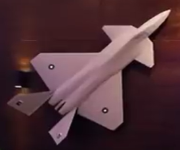
JF-17 PFX program

You could be correct but from paf point of view they cannot purchase 400 5th generation planes ASAP, instead they will stop production of Jf17 block 3s and replace them with Pfx production, produce them till 2040, replacing all Mirages, F7PGs, and older Jf17s, also when funds are available they will purchase more J10CEs and J35s, after 2040 paf will need F16s to be replaced aswell, by most likely Kaan type plane, it's possible paf will stop Pfx and replace it by 5th generation plane, with Turkish help, I hope Turkey, Azerbaijan, Pakistan, Qatar will have strong joint defence industry by 2040.

I think the following makes sense. Before anyone jumps to "money", these procurements aren't being done in a day. Payments can be made in batches for that, we can fund it.

1- JF-17 - Total 180. Block II's upgraded urgently with at AESA radars immediately for PL-15 integration as that's our deterrence now.
2: J-10C - Acquire more. Minimum 80 (ideally 100) and retire multiple Mirage, F-7 squadrons because with S-400 redundant envelop, these jets are high risk in a conflict and really need to go.
3: 5th Gen: Whether J-35 or something else in the future. 40, ideally 60 to create a Naval air arm as from 2028, our trade will significantly increase and will need dedicated air arm for the navy so like 2 squadrons initially.
4: F-16's: Upgrade MLU's from Turkey one last time. As the joint BVR project gives a true product, it will match in range with Meteor.
5: 18 F-16's to upgrade to block 70 standard. Its sort of useless because AMRAAM-D's, even if given will still be below range and capability vs. the meteor. So good for tier II defense only.

This gives us JF-17: 180+ 80 J-10C's = 260 Tier I jets with PL-15 capable. Add F-16's: Total: 335 jets for tier I and II defensive posture.

AWACS - EW: Upgrade Erieye to global Erieye radars. We'll get 4 ZDK's converted into EW planes. We may need about 2-4 KJ-500 due to mass weapons deployment, larger track and target range capability, especially on the sea front as our Naval assets are majority Chinese.

2030 and onwards: Add PFX to the fleet. Eventually going to 450 jets with 4.5 and about 80-100 5th gen platforms.

*** In a TRUE sense, looking at Indian weapons acquisition. I personally think the PAF's future is majority stealth jets because the the line of control will be lit up with Indian sensors soon and redundant tiers of SAM systems like the S-400 and others. So PAF will need to go to 5th gen majority in the near future. However, the economy will need to cross a trillion first. So this part will present itself after 2028 on how many 5th gen the PAF needs.
 
The IP rights for the design of the Su-33, and all Flanker variants, reside with Sukhoi, the company that designed and developed the aircraft. The fact that China got its hands on an airframe of the Su-33 from Ukraine is irrelevant.

The entire episode of China producing Flanker variants is a little opaque, and I'm sure its been discussed at length many times, but perhaps @Deino can provide us all with a quick reminder about the license/unlicensed versions.
Because Russia refused to sell us the relevant license for the su-33, the J15 we developed on the basis of Ukraine has nothing to do with Russia. Even if we sell it abroad, Russia can do nothing about it.
 
Because Russia refused to sell us the relevant license for the su-33, the J15 we developed on the basis of Ukraine has nothing to do with Russia. Even if we sell it abroad, Russia can do nothing about it.
Russia probably can't do anything if China sells any of the Flanker variants, but that's not how IP license works. As I've explained, the fact that China acquired the Su33 from Ukraine is irrelevant. The IP is held by Sukhoi who designed and developed the Flanker and its variants.

That's like saying China buys a Boeing 747 from Germany, makes a copy, and can sell it. Obviously it can't, because Boeing holds the IP.
 
I think the following makes sense. Before anyone jumps to "money", these procurements aren't being done in a day. Payments can be made in batches for that, we can fund it.

1- JF-17 - Total 180. Block II's upgraded urgently with at AESA radars immediately for PL-15 integration as that's our deterrence now.
2: J-10C - Acquire more. Minimum 80 (ideally 100) and retire multiple Mirage, F-7 squadrons because with S-400 redundant envelop, these jets are high risk in a conflict and really need to go.
3: 5th Gen: Whether J-35 or something else in the future. 40, ideally 60 to create a Naval air arm as from 2028, our trade will significantly increase and will need dedicated air arm for the navy so like 2 squadrons initially.
4: F-16's: Upgrade MLU's from Turkey one last time. As the joint BVR project gives a true product, it will match in range with Meteor.
5: 18 F-16's to upgrade to block 70 standard. Its sort of useless because AMRAAM-D's, even if given will still be below range and capability vs. the meteor. So good for tier II defense only.

This gives us JF-17: 180+ 80 J-10C's = 260 Tier I jets with PL-15 capable. Add F-16's: Total: 335 jets for tier I and II defensive posture.

AWACS - EW: Upgrade Erieye to global Erieye radars. We'll get 4 ZDK's converted into EW planes. We may need about 2-4 KJ-500 due to mass weapons deployment, larger track and target range capability, especially on the sea front as our Naval assets are majority Chinese.

2030 and onwards: Add PFX to the fleet. Eventually going to 450 jets with 4.5 and about 80-100 5th gen platforms.

*** In a TRUE sense, looking at Indian weapons acquisition. I personally think the PAF's future is majority stealth jets because the the line of control will be lit up with Indian sensors soon and redundant tiers of SAM systems like the S-400 and others. So PAF will need to go to 5th gen majority in the near future. However, the economy will need to cross a trillion first. So this part will present itself after 2028 on how many 5th gen the PAF needs.

Pakistan is need of 400 to 450 fighter jets.
 
Russia probably can't do anything if China sells any of the Flanker variants, but that's not how IP license works. As I've explained, the fact that China acquired the Su33 from Ukraine is irrelevant. The IP is held by Sukhoi who designed and developed the Flanker and its variants.

That's like saying China buys a Boeing 747 from Germany, makes a copy, and can sell it. Obviously it can't, because Boeing holds the IP.
In the field of defense science and technology and weapons, there is no such international rule as “intellectual property protection”. Such rules are valid only in the civilian sphere. This is because the defense science and technology and weapons field is much higher than the international rules.

Whether or not you copy another country's defense technology and weapons depends only on the technical capabilities you have and the private agreements between the two countries.

For example:
1. Many countries in the world are copying light weapons from the US/Russia/Germany etc. These countries are not licensed by them and pay no royalties. And of course, the US/Russia/Germany etc. have not protested over this.
2, There are some countries that import missiles from China. They then copied these Chinese missiles and renamed them. China did not receive royalties and did not protest over it.
3, A great deal of US weapons technology came from Germany after WWII ......

If you have enough capability, you can copy any country's advanced weapons at will. China would not protest or interfere in any way if a country copied China's J-20 fighter jet exactly.

The Chinese-Russian agreement on the Flanker series of fighters is based on the outcome of the relationship between the two countries. It has nothing to do with international rules of “intellectual property protection”.

Pakistan purchased the Chinese J-10CE.
Whether Pakistan replicates the J-10CE or not is entirely dependent on whether Pakistan itself possesses this technical capability and the Pakistan-China agreement. If that agreement does not allow certain operations, that is the scope of this agreement.
However, if a country completes a copy of the J-10CE without purchasing it, there is nothing China can do about it.
Id. What can Pakistan do with the JF-17? That depends entirely on the terms of the China-Pakistan agreement on the JF-17.
 
Last edited:
In the field of defense science and technology and weapons, there is no such international rule as “intellectual property protection”. Such rules are valid only in the civilian sphere. This is because the defense science and technology and weapons field is much higher than the international rules.

Whether or not you copy another country's defense technology and weapons depends only on the technical capabilities you have and the private agreements between the two countries.

For example:
1. Many countries in the world are copying light weapons from the US/Russia/Germany etc. These countries are not licensed by them and pay no royalties. And of course, the US/Russia/Germany etc. have not protested over this.
2, There are some countries that import missiles from China. They then copied these Chinese missiles and renamed them. China did not receive royalties and did not protest over it.
3, A great deal of US weapons technology came from Germany after WWII ......

If you have enough capability, you can copy any country's advanced weapons at will. China would not protest or interfere in any way if a country copied China's J-20 fighter jet exactly.

The Chinese-Russian agreement on the Flanker series of fighters is based on the outcome of the relationship between the two countries. It has nothing to do with international rules of “intellectual property protection”.

Pakistan purchased the Chinese J-10CE.
Whether Pakistan replicates the J-10CE or not is entirely dependent on whether Pakistan itself possesses this technical capability and the Pakistan-China agreement. If that agreement does not allow certain operations, that is the scope of this agreement.
However, if a country completes a copy of the J-10CE without purchasing it, there is nothing China can do about it.
Id. What can Pakistan do with the JF-17? That depends entirely on the terms of the China-Pakistan agreement on the JF-17.
The fact that countries copy military technology does not mean that there is no IP, otherwise why would defence companies file patents?

Of course many countries reach agreements for one country to license build a copy from another, and there's many examples of that, but it doesn't take away the fact that an unlicensed copy is still infringement of IP. The fact the most countries or companies cant do much about it is irrelevant. Take a look at the Russians copying the Iranian Shahed drone, the did it using a licencing agreement with the Russians, but an American company has also made a copy, but it's unlicensed, its still infringement of original IP, but of course Iran can't do anything about it.
 
Is it now time to rename this thread from "JF17 PFX Program" to "PFX Program" given that it looks like PFT may well be a clean sheet design that "reuse" technology from JF17 ? Is that everyone else's understanding ?
 
Is it now time to rename this thread from "JF17 PFX Program" to "PFX Program" given that it looks like PFT may well be a clean sheet design that "reuse" technology from JF17 ? Is that everyone else's understanding ?

Hmm still don't know what the **** pfx is to be honest. It would most probably be just jf-17 made in house that it. However that alone would be a massive success.
 
Is it now time to rename this thread from "JF17 PFX Program" to "PFX Program" given that it looks like PFT may well be a clean sheet design that "reuse" technology from JF17 ? Is that everyone else's understanding ?
YES. i talked about this a long time ago.

If this program is called “JF-17 PFX”, then it means that it is an extension of the JF-17 program for Pakistan and China to continue working together. Turkey is not involved.

If the program is called “PFX”, then it means it is a new program between Pakistan and Turkey. China is not involved.

These are two completely different concepts.
 
YES. i talked about this a long time ago.

If this program is called “JF-17 PFX”, then it means that it is an extension of the JF-17 program for Pakistan and China to continue working together. Turkey is not involved.

If the program is called “PFX”, then it means it is a new program between Pakistan and Turkey. China is not involved.

These are two completely different concepts.

Calling it JF17-PFX is confusing, as it may not have anything to do with the JF17.

@Fatman17 ? Thoughts? Can we get it renamed? - "Pakistan PFX programme News, Updates and Discussions"
 
Hmm still don't know what the **** pfx is to be honest. It would most probably be just jf-17 made in house that it. However that alone would be a massive success.

Best to treat PFX as a separate PFX project, and not assume it is a JF17 programme, given all that PAF have said so far.
 
There seems to be a lot of overlap between the speculated capability of the PFX and the J10C so I'm sceptical whether this will be a new clean sheet design, despite the messaging from the PAF. They could simply upgrade the JF17 production line to produce the J10C instead, if they want to move on from the JF17. It seems there's just too much going on...acquiring more J10s, more advanced JF17s, acquiring the J35, maybe Kaaan long term as well, upgrading the Vipers potentially...and the adding the PFX...seems overkill.
 
Pakistan is need of 400 to 450 fighter jets.

My assessment covers our "immediate" or short term needs of PAF at 350 capable jets. J-10C's would be better if received in 1 hundred and all Mirages and F-7's retired because they've become essentially useless in today's warfare and secondly, the money being spend on these 200 airframes can be saved and diverted to getting more J-10C's that give us 100 times more capability than these 50 year old jets. But all these may not happen until after 2028. So for now until next 3-5 years, a 350 BVR capable force is a must.

PFX will start adding more numbers also after 2028.

Post 2030, I think our force requirements will change as economy will grow. Expect up to 500 Jets. India will be adding another 400-500 jets over the next 7-10 years. Our best option is to maintain a 2:1 ratio especially after our economy expands post 2028.

YES. i talked about this a long time ago.

If this program is called “JF-17 PFX”, then it means that it is an extension of the JF-17 program for Pakistan and China to continue working together. Turkey is not involved.

If the program is called “PFX”, then it means it is a new program between Pakistan and Turkey. China is not involved.

These are two completely different concepts.


JF-17 PFX means we'll build on JF-17's existing manufacturing baseline with extension of JF-17 design initially. Call it the PFX ALPHA version. That way, in short term, we are adding 4.5 gen capability.

Beyond Alpha, the PFX will have two results long term:

1) Use a 5th Gen concept design like a single engine J-20 that we've seen. I'll add that here. This is a Chinese design.

2) A KAAN version for Pakistan. This will have inter-operability to both, Chinese and Western weapons.


NASTP-STEALTH-J20-2.png
 
Last edited:
Russia probably can't do anything if China sells any of the Flanker variants, but that's not how IP license works. As I've explained, the fact that China acquired the Su33 from Ukraine is irrelevant. The IP is held by Sukhoi who designed and developed the Flanker and its variants.

That's like saying China buys a Boeing 747 from Germany, makes a copy, and can sell it. Obviously it can't, because Boeing holds the IP.

IP is not really the issue for China. Otherwise we wouldn't have seen massive numbers of J11B, J15, J16, etc. If China really wanted to, it could push to get a "limited" weapons export license from Russia. After all, China and India are two major nations keeping Russian war economy running full steam otherwise, per the West's sanctions, Russia would've crippled last year.

The bigger issue is, Russia is now China's strategic ally. China doesn't want to use a few billion weapons trade to either upset Russia, or, push for a license.

Russia is now becoming the gateway for CPEC related connectivity and trillions worth of trade will be transiting through Russian territory for Turkey and Europe through Rail and later through transportation. So its the bigger picture that over shadows a few billion worth of weapons sale.
 

Users who are viewing this thread

Back
Top