Navigation
Install the app
How to install the app on iOS
Follow along with the video below to see how to install our site as a web app on your home screen.
Note: This feature may not be available in some browsers.
More options
Style variation
You are using an out of date browser. It may not display this or other websites correctly.
You should upgrade or use an alternative browser.
You should upgrade or use an alternative browser.
JF-17 - Updates, News & Discussion
- Thread starter ghazi52
- Start date
More options
Who Replied?



Rational Philosopher
Trusted Member

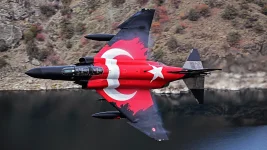
I want to see a JF-17 in similar airframe art like this but with Pakistan flag, I wonder what kind of paint scheme they have for the upcoming air show

StormBreaker
Trusted Member

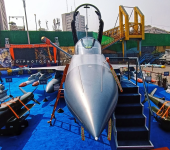
Expo center karachi?

Reichmarshal
Trusted Member
The foundations of PAF were laid by Polish orgin officers of RAFWhat's the link between the PAF and the Polish air force?

Corax
Trusted Member

I was referring to the pic posted regarding RIAT, but thanks for the history lesson, I already knew that.The foundations of PAF were laid by Polish orgin officers of RAF

Scorpio
Registered Member
PAF should come up with JFT Bravo Block 3 (Block 3 dual seat variant) ..
It will give export boost to JTFs ..
Plus local capabilities enhancement as well ....
Bravo Block 2 was used against india specially to distroy S400...
So Block 3 based bravo will have much more capabilities and effectiveness ... In future and more advance mission can be achieved
It will give export boost to JTFs ..
Plus local capabilities enhancement as well ....
Bravo Block 2 was used against india specially to distroy S400...
So Block 3 based bravo will have much more capabilities and effectiveness ... In future and more advance mission can be achieved

Ali_Baba
VIP Member
I want to see a JF-17 in similar airframe art like this but with Pakistan flag, I wonder what kind of paint scheme they have for the upcoming air show
View attachment 134379
That is a GORGEOUS Phantom !! The Phantom is a proper muscle-plane back from the day! Sat inside a Turkish one at RIAT, gorgeous plane.
m52k85
Registered Member
This news must have really complicated IAF planning..Again can any share a pic of jf17 airborn with 4xpl15
RafaleSlayer
Registered Member
Phantom is not a muscle plane, its TWR is very poorThat is a GORGEOUS Phantom !! The Phantom is a proper muscle-plane back from the day! Sat inside a Turkish one at RIAT, gorgeous plane.

Michael
VIP Member

We should have a discussion about this in this thread.Yes, something along those lines even if not exactly. The main goal is having control of the platform and total flexibility to integrate weapons systems and other modifications without having to reach out to China, I don't believe this counts in the realm of political propaganda because it's something that has been a genuine desire by the air force.
I don't want to talk about politics, and we can also completely ignore the intellectual property issues of the JF-17 owned by the CAC. Let's just consider the actual capabilities that Pakistan currently has.
Many years have passed since the JF-17 project began. Until today:
1. Pakistan cannot manufacture any subsystems of the fighter.
2. Pakistan can only manufacture most of the fuselage parts and final assembly of the fighter. Some important load-bearing structural parts still come from CAC. Where do the raw materials for the fuselage parts that PAC can manufacture come from? Perhaps you can answer this question.
I know Pakistan has a lot of claimed indigenous weapon systems. I don't want to question these issues. Let's get back to the real world. I'm not talking about those so-called advanced technologies, let's just talk about some simple basic technologies:
1. How many factories in Pakistan can manufacture the most basic explosive compounds required for various weapons?
2. How many steel mills in Pakistan can manufacture ordinary aviation-grade aluminum alloys? Gun barrel steel?
3. How many factories in Pakistan can manufacture rubber tires?
......
It's rogue to talk about local manufacturing capabilities without these basics.
If Pakistan is really willing to develop a completely localized military industrial capacity, then you need to first develop your own basic industrial capacity. This is what China has been helping Pakistan do.
But many Pakistanis don't think so. In their worldview, as long as the final step of the product is completed in Pakistan and labeled Pakistani, it is a product of national pride...
Last edited:

Oscar
Moderator
This has already happened with the first JF-17.I want to see a JF-17 in similar airframe art like this but with Pakistan flag, I wonder what kind of paint scheme they have for the upcoming air show
View attachment 134379

MastanKhan
VIP Member
Hi,We should have a discussion about this in this thread.
I don't want to talk about politics, and we can also completely ignore the intellectual property issues of the JF-17 owned by the CAC. Let's just consider the actual capabilities that Pakistan currently has.
Many years have passed since the JF-17 project began. Until today:
1. Pakistan cannot manufacture any subsystems of the fighter.
2. Pakistan can only manufacture most of the fuselage parts and final assembly of the fighter. Some important load-bearing structural parts still come from CAC. Where do the raw materials for the fuselage parts that PAC can manufacture come from? Perhaps you can answer this question.
I know Pakistan has a lot of claimed indigenous weapon systems. I don't want to question these issues. Let's get back to the real world. I'm not talking about those so-called advanced technologies, let's just talk about some simple basic technologies:
1. How many factories in Pakistan can manufacture the most basic explosive compounds required for various weapons?
2. How many steel mills in Pakistan can manufacture ordinary aviation-grade aluminum alloys? Gun barrel steel?
3. How many factories in Pakistan can manufacture rubber tires?
......
It's rogue to talk about local manufacturing capabilities without these basics.
If Pakistan is really willing to develop a completely localized military industrial capacity, then you need to first develop your own basic industrial capacity. This is what China has been helping Pakistan do.
But many Pakistanis don't think so. In their worldview, as long as the final step of the product is completed in Pakistan and labeled Pakistani, it is a product of national pride...
Most educated pakistanis are basically illiterate---.
They have absolutely no concept of the difficulties faced in manufacturing an aircraft---.

HRK
THINK TANK: CONSULTANT
We should have a discussion about this in this thread.
I don't want to talk about politics, and we can also completely ignore the intellectual property issues of the JF-17 owned by the CAC. Let's just consider the actual capabilities that Pakistan currently has.
Many years have passed since the JF-17 project began. Until today:
1. Pakistan cannot manufacture any subsystems of the fighter.
2. Pakistan can only manufacture most of the fuselage parts and final assembly of the fighter. Some important load-bearing structural parts still come from CAC. Where do the raw materials for the fuselage parts that PAC can manufacture come from? Perhaps you can answer this question.
I know Pakistan has a lot of claimed indigenous weapon systems. I don't want to question these issues. Let's get back to the real world. I'm not talking about those so-called advanced technologies, let's just talk about some simple basic technologies:
1. How many factories in Pakistan can manufacture the most basic explosive compounds required for various weapons?
2. How many steel mills in Pakistan can manufacture ordinary aviation-grade aluminum alloys? Gun barrel steel?
3. How many factories in Pakistan can manufacture rubber tires?
......
It's rogue to talk about local manufacturing capabilities without these basics.
If Pakistan is really willing to develop a completely localized military industrial capacity, then you need to first develop your own basic industrial capacity. This is what China has been helping Pakistan do.
But many Pakistanis don't think so. In their worldview, as long as the final step of the product is completed in Pakistan and labeled Pakistani, it is a product of national pride...
Please educate yourself, your post is wrong on many issues, therefore I don't want to correct it as it will be an off-topic discussion.
Pakistan obviously does not have industrial manufacturing scale which could match with big Industrial countries but we do have certain capabilities and scale enough to meet local requirements to certain extent.
Please use Google for the questions you asked about explosive, gun barrel, rubber tires etc.
RajaBaja
Trusted Member
We should have a discussion about this in this thread.
I don't want to talk about politics, and we can also completely ignore the intellectual property issues of the JF-17 owned by the CAC. Let's just consider the actual capabilities that Pakistan currently has.
Many years have passed since the JF-17 project began. Until today:
1. Pakistan cannot manufacture any subsystems of the fighter.
2. Pakistan can only manufacture most of the fuselage parts and final assembly of the fighter. Some important load-bearing structural parts still come from CAC. Where do the raw materials for the fuselage parts that PAC can manufacture come from? Perhaps you can answer this question.
I know Pakistan has a lot of claimed indigenous weapon systems. I don't want to question these issues. Let's get back to the real world. I'm not talking about those so-called advanced technologies, let's just talk about some simple basic technologies:
1. How many factories in Pakistan can manufacture the most basic explosive compounds required for various weapons?
2. How many steel mills in Pakistan can manufacture ordinary aviation-grade aluminum alloys? Gun barrel steel?
3. How many factories in Pakistan can manufacture rubber tires?
......
It's rogue to talk about local manufacturing capabilities without these basics.
If Pakistan is really willing to develop a completely localized military industrial capacity, then you need to first develop your own basic industrial capacity. This is what China has been helping Pakistan do.
But many Pakistanis don't think so. In their worldview, as long as the final step of the product is completed in Pakistan and labeled Pakistani, it is a product of national pride...
I agree with some parts of your post and I disagree with some. For some factual questions you asked, I'll try to answer.
Before I start, DO NOTE, that unlike China, Pakistan obviously doesn't have that industrial base, neither does India or other nations. So you can't compare the two. Secondly, the defense industry so far, comes under direct military control so lots of things are state owned. GIDS, NASTP, etc, are examples.
1: Explosive manufacturing: we have units that develop all kinds of explosives under TOT from various European, Eastern European and obviously from China.
2: The "steel mill" concept for commercial use is different and our two mills were closed down years ago. For metallurgy / weapons related steel mills, some units exist under the state owned institutes. That's how we assemble Tank and other various weapon's grade metals. If we can produce that, we can for sure produce anything else with time.
However, COMPOSITES for airframe was different for us because we had never built a fighter before. That's a process in development. Hopefully, in PFX in some years, we'll have a bigger manufacturing role wrt the airframe / metallurgy, composite manufacturing.
3: Rubber tires: You are correct. None commercial. We import from China / Japan / Europe. But here is the catch, if import one's fill our needs, and they are cheaper to get from overseas vs. building internally, why not get imported one's? This is a business case example. But I agree, we should have these industries localized.
Lastly, a reminder, Pakistan's defense needs were rather limited. They've expanded exponentially since 2019 Indian attacks. And now even more so in 2025. We were in the Western block and somehow thought we'd have access to the top western weapons. That idea shifted badly around late 90's, early 2000's, and now we are building a local defense industry. Pakistan army I think 75% gets its things built locally. Air force and Navy are examples of foreign dependence still. By 2035, at least the air force would've moved near 60% indigenous also. Even the US manufacturing has foreign dependency on its F-35 project. So nothing wrong if we'll have 20-30% foreign dependency just because we can't match China or USA's advance research. So we'll buy what their advance defense industries sell as the "latest tech".

hussain0216
Elite Member
I want to see a JF-17 in similar airframe art like this but with Pakistan flag, I wonder what kind of paint scheme they have for the upcoming air show
View attachment 134379
This in green would be great and better that that all green JF17 version we have
Users who are viewing this thread
Total: 1 (members: 0, guests: 1)
Pakistan Defence Latest
-

-
 Somalia Reportedly Agrees to Acquire Pakistan’s JF-17 Fighter Jets (11 Viewers)
- Latest: Pakistanithinktank
-

-

-
Country Watch Latest


Latest Posts
-

-
-
 Makkah Defence Alliance: Turkey, Saudi Arabia, and Pakistan, news & updates (33 Viewers)
- Latest: maxpane
-

-