Jinnah Class Frigate | Updates & Discussion

The potential Road map for PN JCF Taking a Leaf out of PLAN -

The Type 054-B Frigate 5000 Tons
commissioned

Jan 2025


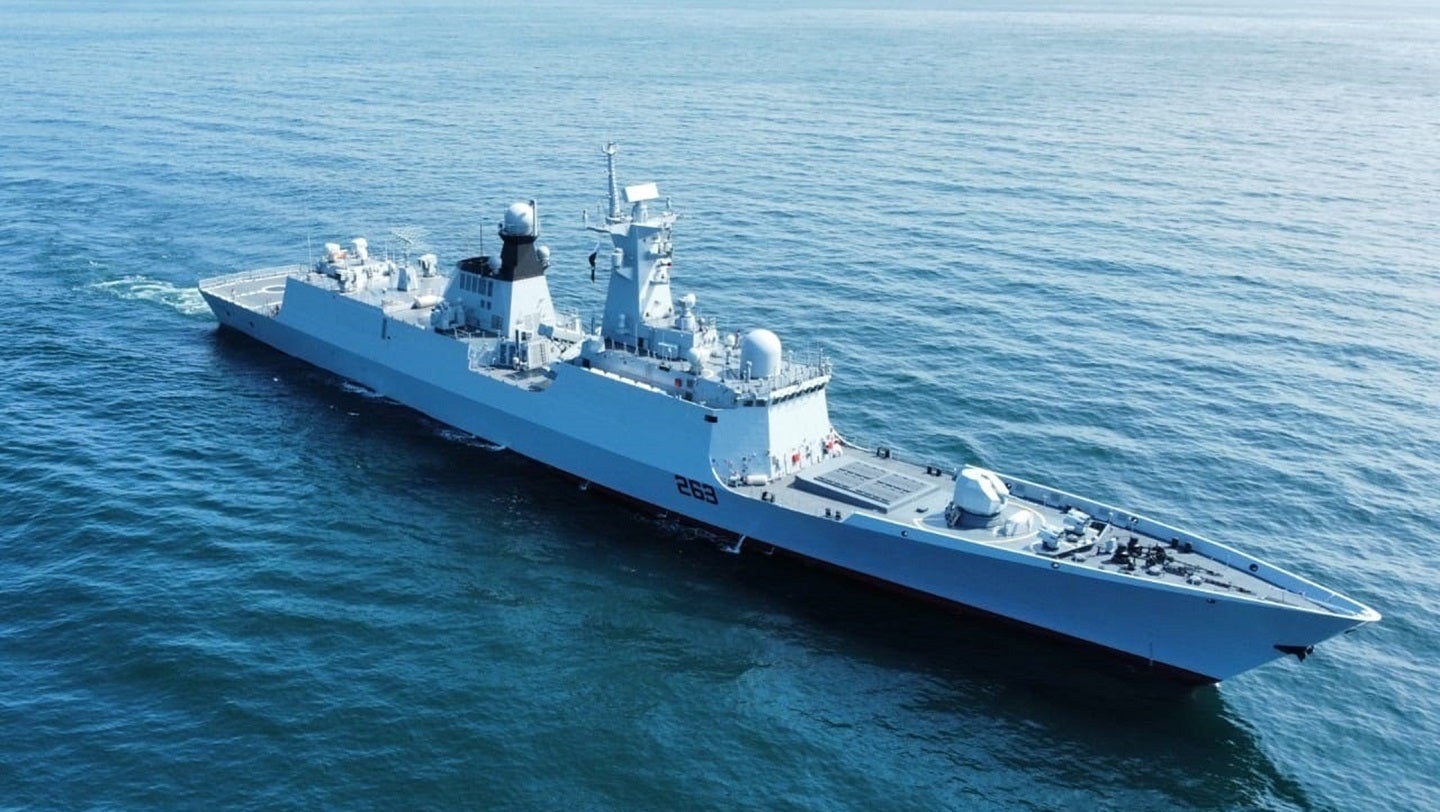
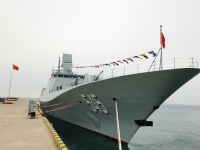
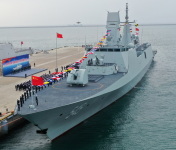
"The Luohe, China's first Type 054B frigate, with a hull number 545, is the first of a new generation of frigate and is an important piece of hardware in the Navy's transformational development - was commissioned in the People's Liberation Army Navy in Qingdao, Shandong province


The 5,000-ton-class warship features advancements in stealth, combat command systems and integrated firepower control. It constitute a distinct design from preceding frigate- and destroyer-types

For example, the Spanish Alvaro de Bazan-class air defense frigate, at a length of 147 meters and beam at 18.6 meters, displaces nearly 6,500 tons. In comparison, the existing Type 054/054A-design is estimated at 4,000 tons full displacement.
1737592373258.png

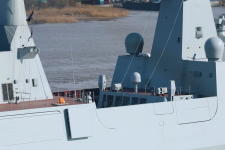
Regarding the stealth technology that makes the warship less visible to detection, it has radar signature reduction throughout its hull, Luck explained. One of the notable stealth features is a cover for the bow anchor, which is not seen on previous Chinese warships.

Besides the Luohe, a second Type 054B, which has a hull number "555," completed its sea trials last year, according to Luck. China is also building a modified Type 054A variant known as the Type 054AG, which has a larger flight deck to support helicopter operations.

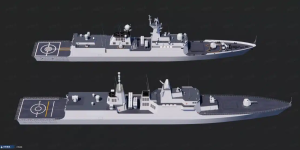
Type 054B has a displacement of nearly 5,000 metric tons and has better capabilities than its predecessor Type 054A in all aspects. It features technological breakthroughs in stealth, combat command, firepower control and other functions, and can better conduct naval battles and other missions.
1737593639345.png

Its service will extensively bolster the naval fleet's overall operational ability, the Navy said.

Many of the most advanced technologies, including those applied on the Type 055 large destroyer, have likely been incorporated into the design of the Type 054B, Song believed
1737593583802.png

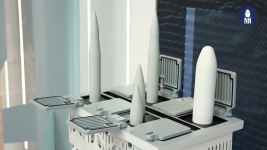
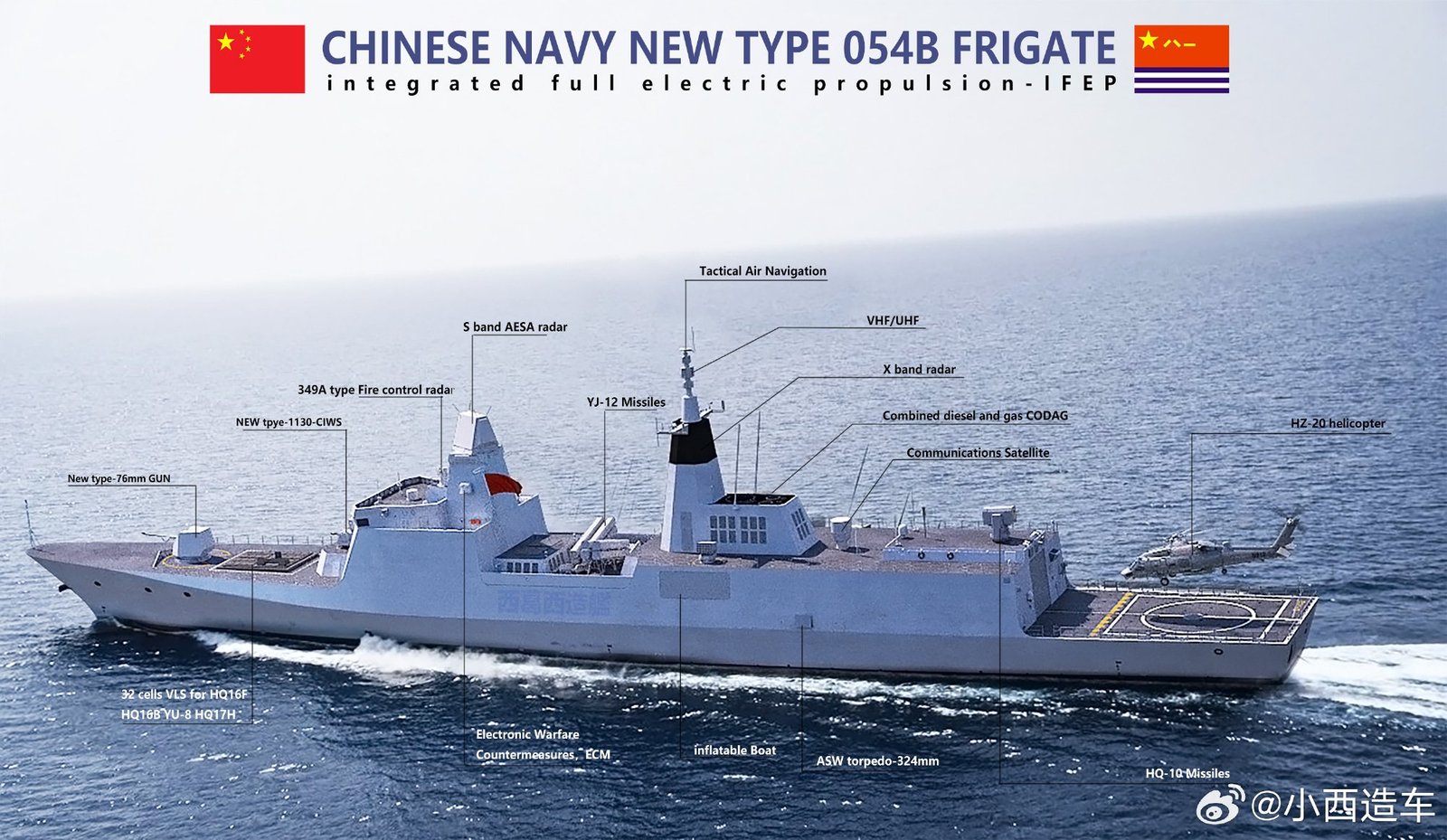
According to Alex Luck, an Australia-based naval analyst writing for specialist outlet Naval News, it is estimated that the Type 054B has 32 cell missile launchers for firing anti-air and anti-submarine weapons, in addition to eight anti-ship missile box launchers.

The H/AJK-16 is slightly lower in footprint and more importantly is is already equipped aboard over 40 surface combatants in the PLAN, the majority of which are 054A frigates. If the 054B fields the H/AJK-16, existing surface combatants with the H/AJK-16 may potentially reap the benefits of new payloads and capabilities developed for the 054B (sensors and networking contingent), thus prolonging the relevance and capability of those ships as well as offering benefits in standardization.

On the other hand, the universal VLS has greater cell cross-sectional size and is able to accommodate larger payloads, and offers standardization with the 052D and 055 destroyers.

If the 054B does utilize the H/AJK-16 VLS, as some rumors and depictions have suggested, it is likely that significant new payloads will be developed to take advantage of the 054B’s significantly more potent sensor suite compared to the 054A.

The original HHQ-16 SAMs used with the H/AJK-16 were rather conservative and low technology weapons for the time, with the original missiles stated to have effective ranges of only 40-50 kilometers (with usual missile range caveats being applied). Since that time, newer land launched HQ-16 variants have emerged with progressively longer ranges,

with the most recent HQ-16FE variant offered for export in 2022 offering a range of 150 kilometers, offering reference for the developmental path that naval HHQ-16 SAMs have likely taken as well. Given the HQ-16 missile airframe is rather sizeable (a peer to the single stage SM-2 family), it is natural that the proliferation of Chinese propellant, materials and guidance technologies will enable much improved performance in a similar missile footprint.

Another payload that the H/AJK-16 is already known to support is the Yu-8 vertically launched anti-submarine rocket weapon, as seen on 054A frigates in the past.

It is an open question whether a multi-pack medium range SAM will be developed for the H/AJK-16, as it is known that a quad-pack medium range SAM already has been developed for the universal VLS for the 052D and 055 and may be in early introduction.

-------------------------------

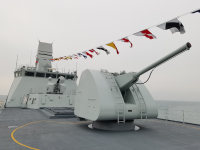
For weaponry the VLS is the H/AKJ-16-design with 32 cells similar to 054A featuring HQ-16-type medium range surface to air- and Yu-8 ASW-missiles. Furthermore the Type 054B design features slant carriers supporting two quadruple box launchers for anti-ship missiles amidships. An exact type remains unconfirmed and YJ-83 or YJ-12 AShM are both plausible candidates. Other already confirmed armament includes the 100mm main gun, a gun CIWS, likely the Type 1130, a HQ-10 missile CIWS, and lightweight torpedo-launchers.

Currently, the Navy's frigate forces mainly consist of the Type 054A ships, which started to be deployed in 2006.

When it emerged, the 054A class was one of the PLAN’s first classes of domestic surface combatant with a vertical launch system for missiles, and equipped with a capable sensor, weapons, and combat management suite. It was the first surface combatant with those features that entered mass production in the modern era. However, many of the 054A’s key subsystems were far from cutting edge for the Chinese military industry at the time (let alone globally), with its radar, propulsion, and weapons systems being relatively conservative, and derived from relatively mature and known systems rather than utilizing the most leading-edge technology available. This was reasonable, as the 054A was intended as a cost-effective but capable warship, and the Chinese industry needed time to further advance and consolidate key technologies and mitigate risks

1737592901342.png

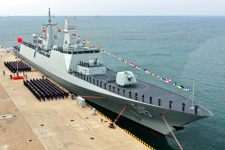
Xiao Liang, a senior hardware researcher in the nation's shipbuilding industry, said that the Type 054B is the largest class of frigate the Navy has ever used, and is almost as large as some of China's older destroyers.

"Its large size allows it to carry more munitions and fuel, and also gives it greater potential for future upgrades. Its propulsion system enables it to sail farther than other Chinese frigates. Another remarkable feature is the new radar system, which, without exaggeration, makes previous radars of its kind look like antiques," he said.
1737592614267.png

"Compared with previous frigate models in China, which were primarily tasked with anti-submarine operations, the Type 054B is also capable of performing fleet air-defense missions."

Meanwhile, the larger air-service zone allows the new frigate to accommodate a bigger helicopter, such as the Z-20, which will enhance the ship's ability to detect, track, and engage hostile submarines, Xiao noted.

He added that as the PLA Navy continues to extend its reach to safeguard world peace and stability and protect China’s interests, more large, advanced frigates will join the Navy.
1737592822567.png


To view this content we will need your consent to set third party cookies.
For more detailed information, see our cookies page.


Last edited:
The CNS Admiral Naveed Ashraf on the status of the Jinnah Class Frigate program in an interview with Naval Technology, 27 January 2025.


JH: What is the current status of the Jinnah-class frigate programme?
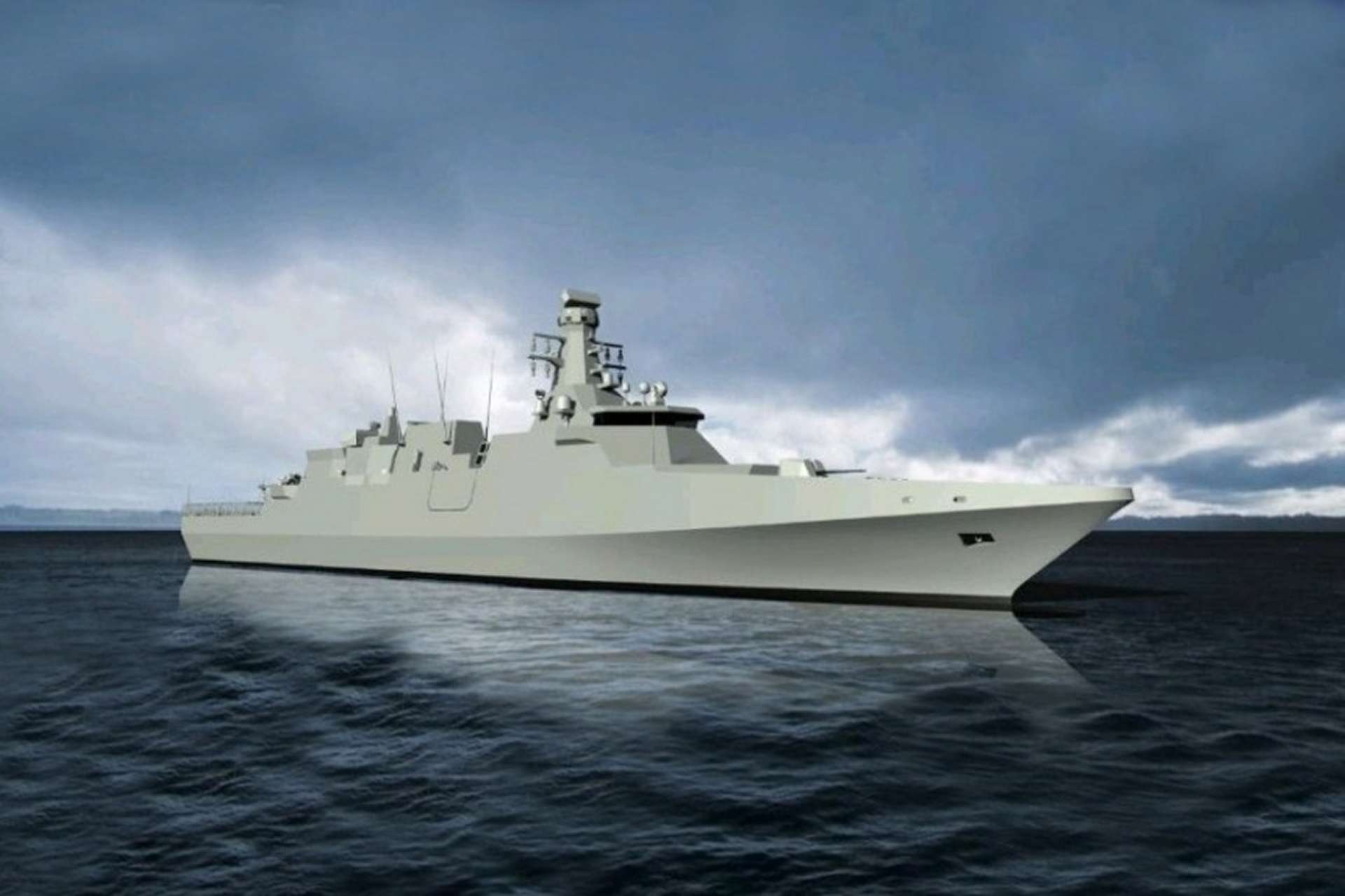
CNS: The Jinnah-class frigate marks a significant advancement for my Navy as our first indigenously designed and produced large warship.

"The first frigate is scheduled to be launched soon, with subsequent units planned for delivery at a consistent tempo that aligns with our operational requirements, strategic objectives, and availability of resources.

In terms of domestic production, a considerable percentage of the Jinnah-class frigates will be built within Pakistan.

Currently, our industrial base is developing and gearing up for this initiative and we anticipate that our technological capabilities will grow throughout the programme. This growth will be facilitated through partnerships with experienced defence partners from friendly countries."
 
The potential Road map for PN JCF Taking a Leaf out of PLAN -

The Type 054-B Frigate 5000 Tons
commissioned

Jan 2025


"The Luohe, China's first Type 054B frigate, with a hull number 545, is the first of a new generation of frigate and is an important piece of hardware in the Navy's transformational development - was commissioned in the People's Liberation Army Navy in Qingdao, Shandong province


The 5,000-ton-class warship features advancements in stealth, combat command systems and integrated firepower control. It constitute a distinct design from preceding frigate- and destroyer-types

For example, the Spanish Alvaro de Bazan-class air defense frigate, at a length of 147 meters and beam at 18.6 meters, displaces nearly 6,500 tons. In comparison, the existing Type 054/054A-design is estimated at 4,000 tons full displacement.
View attachment 96428

Regarding the stealth technology that makes the warship less visible to detection, it has radar signature reduction throughout its hull, Luck explained. One of the notable stealth features is a cover for the bow anchor, which is not seen on previous Chinese warships.

Besides the Luohe, a second Type 054B, which has a hull number "555," completed its sea trials last year, according to Luck. China is also building a modified Type 054A variant known as the Type 054AG, which has a larger flight deck to support helicopter operations.

Type 054B has a displacement of nearly 5,000 metric tons and has better capabilities than its predecessor Type 054A in all aspects. It features technological breakthroughs in stealth, combat command, firepower control and other functions, and can better conduct naval battles and other missions.

View attachment 96433

Its service will extensively bolster the naval fleet's overall operational ability, the Navy said.

Many of the most advanced technologies, including those applied on the Type 055 large destroyer, have likely been incorporated into the design of the Type 054B, Song believed

View attachment 96432

According to Alex Luck, an Australia-based naval analyst writing for specialist outlet Naval News, it is estimated that the Type 054B has 32 cell missile launchers for firing anti-air and anti-submarine weapons, in addition to eight anti-ship missile box launchers.

The H/AJK-16 is slightly lower in footprint and more importantly is is already equipped aboard over 40 surface combatants in the PLAN, the majority of which are 054A frigates. If the 054B fields the H/AJK-16, existing surface combatants with the H/AJK-16 may potentially reap the benefits of new payloads and capabilities developed for the 054B (sensors and networking contingent), thus prolonging the relevance and capability of those ships as well as offering benefits in standardization.

On the other hand, the universal VLS has greater cell cross-sectional size and is able to accommodate larger payloads, and offers standardization with the 052D and 055 destroyers.

If the 054B does utilize the H/AJK-16 VLS, as some rumors and depictions have suggested, it is likely that significant new payloads will be developed to take advantage of the 054B’s significantly more potent sensor suite compared to the 054A.

The original HHQ-16 SAMs used with the H/AJK-16 were rather conservative and low technology weapons for the time, with the original missiles stated to have effective ranges of only 40-50 kilometers (with usual missile range caveats being applied). Since that time, newer land launched HQ-16 variants have emerged with progressively longer ranges,

with the most recent HQ-16FE variant offered for export in 2022 offering a range of 150 kilometers, offering reference for the developmental path that naval HHQ-16 SAMs have likely taken as well. Given the HQ-16 missile airframe is rather sizeable (a peer to the single stage SM-2 family), it is natural that the proliferation of Chinese propellant, materials and guidance technologies will enable much improved performance in a similar missile footprint.

Another payload that the H/AJK-16 is already known to support is the Yu-8 vertically launched anti-submarine rocket weapon, as seen on 054A frigates in the past.

It is an open question whether a multi-pack medium range SAM will be developed for the H/AJK-16, as it is known that a quad-pack medium range SAM already has been developed for the universal VLS for the 052D and 055 and may be in early introduction.


-------------------------------

For weaponry the VLS is the H/AKJ-16-design with 32 cells similar to 054A featuring HQ-16-type medium range surface to air- and Yu-8 ASW-missiles. Furthermore the Type 054B design features slant carriers supporting two quadruple box launchers for anti-ship missiles amidships. An exact type remains unconfirmed and YJ-83 or YJ-12 AShM are both plausible candidates. Other already confirmed armament includes the 100mm main gun, a gun CIWS, likely the Type 1130, a HQ-10 missile CIWS, and lightweight torpedo-launchers.

Currently, the Navy's frigate forces mainly consist of the Type 054A ships, which started to be deployed in 2006.

When it emerged, the 054A class was one of the PLAN’s first classes of domestic surface combatant with a vertical launch system for missiles, and equipped with a capable sensor, weapons, and combat management suite. It was the first surface combatant with those features that entered mass production in the modern era. However, many of the 054A’s key subsystems were far from cutting edge for the Chinese military industry at the time (let alone globally), with its radar, propulsion, and weapons systems being relatively conservative, and derived from relatively mature and known systems rather than utilizing the most leading-edge technology available. This was reasonable, as the 054A was intended as a cost-effective but capable warship, and the Chinese industry needed time to further advance and consolidate key technologies and mitigate risks


View attachment 96431

Xiao Liang, a senior hardware researcher in the nation's shipbuilding industry, said that the Type 054B is the largest class of frigate the Navy has ever used, and is almost as large as some of China's older destroyers.

"Its large size allows it to carry more munitions and fuel, and also gives it greater potential for future upgrades. Its propulsion system enables it to sail farther than other Chinese frigates. Another remarkable feature is the new radar system, which, without exaggeration, makes previous radars of its kind look like antiques," he said.

View attachment 96429

"Compared with previous frigate models in China, which were primarily tasked with anti-submarine operations, the Type 054B is also capable of performing fleet air-defense missions."

Meanwhile, the larger air-service zone allows the new frigate to accommodate a bigger helicopter, such as the Z-20, which will enhance the ship's ability to detect, track, and engage hostile submarines, Xiao noted.

He added that as the PLA Navy continues to extend its reach to safeguard world peace and stability and protect China’s interests, more large, advanced frigates will join the Navy.

View attachment 96430


To view this content we will need your consent to set third party cookies.
For more detailed information, see our cookies page.


The potential Road map for PN JCF Taking a Leaf out of PLAN -

The Type 054-B Frigate 5000 Tons
commissioned

Jan 2025


"The Luohe, China's first Type 054B frigate, with a hull number 545, is the first of a new generation of frigate and is an important piece of hardware in the Navy's transformational development - was commissioned in the People's Liberation Army Navy in Qingdao, Shandong province


The 5,000-ton-class warship features advancements in stealth, combat command systems and integrated firepower control. It constitute a distinct design from preceding frigate- and destroyer-types

For example, the Spanish Alvaro de Bazan-class air defense frigate, at a length of 147 meters and beam at 18.6 meters, displaces nearly 6,500 tons. In comparison, the existing Type 054/054A-design is estimated at 4,000 tons full displacement.
View attachment 96428

Regarding the stealth technology that makes the warship less visible to detection, it has radar signature reduction throughout its hull, Luck explained. One of the notable stealth features is a cover for the bow anchor, which is not seen on previous Chinese warships.

Besides the Luohe, a second Type 054B, which has a hull number "555," completed its sea trials last year, according to Luck. China is also building a modified Type 054A variant known as the Type 054AG, which has a larger flight deck to support helicopter operations.

Type 054B has a displacement of nearly 5,000 metric tons and has better capabilities than its predecessor Type 054A in all aspects. It features technological breakthroughs in stealth, combat command, firepower control and other functions, and can better conduct naval battles and other missions.

View attachment 96433

Its service will extensively bolster the naval fleet's overall operational ability, the Navy said.

Many of the most advanced technologies, including those applied on the Type 055 large destroyer, have likely been incorporated into the design of the Type 054B, Song believed

View attachment 96432

According to Alex Luck, an Australia-based naval analyst writing for specialist outlet Naval News, it is estimated that the Type 054B has 32 cell missile launchers for firing anti-air and anti-submarine weapons, in addition to eight anti-ship missile box launchers.

The H/AJK-16 is slightly lower in footprint and more importantly is is already equipped aboard over 40 surface combatants in the PLAN, the majority of which are 054A frigates. If the 054B fields the H/AJK-16, existing surface combatants with the H/AJK-16 may potentially reap the benefits of new payloads and capabilities developed for the 054B (sensors and networking contingent), thus prolonging the relevance and capability of those ships as well as offering benefits in standardization.

On the other hand, the universal VLS has greater cell cross-sectional size and is able to accommodate larger payloads, and offers standardization with the 052D and 055 destroyers.

If the 054B does utilize the H/AJK-16 VLS, as some rumors and depictions have suggested, it is likely that significant new payloads will be developed to take advantage of the 054B’s significantly more potent sensor suite compared to the 054A.

The original HHQ-16 SAMs used with the H/AJK-16 were rather conservative and low technology weapons for the time, with the original missiles stated to have effective ranges of only 40-50 kilometers (with usual missile range caveats being applied). Since that time, newer land launched HQ-16 variants have emerged with progressively longer ranges,

with the most recent HQ-16FE variant offered for export in 2022 offering a range of 150 kilometers, offering reference for the developmental path that naval HHQ-16 SAMs have likely taken as well. Given the HQ-16 missile airframe is rather sizeable (a peer to the single stage SM-2 family), it is natural that the proliferation of Chinese propellant, materials and guidance technologies will enable much improved performance in a similar missile footprint.

Another payload that the H/AJK-16 is already known to support is the Yu-8 vertically launched anti-submarine rocket weapon, as seen on 054A frigates in the past.

It is an open question whether a multi-pack medium range SAM will be developed for the H/AJK-16, as it is known that a quad-pack medium range SAM already has been developed for the universal VLS for the 052D and 055 and may be in early introduction.


-------------------------------

For weaponry the VLS is the H/AKJ-16-design with 32 cells similar to 054A featuring HQ-16-type medium range surface to air- and Yu-8 ASW-missiles. Furthermore the Type 054B design features slant carriers supporting two quadruple box launchers for anti-ship missiles amidships. An exact type remains unconfirmed and YJ-83 or YJ-12 AShM are both plausible candidates. Other already confirmed armament includes the 100mm main gun, a gun CIWS, likely the Type 1130, a HQ-10 missile CIWS, and lightweight torpedo-launchers.

Currently, the Navy's frigate forces mainly consist of the Type 054A ships, which started to be deployed in 2006.

When it emerged, the 054A class was one of the PLAN’s first classes of domestic surface combatant with a vertical launch system for missiles, and equipped with a capable sensor, weapons, and combat management suite. It was the first surface combatant with those features that entered mass production in the modern era. However, many of the 054A’s key subsystems were far from cutting edge for the Chinese military industry at the time (let alone globally), with its radar, propulsion, and weapons systems being relatively conservative, and derived from relatively mature and known systems rather than utilizing the most leading-edge technology available. This was reasonable, as the 054A was intended as a cost-effective but capable warship, and the Chinese industry needed time to further advance and consolidate key technologies and mitigate risks


View attachment 96431

Xiao Liang, a senior hardware researcher in the nation's shipbuilding industry, said that the Type 054B is the largest class of frigate the Navy has ever used, and is almost as large as some of China's older destroyers.

"Its large size allows it to carry more munitions and fuel, and also gives it greater potential for future upgrades. Its propulsion system enables it to sail farther than other Chinese frigates. Another remarkable feature is the new radar system, which, without exaggeration, makes previous radars of its kind look like antiques," he said.

View attachment 96429

"Compared with previous frigate models in China, which were primarily tasked with anti-submarine operations, the Type 054B is also capable of performing fleet air-defense missions."

Meanwhile, the larger air-service zone allows the new frigate to accommodate a bigger helicopter, such as the Z-20, which will enhance the ship's ability to detect, track, and engage hostile submarines, Xiao noted.

He added that as the PLA Navy continues to extend its reach to safeguard world peace and stability and protect China’s interests, more large, advanced frigates will join the Navy.

View attachment 96430


To view this content we will need your consent to set third party cookies.
For more detailed information, see our cookies page.


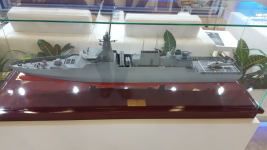
Huge warship. Hopefully, it will find it's way towards Pakistan Navy post 2030s.
 
Pakistan’s First Locally Built Jinnah-Class Frigate to Feature SMASH Supersonic Missiles

1738273975213.jpeg

Pakistan Navy set to launch its first indigenously built Jinnah-class frigate, equipped with next-generation sensors and the powerful SMASH supersonic missile system

 
@Quwa

remember this research paper?

I wonder whether Jinnah is the v2 config or whether its the v1 with a v2 uparmed version in the plans... This paper i forgot about but shows some direction possibly for this project
 

Attachments

To view this content we will need your consent to set third party cookies.
For more detailed information, see our cookies page.
 

PN's Flagship frigate Program​

"Interms of an indigenous project involving partners with ToT- The Jinnah Class frigate Batch I & II may be termed as JF-17 Thunder for Pakistan Navy.


1743590174027.png


The 4000 tonns jinnah class frigate development builds on the experience gained through Pakistan’s collaboration with Turkiye during MILGEM Frigates.​


Moving to some key systems - PN has a viable option for VLS -​

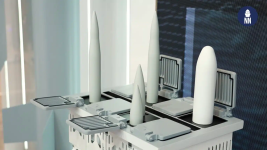
At IDEX 2025, Turkiye’s missile manufacturer, Roketsan, showcased its indigenous vertical launch system (VLS), “MIDLAS,” featuring quad-pack surface-to-air missile launching capabilities and a newly introduced ability to launch anti-ship missiles.


1743589867899.png

Turkish missile manufacturer Roketsan is showcasing its homegrown vertical launching system (VLS) solution, the MIDLAS (Milli Dikey Atım Sistemi), at IDEX NAVDEX 2025 exhibition in Abu Dhabi.


The scale model of MIDLAS at the event shows ATMACA anti-ship missile and quad pack SAM solutions, which is currently under process by Roketsan.


Similar;y as for other sensors such as AESA Radar - the example of Indonesia with Turkish Aselsan is a case in point.

Indonesia’s future Merah Putih-class frigates will be equipped with ASELSAN’s Mete Han multi-function AESA radar, marking a new export in naval radars.

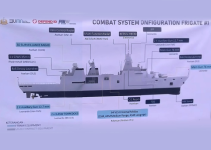
A brochure showing the equipment of Merah Putih-class frigates was shared on social media. The equipment was separated into “Main Contract” and “Fitted For but Not With (FFBNW)”.

Turkish main contract equipment includes the Mete Han multi-function AESA radar and CENK 200-N (MAR-D) searching radar for helicopter approach control, FERSAH hull-mounted sonar, and decoy launchers from ASELSAN. HAVELSAN, on the other hand, will provide the systems for the CIC room, which might be translated to an export of the ADVENT CMS.

Mete Han is a new name, but its fixed configuration and size suggest it might be the AKREP 500-NI multi-function AESA radar of the ÇAFRAD multi-band radar suite to be used on TF-2000 destroyers being built for the Turkish Navy. Thus, it can be inferred that ASELSAN has developed an “ÇAFRAD Lite” solution for smaller warships like frigates.

FFBNW equipment is listed as CENK 400-N (CENK-S) AESA searching radar and 64 MİDLAS VLS from ROKETSAN.

CENK 400-N (CENK-S) is currently in use with the Turkish Navy’s I-class frigate TCG İstanbul (F-515) and will be used on the other seven class ships to enter service. The radar’s export agreement to Indonesia was announced in 2024; thus, its integration decision might have passed.

TurDef learnt that the brochure has a spelling error where SAM was written as "ASM". If Indonesia decides to place the MİDLAS VLS, the frigate will be capable of using HİSAR-D and SİPER missiles for air defence as well as the vertically launched version of ATMACA anti-ship missile for ASuW. More importantly, it will mark the first export of MİDLAS VLS and missiles associated with it.

1743589959537.png


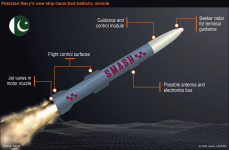
A key highlight of the Jinnah-class is its integration of the SMASH missile system, an indigenous supersonic weapon designed for both anti-ship and land-attack missions.

1743589246280.png

With a range exceeding 350 kilometers and the ability to travel at speeds over Mach 2.5, the SMASH missile offers Pakistan a powerful deterrent against enemy naval assets. The missile’s maneuverable reentry vehicle (MaRV) capability ensures high precision, making it an effective weapon for striking heavily defended targets."
 

Attachments

  • 1743589762407.png
    1743589762407.png
    1.2 MB · Views: 7
Last edited:
The more i think about JCF i think PN should delay it a few more years and design a destroyer-type ship instead of JCF it should be JCD. get all the help it needs from Turkish and Chinese friends to design and arm it. This will give PN a future looking war ship that can dominate arabian sea .
 
The more i think about JCF i think PN should delay it a few more years and design a destroyer-type ship instead of JCF it should be JCD. get all the help it needs from Turkish and Chinese friends to design and arm it. This will give PN a future looking war ship that can dominate arabian sea .

My guess is that this will happen eventually anyway

As someone stated in this thread, the Jinnah class frigate is the navys JF17, they are learning what they need to learn, setting up the basic requirements and staff, engineers for a homegrown industry that they can continue to build upon

The JCF like the JF17 will become more potent as the years pass and eventually like the JF17 programme, they will reach a stage where they can think about a PFX like next stage which may mean a even more potent frigate or it may mean a destroyer design based upon what they have learnt with the frigate program
 

PN's Flagship frigate Program​

"Interms of an indigenous project involving partners with ToT- The Jinnah Class frigate Batch I & II may be termed as JF-17 Thunder for Pakistan Navy.


View attachment 110957


The 4000 tonns jinnah class frigate development builds on the experience gained through Pakistan’s collaboration with Turkiye during MILGEM Frigates.​


Moving to some key systems - PN has a viable option for VLS -​

At IDEX 2025, Turkiye’s missile manufacturer, Roketsan, showcased its indigenous vertical launch system (VLS), “MIDLAS,” featuring quad-pack surface-to-air missile launching capabilities and a newly introduced ability to launch anti-ship missiles.


View attachment 110955

Turkish missile manufacturer Roketsan is showcasing its homegrown vertical launching system (VLS) solution, the MIDLAS (Milli Dikey Atım Sistemi), at IDEX NAVDEX 2025 exhibition in Abu Dhabi.


The scale model of MIDLAS at the event shows ATMACA anti-ship missile and quad pack SAM solutions, which is currently under process by Roketsan.


Similar;y as for other sensors such as AESA Radar - the example of Indonesia with Turkish Aselsan is a case in point.

Indonesia’s future Merah Putih-class frigates will be equipped with ASELSAN’s Mete Han multi-function AESA radar, marking a new export in naval radars.

A brochure showing the equipment of Merah Putih-class frigates was shared on social media. The equipment was separated into “Main Contract” and “Fitted For but Not With (FFBNW)”.

Turkish main contract equipment includes the Mete Han multi-function AESA radar and CENK 200-N (MAR-D) searching radar for helicopter approach control, FERSAH hull-mounted sonar, and decoy launchers from ASELSAN. HAVELSAN, on the other hand, will provide the systems for the CIC room, which might be translated to an export of the ADVENT CMS.

Mete Han is a new name, but its fixed configuration and size suggest it might be the AKREP 500-NI multi-function AESA radar of the ÇAFRAD multi-band radar suite to be used on TF-2000 destroyers being built for the Turkish Navy. Thus, it can be inferred that ASELSAN has developed an “ÇAFRAD Lite” solution for smaller warships like frigates.

FFBNW equipment is listed as CENK 400-N (CENK-S) AESA searching radar and 64 MİDLAS VLS from ROKETSAN.

CENK 400-N (CENK-S) is currently in use with the Turkish Navy’s I-class frigate TCG İstanbul (F-515) and will be used on the other seven class ships to enter service. The radar’s export agreement to Indonesia was announced in 2024; thus, its integration decision might have passed.

TurDef learnt that the brochure has a spelling error where SAM was written as "ASM". If Indonesia decides to place the MİDLAS VLS, the frigate will be capable of using HİSAR-D and SİPER missiles for air defence as well as the vertically launched version of ATMACA anti-ship missile for ASuW. More importantly, it will mark the first export of MİDLAS VLS and missiles associated with it.

View attachment 110956


A key highlight of the Jinnah-class is its integration of the SMASH missile system, an indigenous supersonic weapon designed for both anti-ship and land-attack missions.

View attachment 110950

With a range exceeding 350 kilometers and the ability to travel at speeds over Mach 2.5, the SMASH missile offers Pakistan a powerful deterrent against enemy naval assets. The missile’s maneuverable reentry vehicle (MaRV) capability ensures high precision, making it an effective weapon for striking heavily defended targets."
Is the PN considering the TF-2000 (with its 96 VLS cells and 180 km range Siper Block 3 Missile)? Any estimate of the cost of the TF-2000? 8300 tons is heavier than the 6000 ton design it said it is seeking, but the Turkish design may be the most heavily armed vessel in its weight class, that is available to the PN.
 
Last edited:
Is the PN considering the TF-2000 (with its 96 VLS cells and 180 Siper Block 3 Missile)? Any estimate of the cost of the TF-2000? 8300 tons is heavier than the 6000 ton design it taught, but the Turkish design may be the most heavily armed vessel in its weight class that is available to the PN.
can the PN afford to fill the VLS of such a ship...?

a full VLS loadout would likely cost as much as a JCF, if not, more.
 
can the PN afford to fill the VLS of such a ship...?

a full VLS loadout would likely cost as much as a JCF, if not, more.
Probably not at present, but having the ships in hand and being able to load them up during heightened tensions could complicate adversary ability to think they can overwhelm a task force keeping Pakistanis SLOCs open. A ship that size is probably necessary to have the power generation to power the radars able to detect adversaries far enough out to knock out the aircraft carrying supersonic anti ship missiles before they can launch upon the task force or land based torpedo missiles so Pakistan can maintain submarine bastions.
 
Probably not at present, but having the ships in hand and being able to load them up during heightened tensions could complicate adversary ability to think they can overwhelm a task force keeping Pakistanis SLOCs open. A ship that size is probably necessary to have the power generation to power the radars able to detect adversaries far enough out to knock out the aircraft carrying supersonic anti ship missiles before they can launch upon the task force or land based torpedo missiles so Pakistan can maintain submarine bastions.

One TF2000 would basically be equivalent to 4 JCF in terms of cost. Dispersing of the asset is an important ability that we need. One or two capital ships will be the main target and they will do whatever they can to get rid of them. It is just a risk, not worth taking.
 
PN prob won't get anything as big as the TF-2000 because, ultimately, the PN is focused on asymmetrical gains. If the goal's to acquire a long-range AAW capability, then NHQ will focus on ensuring the JCF can use something like SIPER when available rather than seeking a larger ship for the sake of AAW.

The PN's real edge will come from its future sub-surface programs: SWATS, a next-gen SSP, and AUVs. A robust sub-surface presence will deter most threats, leaving surface platforms like the JCF (ideally with medium-to-long-range AAW) to round it out with AAW for a comprehensive umbrella.
 

Users who are viewing this thread

Country Watch Latest

Latest Posts

Back
Top