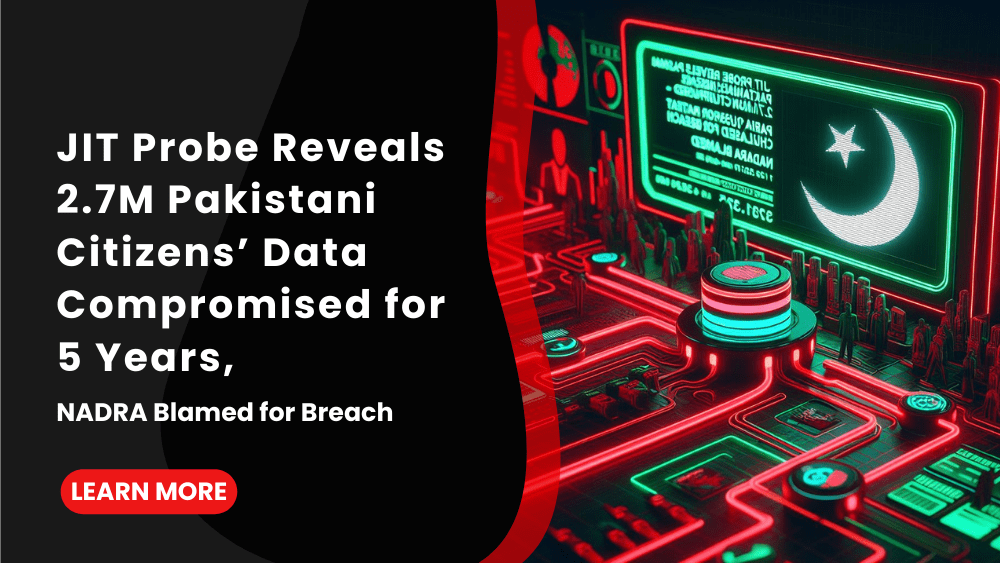
JIT Probe Reveals 2.7M Pakistani Citizens’ Data Breached for 5 Years, NADRA Blamed for Data Leak

Sir data is the thing.
Data is what used for all sorts of things.
Also a very attractive target for hacking activities. Treasure trove of information at one or few locations and bingo. If I will be working for enemy, getting that data is my first priority.

Next wars are AI based, cyberspace disruptions.
Hybrid regime is also going to use it for crackdown against army and political dissent. Data can be fed to Madam Nadra and army can just block people IDs, NICs, passports, enmass.

It is all good till someone us is not found in the dragnet.

Welcome to North Korea 2.0
And China 1.0
Data collection has been happening for a long time but in total disarray.

A lot of very useful intel against terrorists was collected from these efforts. But the problem isn’t so much whether it can be used for oppression but how.

You can use known anti-state or anti-who-is-in-power targets to do something as focused as black vigo pick ups to blocking off documents, access to electricity and water along with potentially doing what China does in terms of social scoring.

However, to actually implement in practice means you either get an already developed slate like Chinese society or you will have trouble as Turkey is having recently.

You are better off having people voluntarily give up freedom using the Saudi model of opening up society to social media but for that you also need to provide prosperity which neither of these duffers will ever have the vision nor character to implement.

So what you get then is a semblance of stability through fear in your capital and perhaps parts of larger cities but a constant bleeding of resources both human and capital to insurgencies and security needs.

There will be utter doomsday types who will predict the worst to this suppression from PTI gang and others while those with connections or monetary interests aligned with the establishment or rather the “autonomous” system of military-elite-feudal will either say all is well or spout pseudo-intellectual nonsense to “this is what works”.

But the issue isn’t purely data collection and the security of the data or otherwise - but that at the end the various species living in the ecosystem of Pakistan make it a challenge for data hygiene and any surgical action on it. Only truly useful for financial hacks or very specific targeted action by enemy states or actors to say find data on individuals critical to their time bound plans.

Those in charge can never utilize it properly for their own house-of-card goals nor will any of the inhabitants organize around any true reformist lines other than ethnofascist ideals to rebel against it.
 
So we can have 10 million of you running around chanting haqeeqi azadi while the entire country burns by Afghan bomb blasts? Then a colour revolution? A civil war? India invades while you run your haqeeqi azadi elsewhere? We don't want your arab spring Indian wet dreams to play out.

They need to monitor every Pakistani and make sure all the illegals and terrorists are captured.
I hate to be sarcastic but wish you had some info...
Why afgahnis are blowing bombs, ask ISI chiefs from 1970s, ghulam jilanis, riaz Khans, Akhtars, hameed guls, durranis, kyayanis, today's Asim Muneer, and God knows who is the current chanakya chief who might be playing games to become real chief!

Do I need to explode the fact to you that what destruction army and it's political wing has brought on Pakistan?
Seven party muj coalition against USSR?
Good Taliban, bad Taliban! Does that ring a bell?
And more than dozen raddul XXX Operations?
 

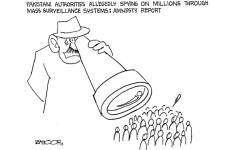
Amnesty calls out Pakistan for mass telecom surveillance​


Govt can spy on 4m phones, restrict YouTube, Facebook, block over 650,000 websites across Pakistan
September 09, 2025

Pakistan is spying on millions of its citizens using a Chinese-built internet firewall that censors social media and a phone-tapping system, in one of the most comprehensive examples of state surveillance outside China, Amnesty International said.

In a report released on Tuesday, the rights watchdog said that Pakistan's growing monitoring network was built using both Chinese and Western technology and powered a large crackdown on dissent and free speech.

Pakistan has further tightened political and media freedoms in recent years, particularly after the military broke with then-Prime Minister Imran Khan in 2022, who was later jailed and thousands of his party activists declined.


According to Amnesty, Pakistan's spy agencies can monitor more than 4 million mobile phones at a time through its Lawful Intercept Management System (LIMS), while a firewall known as WMS 2.0 that inspects internet traffic can block 2 million active sessions at a time.

It added that the two monitoring systems function in tandem: one lets intelligence agencies tap calls and texts while the other slows or blocks websites and social media across the country.

Amnesty technologist Jurre van Berge told Reuters that the number of phones under surveillance may be higher, as all four major mobile operators have been ordered to connect to LIMS.

"Mass surveillance creates a chilling effect in society, whereby people are deterred from exercising their rights, both online and offline," the report said.

Amnesty said its findings draw on a 2024 Islamabad High Court case filed by Bushra Bibi, the wife of former premier Khan, after her private calls were leaked online.

In court, Pakistan's defence ministries and intelligence agencies denied running or even having the capacity for phone tapping. When questioned, however, the telecom regulator acknowledged it had already ordered phone companies to install LIMS for use by "designated agencies."


Pakistan's technology, interior, and information ministries, as well as the telecom regulator, did not respond to questions from Reuters about the Amnesty report.

Foreign suppliers

Pakistan is currently blocking about 650,000 web links and restricting platforms such as YouTube, Facebook and X, Amnesty said.

The controls have hit hardest in the insurgency-hit Balochistan province, where districts have faced years-long internet blackouts, and rights groups accuse the military of disappearances and killings of Baloch and Pashtun activists, charges it denies.

According to Amnesty, they have reviewed licensing agreements, trade data, leaked technical files and Chinese records tying the firewall supplier to state-owned firms in Beijing.

It said that the firewall is supplied by the Chinese company Geedge Networks. The company did not respond to a request for comment.

Ben Wagner, Professor of Human Rights and Technology at Austrian university IT:U, has said that mobile call monitoring centers are common globally, but internet filtering for the public is rare. He adds that having both in Pakistan "constitutes a troubling development from a human rights perspective” and "suggests greater restrictions on freedom of expression and privacy will become more common as such tools become easier to implement."

Amnesty said the firewall uses equipment from US-based Niagara Networks, software from Thales DIS, a unit of France's Thales (TCFP.PA), and servers from a Chinese state IT firm. An earlier version relied on Canada’s Sandvine.

Niagara told Reuters it follows US export rules, does not know end users or how its products are used, and only sells tapping and aggregation gear.

Amnesty said that Germany’s Utimaco made the phone tapping system and deployed it through monitoring centres run by UAE-based Datafusion.

Datafusion told Amnesty that its centres are only sold to law enforcement and that it does not make LIMS, while AppLogic Networks, the successor to Sandvine, said it has grievance mechanisms to prevent misuse.

The other companies named in the report did not respond to requests for comment.

SO what ?

Every country is doing it, except for the ones who are incapable of or not worth it.
Israel is trying it's best to incite chaos, and this is not going to end well.

and for the activists, here is an assignment.
Google , Microsoft and Amazon. run how many data centers ?
Now go count physical data centers.
Now guess who runs the ghost data centers ?
 

Amnesty calls out Pakistan for mass telecom surveillance​


Govt can spy on 4m phones, restrict YouTube, Facebook, block over 650,000 websites across Pakistan
September 09, 2025

Pakistan is spying on millions of its citizens using a Chinese-built internet firewall that censors social media and a phone-tapping system, in one of the most comprehensive examples of state surveillance outside China, Amnesty International said.

In the US, every single cell phone, communication device is spied on. Israel does the same on the entire middle east. Does Amnesty not have enough work to do but to write these propaganda articles that are then used by our Afghan propagandists to post and use? Wasn't killing our innocent women and children not enough by TTP and BLA?
 

Amnesty calls out Pakistan for mass telecom surveillance​


Govt can spy on 4m phones, restrict YouTube, Facebook, block over 650,000 websites across Pakistan
September 09, 2025

Pakistan is spying on millions of its citizens using a Chinese-built internet firewall that censors social media and a phone-tapping system, in one of the most comprehensive examples of state surveillance outside China, Amnesty International said.

In a report released on Tuesday, the rights watchdog said that Pakistan's growing monitoring network was built using both Chinese and Western technology and powered a large crackdown on dissent and free speech.

Pakistan has further tightened political and media freedoms in recent years, particularly after the military broke with then-Prime Minister Imran Khan in 2022, who was later jailed and thousands of his party activists declined.


According to Amnesty, Pakistan's spy agencies can monitor more than 4 million mobile phones at a time through its Lawful Intercept Management System (LIMS), while a firewall known as WMS 2.0 that inspects internet traffic can block 2 million active sessions at a time.

It added that the two monitoring systems function in tandem: one lets intelligence agencies tap calls and texts while the other slows or blocks websites and social media across the country.

Amnesty technologist Jurre van Berge told Reuters that the number of phones under surveillance may be higher, as all four major mobile operators have been ordered to connect to LIMS.

"Mass surveillance creates a chilling effect in society, whereby people are deterred from exercising their rights, both online and offline," the report said.

Amnesty said its findings draw on a 2024 Islamabad High Court case filed by Bushra Bibi, the wife of former premier Khan, after her private calls were leaked online.

In court, Pakistan's defence ministries and intelligence agencies denied running or even having the capacity for phone tapping. When questioned, however, the telecom regulator acknowledged it had already ordered phone companies to install LIMS for use by "designated agencies."


Pakistan's technology, interior, and information ministries, as well as the telecom regulator, did not respond to questions from Reuters about the Amnesty report.

Foreign suppliers

Pakistan is currently blocking about 650,000 web links and restricting platforms such as YouTube, Facebook and X, Amnesty said.

The controls have hit hardest in the insurgency-hit Balochistan province, where districts have faced years-long internet blackouts, and rights groups accuse the military of disappearances and killings of Baloch and Pashtun activists, charges it denies.

According to Amnesty, they have reviewed licensing agreements, trade data, leaked technical files and Chinese records tying the firewall supplier to state-owned firms in Beijing.

It said that the firewall is supplied by the Chinese company Geedge Networks. The company did not respond to a request for comment.

Ben Wagner, Professor of Human Rights and Technology at Austrian university IT:U, has said that mobile call monitoring centers are common globally, but internet filtering for the public is rare. He adds that having both in Pakistan "constitutes a troubling development from a human rights perspective” and "suggests greater restrictions on freedom of expression and privacy will become more common as such tools become easier to implement."

Amnesty said the firewall uses equipment from US-based Niagara Networks, software from Thales DIS, a unit of France's Thales (TCFP.PA), and servers from a Chinese state IT firm. An earlier version relied on Canada’s Sandvine.

Niagara told Reuters it follows US export rules, does not know end users or how its products are used, and only sells tapping and aggregation gear.

Amnesty said that Germany’s Utimaco made the phone tapping system and deployed it through monitoring centres run by UAE-based Datafusion.

Datafusion told Amnesty that its centres are only sold to law enforcement and that it does not make LIMS, while AppLogic Networks, the successor to Sandvine, said it has grievance mechanisms to prevent misuse.

The other companies named in the report did not respond to requests for comment.
What abuot your country a living hell hole ?
 

Amnesty calls out Pakistan for mass telecom surveillance​


Govt can spy on 4m phones, restrict YouTube, Facebook, block over 650,000 websites across Pakistan
September 09, 2025

Pakistan is spying on millions of its citizens using a Chinese-built internet firewall that censors social media and a phone-tapping system, in one of the most comprehensive examples of state surveillance outside China, Amnesty International said.

In a report released on Tuesday, the rights watchdog said that Pakistan's growing monitoring network was built using both Chinese and Western technology and powered a large crackdown on dissent and free speech.

Pakistan has further tightened political and media freedoms in recent years, particularly after the military broke with then-Prime Minister Imran Khan in 2022, who was later jailed and thousands of his party activists declined.


According to Amnesty, Pakistan's spy agencies can monitor more than 4 million mobile phones at a time through its Lawful Intercept Management System (LIMS), while a firewall known as WMS 2.0 that inspects internet traffic can block 2 million active sessions at a time.

It added that the two monitoring systems function in tandem: one lets intelligence agencies tap calls and texts while the other slows or blocks websites and social media across the country.

Amnesty technologist Jurre van Berge told Reuters that the number of phones under surveillance may be higher, as all four major mobile operators have been ordered to connect to LIMS.

"Mass surveillance creates a chilling effect in society, whereby people are deterred from exercising their rights, both online and offline," the report said.

Amnesty said its findings draw on a 2024 Islamabad High Court case filed by Bushra Bibi, the wife of former premier Khan, after her private calls were leaked online.

In court, Pakistan's defence ministries and intelligence agencies denied running or even having the capacity for phone tapping. When questioned, however, the telecom regulator acknowledged it had already ordered phone companies to install LIMS for use by "designated agencies."


Pakistan's technology, interior, and information ministries, as well as the telecom regulator, did not respond to questions from Reuters about the Amnesty report.

Foreign suppliers

Pakistan is currently blocking about 650,000 web links and restricting platforms such as YouTube, Facebook and X, Amnesty said.

The controls have hit hardest in the insurgency-hit Balochistan province, where districts have faced years-long internet blackouts, and rights groups accuse the military of disappearances and killings of Baloch and Pashtun activists, charges it denies.

According to Amnesty, they have reviewed licensing agreements, trade data, leaked technical files and Chinese records tying the firewall supplier to state-owned firms in Beijing.

It said that the firewall is supplied by the Chinese company Geedge Networks. The company did not respond to a request for comment.

Ben Wagner, Professor of Human Rights and Technology at Austrian university IT:U, has said that mobile call monitoring centers are common globally, but internet filtering for the public is rare. He adds that having both in Pakistan "constitutes a troubling development from a human rights perspective” and "suggests greater restrictions on freedom of expression and privacy will become more common as such tools become easier to implement."

Amnesty said the firewall uses equipment from US-based Niagara Networks, software from Thales DIS, a unit of France's Thales (TCFP.PA), and servers from a Chinese state IT firm. An earlier version relied on Canada’s Sandvine.

Niagara told Reuters it follows US export rules, does not know end users or how its products are used, and only sells tapping and aggregation gear.

Amnesty said that Germany’s Utimaco made the phone tapping system and deployed it through monitoring centres run by UAE-based Datafusion.

Datafusion told Amnesty that its centres are only sold to law enforcement and that it does not make LIMS, while AppLogic Networks, the successor to Sandvine, said it has grievance mechanisms to prevent misuse.

The other companies named in the report did not respond to requests for comment.
and yet crime and corruptiom is still rampant even after all this. one must wonder who is the for, the common people or the criminals
 

Amnesty calls out Pakistan for mass telecom surveillance​


Govt can spy on 4m phones, restrict YouTube, Facebook, block over 650,000 websites across Pakistan
September 09, 2025

Pakistan is spying on millions of its citizens using a Chinese-built internet firewall that censors social media and a phone-tapping system, in one of the most comprehensive examples of state surveillance outside China, Amnesty International said.

In a report released on Tuesday, the rights watchdog said that Pakistan's growing monitoring network was built using both Chinese and Western technology and powered a large crackdown on dissent and free speech.

Pakistan has further tightened political and media freedoms in recent years, particularly after the military broke with then-Prime Minister Imran Khan in 2022, who was later jailed and thousands of his party activists declined.


According to Amnesty, Pakistan's spy agencies can monitor more than 4 million mobile phones at a time through its Lawful Intercept Management System (LIMS), while a firewall known as WMS 2.0 that inspects internet traffic can block 2 million active sessions at a time.

It added that the two monitoring systems function in tandem: one lets intelligence agencies tap calls and texts while the other slows or blocks websites and social media across the country.

Amnesty technologist Jurre van Berge told Reuters that the number of phones under surveillance may be higher, as all four major mobile operators have been ordered to connect to LIMS.

"Mass surveillance creates a chilling effect in society, whereby people are deterred from exercising their rights, both online and offline," the report said.

Amnesty said its findings draw on a 2024 Islamabad High Court case filed by Bushra Bibi, the wife of former premier Khan, after her private calls were leaked online.

In court, Pakistan's defence ministries and intelligence agencies denied running or even having the capacity for phone tapping. When questioned, however, the telecom regulator acknowledged it had already ordered phone companies to install LIMS for use by "designated agencies."


Pakistan's technology, interior, and information ministries, as well as the telecom regulator, did not respond to questions from Reuters about the Amnesty report.

Foreign suppliers

Pakistan is currently blocking about 650,000 web links and restricting platforms such as YouTube, Facebook and X, Amnesty said.

The controls have hit hardest in the insurgency-hit Balochistan province, where districts have faced years-long internet blackouts, and rights groups accuse the military of disappearances and killings of Baloch and Pashtun activists, charges it denies.

According to Amnesty, they have reviewed licensing agreements, trade data, leaked technical files and Chinese records tying the firewall supplier to state-owned firms in Beijing.

It said that the firewall is supplied by the Chinese company Geedge Networks. The company did not respond to a request for comment.

Ben Wagner, Professor of Human Rights and Technology at Austrian university IT:U, has said that mobile call monitoring centers are common globally, but internet filtering for the public is rare. He adds that having both in Pakistan "constitutes a troubling development from a human rights perspective” and "suggests greater restrictions on freedom of expression and privacy will become more common as such tools become easier to implement."

Amnesty said the firewall uses equipment from US-based Niagara Networks, software from Thales DIS, a unit of France's Thales (TCFP.PA), and servers from a Chinese state IT firm. An earlier version relied on Canada’s Sandvine.

Niagara told Reuters it follows US export rules, does not know end users or how its products are used, and only sells tapping and aggregation gear.

Amnesty said that Germany’s Utimaco made the phone tapping system and deployed it through monitoring centres run by UAE-based Datafusion.

Datafusion told Amnesty that its centres are only sold to law enforcement and that it does not make LIMS, while AppLogic Networks, the successor to Sandvine, said it has grievance mechanisms to prevent misuse.

The other companies named in the report did not respond to requests for comment.
Who doesn't do that?
Given the use of social media as weapons of dismantling nations from within, it is the responsibility of every state to safeguard itself against such attacks by the enemy.
 
Last edited:
  1. NADRA Blamed for the Data Breach

According to a probe by a joint investigation team, the personal records of over 2.7 million Pakistani citizens have been exposed online in massive data breaches over the past 5 years.


The probe discovered that highly sensitive information belonging to citizens, such as national ID numbers, passport and visa details, income tax records, and even information on debt and bank loans was being openly circulated on the internet since 2017.

The investigation raised serious concerns about lax data handling practices at various government departments and private companies. Personal records were being collected, digitized and even outsourced without proper security protocols.

NADRA Blamed for the Data Breach​

This major data breach involves one of Pakistan’s most important government organizations – the National Database and Registration Authority, also known as NADRA.

NADRA serves as the national identity database, collecting and storing civic registration information and ID records for all Pakistani citizens. It’s basically a central repository for residents’ most sensitive personal data.

The investigation discovered that specific NADRA offices in major cities like Karachi, Multan, and Peshawar were allegedly involved in leaking citizens’ data over the past 5 years.

Traces of this leaked NADRA data was found being used or circulated as far away as Argentina and Romania.

Following an investigation into the cybersecurity incident that occurred in March 2023, appropriate measures have been taken.

The Joint Investigation Team (JIT) has recommended upgrading technology and initiating departmental and criminal proceedings against those responsible for the security lapse.

Concerns regarding the vulnerability of Nadra’s data had been previously raised but garnered significant attention following the disclosure of an information leak involving certain senior military officials.

The report placed blame on NADRA for lacking proper security protocols when digitizing storage, sharing data between departments, and potentially outsourcing databases to third parties.

This failure to protect citizens’ most confidential files is a huge privacy breach of trust that needs to be addressed through stronger laws and updated technology.
 
Massive data already leaked


That is one other issue.
The vendors who supplied the fw, surveillance software can provide tools to exfiltrate data.
If not, then every data does not matter how secure it is, can be hacked.
That's why in cybersecurity world, it is said, we can only mitigate attacks and vulnerabilities.
 

Users who are viewing this thread

  • Pakistan Defence Latest

    Back
    Top