Navigation
Install the app
How to install the app on iOS
Follow along with the video below to see how to install our site as a web app on your home screen.
Note: This feature may not be available in some browsers.
More options
Style variation
You are using an out of date browser. It may not display this or other websites correctly.
You should upgrade or use an alternative browser.
You should upgrade or use an alternative browser.
Just a Nice Pic
- Thread starter Fatman17
- Start date
More options
Who Replied?

Fatman17
THINK TANK: CONSULTANT
- Thread starter
- #1,112
Memorable RIAT aircraft attendees and the stories behind them - Part 1
- Aviation Features
- Memorable RIAT aircraft attendees and the stories behind them - Part 1
By Ben Stanley Hall
10th July 2025
Feature
2025 marks the 40th anniversary of what is now known as the Royal International Air Tattoo making RAF Fairford its home. Ben Stanley Hall looks at some of the more interesting first appearances at the world’s greatest military airshow
The modern-day Royal International Air Tattoo can trace its lineage back to the 1971 airshow at North Weald, Essex. Organised by a pair of air traffic controllers, Paul Bowen and Tim Prince, and staffed exclusively with volunteers, the airshow was in support of the Royal Air Forces Association. The airshow was held only once more at North Weald, in 1972, before moving to RAF Greenham Common, Berkshire, being staged intermittently between 1973 and 1983. The 1976 show was the first to use the ‘International Air Tattoo’ (IAT) moniker.

RAF Fairford in Gloucestershire became home to the IAT from 1985 and, initially, it was held every other year, before moving to its now-familiar annual basis in 1993. In 1996, ‘Royal’ was added to the name of the show after it was endorsed by Her Majesty, Queen Elizabeth II.
Between 2000-2001, RIAT was held at RAF Cottesmore in Rutland due to engineering works at Fairford and in 2008, the show was cancelled due to unprecedented rainfall. The COVID-19 pandemic cancelled two further shows in 2020 and 2021.
Since its inception, and particularly while at Fairford, special and often unique appearances have graced the event. In this article, and the second part next month, we will look back at some of the most incredible ‘first appearances’ of aircraft at IAT/RIAT at RAF Fairford. These ‘firsts’ will be described by one of the show’s creators, Tim Prince, and the recent ‘voice of RIAT’ and its lead commentator, Ben Dunnell.

1991 – First UK airshow appearance of an in-service Warsaw Pact combat aircraft
While Eastern combat aircraft such as the MiG-29 and Su-27 had visited before, at Farnborough, these had been manufacturers’ aircraft, not from frontline military units. Tim Prince explained: “We had been ‘working’ the Embassy on an annual basis and the [Russian] air attaché had shown interest in establishing a charity to support his air force on the lines of our then ‘owner’, the RAFBF [RAF Benevolent Fund]. This resulted in our 1990 show at Boscombe Down enjoying the successful participation of an L-39C and L-410UVP, which led the way for the combat aircraft to participate in IAT91 at Fairford. Indeed, this resulted in us assisting in staging their first ‘public’ military air show at Kbely in September of that year.” The combat aircraft Tim was speaking about were a MiG-23ML Flogger G, 4644, and a pair of MiG-29A Fulcrums, 5616 and 7501.
1993 – First Western public appearance of a Tu-95 Bear and first appearance of an in-service MiG-21 Fishbed
Hot on the heels of the thawing relations between the East and West, and with past appearances from Warsaw Pact nations at IAT91 and ATI at Boscombe Down in 1992, the bar was raised even further. Ben Dunnell states “Even though aircraft from Soviet/Russian manufacturers had displayed at Farnborough, and the Russian LII flight research institute’s Su-27 had made such a memorable appearance at IAT’s Boscombe Down event in 1992, there was surely no more potent symbol of the warming in relations with the old Warsaw Pact foe than the sight of the Russian Air Force Tu-95 Bear settling onto Fairford’s tarmac for the 1993 show. The frontline heavy strategic bomber that, for decades, had been seen by countless RAF fighter pilots on quick reaction alert intercepts around Britain’s boundaries, but never actually on our soil – it was an incredible moment. What a sound, too! Sadly, those days of friendship now seem very far off.”
Tim Prince added: “Flushed from the success of Warsaw Pact aircraft taking part at Boscombe Down and Fairford, we turned our attention to securing a Bear through many direct approaches and visits to the Russian Embassy in London. We also ‘worked’ our Embassy in Moscow where our request for a Bear to attend the Air Tattoo on a United States military air base initially caused just a little amusement/scepticism, but together we made it happen. Discussing the project over dinner in a nearby Cotswolds restaurant with the forward planning team from the 182nd Guards Heavy Bomber Air Regiment was a surreal but illuminating experience. What a treat parking it next to the USAF B-52H at the show!”

In any other year, the first appearance of a single MiG-21 would receive top billing, let alone four of them in the flying display, known as the Sky Hussars. But with the Bear’s first appearance, the diminutive MiG takes second stage, although no less important or impressive. Ben Dunnell said: “A host of ex-Warsaw Pact combat types made their British in-service airshow debuts at the Air Tattoo around this time, but – Bear aside – the most important had to be the Hungarian Air Force MiG-21s, making up for the non-appearance of the expected Czechoslovak examples at Boscombe Down a year previously. This was the quintessential Cold War Eastern Bloc fighter, and we were treated to four of them giving a formation and dogfight display.”

Fatman17
THINK TANK: CONSULTANT
- Thread starter
- #1,113
Cápeti’ powering off Fairford’s runway to make up the Hungarian Sky Hussars’ four-ship demonstration with the legendary MiG-21 Fishbed
 Two of the four MiG-21s belonging to the Hungarian Air Force’s Sky Hussars demonstration team. All four MiGs came from 31. ‘Kapos’ Harcászati Repülo Ezred (31.HRE)
Tim added: “A lot of work went into the 1993 Air Tattoo where we celebrated the 75th anniversary of the RAF. Paul Bowen took a small team of volunteers to Hungary to negotiate the participation where his love of tobacco seemed to ring true with the one Fishbed in pseudo ‘Camel’ colour scheme!” The aircraft Tim referred to is MiG-21bis Fishbed N, 1904, which received a special shark paint scheme in 1992. It was named ‘Cápeti’ (Peter Shark) after a popular cartoon character of the time and used as the enemy of the Sky Hussars, during the air combat segment of their display.
 Taxiing in on the western end of the Fairford runway is the Armée de l’air Dassault Mirage IVP, 55/CB. The aircraft arrived directly from its home base of Mont-de-Marsan and belonged to Escadron de Bombardement 1/91 ‘Gascogne’ Glenn Stanley
 Initially conceived to fly high and fast to deliver a nuclear bomb onto a Soviet city as the IVA, a number of aircraft were upgraded to IVP (penetration) standard and its mission
It had been described by President de Gaulle in 1963: “We don’t have fighter aircraft, we have fear-inducing aircraft.” Talking of how much effort it took to lure the French into sending their jewel, Tim said: “Despite many requests over the years to secure this stunning aeroplane it took a visit to Paris, organised by our volunteer Derek Morter [of Blue Herons fame], so we could take the French Air Force air show participation manager out for dinner. It was a good opportunity to thank him for the excellent French military participation over the years and he kindly made it happen.”
Next month, we shall look at other ‘firsts’ at IAT/RIAT, and announce a competition where you have the chance to win a pair of tickets to this year’s Sunday show day at Fairford, to be part of the celebrations of IAT/RIAT calling Gloucestershire its home.
Tim added: “A lot of work went into the 1993 Air Tattoo where we celebrated the 75th anniversary of the RAF. Paul Bowen took a small team of volunteers to Hungary to negotiate the participation where his love of tobacco seemed to ring true with the one Fishbed in pseudo ‘Camel’ colour scheme!” The aircraft Tim referred to is MiG-21bis Fishbed N, 1904, which received a special shark paint scheme in 1992. It was named ‘Cápeti’ (Peter Shark) after a popular cartoon character of the time and used as the enemy of the Sky Hussars, during the air combat segment of their display.
1994 – First UK show appearance of the Dassault Mirage IV
While the French Air Force had always been a great supporter of the UK airshow scene, one aircraft in particular had eluded organisers… until the 1994 IAT. The Mirage IV had entered service in 1964 in the nuclear strike role, possibly the reason it never attended a UK airshow until 1994, at which time it was only two years away from being withdrawn from the nuclear role entirely. This example came from 1/91 ‘Gascogne’, based at Mont-de-Marsan. Ben said: “It seemed as if we’d never see a Mirage IV at a British show. The mighty French Air Force nuclear strike jet had appeared in UK skies during exercises, but never at a public event. Finally, the type – now in the reconnaissance role – changed that at IAT 94. They were regulars thereafter – what a shame, though, that we never enjoyed one in the flying programme...”
It had been described by President de Gaulle in 1963: “We don’t have fighter aircraft, we have fear-inducing aircraft.” Talking of how much effort it took to lure the French into sending their jewel, Tim said: “Despite many requests over the years to secure this stunning aeroplane it took a visit to Paris, organised by our volunteer Derek Morter [of Blue Herons fame], so we could take the French Air Force air show participation manager out for dinner. It was a good opportunity to thank him for the excellent French military participation over the years and he kindly made it happen.”
Next month, we shall look at other ‘firsts’ at IAT/RIAT, and announce a competition where you have the chance to win a pair of tickets to this year’s Sunday show day at Fairford, to be part of the celebrations of IAT/RIAT calling Gloucestershire its home.
Fatman17
THINK TANK: CONSULTANT
- Thread starter
- #1,114
Memorable RIAT aircraft attendees and the stories behind them - Part 2
- Aviation Features
- Memorable RIAT aircraft attendees and the stories behind them - Part 2
By Ben Stanley Hall
10th July 2025
Feature
Concluding AFM’s celebration marking the 40th anniversary of the Royal International Air Tattoo at RAF Fairford. Ben Stanley Hall looks at some of the most notable debuts at the world’s greatest military airshow

An aerial shot of the E-4B shows the size and scale of this classic 1970s-built aircraft
All images Glenn Stanley unless stated
After the heady days of the early 1990s, the falling of the Iron Curtain allowed many East European aircraft to make an appearance at airshows. Nevertheless, the following years were more about firsts for Western technology, such as the pan-European Eurofighter 2000, the stealthy B-2A Spirit and the revolutionary MV-22 Osprey.
1995 – First UK public appearance of the Eurofighter 2000
The finale of the Victory Show parade, which celebrated the 50th anniversary of World War Two, may be the lasting image from the 1995 event, but another major milestone was the debut of the Eurofighter 2000.Tim Prince reflected on the importance of the occasion: “The year of the Victory Airshow at the Air Tattoo was a huge theatrical production to reflect the end of World War Two. By comparison, John Turner’s routine in Eurofighter 2000 DA2, ZH558, operating out of BAe Warton each day, was, by necessity, relatively tame. Nevertheless, it was an important moment for us all.”
Ben Dunnell, the current lead commentator at RIAT, echoed Tim’s sentiments: “Of all my choices for this list, the Eurofighter 2000’s British public debut was the least spectacular. It gave just a few flypasts and didn’t even land at Fairford. But this was the first chance for a UK audience to see the most important new RAF combat aircraft since the Tornado, so it has to be included here.”
1997 – First UK landing of the USAF B-2A Spirit
In 1997, the USAF’s premier stealth bomber, the B-2A Spirit, 89-0127 Spirit of Kansas, made history by making the type’s first landing on UK soil. These days, appearances of Northrop Grumman’s flying wing bomber are a semiregular occurrence, but back in 1997 the Spirit had only graced the UK shores with flypasts at Farnborough Airshow in 1996 (88-0332 Spirit of Washington) and 1997 at RAF Mildenhall’s Air Fete (93-1086 Spirit of Kitty Hawk).Tim Prince explained how it came about: “Our relationship with the Chief of Staff of the Air Force (CSAF) and the outer office in the Pentagon had, slowly but surely, become very strong over the years since the Air Tattoo had moved onto a DoD airfield back in 1973. In subsequent years, two retired CSAFs had taken honorary positions on our team as vice patrons. In 1997, having been allocated a flypast by a B-2A operating out of Whiteman without landing at Fairford, a few focused calls to the outer office suggesting that our patron, HRH the Duke of Kent, might welcome a closer look at the Spirit, seemed appropriate. It was a good move, as HRH was delighted, as were the Spirit crews. A ‘fresh’ crew had been sent over for the return leg, so both had an opportunity to enjoy the event while on the ground.”

Compared to current Eurofighter displays, this was quite a tame affair. ZH588 arrived from the west, completed two 360° turns before a power climb out
Roger Leitch

The unmistakable shape of the Spirit as it cuts across the Gloucestershire skies. After its flypast, the aircraft landed, refuelled and departed back to its homebase of Whiteman AFB, Missouri
Peter R March

Moments before the iconic moment of the B-2A touching down on runway 09. This view shows off the curves of the Spirit, at complete odds with its angular planform view
Peter R March
Ben Dunnell added: “The rumours were out that the B-2, which was intended to make a couple of passes as it had at Mildenhall earlier in the USAF 50th anniversary season, might land at Fairford. Then we got the day’s detailed flying programme and they were confirmed. The spectacle didn’t disappoint.”
2006 – First UK appearance of the USMC MV-22 Osprey
The first appearance of a V-22 Osprey in the UK had to wait 17 years after the type’s maiden flight in 1989. While the tiltrotor design wasn’t new, the Osprey was the first to enter military service, which it did in 2000 with the United States Marine Corps’ Marine Medium Tiltrotor Training Squadron 204 (VMMT-204). The pair that made the type’s debut hailed from Marine Operational Test and Evaluation Squadron Twenty Two (VMX-22).Tim Prince said: “A few years before, we had held significant meetings with the manufacturer, its test pilots and engineers to ascertain the viability of participation by the Osprey. Interestingly, one development engineer was a Brit and had been through an ETPS engineers’ course at Boscombe Down. Prior to the Osprey attending in 2006 there had been a lot of work by us all to ensure that it would comply with all the MOD/CAA / RIAT regulations. It was actually meant to debut at Cottesmore in 2000, but the visit was cancelled after an incident with the aircraft in the States in April of that year. It was another milestone event for us and was well received by everyone at Fairford.”
Talking about the uniqueness of the aircraft, Ben Dunnell: “Tiltrotor aircraft were nothing new – Bell’s XV-15 technology demonstrator had been around for years and Bell Boeing’s production Osprey was almost two decades old by the time these USMC MV-22s made their British debut. Nevertheless, in a year that also witnessed the thrust-vectoring MiG-29M OVT putting on such spectacular routines, it was fascinating to watch another aircraft in a class of its own.”
2008 – First appearance by the USAF F-22A Raptor
While 2008 was meant to mark the Raptor’s European public debut, that was scuppered by the wet weather in the weeks preceding the show days. The F-22 did fly at Farnborough in 2008, but only on the trade days. The Raptors were back in 2010 to display in front of the public.
Just about to land, this USAF F-22A Raptor was one of three that attended the cancelled 2008 show
Peter R March

Fatman17
THINK TANK: CONSULTANT
- Thread starter
- #1,115
Shown here in its tiltrotor configuration, MV-22B, 166391, displays the versatility of the design
Peter R March

The USMC Osprey, configured for landing, with its ramp down and its air refuelling receptacle extended
Peter R March
Describing what transpired in 2008, Tim Prince said: “Along with many others appearing for the first time in the UK, this was a disappointing time for the Raptor team, with the public weekend of RIAT 2008 cancelled, meaning they were only able to undertake a rehearsal/validation flight. Nevertheless, the rehearsal on the Friday afternoon in atrocious weather was described as ‘stunning’ by everyone who witnessed it.”
Ben Dunnell saw the rehearsal: “No-one who was at Fairford prior to the planned RIAT 2008 weekend will forget the experience. One reason was the appalling weather and the state of the ground. Another was the incredible performance of the F-22 during its rehearsals. Two years previously, the MiG-29 OVT had flown through the most amazing demonstrations of a vectored-thrust fighter, but with the Raptor we were seeing a production, in-service jet going through its paces, rather than a test aircraft. Very impressive indeed – perhaps even more so as the F-22 was enveloped in vapour under the dark skies on the Friday afternoon.”
There have been more exciting firsts over the years, but for significance with regards to the future of aerial warfare, the display by the F-35 probably tops the list. Ben Dunnell commented; “It may have been two years late, but the F-35’s British debut was worth waiting for. Watching the rehearsal and validation flights by the RAF/Royal Navy and USMC F-35Bs was fascinating, not least because they used the temporary pads laid on the far side of the runway to enable the variant’s vertical take-off performance to be illustrated. We had a first-time air-to-air refuelling demonstration by USMC KC-130J and F-35B – the Marine Corps’ first ever participation in an Air Tattoo flying display, incredibly – and solo routines by both the British and American jets, as well as a unique formation of a UK jet with two Typhoons and the Red Arrows. It was a level of prominence befitting the significance of the F-35 to the future of air power.”

RAF F-35B Lightning II, ZM137, the first RAF F-35 to visit the UK in 2016

USMC F-35B, 168727/’VM-19’, performing a vertical landing and take off on a specially placed landing pad

Arriving at Fairford on the Friday allowed the public to witness the E-4B perform a flyby before breaking into the circuit

The USAF operates four of Nightwatch aircraft. When in action, it is known as the National Airborne Operations Center
Ben Dunnell said: “As a commentator, I always particularly enjoy opportunities to describe those showpieces that have never been seen before. Initially, the E-4B was scheduled to arrive on the Thursday before RIAT 2022 to take its place in the static display, but a delay would see it coming in at the close of Friday’s flying programme, and thus afford the chance to present it to the crowd. And, of course, it wasn’t just a straight-in approach, but an overhead break into a tight visual circuit. In mind was an interview I’d done with the great Reg Urschler, long-time P-51 Mustang warbird pilot, who had flown the E-4s, then newly upgraded to E-4B standard. He said it was ‘the most impressive airplane I flew on active duty’. I thought the captain on this occasion probably felt the same.”
Peter R March
The USMC Osprey, configured for landing, with its ramp down and its air refuelling receptacle extended
Peter R March
Describing what transpired in 2008, Tim Prince said: “Along with many others appearing for the first time in the UK, this was a disappointing time for the Raptor team, with the public weekend of RIAT 2008 cancelled, meaning they were only able to undertake a rehearsal/validation flight. Nevertheless, the rehearsal on the Friday afternoon in atrocious weather was described as ‘stunning’ by everyone who witnessed it.”
Ben Dunnell saw the rehearsal: “No-one who was at Fairford prior to the planned RIAT 2008 weekend will forget the experience. One reason was the appalling weather and the state of the ground. Another was the incredible performance of the F-22 during its rehearsals. Two years previously, the MiG-29 OVT had flown through the most amazing demonstrations of a vectored-thrust fighter, but with the Raptor we were seeing a production, in-service jet going through its paces, rather than a test aircraft. Very impressive indeed – perhaps even more so as the F-22 was enveloped in vapour under the dark skies on the Friday afternoon.”
2016 – First UK appearance of the F-35 Lightning II
This was another debut that happened later than originally planned, as Tim Prince explained: “The planned F-35B displays by both RAF and US Marine pilots in 2014 were to be the highlight of the last RIAT with me at the helm. Lockheed Martin, the USMC, the RAF, the RN and the DoD F-35 Joint Program Office had been working with us for months to make it happen. Teams of pilots, engineers, PA folk and the like had been despatched from the US, exhibition structures had been built and copious quantities of air show handouts delivered, only to be thwarted at the eleventh hour by a grounding of all F-35s following a significant engine issue on the USAF’s ‘A’ model. Not to be put off, the CEO of Lockheed Martin at the RIAT 2014 Gala Dinner that weekend made a promise that an F-35 would appear as soon as the issues had been resolved. She kept to her word, as we saw with the appearance of USMC and RAF F-35Bs in 2016.”There have been more exciting firsts over the years, but for significance with regards to the future of aerial warfare, the display by the F-35 probably tops the list. Ben Dunnell commented; “It may have been two years late, but the F-35’s British debut was worth waiting for. Watching the rehearsal and validation flights by the RAF/Royal Navy and USMC F-35Bs was fascinating, not least because they used the temporary pads laid on the far side of the runway to enable the variant’s vertical take-off performance to be illustrated. We had a first-time air-to-air refuelling demonstration by USMC KC-130J and F-35B – the Marine Corps’ first ever participation in an Air Tattoo flying display, incredibly – and solo routines by both the British and American jets, as well as a unique formation of a UK jet with two Typhoons and the Red Arrows. It was a level of prominence befitting the significance of the F-35 to the future of air power.”
2022 – First European show appearance by the USAF E-4B
On the face of it, the European debut of the E-4B Nightwatch might not seem all that significant or exciting compared to the arrival of Warsaw Pact types in the early 1990s or the stealthy aircraft in the years that followed. But anyone in attendance on that Friday afternoon will never forget the moment the 747-derived E-4B gracefully entered the Fairford circuit. The size of the aircraft grabbed the attention of all attendees as the so-called ‘Doomsday plane’ performed a fairly low flypast before landing on runway 27 and taxied into the static park.
RAF F-35B Lightning II, ZM137, the first RAF F-35 to visit the UK in 2016
USMC F-35B, 168727/’VM-19’, performing a vertical landing and take off on a specially placed landing pad
Arriving at Fairford on the Friday allowed the public to witness the E-4B perform a flyby before breaking into the circuit
The USAF operates four of Nightwatch aircraft. When in action, it is known as the National Airborne Operations Center
Ben Dunnell said: “As a commentator, I always particularly enjoy opportunities to describe those showpieces that have never been seen before. Initially, the E-4B was scheduled to arrive on the Thursday before RIAT 2022 to take its place in the static display, but a delay would see it coming in at the close of Friday’s flying programme, and thus afford the chance to present it to the crowd. And, of course, it wasn’t just a straight-in approach, but an overhead break into a tight visual circuit. In mind was an interview I’d done with the great Reg Urschler, long-time P-51 Mustang warbird pilot, who had flown the E-4s, then newly upgraded to E-4B standard. He said it was ‘the most impressive airplane I flew on active duty’. I thought the captain on this occasion probably felt the same.”

AZ_HighCountry
INT'L MOD

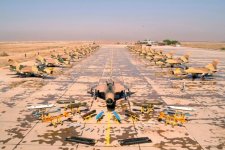
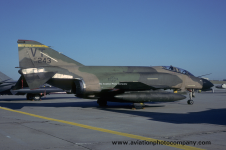
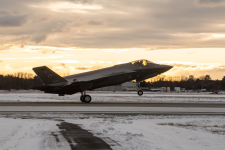
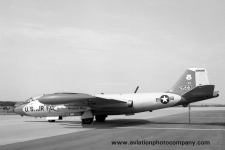
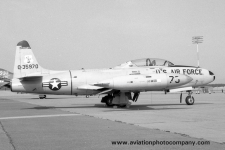
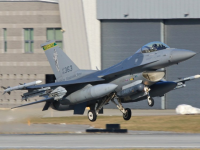
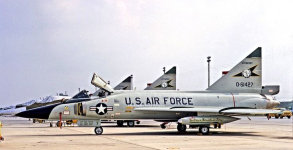
Tonight's selection: Vermont Air National Guard.
AZ_HighCountry
INT'L MOD
AZ_HighCountry
INT'L MOD
AZ_HighCountry
INT'L MOD
AZ_HighCountry
INT'L MOD
AZ_HighCountry
INT'L MOD
Users who are viewing this thread
Total: 2 (members: 0, guests: 2)
Pakistan Defence Latest


Country Watch Latest

Latest Posts
-

-

-
Yemen Civil War News and Discussion.. an evolving situation (19 Viewers)
- Latest: Khorasan Black Flags
-
 FlyDubai Incident: Pilot was stabbed on flight to Israel - diverted to Saudi Arabia (13 Viewers)
- Latest: MNZGamerX
-
