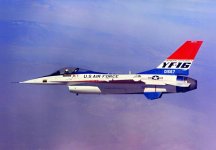
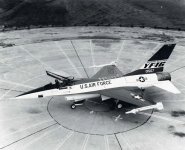
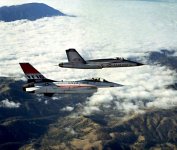
General Dynamics YF-16A Fighting Falcon, 72-1567, on February 2, 1974, during its first, official flight. While the aircraft has become common, at the time it represented a radical departure from the orthodoxy of US fighter design
USAF
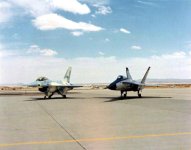
The two Lightweight Fighter (LWF) designs, the YF-16A and YF-17A, with the former represented by the second prototype. Of all the projects proposed by the US Air Force Prototype Study Team, LWF was by far the most successful, giving rise to the west’s most successful combat jet of the last half century and the ancestor of the US Navy’s most numerous jet fighter of the same period
Lockheed Martin
Test pilot and engineer Phil Oestricher in the cockpit of the first General Dynamics YF-16A Lightweight Fighter prototype at Carswell AFB, Texas, in December 1973. Oestricher would make the first (unscheduled) flight in the aircraft on January 20, 1974
Lockheed Martin
The two Lightweight Fighter designs were different, covering different technologies and configurations as required in the request for proposals. At the start of the competition, the US Air Force was under no obligation to proceed to a production program
USAF
The designs that led to the YF-16 on the heading page of a briefing presented by Harry J Hillaker, chief project engineer for the Model 401
Lockheed Martin
Today In Aviation History: First Flight of the Convair CV-540
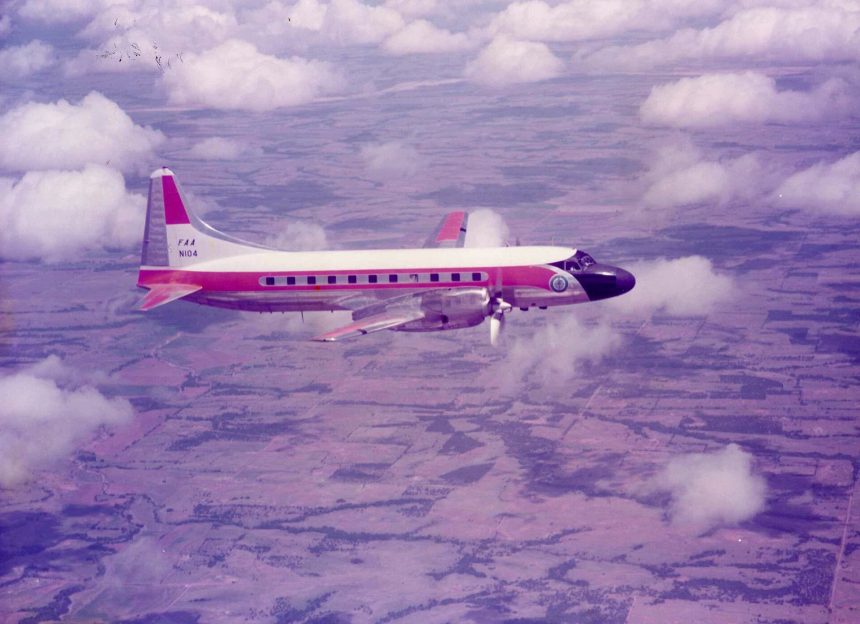
The Convair CV-540 took to the air for the first time on February 9, 1955, as a turboprop-powered evolution of the successful CV-240 airliner family. Developed from the CV-340, the CV-540 replaced piston engines with Napier Eland turboprops, reflecting the industry’s search for greater efficiency and performance in regional air transport. Though produced in limited numbers, the type played a key role in the progression that later led to more widely used Convair turboprop variants and highlighted the adaptability of the CV-240 design.
United States, Federal Aviation Administration Convair 540 N104, c/n 480, allocated to United States Air Force as 57-2551. Converted to C-131E-CO and delivered to FAA in 1968-04-01 as N104. In 1975 was re-registered N30, then N74 in 1976 and N39 in 1991-06-25. Via Wikimedia Commons
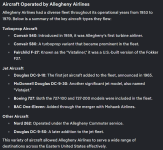
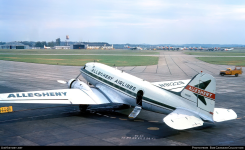
Back in the early days of my youth, Allegheny Airlines, the direct precursor to what would become USAir, flew the both the CV-540 and CV-580. Here is an AI breakdown of the aircraft in their fleet:
This site uses cookies to help personalise content, tailor your experience and to keep you logged in if you register.
By continuing to use this site, you are consenting to our use of cookies.