Navigation
Install the app
How to install the app on iOS
Follow along with the video below to see how to install our site as a web app on your home screen.
Note: This feature may not be available in some browsers.
More options
Style variation
You are using an out of date browser. It may not display this or other websites correctly.
You should upgrade or use an alternative browser.
You should upgrade or use an alternative browser.
Lebanon-Israel War | 2023-present
- Thread starter Persian Gulf
- Start date
More options
Who Replied?

Hassan Al-Somal
Elite Member
 ️Statement by Hezbollah:
"While the Israeli occupation forces were committing a new violation, adding to a series of blatant and documented breaches over three days since the ceasefire came into effect, and as a column of eight armored vehicles was moving on Sunday, 19-04-2026, from the town of Taybeh toward the old Al-Salaa site in the town of Deir Siryan, it was struck by a chain explosion of improvised explosive devices previously planted in the area by the fighters of the Islamic Resistance.
The explosion, which occurred in two waves between 15:40 and 16:40, led to the destruction of four Merkava tanks, which were seen engulfed in flames before the enemy, at 18:00, proceeded to withdraw them from the scene."

Lebanon, Israel to Hold Second Round of Talks in Washington on Thursday
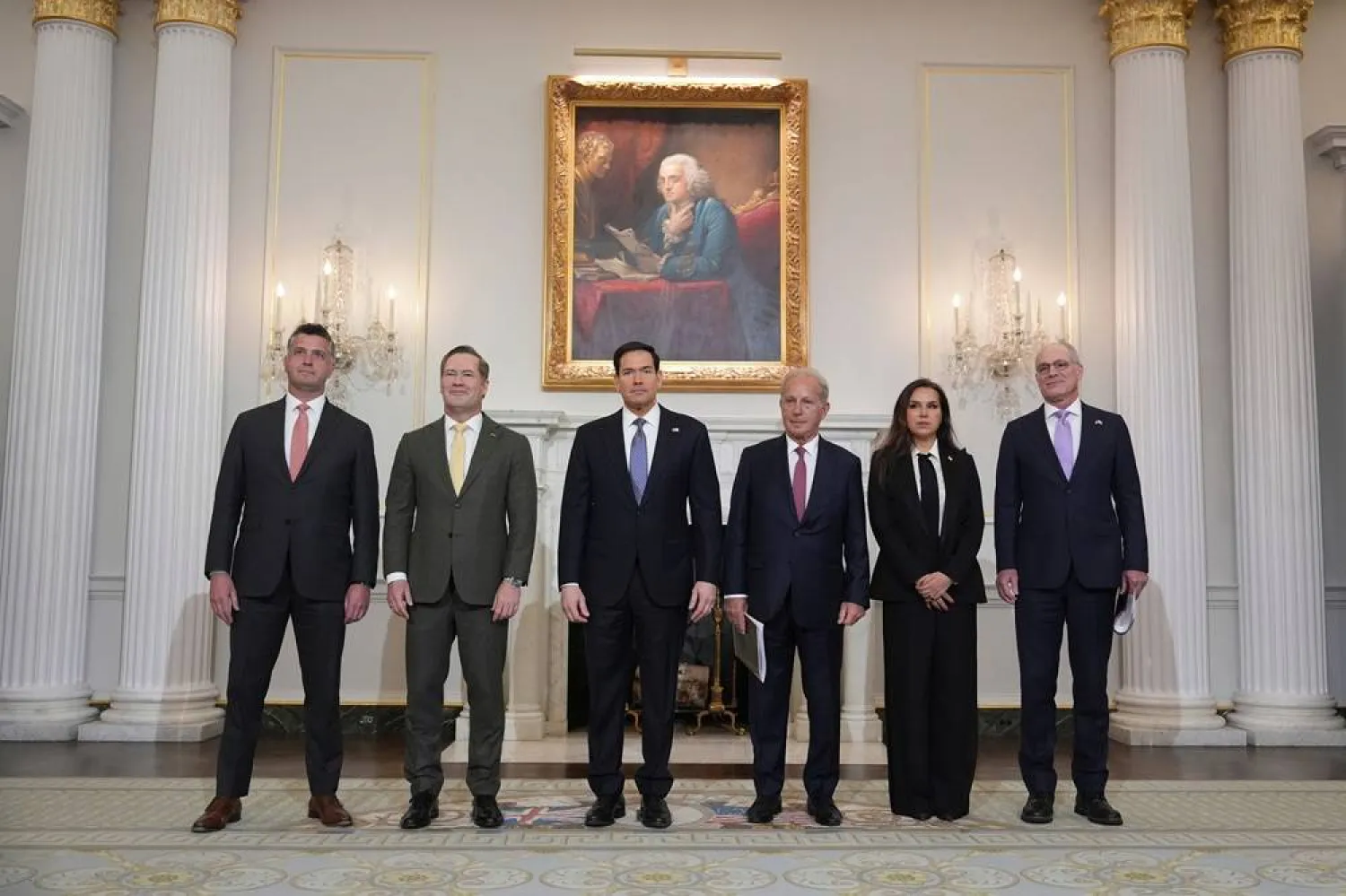
From left, Michael Needham, counselor for the US Dept. of State, US Ambassador to the United Nations Mike Waltz, Secretary of State Marco Rubio, US Ambassador to Lebanon Michel Issa, Lebanese Ambassador to the US Nada Hamadeh Moawad, and Israeli Ambassador to the US Yechiel Leiter pose for a photo before a meeting at the State Department in Washington, Tuesday, April 14, 2026. (AP)
17:25-20 April 2026 AD ـ 03 Thul-Qi’dah 1447 AH
17:21-20 April 2026 AD ـ 03 Thul-Qi’dah 1447 AH
Lebanese and Israeli representatives will hold talks in Washington on Thursday, a US State Department spokesperson and an Israeli source speaking on the condition of anonymity told Reuters on Monday.
The US will host the second round of ambassador-level talks between the two countries at the Department of State, the State Department spokesperson said.
US Secretary of State Marco Rubio hosted the first round of talks between Israeli ambassador to the United States Yechiel Leiter and Lebanon's ambassador to Washington Nada Moawad - the first direct talks between Israel and Lebanon in decades - on April 14.
"We will continue to facilitate direct, good-faith discussions between the two governments," the spokesperson said.
The second round of talks will mark the first talks between the two countries since a 10-day ceasefire took effect on Thursday.
- Aoun defends talks -
Lebanese President Joseph Aoun said Monday that planned talks with Israel aim to end hostilities and the occupation in the south, even as Hezbollah and its supporters rejected the negotiations.
Hezbollah lawmaker Hassan Fadlallah told AFP Monday it was in Aoun's and Lebanon's "interest" to withdraw from the talks, however adding that his group also wanted the ceasefire to last.
A ceasefire pausing more than six weeks of war between Hezbollah and Israel started on Friday after being announced by US President Donald Trump.
"It is in the interest of Lebanon, the president of the republic and the government to move away from the path of direct negotiation and return to a national understanding about the best option for Lebanon," Fadlallah told AFP.
"Perhaps through indirect negotiations, even via the United States of America, we can achieve" Lebanon's goals, Fadlallah stated.
Aoun said Monday the goal of negotiations was to "stop hostilities, end the Israeli occupation of southern regions and deploy the (Lebanese) army all the way to the internationally recognized southern borders".
Fadlallah said regional powers including Iran, Pakistan and Saudi Arabia have worked to build a US-Iran diplomatic track, which creates "a regional umbrella that can provide a kind of guarantee for Lebanon.
"Going into direct bilateral negotiations, alone, amid deep Lebanese divisions and internal disagreements, constitutes a threat to internal consensus."
He noted that there was no direct communication with the president, while Hezbollah's ministers remain in Lebanon's cabinet.
Aoun's remarks on Monday came after an address to the nation Friday night, in which he said: "We negotiate for ourselves... we are no longer a pawn in anyone's game, nor an arena for anyone's wars, and we never will be again."
The truce in Lebanon was also one of Iran's conditions for resuming talks with Washington to extend their separate ceasefire and work out the terms of a lasting peace.
Lebanon is officially at war with Israel and has no diplomatic relations with its southern neighbor.
- Aoun faces backlash -
On the road to Beirut's international airport, in the southern suburbs where Hezbollah holds sway, AFP images showed fresh graffiti attacking Aoun and Prime Minister Nawaf Salam on Monday, following their endorsement of negotiations.
"Joseph is a traitor, Nawaf is a turncoat," said one spray-painted sign. "Dealing with Israel is forbidden... no to normalization," another read.
Senior Hezbollah official Mahmud Qamati blasted Aoun on Saturday, saying "defeated, you go to the Israelis and Americans, let's see what you will get out of it".
Hezbollah supporters also heaped scorn on Aoun on social media.
"You're going to hand over the south after two days of negotiations?" one user posted on X, adding "we won't let you" sign an agreement.
"After all our sacrifices this guy wants to speak for us?" another user posted on X, with their profile picture showing a picture of Aoun and Salam with the words "they do not represent me".
Israeli attacks killed nearly 2,300 people and forced over a million to flee their homes, Lebanese authorities said, since Hezbollah pulled the country into the Middle East war last month.
"Any outcome of direct negotiations cannot be imposed on the people who made these sacrifices," Fadlallah told AFP.
- 'I am full of hope' -
Aoun on Monday named former Lebanese ambassador to Washington Simon Karam to head the negotiations with Israel.
In December, Karam became the first Lebanese civilian representative to directly speak with Israeli representatives in decades, as part of a ceasefire monitoring mechanism set up at the end of a previous round of fighting between Israel and Hezbollah in 2023 and 2024.
"Lebanon is facing two options: either the continuation of the war, with all its humanitarian, social, economic, and sovereign repercussions, or negotiations to put an end to this war and achieve lasting stability," Aoun said.
"I have chosen negotiations, and I am full of hope that we will be able to save Lebanon," he said.
Hassan Al-Somal
Elite Member
 BREAKING: Israeli Occupation Forces Are Burning Down Ambulances In South Lebanon
Israelis entered west of the town of Mays al-Jabal and burned ambulances belonging to the Civil Defense in the Al-Risalah Scout Association.
Hezbollah ‘human shield’ strategy behind Lebanon ambush, bomb detonation - Macron drawn in
Macron confirmed the death of Sgt. Maj. Florian Montorio and demanded Lebanese authorities arrest those responsible
By Emma Bussey Fox News
Published April 19, 2026 5:19pm EDT
The 10-day Israel-Lebanon ceasefire was tested April 18 after an ambush in southern Lebanon killed a French soldier, highlighting Hezbollah’s alleged "human shield" tactics and drawing another nation into the conflict, a defense analyst said.
An IDF reservist was also killed, and nine soldiers were wounded—one seriously—on the same day, when an engineering vehicle drove over a bomb planted by Hezbollah in southern Lebanon, the military said.
Kobi Michael, a senior researcher at the INSS and the Misgav Institute in Tel Aviv, said the Iranian-backed group had spent years preparing the region for Israel’s arrival, relying on its entrenched, signature terror strategy—even after the latest ceasefire and the IDF’s re-entry into southern Lebanon in March.
"This is the rationale of human shields, using the population and sensitive civilian facilities in order to store weapons and use places for terror and operational purposes," Michael told Fox News Digital.
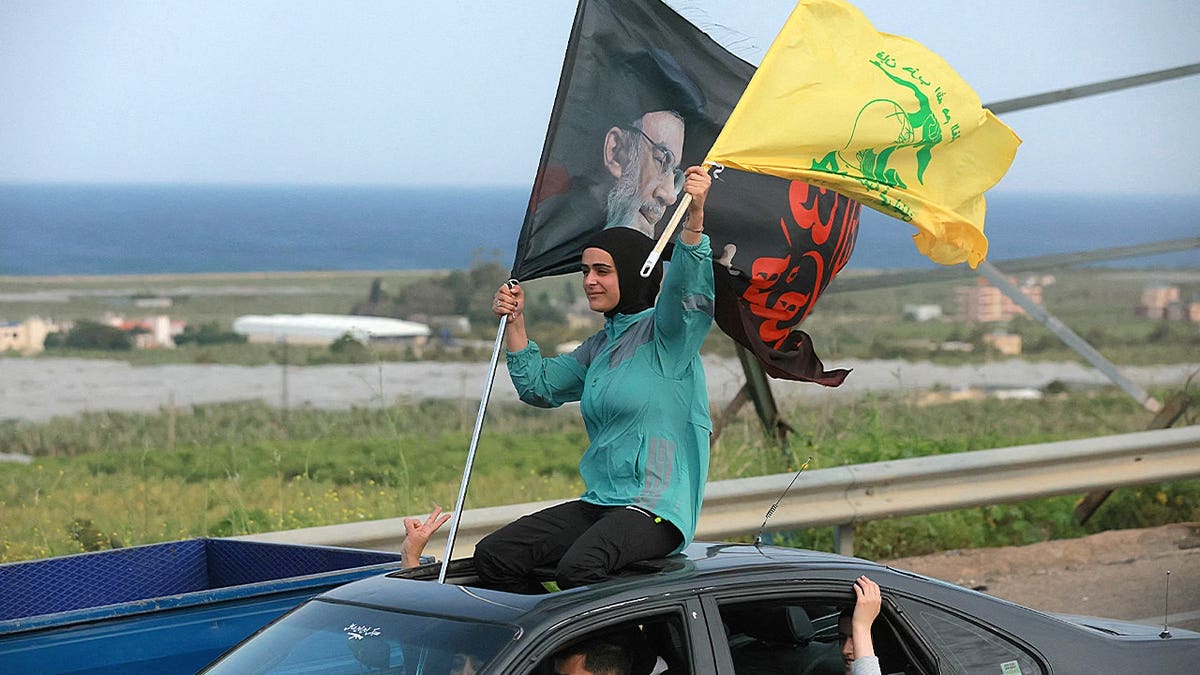
A displaced resident carrying flag of Hezbollah, travels through the Qasmieh area on the way back to her home in the southern Lebanon (Ibrahim AMRO / AFP via Getty Images)
"Hezbollah worked for decades to build an entire facility, part of it underground, below private residential buildings and houses, preparing themselves for a surprise attack on Israel," Michael added.
"They were well-prepared to defend themselves once the IDF entered and tried to fight them," he said.
France’s foreign minister said the soldier was killed in a close-range ambush and struck by a direct shot.
The minister said the attack happened during a patrol clearing explosives near Ghandouriyeh, when troops came under small-arms fire from "non-state actors," a term often used to refer to groups like Hezbollah.
"They operate in the Shiite villages and among the Shiite population who are supported by Hezbollah," Michael said, before describing how "most people in these southern villages are connected to Hezbollah" in one way or another and are "heavily dependent on the terror organization."
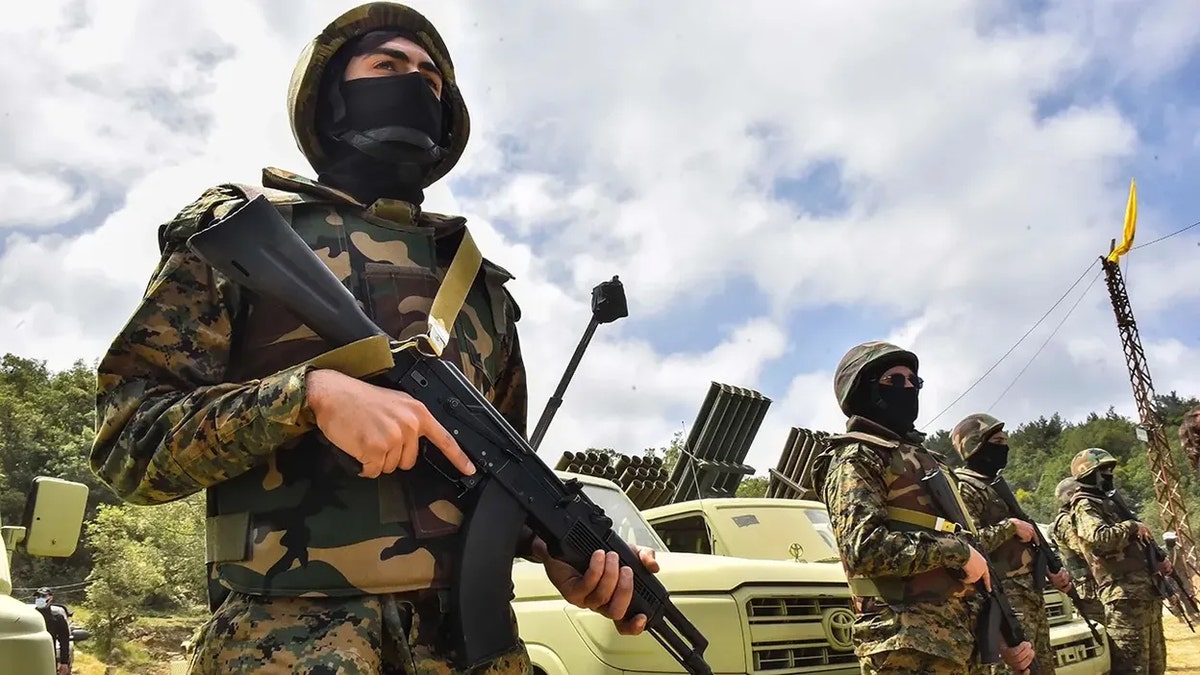
Hezbollah terrorists are shown in this image. A "terrorist network" funded and operated by Hezbollah and Iran has been foiled in the United Arab Emirates, according to a report. (Fadel Itani/NurPhoto via Getty Images)
"All community life and infrastructure in these Shiite villages and towns are an effective cover for terror purposes and Hezbollah activities," he added.
French President Emmanuel Macron confirmed the soldier's death.
"Sgt. Maj. Florian Montorio of the 17th Parachute Engineer Regiment in Montauban was killed this morning in southern Lebanon during an attack against UNIFIL (United Nations Interim Force in Lebanon)," Macron said. "Three of his comrades were wounded and evacuated."
"All indications suggest that Hezbollah is responsible for this attack. France demands that the Lebanese authorities immediately arrest those responsible and take responsibility alongside UNIFIL," Macron added.
Michael, however, claimed Macron’s response was, in some ways, inconsistent, as the president has been drawn into the war.
At first, France had called Israeli strikes on Lebanon on April 8 "intolerable" and opposed a ground offensive.
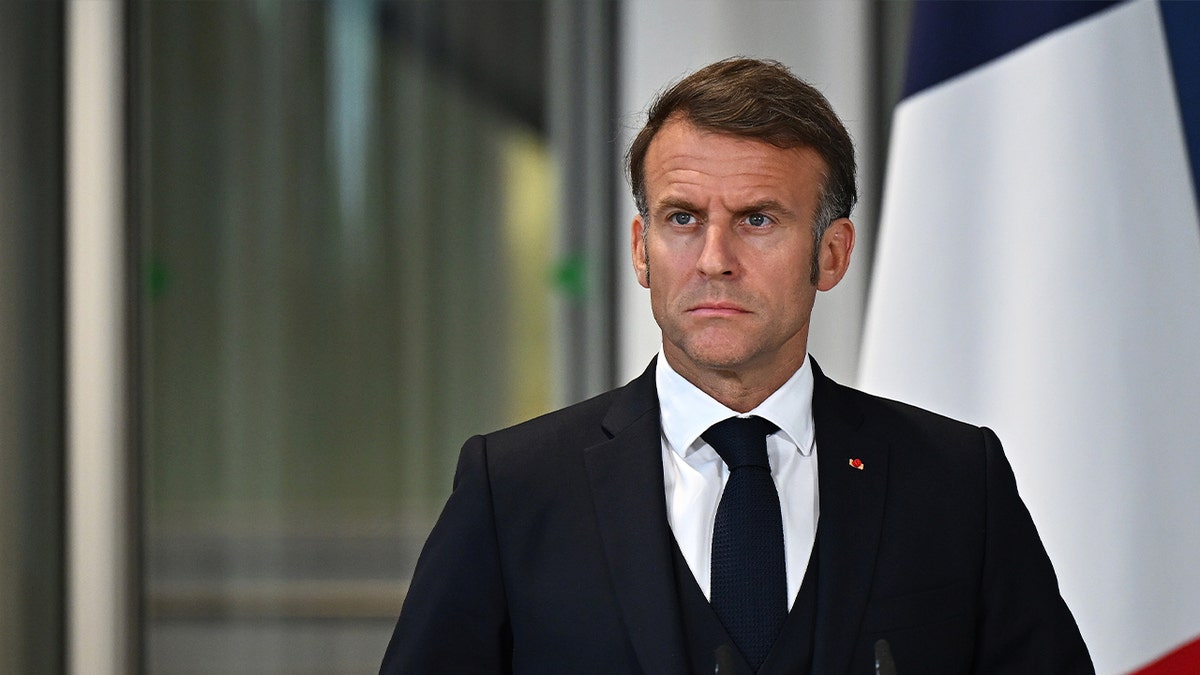
French President Emmanuel Macron hold a press conference on July 10, 2025 in London, England. (Leon Neal)
Israel's ambassador to Washington, Yechiel Leiter, also expressed his wish to keep Macron out of ceasefire negotiations, highlighting tensions surrounding his policy.
"When it comes to Hezbollah breaches against Israel, the French demand Israel restrain and contain, but when it comes to one of their soldiers, they are furious at Hezbollah," Michael said.
"That said, Hezbollah has breached the ceasefire agreement since its first moment," Michael added.
Hezbollah has since denied the ambush, with the soldier’s death still underscoring the volatility of the 10-day ceasefire, which came into effect April 16.
UN Secretary-General Antonio Guterres condemned the attack in a statement and said an initial assessment by the UN Interim Force in Lebanon found it was carried out by Hezbollah.
According to the U.S. State Department, under the terms of the 2026 ceasefire, brought about by negotiations between Israel and Lebanon, Israel retains the right to act in self-defense against threats, while Lebanon must take steps to prevent attacks by Hezbollah and other armed groups.
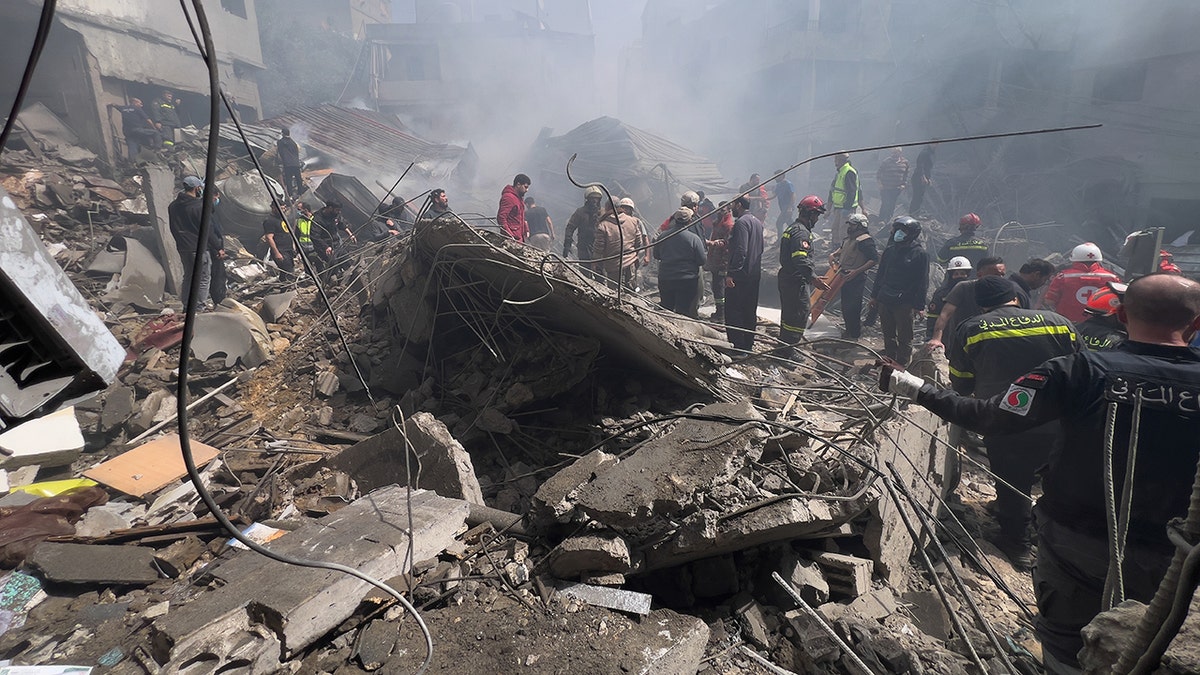
Rescue workers search for victims at the site of an Israeli airstrike that hit a crowded neighbourhood south of Beirut, Lebanon, Sunday, April 5, 2026. (Hussein Malla/AP Photo)
Lebanon’s security forces are solely responsible for national security, and both sides have asked the U.S. to continue facilitating talks to resolve remaining issues.
The Israel Defense Forces (IDF) also said it carried out strikes in response to what it described as "ceasefire violations by Hezbollah."
Michael also emphasized Iran’s continued influence as Hezbollah operates in southern Lebanon as an "unrestrained political force."
"Iran’s Islamic Revolutionary Guard Corps (IRGC) is still in charge of Hezbollah," he added, before saying that the Lebanese army is also "unwilling to fight or confront Hezbollah."
"First, because of the Shiite segment of this army that identifies with Hezbollah, and secondly, because it is afraid that confronting Hezbollah will lead to a civil war, a trauma they still have since the first one in 1975, lasting 15 years — until 1990."
Michael added: "The Shiite militia, also controlled by Iran, is not subordinate to state authority, enabling Hezbollah to operate as an unrestrained political force within the Lebanese political system."
Hassan Al-Somal
Elite Member
Bint JBeil in ruins
"........ much of my Dearborn community comes from Bint Jbeil. Everyone of us is grieving "
"........ much of my Dearborn community comes from Bint Jbeil. Everyone of us is grieving "

By Scott Peterson Staff writer
@peterson__scott
April 20, 2026, 3:57 p.m. ET|London
The 10-day ceasefire in Lebanon brokered by the White House after 46 days of war has, since Friday, lessened Israeli bombardments and lowered attacks by Iran-backed Hezbollah fighters.
Lebanese residents reacted to the news with celebrations and flag-waving, then were on the move. Highways to southern Lebanon and Hezbollah strongholds in Beirut, from which 1.2 million people had been displaced during the fighting, were clogged with traffic as residents returned to homes – many of them damaged or destroyed.
The ceasefire has largely paused a battle that, from March 2 until April 16, left some 2,294 dead and 7,544 wounded, according to Lebanese health officials who do not differentiate between civilians and combatants.
As civilians displaced by the Israel-Hezbollah conflict in Lebanon try to return to their war-damaged homes, a new Israeli occupation zone in the country’s south poses an obstacle for many. Meanwhile, the ceasefire has reduced but not eliminated the fighting.
But the ceasefire has also been breached repeatedly by both Israel and Hezbollah.
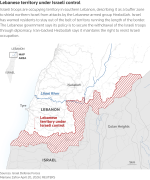
The Israeli military is seeking tactical advantage against the Shiite militia and creation of a longer-term occupied zone in southern Lebanon by creating a Gaza-style “yellow line,” south of which this weekend it forbade Lebanese from returning to 55 villages.
U.S. President Donald Trump – who sees the Lebanon ceasefire as part of a broader deal to end the U.S.-Israeli war against Iran, for which a separate two-week truce expires Wednesday – said over the weekend that he had “prohibited” Israel from further attacks.
https://www.csmonitor.com/USA/Socie...n-ice-detention-center?icid=mkt:cdp:promo-a-f
Nonetheless, Lebanese news outlets reported “dozens” of further Israeli strikes. Israeli army commanders told the newspaper Haaretz about a military policy in southern Lebanon that included “widespread demolition of civilian infrastructure ... replicated from tactics used in the Gaza Strip” to create the buffer zone and prevent Lebanese residents from returning home.
Hezbollah, which reignited the conflict on March 2 by launching rockets into northern Israel – in response to Israel’s killing on Feb. 28 of Iran’s supreme leader, Ayatollah Ali Khamenei – is trying to fend off concerted efforts by Lebanon’s government to disarm the militia.
Hezbollah was not party to the ceasefire, and its officials have rejected negotiations between Israel and the Lebanese government. President Joseph Aoun said on Friday that the truce signified a new phase in which Lebanon would no longer be a “card in anyone’s pockets, nor a battlefield for others’ wars.”
Marko Djurica/Reuters
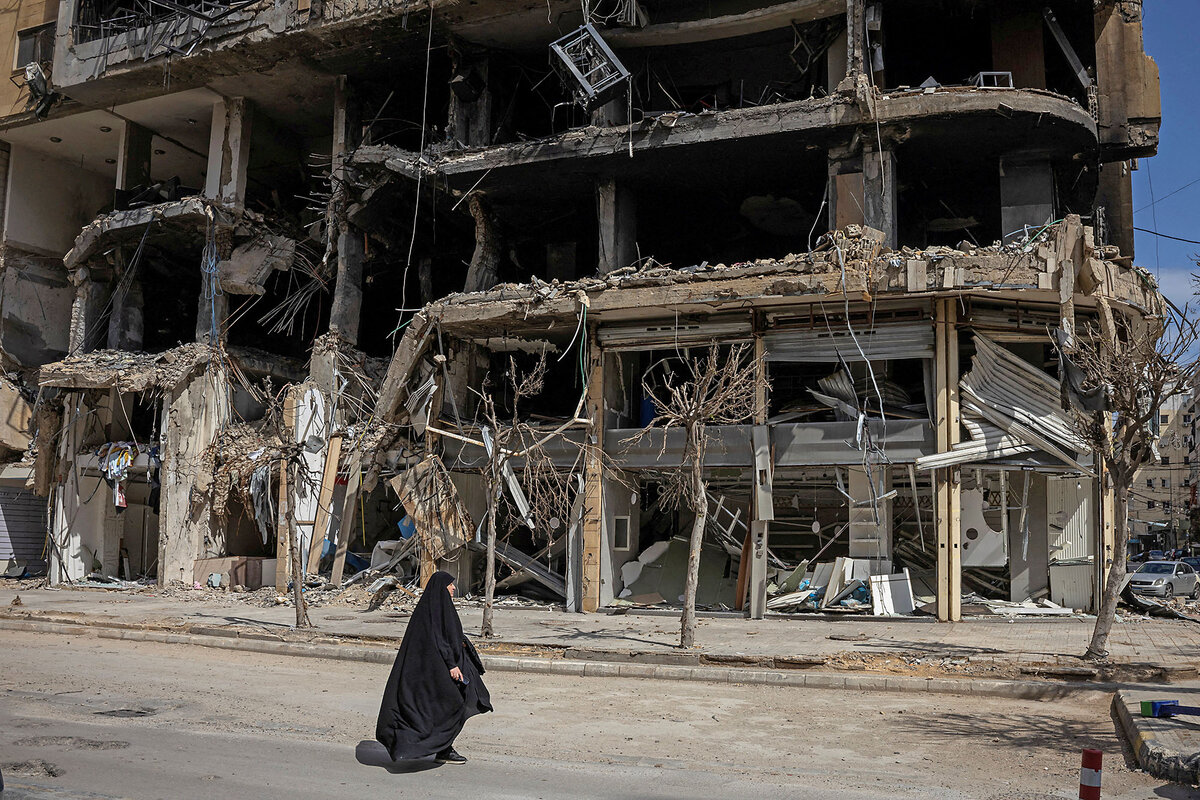
A woman walks past damaged buildings amid a 10-day ceasefire in Lebanon, in the southern suburbs of Beirut, April 20, 2026.
Also on Friday, Prime Minister Nawaf Salam said that the government’s decision to disarm Hezbollah was “irreversible.” He is scheduled to meet Tuesday with French President Emmanuel Macron.
Hezbollah has bridled at peace efforts and refused to give up its weapons. On the first day of the ceasefire, Hezbollah Secretary-General Naim Qassem said his fighters’ “hands will remain on the trigger,” in their bid to prevent any Israeli political or military victory.
On the second day of the ceasefire, Mr. Qassem said the truce was “useless in practical terms,” and demanded that Israel halt attacks “in the air, on land, and at sea.”
https://www.csmonitor.com/World/Mid...-hard-line-new-leaders?icid=mkt:cdp:promo-a-f
The militia said on Sunday it had ambushed Israeli soldiers near Taybeh, in southern Lebanon. Hezbollah was also widely blamed for the killing on Saturday of a French soldier and the wounding of three others serving in the United Nations Interim Force in Lebanon. The force has been deployed to border areas for decades.
“The Nation bows with respect and extends its support to the families of our soldiers and to all our military personnel engaged for peace in Lebanon,” Mr. Macron wrote on X. “Everything suggests that responsibility for this attack lies with Hezbollah.” The organization denied it played a role in the killing.
Before a November 2024 ceasefire, Hezbollah was devastated by more than a year of conflict with Israel, which culminated with the assassination of nearly all of its top leadership, the killing or wounding of thousands of fighters, and unrelenting bombardment of its missile and rocket arsenal.
Even since late 2024, near-daily strikes by Israel against Hezbollah targets and infrastructure have killed more than 300 Lebanese. Prior to the resumption of the latest fighting, the Lebanese army claimed it had entirely disarmed Hezbollah south of the Litani River.
While the 2024 ceasefire required Hezbollah to completely disarm, it also required Israel to halt attacks and withdraw its forces from all Lebanese territory, including five areas Israel continued to occupy inside Lebanon.
Mahmoud Qomati, vice president of Hezbollah’s political council, said on Saturday that Mr. Aoun’s dealing with Israel had “thanked the criminal and the assassin, without thanking those who saved us, namely Iran,” the news website L’Orient Today reported.
“If the president of the republic and the head of government persist in the path of direct negotiations, then they will go their way, and we will go ours,” he said.
Second French peacekeeper dies
Lebanese PM, in Paris, asks for 500 million Euros
...Israel’s ambassador to Washington said last week that France should be excluded from any talks, describing Paris as having "no positive influence."
Lebanese PM, in Paris, asks for 500 million Euros
...Israel’s ambassador to Washington said last week that France should be excluded from any talks, describing Paris as having "no positive influence."


Hassan Al-Somal
Elite Member
️Israeli army carrying out Gaza-style demolitions in south Lebanon: The more contractors demolish, the more they earnThe Israeli army is continuing to demolish homes and civilian infrastructure in southern Lebanon despite the so-called "ceasefire," with a 19 April report by Haaretz stating that the campaign is modeled on tactics used in Gaza.
According to the investigation, citing Israeli army commanders and military sources, dozens of engineering vehicles, including large numbers of bulldozers, have been deployed south of the Litani River, many operated by civilian contractors tasked with systematically destroying buildings in border villages, including homes, public buildings, and even schools.
Military sources cited by the report say contractors are incentivized through payment structures tied to the number of structures they demolish, with some receiving daily wages and others paid based on output, effectively rewarding the scale of destruction.
The endeavor, referred to within the army as the “Money Plow,” involves organized, large-scale demolition aimed at altering the landscape and preventing residents from returning, with “success” measured by daily quotas of destroyed buildings rather than military objectives.
Some of the contractors are reported to have previously taken part in similar demolitions in Gaza, reinforcing what sources describe as a “Gaza-style” scorched-earth approach.
The findings have sparked calls in Lebanon to pursue legal action against the companies involved in the demolitions.
Hassan Al-Somal
Elite Member
Hassan Al-Somal
Elite Member
️Lebanon’s Hezbollah has announced three operations on Thursday so far:• At 06:00, it said its fighters targeted a gathering of Israeli soldiers in Taybeh using appropriate weapons, in response to Israeli ceasefire violations and attacks on civilians in Tayri.
• At 10:00, it said it carried out a drone strike on another group of Israeli soldiers in Taybeh, also in response to Israeli attacks on civilians in Tayri.
• At 10:30, it announced downing an Israeli reconnaissance drone over Majdal Zoun, citing continued violations of Lebanese airspace.
Davey Crockett
Elite Member

Persian Gulf
INT'L MOD


- Thread starter
- #3,329
Report: US, KSA, Egypt working on Lebanon-Israel non-aggression pact
by Naharnet Newsdesk 48 minutes ago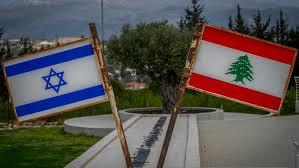
Political and diplomatic developments are accelerating toward forging an understanding between Lebanon and Israel, that has started to be known as a "non-aggression pact," based on a U.S.-Saudi initiative joined by Egypt, a political source informed on the talks said.
"Egypt is reviving its previous proposal to contain Hezbollah's weapons, given the inability to remove them," the source told al-Joumhouria newspaper.
The source revealed that contacts have intensified between Saudi Arabia, the United States and Egypt, in coordination with Tehran, to end the state of war in Lebanon through a comprehensive solution that revives the 1949 Armistice Agreement.
The proposed agreement stipulates that Israel withdraw to the Blue Line, simultaneously with the Lebanese Army's entry into southern Lebanon and Hezbollah's withdrawal beyond the Litani River. In return, a plan to contain Hezbollah's weapons will be initiated, along with addressing outstanding issues along the Blue Line.
The agreement also includes the release of Lebanese captives, the return of residents to habitable villages, and the launch of reconstruction efforts. A key feature of this agreement is the international and Arab guarantees, particularly from the United States, to ensure both parties' commitment to its implementation and respect.
The same source also revealed that proposals have been put forward to contain heavy weapons, missile arsenals and drones, in coordination with Tehran, stemming from a desire for Shiite participation in the solution. A dialogue table is also being arranged under Saudi-Egyptian auspices to resolve the disputes.
Al-Juomhouria has also learned that Saudi envoy Prince Yazid bin Farhan is arranging a meeting between President Joseph Aoun and Speaker Nabih Berri to unify their positions, as well as a meeting of the Aoun, Berri and PM Nawaf Salam to coordinate Lebanon's strategy.
The source also said that Lebanon is benefiting from the renewed U.S. interest in it, particularly from U.S. President Donald Trump, in order to formulate a solution that will not deviate significantly from the possible American-Iranian agreement.
Users who are viewing this thread
Total: 6 (members: 0, guests: 6)
Pakistan Defence Latest
-

-

-
 PTI Murad Saeed in Afghanistan, was 'controlling KP govt' from there: Rana Sanaullah (1 Viewer)
- Latest: Meengla

Country Watch Latest
-
Iran - Israel/US War: Israel-US declare war on Iran, Iran responds (123 Viewers)
- Latest: BananaRepublic
-
China’s PLAAF Has No Crashes on Paper But What Happens to the Pilots Who Never Come Home? (3 Viewers)
- Latest: indo17787
-
India Opens 298 km Nimmu-Padum-Darcha Road, Expanding Strategic Access to Ladakh Through Zanskar Valley (20 Viewers)
- Latest: indo17787
-

-

Latest Posts
-
-

-
Iran - Israel/US War: Israel-US declare war on Iran, Iran responds (123 Viewers)
- Latest: BananaRepublic
-
China’s PLAAF Has No Crashes on Paper But What Happens to the Pilots Who Never Come Home? (3 Viewers)
- Latest: indo17787