Lebanon-Israel War | 2023-present

To view this content we will need your consent to set third party cookies.
For more detailed information, see our cookies page.
 
Same comment as I gave @HAIDER : I think you posted it just to maintain and inspire fear of the West in these promising moments of upcoming peace between Israel and Lebanon.
 
April 16, 2026 Rodayna Raydan

Is peace a bad thing? Lebanon confronts its deepest divide


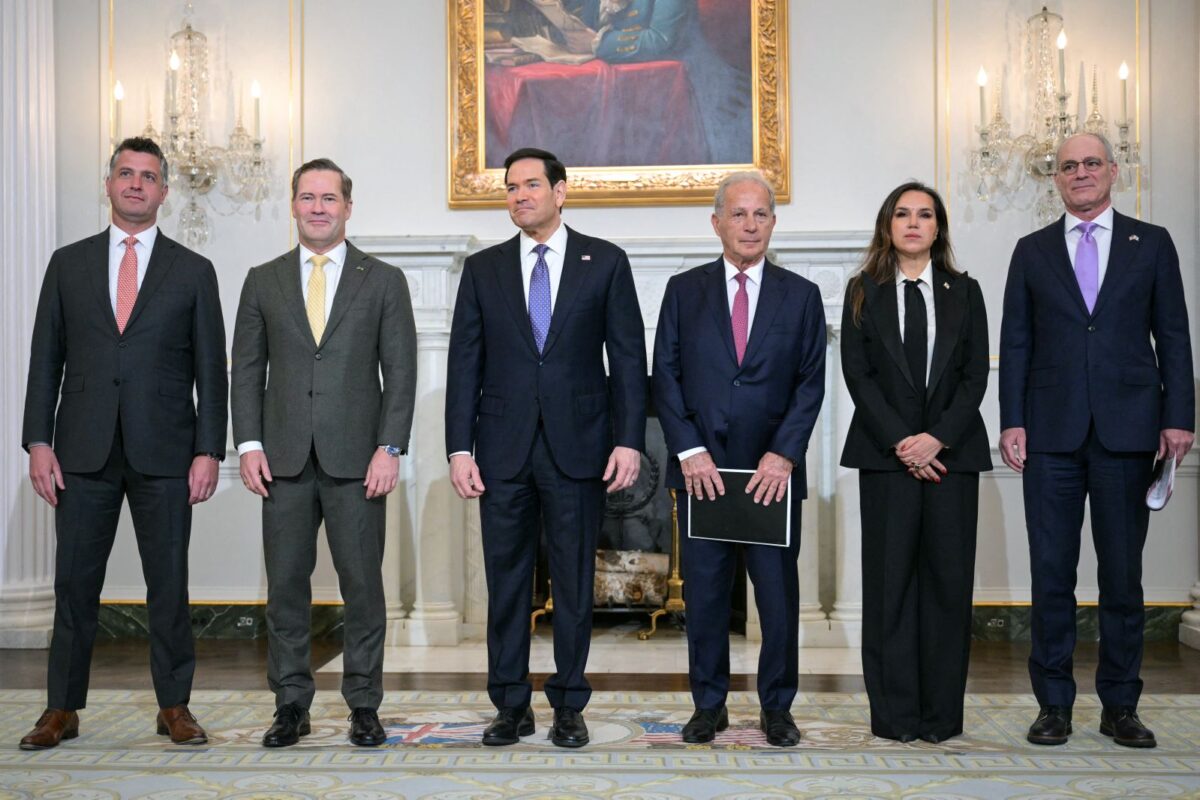
AFP__20260414__A7RW3H6__v1__HighRes__UsIsraelLebanonDiplomacy-1200x800.jpg

(L/R) US State Department Counselor Michael Needham, US Ambassador to the UN Mike Waltz, US Secretary of State Marco Rubio, US Ambassador to Lebanon Michel Issa, Lebanon's Ambassador to the US Nada Hamadeh Moawad, and Israeli Ambassador to the US Yechiel Leiter stand together before meeting at the State Department in Washington, DC, on April 14, 2026. (Photo by Oliver Contreras / AFP)

[responsivevoice_button voice="UK English Male" buttontext="Listen to Post"]

Today, the question of peace is being asked more openly, and more urgently: Is peace actually a bad thing?

The debate has resurfaced amid renewed diplomatic movement and rising internal tensions, exposing a country deeply divided not only along political lines, but also over its identity, sovereignty, and future.

A fragile diplomatic opening

Recent days have seen a rare and significant shift, with Lebanon and Israel engaging in their first direct talks in decades during a U.S.-mediated meeting in Washington. The discussions, which brought together senior diplomats from both sides, focused on de-escalation, border security, and the possibility of a broader framework for negotiations.

While Lebanese officials have avoided labeling them as formal “peace talks,” the meeting itself described by some as historic, signals a clear change in approach. However, reactions inside Lebanon have been sharply divided, with strong opposition from Hezbollah and its supporters, highlighting just how sensitive any move toward negotiations remains.


Protests and political backlash

That opposition has already spilled into the streets.

In recent weeks, protests particularly among Hezbollah supporters have pushed back against what is perceived as a softening stance by the Lebanese government. Demonstrators have framed any engagement with Israel as a betrayal of those killed in past wars and the current war, and as a surrender to foreign pressure.

The backlash has also placed Prime Minister Nawaf Salam under intense criticism from the demonstrators.


A country divided

Against this backdrop, Lebanese voices reflect a spectrum of opinion as polarized as the political scene itself.

For some, peace represents an overdue correction.

“Lebanon needs to take its destiny into its own hands,” Salmen a business owner from Baakline in the Chouf region told NOW. He argued that the country has long paid the price for conflicts not entirely its own. “This path must lead to de-escalation, sovereignty, and a better future for all Lebanese… people are fed up with being dragged into others’ wars and losing so much every time, especially to please Iran and its interests.”

Others frame the issue less as reconciliation and more as state-building.


The direct negotiations with Israel are definitely a step forward, but the real test is implementation
“The direct negotiations with Israel are definitely a step forward, but the real test is implementation,” George from Zgharta told NOW. “Lebanon needs to restore full state authority… we need protection, we need full state authority over arms.”

In this context, peace is not seen simply as a diplomatic outcome, but as a test of sovereignty.

For others still, peace is framed in regional and economic terms.


Peace is a necessity for the safety, prosperity, and future of the people on both sides
“Peace… is a necessity for the safety, prosperity, and future of the people on both sides,” Rana from Koura told NOW. She linked Lebanon’s continued hostility with Israel to external interference, particularly from Iran.

As she added, “It’s time for us to start disconnecting Palestinian problems from Lebanon, as well as Iran’s interests… We need to believe that Lebanon deserves to negotiate its own future.”


“Peace” as betrayal

Among opponents, the language is stark and emotionally charged.

“Peace with Israel is a shame,” Asia, a public school teacher from the southern village of Siddiqin told NOW, pointing to the destruction of homes and loss of life in past wars. “They have flattened our villages… this is enough to show their intentions.”

For many in the south and other areas heavily affected by repeated conflicts, the idea of normalization remains inseparable from lived trauma.

“How can we imagine peace with them when they are “butchers” of Lebanese families, secondly they do not even keep their word on anything so it is not logical or moral to go ahead with peace and most importantly they have a history of land theft.” Added Asia.

Similarly for Ahmad from Southern Beirut, “Lebanese need to wake up and stop romanticizing this idea. The resistance runs in our blood and we will never know the meaning of peace with Israel,” He told NOW.


Their eyes are on our lands and resources, and we feel betrayed by our own government
“Their eyes are on our lands and resources, and we feel betrayed by our own government…”

He added: “If there is anything legitimate in Lebanon, it is the resistance and its weapons.”


Between fear and pragmatism

Some voices attempt to navigate a middle ground, acknowledging both the risks and the necessity of change.

“I don’t think peace is a bad thing,” Imad a construction worker from Hasbaya told NOW, “but we shouldn’t be too optimistic.” He described Lebanon as caught in a broader regional struggle between Iran and Israel, warning that replacing one form of external influence with another would not amount to true sovereignty.

His solution, echoed by others, is neutrality.

“Lebanon needs to be strongly independent and neutral… only Lebanese unity will preserve its independence from outsiders,” he added.

In Barja, Saad, a nurse working on the frontline of Lebanon’s strained healthcare system, offers a more cautious reading, one shaped less by ideology and more by exhaustion.

Speaking to NOW, he describes a population that does not want to be pulled back into cycles of regional confrontation.


We don’t want to be dragged into any more wars, people here are tired and angry
“We don’t want to be dragged into any more wars, people here are tired and angry.”

But when it comes to the idea of peace with Israel, he is far less optimistic.

“I don’t see peace as something realistic right now,” he told NOW. “There is too much history, too much mistrust, and too much pain on all sides.”

“Lebanon should focus on Lebanon. Nothing else,” he said.


So, is peace a bad thing?

In Lebanon, the answer depends on who you ask and perhaps more importantly, on what “peace” actually means.

Is it a formal agreement with a long-time enemy? A reassertion of state sovereignty? An economic lifeline and opportunity? Or a dangerous illusion that ignores deeper imbalances of power on the ground?

For now, the debate itself is the story. The fact that it is being asked openly on the streets, in homes, and within political and media circles signals a significant shift.


Israel expands Lebanon invasion to Mount Hermon
Kieran Kelly, Henry Bodkin
7–9 minutes

US president claims leaders of Israel and Lebanon are ready to hold peace talks

Israel plans to expand its buffer zone in southern Lebanon, as the two countries’ leaders prepare to speak for the first time in three decades.

Benjamin Netanyahu, Israel’s prime minister, said the Israel Defense Forces (IDF) would push eastwards towards the slopes of Mount Hermon.

This follows a ground incursion focused on the area between Israel’s border and the Litani river, a few miles to the north.

Israel’s prime minister framed the advance as a move to protect the Druze minority, a group with strong ties to Israel, as well as strengthening Israel’s positions for the current negotiations.

His announcement came despite Donald Trump, the US president, saying that the leaders of Israel and Lebanon would speak for the first time in three decades on Thursday to discuss an end to the conflict.
An Israeli strike on residential homes in Nabatieh, Lebanon, on Thursday
An Israeli strike on homes in the city of Nabatieh, Lebanon, on Thursday Credit: Reuters

Lebanon was pulled into the war in the Middle East on March 2 after Hezbollah, the Iran-backed terror group, attacked Israel.

Retaliatory Israeli attacks on Hezbollah strongholds in Lebanon have killed more than 2,000 people since then.

On Thursday, an Israeli ‌strike severed the last bridge ‌linking ‌southern ⁠Lebanon to the ⁠rest of the country, a senior ‌Lebanese security official said. The official told Reuters that the bridge had been “shattered”, with no possibility of repair.

Israel is under pressure from the United States to sign a peace deal with Lebanon, as Mr Trump looks to end hostilities in the Middle East. Iran insists that Lebanon must be covered by any peace deal.

Teams of negotiators met in Washington earlier this week for rare direct talks about ending the fighting between Israel and the Iran-backed Hezbollah terror group, but the countries’ leaders have not spoken since 1993.

Mr Trump announced the talks in a Truth Social post. “It has been a long time since the two leaders have spoken. It will happen tomorrow. Nice!” the US president wrote.
Donald Trump Truth Social
Donald Trump made an announcement on Thursday Credit: Truth Social

It was not clear which leaders Mr Trump was referring to, with Lebanon and Israel each having a president and a prime minister.

But on Thursday Gila Gamliel, an Israeli cabinet member, confirmed in an interview that Mr Netanyahu would take the call.

Lebanon, said it was unaware of the talks. Joseph Aoun, the country’s president, said he wanted a ceasefire with Israel before any direct negotiations.

“We are not aware of any planned contact with the Israeli side, and we have not been informed of any through official channels,” a source told AFP.

Speaking on Thursday, Mr Aoun said: “The ceasefire requested by Lebanon with Israel is the natural starting point for direct negotiations between the two countries.”

The Israeli prime minister’s office did not immediately respond ‌to a ‌request for comment.

Mr Netanyahu has vowed to continue fighting Hezbollah but is under intense pressure from the Trump administration to stop because of fears that conflict could derail a ceasefire with Iran.
Donald Trump
Donald Trump is urging Israel to sign a peace deal with Beirut Credit: Salwan Georges/Pool/EPA/Shutterstock

Hebrew media reported that Israel had put forward three main demands in the talks.

The first was a continuing buffer zone south of the Litani River, free of Hezbollah and infrastructure belonging to the group.

This would be accompanied by the right to conduct military raids north of the zone to attack terror targets, plus a long-term disarmament process under an American oversight mechanism.

If confirmed, the negotiating position would signal an intention to remain on the ground in Lebanon for an extended period.

Israel’s security cabinet had convened late on Thursday night to discuss a potential ceasefire in Lebanon, a senior Israeli official told Reuters.

Two senior Lebanese officials also said they had been briefed that efforts were under way to agree a ceasefire but had no details on how long it would last or when it would be announced.
An Israeli soldier fires towards southern Lebanon on Wednesday
An Israeli soldier fires towards southern Lebanon on Wednesday Credit: Amir Levy/Getty Images

However, a senior Lebanese official said that Beirut believed Israel wanted to secure victory in the town of Bint Jbeil, in the country’s south, before any diplomatic announcement.

Mr Netanyahu said on Wednesday that the Israeli military was about to overcome the town. Iran is demanding that Lebanon be included in any broader plan to end the war in the Middle East.

Bagher Ghalibaf, Iran’s parliamentary speaker, who led talks with JD Vance, the US vice-president, last week, warned the US “must comply” with a ceasefire agreement that included Lebanon.

He said: “The completion and consolidation of a comprehensive ceasefire in Lebanon will be the result of the steadfastness and struggle of the esteemed Hezbollah and its heroic deeds, and the unity of the axis of resistance. And the US must commit to the agreement.

“The resistance and Iran are one and the same entity, whether in war or in a ceasefire. America must back down from the mistake of ‘Israel first’.”


>>> The Lebanese government are an absolute joke!
 
To view this content we will need your consent to set third party cookies.
For more detailed information, see our cookies page.


Hezbollah FPV strike on Zionist tank
 

Trump announces 10-day ceasefire in Lebanon starting at midnight

US President Donald Trump informed Lebanon of an imminent ceasefire, but Hezbollah launched missiles at Haifa shortly after reports emerged.​

Israel National News
Published: Apr 16, 2026, 6:08 PM (GMT+3)

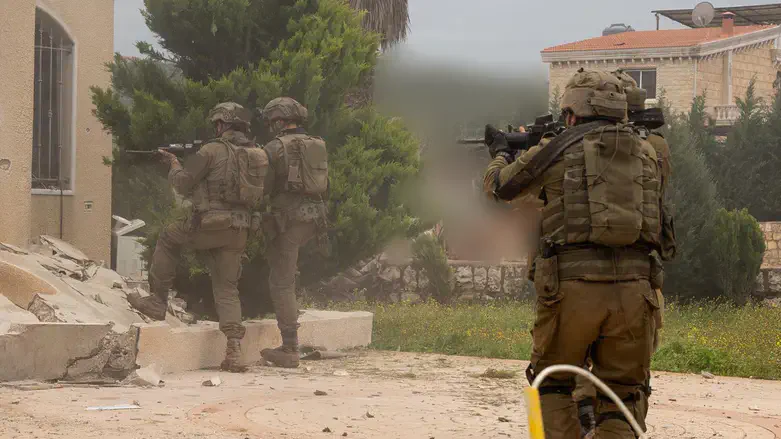
IDF soldiers in Lebanon
IDF soldiers in LebanonIDF Spokesperson

US President Donald Trump announced that a ceasefire would go into effect at midnight tonight in Lebanon. The ceasefire will last ten days.

In a post to Truth Social, Trump wrote: "I just had excellent conversations with the Highly Respected President Joseph Aoun, of Lebanon, and Prime Minister Bibi Netanyahu, of Israel. These two Leaders have agreed that in order to achieve PEACE between their Countries, they will formally begin a 10 Day CEASEFIRE at 5 P.M. EST."

He added: "On Tuesday, the two Countries met for the first time in 34 years here in Washington, D.C., with our Great Secretary of State, Marco Rubio. I have directed Vice President JD Vance and Secretary of State Rubio, together with the Chairman of the Joint Chiefs of Staff, Dan Razin' Caine, to work with Israel and Lebanon to achieve a Lasting PEACE. It has been my Honor to solve 9 Wars across the World, and this will be my 10th, so let's, GET IT DONE! President DONALD J. TRUMP"

Axios reported earlier on Thursday, citing a Lebanese presidential source, that US President Donald Trump had contacted President Joseph Aoun and officially notified him of a ceasefire decision that will go into effect within hours.

An Israeli official confirmed that due to US pressure, there is a move toward a settlement with Lebanon, but no final agreement has been reached.

According to reports, the Americans were the ones who initiated the talks, thinking that direct talks between the parties would lead to the declaration of a permanent or temporary ceasefire.

Despite the optimism, Hezbollah quickly put a damper on the reports. Minutes after the reports of ceasefire were released, the terrorist organization launched a volley of five missiles at Haifa and the bay area. Some of the missiles were intercepted by the Iron Dome, and others fell in open areas.

On Wednesday night, President Trump announced on Truth Social: "Trying to get a little breathing room between Israel and Lebanon. It has been a long time since the two leaders have spoken, like 34 years. It will happen tomorrow. Nice!"

However, a Lebanese source claimed that when US Secretary of State Marco Rubio asked President Aoun if Prime Minister Benjamin Netanyahu could join a phone conversation between them, the Lebanese leader vehemently refused.

After Aoun did not respond to Trump’s earlier proposal for a trilateral call, Marco Rubio informed the Lebanese president that Trump would continue contact with him at a later stage. Reports in Lebanon emphasized that Aoun “insisted on an immediate ceasefire" and received a promise from Rubio to intensify efforts.

Earlier in the afternoon, a direct hit was identified on a building in Kiryat Shmona following a barrage launched toward the city and surrounding area. Magen David Adom teams who scanned the scene reported no casualties, though property damage was caused.
 
expect a lot of air strikes by iaf before the ceasefire activates
I think that part is done.
I read one news story - which I can't quote here - that said Lebanese officials insisted that there be no ceasefire until the IDF had rooted Hezbollah out of Bint Jbeil.
Kind of like how, in WWII, some of the French wouldn't side with the Allies until North Africa had been liberated.
That said, I suspect bombing will continue on Hezbollah sites north of the Litani until the minute ceasefire begins.

One proviso: remember, UNSCR 1701 still applies, therefore imo IAF activity over Lebanon can continue even after midnight.
 
To view this content we will need your consent to set third party cookies.
For more detailed information, see our cookies page.


Bint Jbeil did not fall.
 
To view this content we will need your consent to set third party cookies.
For more detailed information, see our cookies page.
 
To view this content we will need your consent to set third party cookies.
For more detailed information, see our cookies page.


Their is no peace with the Jews

Israel is a cancerous tumor, it should never have been created in the middle east

What we have is constant conflict until the Jews are expelled from the middle east

For the slaughter of the children of the middle east, their is only revenge left

Any "peace" is just a lull in conflict


Syria will push for a return of it's sovereign territory

Millions of Palestinians are still under occupation

Their is sufficient and growing hatred of Israel across the world


Just like with the crusaders, their will be constant harassment until the Jews can be thrown out of the middle east or forced to leave
 

Users who are viewing this thread

Back
Top