Lebanon-Israel War | 2023-present


MP Jameel Al-Sayyed explains the altercation that took place between the Prime Minister and the Minister of Defense:The Prime Minister kicked the Minister of Defense out, telling him "You're banned from attending the session".. The Minister of Defense involuntarily burst into tears!


MP Jameel Al-Sayyed explains the altercation that took place between the Prime Minister and the Minister of Defense:The Prime Minister kicked the Minister of Defense out, telling him "You're banned from attending the session".. The Minister of Defense involuntarily burst into tears!


Are the girls fighting again ?
 
Al Qassam Brigades broke the brain of Israel on Oct.7 it's been having a psychotic episode ever since

That is likely leading them into their own permanent downfall


Reports: Aoun contacts US to find solution for Ali al-Taher

by Naharnet Newsdesk 7 hours ago


W460


President Joseph Aoun has contacted the U.S. administration to find a solution for the strategic Ali Taher hill, in order to prevent any escalation of the situation, Qatar’s al-Araby al-Jadeed news portal reported.

The president “proposed the entry of the Lebanese Army into it after the withdrawal of Hezbollah elements from it, informing Parliament Speaker Nabih Berri of this, especially since there are Lebanese fears of Israel occupying the hill and carrying out massive explosions in it, which would have repercussions on the surrounding villages," the report said.
Lebanon

Comments 1
Missing
HellAndWaite 3 hours ago00
The LAF will need explicit orders for what to do with any Iranians and other non-Lebanese that they might encounter at Ali Taher .. at a minimum, they should be held as prisoners pending a completely separate set of negotiations that will be needed after Iran's withdrawl from Lebanon and Lebanese life and politics
. . . https://english.alarabiya.net/views...and-lebanon-s-perpetual-crisis-of-sovereignty

Reply
 

The Sheibani affair and Lebanon’s perpetual crisis of sovereignty

Makram Rabah
Makram Rabah

Published: 26 August ,2026: 01:43 PM GST Updated: 26 August ,2026: 03:46 PM GST

There is a familiar ritual in Beirut. The Lebanese state takes a decision, announces it with solemn language about sovereignty, waits for the pressure to build, and then begins searching for an administrative formula that allows it to retreat without admitting that it has faltered.

The handling of Mohammad Reza Sheibani is becoming another example.

In March, Lebanon withdrew its approval of Sheibani’s accreditation as Iran’s ambassador-designate, declared him persona non grata and formally asked him to leave the country. It was an unusually clear exercise of Lebanese sovereign authority toward Tehran. Five months later, General Security granted the same man six months of residency, this time not as a diplomat but as an ordinary Iranian citizen.

Perhaps the paperwork is legal. Politically, that is beside the point.

A state cannot declare that a foreign representative is no longer welcome and then pretend that his continued presence becomes politically meaningless because he has changed passports or immigration categories. Foreign Minister Youssef Rajji himself had argued days earlier that the persona non grata decision left no room for such maneuvering.

This is precisely how sovereignty is eroded in Lebanon: not always through dramatic capitulation, but through a thousand small accommodations.

Every time the government convinces itself that avoiding confrontation is an act of prudence, it postpones the confrontation required to restore its own authority. And every retreat teaches Iran and Hezbollah the same lesson: wait long enough, apply enough pressure, and the Lebanese state will eventually find a formula to accommodate the reality imposed upon it.

But there is an even greater problem with the Sheibani affair. It is a distraction.

Lebanon’s principal Iranian problem is not one diplomat sitting in Beirut, however politically provocative his presence may be. Diplomats can be expelled. Ambassadors can be replaced. Embassies operate in the open.

The real question is what Iran has been allowed to build underneath the Lebanese state.

While Beirut debates whether Sheibani may remain for another six months as a “private citizen,” a far more serious confrontation is unfolding around the Ali al-Taher ridge in southern Lebanon. The area contains a vast Hezbollah underground military network that Israeli and other reports describe as a major command complex. Recent Israeli security assessments cited by Lebanese media have claimed that Hezbollah fighters and members of Iran’s IRGC remains inside parts of that tunnel system as Israeli forces attempt to isolate them. Those claims require independent verification, but their implications should be impossible for the Lebanese government to ignore.

If IRGC officers or soldiers are indeed operating from military installations on Lebanese territory, then the question of Iranian interference has moved far beyond diplomatic etiquette.

It becomes a question of foreign military presence. That should be the scandal.

The Lebanese government should be demanding to know whether Iranian military personnel are deployed inside Lebanon, under whose authority they entered, who protects them, what role they play in Hezbollah’s military infrastructure and, above all, how the Lebanese Army intends to establish exclusive control over such installations.

None of this legitimizes Israeli military operations inside Lebanon. Sovereignty cannot be restored by outsourcing it to Israel. On the contrary, the fact that Israel can conduct military operations around an underground Hezbollah complex on Lebanese territory while the Lebanese government debates the residency status of an Iranian diplomat illustrates the depth of the state’s failure.

Lebanon is squeezed between two violations of its sovereignty because it has spent decades refusing to exercise that sovereignty itself.

The Sheibani episode therefore matters, but not because Sheibani himself represents the greatest Iranian threat to Lebanon. It matters because the government’s retreat over his presence reveals the same instinct that has crippled the state for years: Avoid the difficult decision today and hope the problem becomes more manageable tomorrow. It never does.

Sovereignty is not restored through speeches, legal technicalities or carefully calibrated gestures. It is restored when the state decides that its decisions have consequences and that no foreign power – friend, enemy or self-appointed protector – is entitled to maintain a political or military reality on Lebanese soil outside the authority of the Lebanese Republic.

Until Beirut understands that, the argument over one Iranian ambassador will remain exactly what it is: a sideshow to the much larger question of who actually exercises power in Lebanon.
 

School is again in session in Israel’s northernmost community, after 65% of its residents came back to live amid telltale signs of war. It was a celebration three years in the making


By Diana Bletter 1 September 2026, 4:52 pm


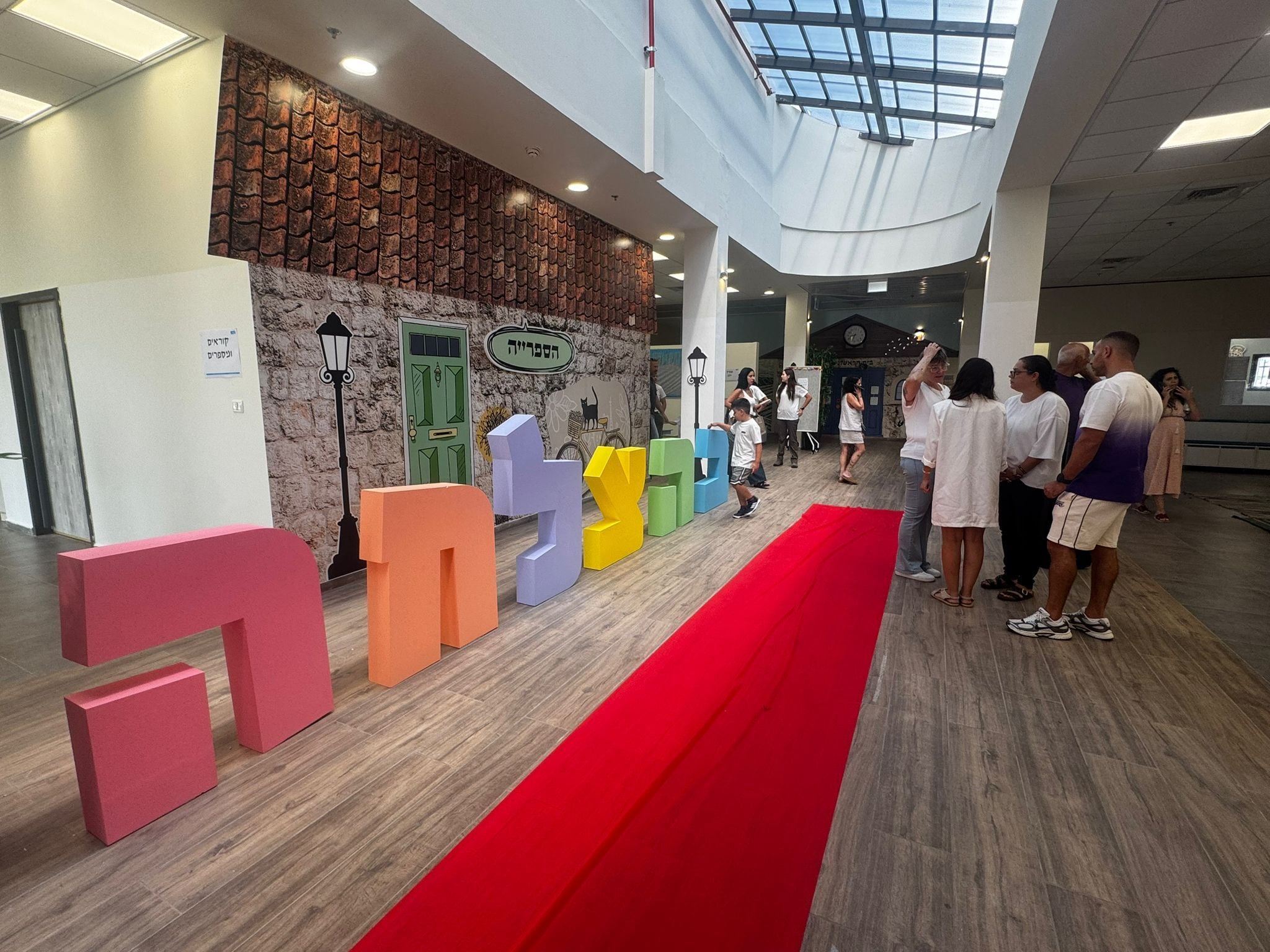
  • After a three-year closure due to war, Israel's northernmost community of Metula celebrates a first day of school, September 1, 2026. (courtesy)

  • After a three-year closure due to war, Israel's northernmost community of Metula celebrates a first day of school, September 1, 2026. (courtesy)
    After a three-year closure due to war, Israel's northernmost community of Metula celebrates a first day of school, September 1, 2026. (courtesy)

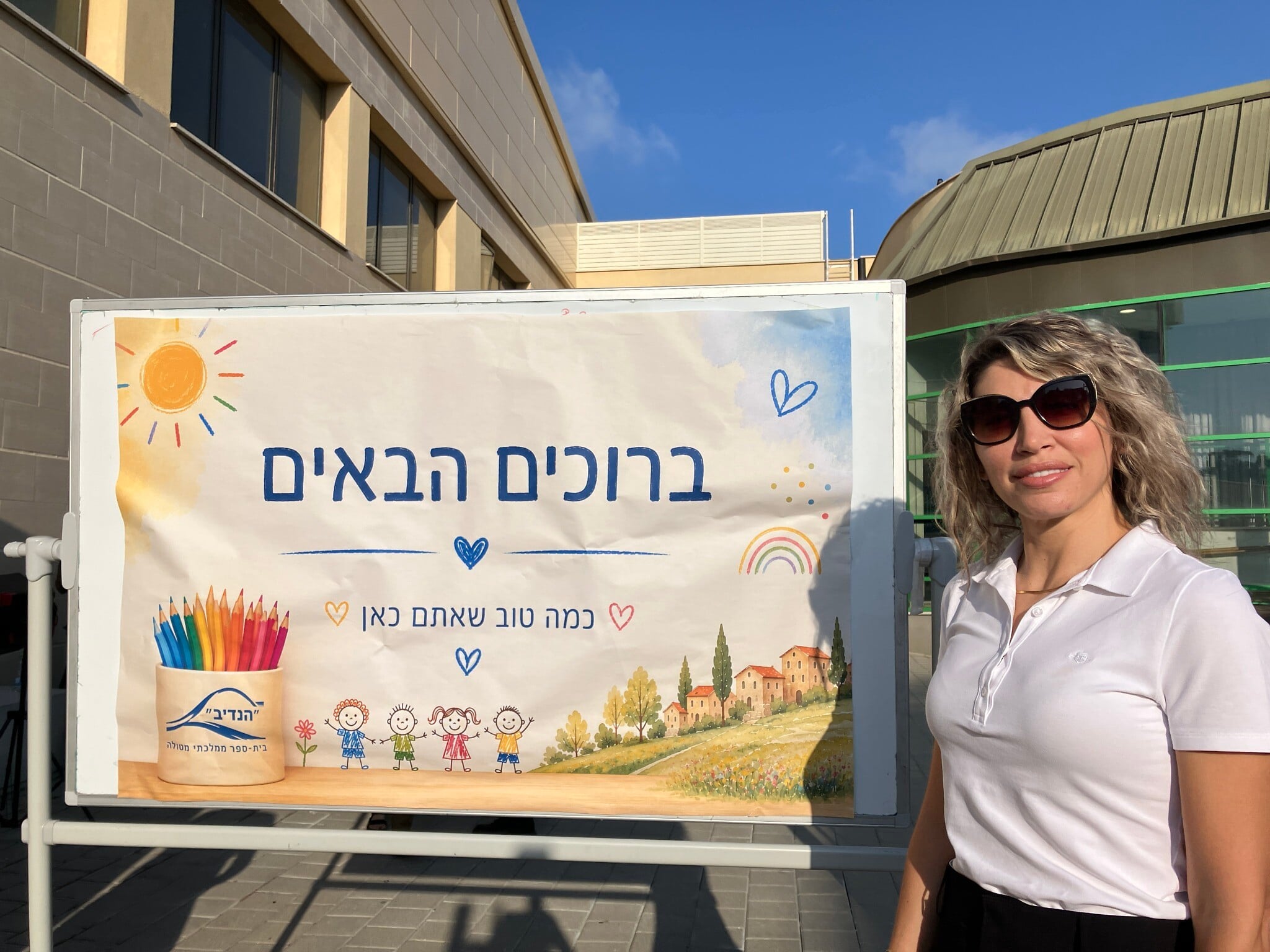
  • Noleen Safadi, head of Metula's education department and a Majdal Shams resident, stands in front of a sign that says 'Welcome' in front of Metula's Hanadiv elementary school on September 1, 2026. (Diana Bletter/Times of Israel)

  • Metula Mayor David Azoulay greets students at Hanadiv Elementary School on September 1, 2026 (Diana Bletter/Times of Israel)
METULA – For the first time in three years, Israel’s northernmost community reopened its Hanadiv Elementary School on Tuesday, with 36 students in grades one to six. Another 18 children began the school year in a freshly reopened kindergarten.

The Metula school had been closed from October 8, 2023, when Hezbollah began firing rockets, missiles and drones at Israel in solidarity with fellow terror group Hamas. The picturesque town became the scene of near-daily devastation, forcing nearly all of its 2,100 residents to flee. Prior to the 2023 war, 75 children had attended the elementary school.

Since the November 27, 2024, ceasefire, roughly 65% of the town’s residents on the Israel-Lebanon border have returned, a Metula spokesperson told The Times of Israel. Today, the northern border felt peaceful, with IDF soldiers sitting in cafes enjoying the relatively mild weather.

Speaking with The Times of Israel at the celebratory school reopening, Metula native Shimon Gino said he moved back a month ago with his wife, Noa, and their four children.

“Moving back here won’t be easy, but kids can adjust, and they’re very excited,” Shimon said. “We have to rebuild the community from scratch.”

One of the Gino children started school during COVID-19, then went to two different schools during the family’s relocation, and has now returned to school in Metula for sixth grade. He recalled that when he was a student here in the early 1980s, there were far more children — 17 in each grade.

Shimon Gino stands in front of Metula’s Hanadiv Elementary School, after dropping off two of his children, on September 1, 2026. (Diana Bletter/Times of Israel)
But the scars of war are everywhere.

Because of its proximity to the border, the town wasn’t subjected only to rocket and drone attacks, but also to anti-tank missiles. Out of 650 homes in Metula, 460 sustained damage from attacks, 120 of them severely. And the danger continues: On August 18, six foreign workers were injured, two of them seriously, when an old explosive detonated in an agricultural field in the town.

Some agricultural orchards have yet to bloom again, and the iconic Canada Center, with its skating rinks and Olympic-sized pool, has not yet been rebuilt.


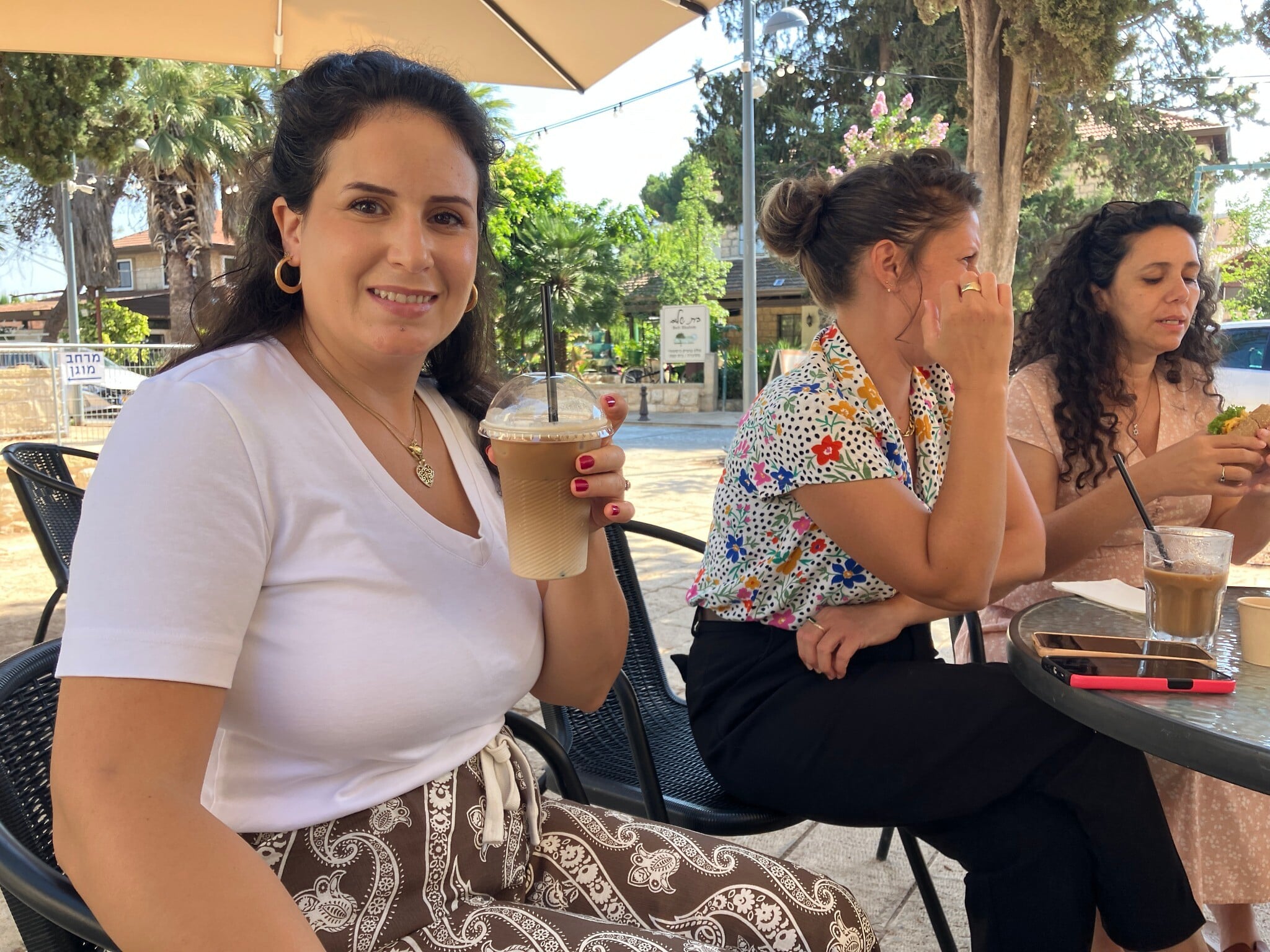
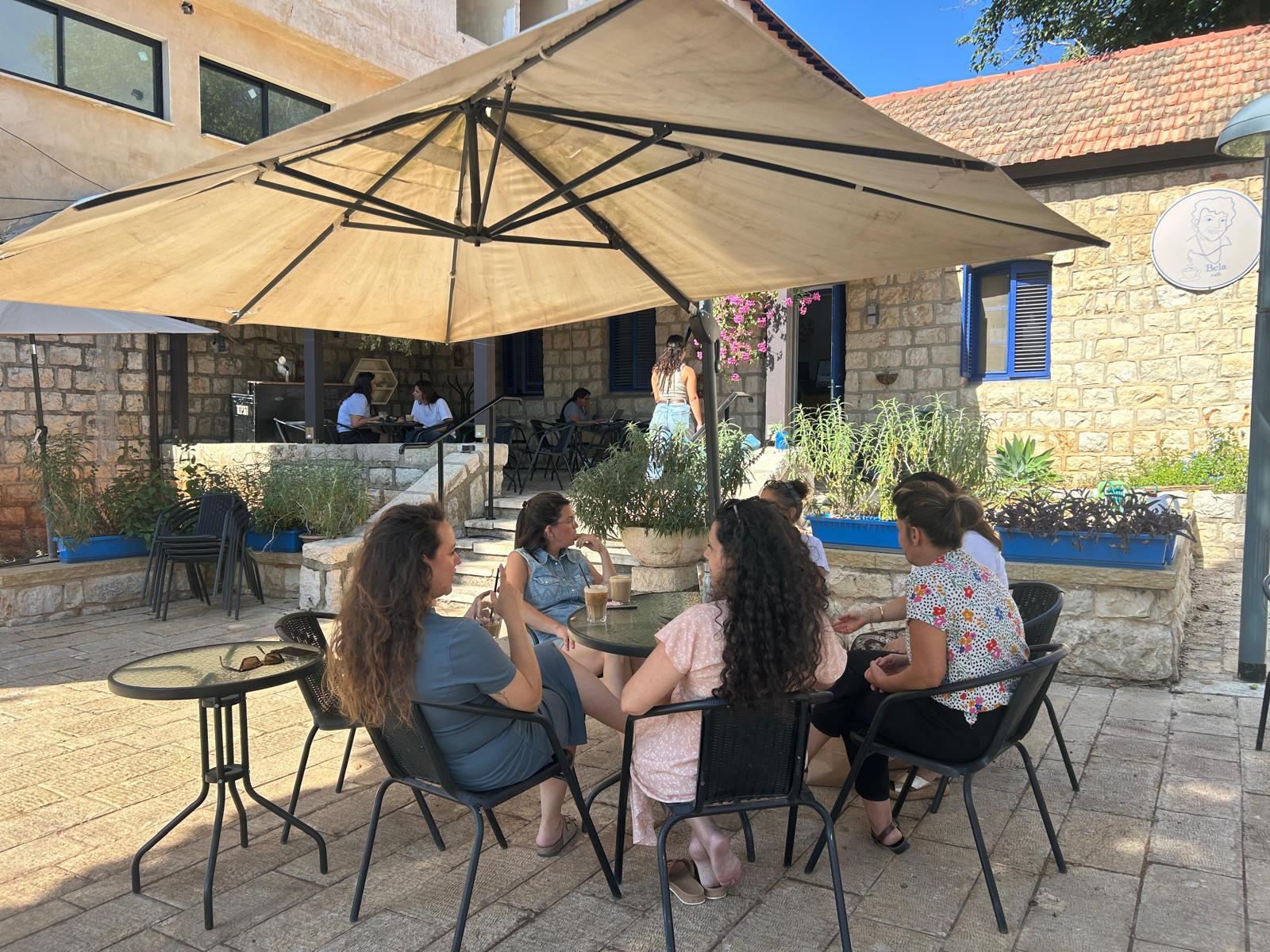
Noa Gino sits with friends at Bela Cafe on Metula’s main street after dropping her children off for their first day of school on September 1, 2026. (Diana Bletter/Times of Israel)

However, the town has repaired most of the roads, and new cobblestones have been installed on HaRishonim, the town’s charming main street. Enjoying a cold coffee at the street’s Bela Cafe after dropping the kids at school, Noa Gino said she believes in the importance of the family’s return.

“Having grown up in Tel Aviv during the intifada, I’m not naive,” she added. “The situation could change, but I believe in being here… We can’t abandon the north or the Gaza border region because if we do, our enemies will move in,” she said.

The Ginos’ sense of commitment is characteristic of the people who live both in Metula and the surrounding area of the Golan.


Noleen Safadi, head of Metula’s education department and a Majdal Shams resident, stands in front of a sign that says ‘Welcome’ in front of Metula’s Hanadiv elementary school on September 1, 2026. (Diana Bletter/Times of Israel)

Noleen Safadi, head of Metula’s education department, lives in the Druze town of Majdal Shams, 35 kilometers (22 miles) away, in the Golan Heights.

Her son, Alan, now 14, was one of the survivors of the devastating July 27, 2024, Hezbollah rocket attack on a soccer field in Majdal Shams, which killed 12 children. Safadi said that Alan has undergone 23 operations since the attack.

She stood at the school entrance greeting students, parents and teachers.

“Since the attack, we’ve met so many good people,” Safadi said. “It’s very moving for me to take part in rebuilding Metula’s education system.”


‘Lebanese people tell us, ‘We’re sick of war’​

Soon after the war ended, in February 2025, Metula Mayor David Azoulay bemoaned that Metula had “no lights in the streets, no sidewalks, no health clinics, schools, or grocery stores,” and he discouraged residents from returning.

But on the first day of school, Azoulay was beaming as he greeted people.

He said that he’s heard from some Lebanese, Christian, Druze, Sunni, and even Shiites in southern Lebanon.

“They told me, ‘We’re sick of war, and we want something different,'” he said. “We want peace. Right now, I’m optimistic.”


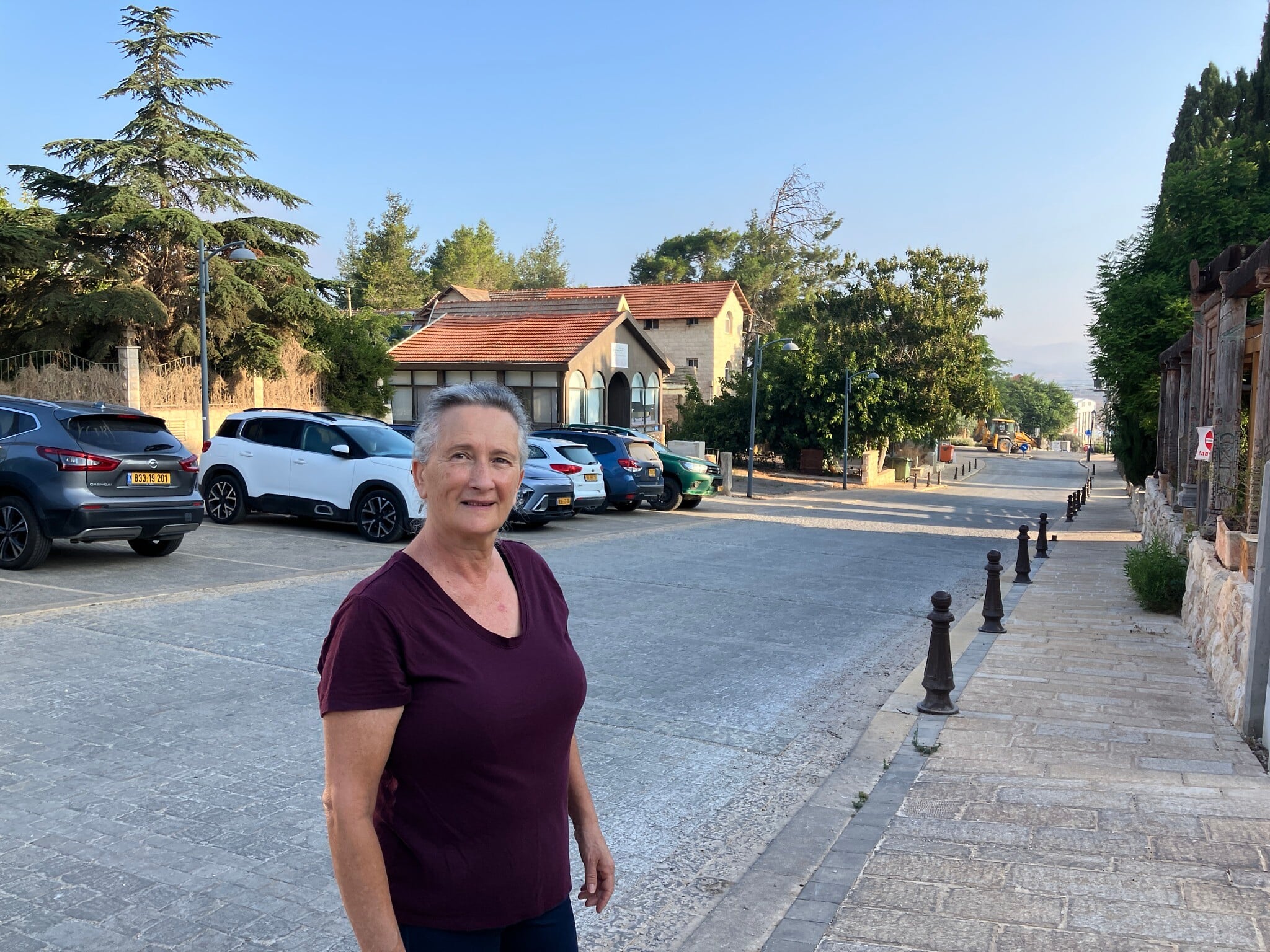
Zipora Norel stops during her morning walk on Metula’s main street on September 1, 2026. (Diana Bletter/Times of Israel)

Early in the morning, right by the school, Zipora Norel was taking her morning walk.

“I fell in love with Metula when I came here a month ago, and moved here two days ago,” she told The Times of Israel. “The weather is beautiful. The vibe is open.”

During the war, Norel was evacuated from Kiryat Shmona and lived in various places.

“I’ve been wandering,” she said. “But since arriving in Metula, everyone wants to help me. I’m looking for part-time work, cooking or teaching, and I do art.”

When asked how it was for her to live in the border town, she replied, “I count on our soldiers. I don’t have a gram of fear.”


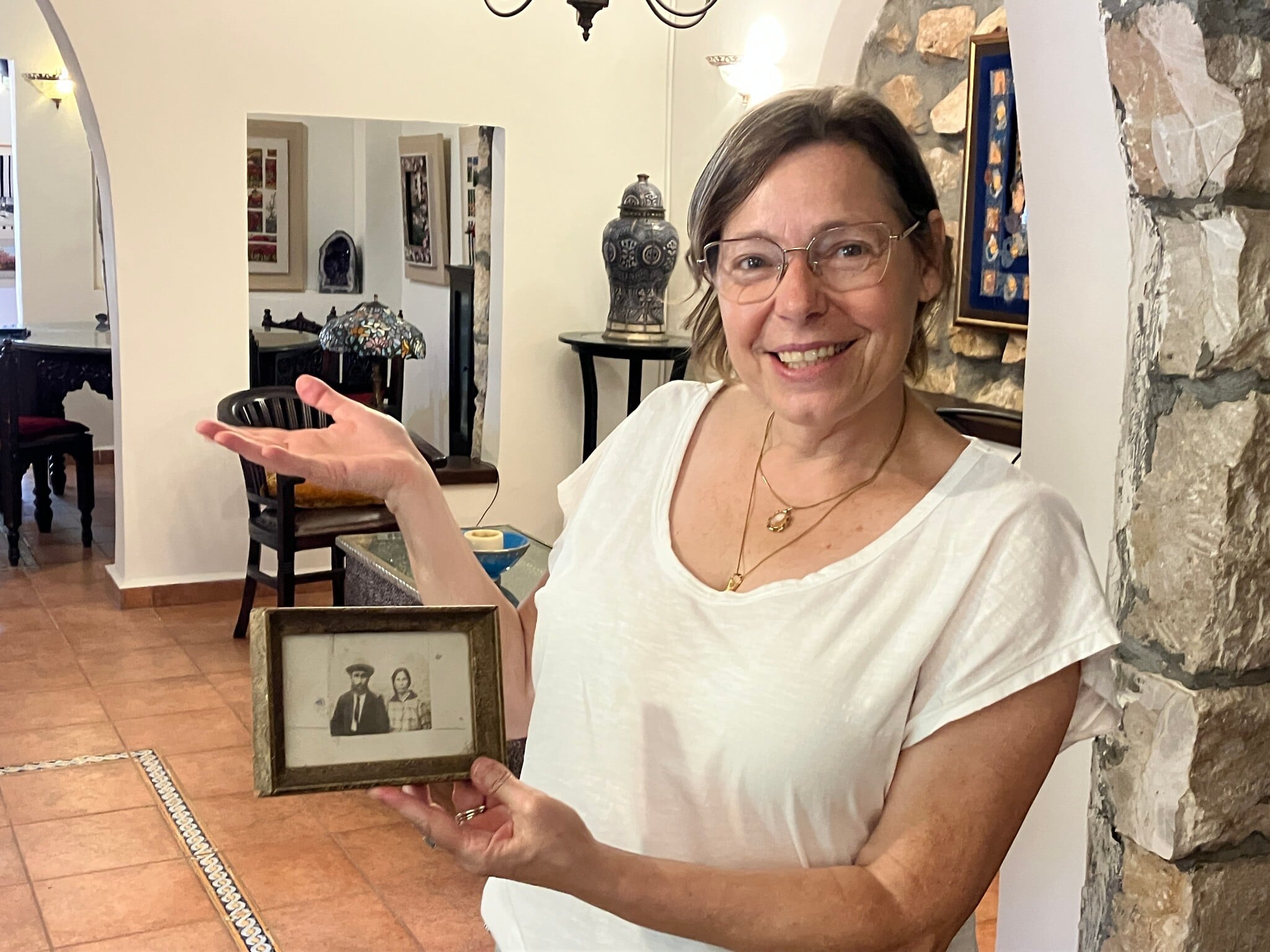
Erit Fine holds a photograph of her great-grandparents, two of the founders of Metula, at the Beit Shalom Gallery on HaRishonim Street on September 1, 2026. (Diana Bletter/Times of Israel)

Erit Fine, a fifth-generation Metula resident, operates Hod Rishonim, a family retreat center on the town’s main street.

The center was closed during the war, but she said that now, “my phone is ringing again.”

Standing on HaRishonim Street, she gestured to the various eateries that have sprouted since the war.


A sidewalk table at Bela Cafe on HaRishonim Street in Metula on September 1, 2026. (Diana Bletter/Times of Israel)

“This is now a culinary hub,” she said, pointing to a kosher pizza restaurant, a hamburger restaurant and a café with tables on the sidewalk under tall trees.

“Until the war ends, Israelis live as if there’s no war,” Fine said. “People may be alert, they know what’s going on, but they’re living and celebrating life.”

She said she was delighted to see children returning to school earlier in the morning.

“Hearing the sounds of children’s shouts and happiness shows that there’s life here again,” Fine said. “That is victory.”
 
original.png

Aoun says Lebanon must not waste opportunities on narrow interests

by Naharnet Newsdesk 4 hours ago
Comment

W460

President Joseph Aoun signaled openness to all diplomatic pathways on Wednesday, stating that the primary objective of the ongoing negotiations with Israel is to spare Lebanon from war while protecting its national sovereignty.

"I have outlined the core objectives of the negotiations: sparing Lebanon the scourge of war while safeguarding its sovereignty, stability, and national interests," Aoun said. "I remain open to any option or path that serves these goals, as our ultimate priority is protecting Lebanon and its people."

Aoun called for national unity amid worsening regional tensions and lauded recent remarks by Parliament Speaker Nabih Berri, which underscored civil peace, the Lebanese army, and the Taif Accord as non-negotiable "red lines."

"It is a message to the Lebanese before the rest of the world," he said, urging political factions not to squander current opportunities on narrow partisan interests.

"Lebanon has many opportunities ahead, and the crucial thing is that we do not waste them on narrow self-interests but rather learn from the past to build a better future."
 

School is again in session in Israel’s northernmost community, after 65% of its residents came back to live amid telltale signs of war. It was a celebration three years in the making


By Diana Bletter 1 September 2026, 4:52 pm


  • After a three-year closure due to war, Israel's northernmost community of Metula celebrates a first day of school, September 1, 2026. (courtesy)

  • After a three-year closure due to war, Israel's northernmost community of Metula celebrates a first day of school, September 1, 2026. (courtesy)'s northernmost community of Metula celebrates a first day of school, September 1, 2026. (courtesy)
    After a three-year closure due to war, Israel's northernmost community of Metula celebrates a first day of school, September 1, 2026. (courtesy)

  • Noleen Safadi, head of Metula's education department and a Majdal Shams resident, stands in front of a sign that says 'Welcome' in front of Metula's Hanadiv elementary school on September 1, 2026. (Diana Bletter/Times of Israel)

  • Metula Mayor David Azoulay greets students at Hanadiv Elementary School on September 1, 2026 (Diana Bletter/Times of Israel)
METULA – For the first time in three years, Israel’s northernmost community reopened its Hanadiv Elementary School on Tuesday, with 36 students in grades one to six. Another 18 children began the school year in a freshly reopened kindergarten.

The Metula school had been closed from October 8, 2023, when Hezbollah began firing rockets, missiles and drones at Israel in solidarity with fellow terror group Hamas. The picturesque town became the scene of near-daily devastation, forcing nearly all of its 2,100 residents to flee. Prior to the 2023 war, 75 children had attended the elementary school.

Since the November 27, 2024, ceasefire, roughly 65% of the town’s residents on the Israel-Lebanon border have returned, a Metula spokesperson told The Times of Israel. Today, the northern border felt peaceful, with IDF soldiers sitting in cafes enjoying the relatively mild weather.

Speaking with The Times of Israel at the celebratory school reopening, Metula native Shimon Gino said he moved back a month ago with his wife, Noa, and their four children.

“Moving back here won’t be easy, but kids can adjust, and they’re very excited,” Shimon said. “We have to rebuild the community from scratch.”

One of the Gino children started school during COVID-19, then went to two different schools during the family’s relocation, and has now returned to school in Metula for sixth grade. He recalled that when he was a student here in the early 1980s, there were far more children — 17 in each grade.

Shimon Gino stands in front of Metula’s Hanadiv Elementary School, after dropping off two of his children, on September 1, 2026. (Diana Bletter/Times of Israel)
But the scars of war are everywhere.

Because of its proximity to the border, the town wasn’t subjected only to rocket and drone attacks, but also to anti-tank missiles. Out of 650 homes in Metula, 460 sustained damage from attacks, 120 of them severely. And the danger continues: On August 18, six foreign workers were injured, two of them seriously, when an old explosive detonated in an agricultural field in the town.

Some agricultural orchards have yet to bloom again, and the iconic Canada Center, with its skating rinks and Olympic-sized pool, has not yet been rebuilt.


Noa Gino sits with friends at Bela Cafe on Metula’s main street after dropping her children off for their first day of school on September 1, 2026. (Diana Bletter/Times of Israel)

However, the town has repaired most of the roads, and new cobblestones have been installed on HaRishonim, the town’s charming main street. Enjoying a cold coffee at the street’s Bela Cafe after dropping the kids at school, Noa Gino said she believes in the importance of the family’s return.

“Having grown up in Tel Aviv during the intifada, I’m not naive,” she added. “The situation could change, but I believe in being here… We can’t abandon the north or the Gaza border region because if we do, our enemies will move in,” she said.

The Ginos’ sense of commitment is characteristic of the people who live both in Metula and the surrounding area of the Golan.


Noleen Safadi, head of Metula’s education department and a Majdal Shams resident, stands in front of a sign that says ‘Welcome’ in front of Metula’s Hanadiv elementary school on September 1, 2026. (Diana Bletter/Times of Israel)

Noleen Safadi, head of Metula’s education department, lives in the Druze town of Majdal Shams, 35 kilometers (22 miles) away, in the Golan Heights.

Her son, Alan, now 14, was one of the survivors of the devastating July 27, 2024, Hezbollah rocket attack on a soccer field in Majdal Shams, which killed 12 children. Safadi said that Alan has undergone 23 operations since the attack.

She stood at the school entrance greeting students, parents and teachers.

“Since the attack, we’ve met so many good people,” Safadi said. “It’s very moving for me to take part in rebuilding Metula’s education system.”


‘Lebanese people tell us, ‘We’re sick of war’​

Soon after the war ended, in February 2025, Metula Mayor David Azoulay bemoaned that Metula had “no lights in the streets, no sidewalks, no health clinics, schools, or grocery stores,” and he discouraged residents from returning.

But on the first day of school, Azoulay was beaming as he greeted people.

He said that he’s heard from some Lebanese, Christian, Druze, Sunni, and even Shiites in southern Lebanon.

“They told me, ‘We’re sick of war, and we want something different,'” he said. “We want peace. Right now, I’m optimistic.”


Zipora Norel stops during her morning walk on Metula’s main street on September 1, 2026. (Diana Bletter/Times of Israel)

Early in the morning, right by the school, Zipora Norel was taking her morning walk.

“I fell in love with Metula when I came here a month ago, and moved here two days ago,” she told The Times of Israel. “The weather is beautiful. The vibe is open.”

During the war, Norel was evacuated from Kiryat Shmona and lived in various places.

“I’ve been wandering,” she said. “But since arriving in Metula, everyone wants to help me. I’m looking for part-time work, cooking or teaching, and I do art.”

When asked how it was for her to live in the border town, she replied, “I count on our soldiers. I don’t have a gram of fear.”


Erit Fine holds a photograph of her great-grandparents, two of the founders of Metula, at the Beit Shalom Gallery on HaRishonim Street on September 1, 2026. (Diana Bletter/Times of Israel)

Erit Fine, a fifth-generation Metula resident, operates Hod Rishonim, a family retreat center on the town’s main street.

The center was closed during the war, but she said that now, “my phone is ringing again.”

Standing on HaRishonim Street, she gestured to the various eateries that have sprouted since the war.


A sidewalk table at Bela Cafe on HaRishonim Street in Metula on September 1, 2026. (Diana Bletter/Times of Israel)

“This is now a culinary hub,” she said, pointing to a kosher pizza restaurant, a hamburger restaurant and a café with tables on the sidewalk under tall trees.

“Until the war ends, Israelis live as if there’s no war,” Fine said. “People may be alert, they know what’s going on, but they’re living and celebrating life.”

She said she was delighted to see children returning to school earlier in the morning.

“Hearing the sounds of children’s shouts and happiness shows that there’s life here again,” Fine said. “That is victory.”
The scum have killed thousands of innocent kids and you dont comment and instead post this?
You really are something else. You reconfirm hatred in members for your tribe.
Really are the lowest form of humans
 
The scum have killed thousands of innocent kids and you dont comment and instead post this?
You really are something else. You reconfirm hatred in members for your tribe.
Really are the lowest form of humans
to be fair he’s that one half of the population that’s vile I have met many Israelis and Jewish people my past 45 years and vast majority are sane people as sane as any Palestinian but to be fair I think the Zionists of Israel are flocking in droves to south Florida it’s like settlers from the West Bank are enjoying sunny Florida…..free housing here and many get welfare same as Israel
 

Users who are viewing this thread

Latest Posts

Back
Top