Lebanon-Israel War | 2023-present

Aoun says 'necessary to negotiate' with Israel

by Naharnet Newsdesk 2 hours ago
Comment

W460

President Joseph Aoun on Monday called for negotiations with Israel, after U.S. President Donald Trump brokered a ceasefire in Gaza.

"The Lebanese state has previously negotiated with Israel under American and United Nations auspices, resulting in an agreement to demarcate the maritime border... so what prevents the same thing from happening again to find solutions to the outstanding issues," Aoun said according to a presidency statement.

"Today, the general atmosphere is one of compromise, and it is necessary to negotiate. As for the shape of this negotiation, it would be decided when the time comes," the president added.

Calling for an end to Israel’s military operations in Lebanon “so that the course of negotiations can begin,” Aoun said Lebanon “cannot be outside the current course in the region.”

“It is a course of settling crises and we have to be part of it, seeing as we can no longer bear further war, destruction, killing and displacement,” the president added.
 
Israeli aggression and violation of ceasefire continues.

This is setting a bad precedent for the region. Arab leadership are not doing anything to demand this ends. Even if they aren't on good terms with Hezbollah, this is not about Hezbollah, it is about Israeli expansionism and aggression towards people of the region. Seeing how much it can get away with.

It will violate peace treaty with Jordan and Israel if Netanyahu wasn't such a coward that bullies tiny ravaged Gaza to avoid corruption trial. Once Gaza is no longer allowed to be his punching bag, he will attack other nations.

To view this content we will need your consent to set third party cookies.
For more detailed information, see our cookies page.
 
Israel is targeting diesel fuel reserves

That would be used to fuel heavy vehicles that rebuild southern Lebanon

These aren't weapons depots

To view this content we will need your consent to set third party cookies.
For more detailed information, see our cookies page.
 
Once Gaza is no longer allowed to be his punching bag, he will attack other nations.

In your view, is that the reason none of the neighboring countries have actually stepped up to help out the hapless Gazans in any meaningful way?
 
In your view, is that the reason none of the neighboring countries have actually stepped up to help out the hapless Gazans in any meaningful way?
They don't need to be able to help Palestinians of Gaza to recognize that reality.

Egypt is preventing the ethnic cleansing of Palestinains of Gaza. The Egyptian military that is. Yes Israel is not confident and has fears taking on the Egyptian military.

Egypt is doing that because it knows Gaza's exisistence is essential to its national security.

Why do you think Israel will do if Gaza is out of the picture ? It's not going to leave the rest of the region alone because the rest of region is on a development journey, and in a decade will have overtaken Israel in many categories. Israel won't be able to assert any dominance in 10 years unless it tries to sabotage those nations development.
 
Why do you think Israel will do if Gaza is out of the picture ? It's not going to leave the rest of the region alone because the rest of region is on a development journey, and in a decade will have overtaken Israel in many categories. Israel won't be able to assert any dominance in 10 years unless it tries to sabotage those nations development.

I do not have the same certainty as you appear to have about predicting future events.

After all, those possessing such clairvoyance would also have seen the events of the past two years many years prior to they actually happening. And yet such decisive foreknowledge did not help them in any way either.
 
Israeli aggression and violation of ceasefire continues.

This is setting a bad precedent for the region. Arab leadership are not doing anything to demand this ends. Even if they aren't on good terms with Hezbollah, this is not about Hezbollah, it is about Israeli expansionism and aggression towards people of the region. Seeing how much it can get away with.

It will violate peace treaty with Jordan and Israel if Netanyahu wasn't such a coward that bullies tiny ravaged Gaza to avoid corruption trial. Once Gaza is no longer allowed to be his punching bag, he will attack other nations.

To view this content we will need your consent to set third party cookies.
For more detailed information, see our cookies page.


This is the responsibility of the government of Lebanon to protect against, as they are civilian targets.
 
Israeli media reveals details of Israel's failed invasion of Lebanon for the first time, including the Battle of Odaisseh (south Lebanon) in October 2024

56 IDF soldiers were killed or injured in the first day of the battle (including the IDF Company Commander, who was killed on the first day), and the IDF withdrew from Odaisseh after less than a week of battles with Hezbollah's elite Redwan Force

"They [IDF soldiers] were not afraid in Rafah, but that night in Lebanon their balls were shaking"


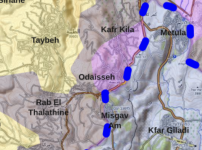
In October 2024, after Israel had assassinated most of Hezbollah's senior military command, and Sayed Nasrallah, and carried out the mass-scale terrorist pager attacks, the IDF launched its invasion into south Lebanon, and one of the biggest battles was in the border town of Odaisseh
Screenshot 2025-10-18 at 19.37.49.png

A new report in Israeli media reveals testimony from this battle for the first time:

---

The last time Lieutenant Eitan Oster, a team commander in the Egoz unit, spoke to his older brother Eviatar was the day before he was killed. Eitan told him that he was going on a dangerous and important operation, from which he was not sure he would return. Oster's team set off two days before Rosh Hashanah, to the village of Al-Adeisa in southern Lebanon. They checked out the area but did not feel prepared for the mission. "His soldiers said they were not afraid in Khan Yunis, they were not afraid in Rafah, but that night in Lebanon their balls were shaking," said Alik, his oldest brother, in an interview after his death.

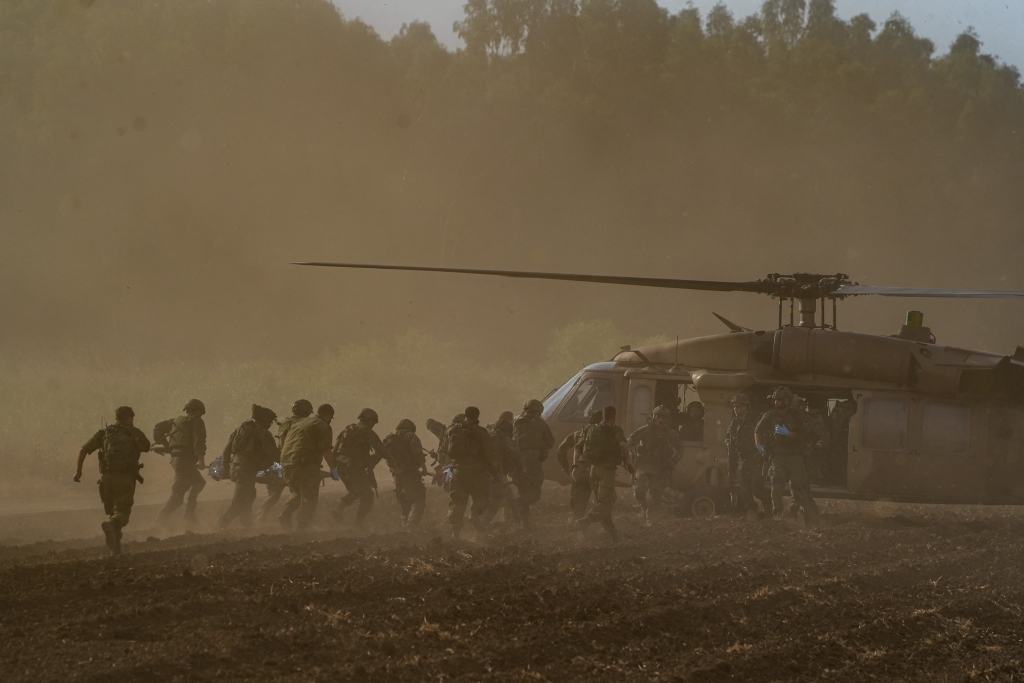
Oster recognized the fear of his subordinates. Contrary to popular belief, he was the first to enter the building, which was fortified with resistance fighters and quickly became a death trap. At 4:15 in the morning, he was shot in the leg. Only after more than three hours, at 7:24, did the IDF helicopter that rescued him take off to Ziv Hospital in Safed. He arrived at the hospital alive, but the large amount of blood he lost led to his death being declared within a short time. Four other Egoz fighters died in the same battle – Captain Harel Ettinger, Major General Noam Barzilai, Major General Or Manzur, Major General Nezer Itkin, as well as Captain Itai Ariel Giat from the Yahalam unit.

The battle for El Adeisa began on October 2, less than two days after the start of the maneuver, and just a few hundred meters from Kibbutz Misgav Am Ha-Tsefoni. It began around 3:00 a.m., in complete darkness and under heavy fog. The Egoz unit, an infantry commando unit specializing in fighting Hezbollah's Radwan force, was chosen to lead the mission. For nine hours, the forces fought dozens of Hezbollah fighters in a bloody battle, in which six IDF fighters were killed and 42 others were wounded, including aid forces who came to rescue and were shot themselves.

Warnings about the impending disaster began long before the battle. According to testimonies that reached the "hottest spot," many of the fighters entered Lebanon with a feeling of burnout and unpreparedness - both operationally and mentally. In the days leading up to the battle, operational warnings came from the teams in the field - which were met with dismissal by the commander of the Egoz unit. After the battle, fighters say, a serious crisis of trust arose in the unit that led many soldiers to refuse to continue serving. This is what the Battle of Adeisa looked like from the eyes of the soldiers of the Egoz unit.

In a conversation with "The Hottest Place," a source familiar with the details said that the fighters were forced to make their own decisions about who would evacuate and who would not, while they were dealing with a suspicion of the kidnapping of one of the soldiers, which was later disproven.

In one case, a group of regular fighters from one of the veteran teams refused to continue fighting, demanding to receive treatment. They asked not to enter Lebanon, but the IDF threatened to take away their fighter ID and all the associated rights. In another case last September, fighters refused to participate in the fighting, but after being emotionally manipulated, they were subdued – and entered.

The difficult feelings led a number of soldiers in the ranks to announce, less than a month after the disaster, that they would no longer enter Lebanon, and that they were requesting to be discharged from service. The fighters responded with threats and manipulation. And at least five of them refused – and were discharged.

The crisis reached other teams in the unit, who made it clear one by one that they could no longer fight.

Another crisis of trust developed when the fighters discovered that the command did not intend to release them for the funeral of their company commander. "They voted with their feet," recalls one of the mothers. "They simply got on the Humvees and said, 'Either you allow us, or we'll do it without you allowing us.'"

 
Last edited:
To view this content we will need your consent to set third party cookies.
For more detailed information, see our cookies page.
 
To view this content we will need your consent to set third party cookies.
For more detailed information, see our cookies page.

While Hezbollah agreed to disarm in southern Lebanon as part of a government plan, the group has retained its arms in other strongholds and is undergoing a deep, secretive restructuringaided by Iranian operatives and extensive internal reforms, according to the report published Saturday night.

Although the fighters in the south of the country continued to fight, about 1,200 of them were killed. According to the investigation and testimonies, after about two weeks, Iranians - led by Ismail Qaani, commander of the Quds Force - arrived to restore the chain of command. “They restored the army in 10 days, but the political echelon remained vacant,” said Wafik.

Hezbollah has since adopted a new structure. “We now have a new, secret military structure, led by a younger, more dynamic leadership,” Parliament member Ali Fayyad stated. The group has reverted to levels of secrecy not seen since the 1980s, separating its political and military wings and shortening command chains. “No one knows who does what,” an insider told Le Figaro.

Le Figaro concludes that, while weakened, Hezbollah remains resilient. The group is rebuilding its command structure and retaining grassroots support. Analysts warn its covert activity could eventually reignite hostilities — especially amid tensions with Israel. “They’re like a snake slithering in the dark,” said one Western intelligence source. “They haven’t disappeared — they’re just waiting.”
 
To view this content we will need your consent to set third party cookies.
For more detailed information, see our cookies page.
 
To view this content we will need your consent to set third party cookies.
For more detailed information, see our cookies page.

To view this content we will need your consent to set third party cookies.
For more detailed information, see our cookies page.
 
While Hezbollah agreed to disarm in southern Lebanon as part of a government plan, the group has retained its arms in other strongholds and is undergoing a deep, secretive restructuringaided by Iranian operatives and extensive internal reforms, according to the report published Saturday night.

Although the fighters in the south of the country continued to fight, about 1,200 of them were killed. According to the investigation and testimonies, after about two weeks, Iranians - led by Ismail Qaani, commander of the Quds Force - arrived to restore the chain of command. “They restored the army in 10 days, but the political echelon remained vacant,” said Wafik.

Hezbollah has since adopted a new structure. “We now have a new, secret military structure, led by a younger, more dynamic leadership,” Parliament member Ali Fayyad stated. The group has reverted to levels of secrecy not seen since the 1980s, separating its political and military wings and shortening command chains. “No one knows who does what,” an insider told Le Figaro.

Le Figaro concludes that, while weakened, Hezbollah remains resilient. The group is rebuilding its command structure and retaining grassroots support. Analysts warn its covert activity could eventually reignite hostilities — especially amid tensions with Israel. “They’re like a snake slithering in the dark,” said one Western intelligence source. “They haven’t disappeared — they’re just waiting.”
Yeah honestly I have been saying this for awhile Hezbollah got battered no doubt about it they lost much of their top echelon but funny thing is and I think people forget Hezbollah has 10s of thousands soldiers the guys who have stuck around are the guys who are going to build up Hezbollah back to its roots a lighter more mobile attack formations long range rockets are going to disappear more short range tactical missiles like the ones used on the fatah 360 launchers are going to be the norm.

Hezbollah got way to big they started to act like a military powerhouse but no navy no Air Force having Israel no the exact locations of these bases be it above or underground wasn’t feasible Hamas lasted as long as they did because they didn’t fully act as an army when the top leadership were taken out basically they went back to small squads that kept bleeding the Israelis that’s what I liked about Hezbollah that the could appear and disappear at any time
 

Users who are viewing this thread

Back
Top