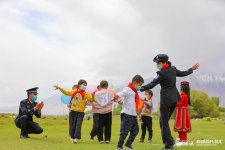
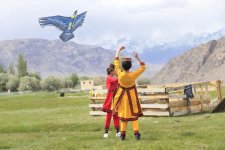
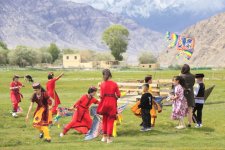
Limousine bus convoy stretching kilometers escorted by police cars, dignitaries arrive in Xinjiang?

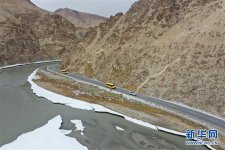
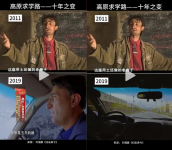
Check out the road and weather condition in these mountains, police escort is a must for the kids school bus travel in this harsh environment.


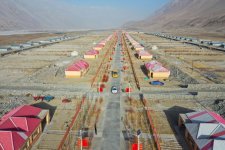
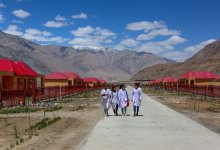
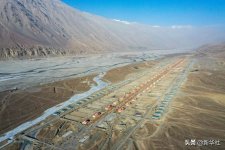
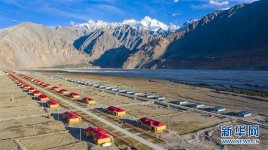
Xinjiang Xihexiu Township, Kargilik County. Xinjiang organized 45 vehicles from Bashiquepu Village, Ayagequepu Village, Yaeragezi Village and Kulan Agu Village to escort 165 primary school students to the primary school in the town.

Xihexiu Township is located in the hinterland of Kunlun Mountain, surrounded by mountains. There is only one road to send children to school, which needs to cross two snow-capped mountain passes with an altitude of 4,000 meters.
 
It was not always like this comfy and safe, the kids from the exact same villages had to risk their lives to go to school just a decade ago.


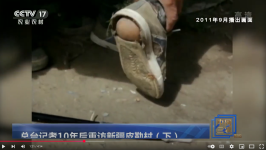
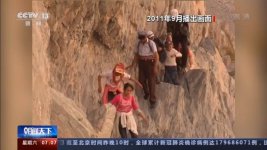
In 2011, a prime time TV News series aired for a whole week on the Chinese central TV (CCTV) featuring 42 Tajik children from Pili village in Pamir Plateau and their dangerous school run, the series shocked the whole nation and gripped the hearts of hundreds of millions in China. Government scrambled to respond and social media was flooded with angry comments. Even foreign media noticed it and made extensive coverage.

 
In 2011, a week long news series on Chinese central TV about how dangerous a route school kids have to take to go to school in Xinjiang gripped whole nation's heart, children had to scale the mountain cliff and trek for days to get to their school, CCTV reporter cried when she saw a little girl's deformed hands by frostbites and she took her to Beijing for better treatment.


Chinese children endure 'world's most dangerous school run'
By Malcolm Moore, Shanghai4:33PM GMT 15 Nov 2011
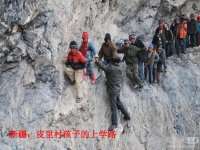
新疆:皮里村孩子的上学路.jpg

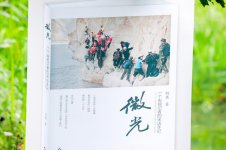
Four times a year, 80 children from a remote village in the Pamir mountains set off on a school run that would make most parents blanch, scaling 1000ft-high cliffs and fording swollen rivers to get to class.

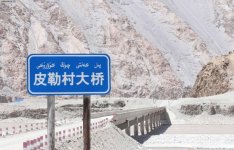
The children, aged between six and 17 years-old, live in Pili, a village of some 400 herders and farmers high up in the foothills that separate China from Tajikistan and Afghanistan.
But their school lies some 120 miles away, 50 miles of which are inaccessible to vehicles and have to be crossed on foot, or by camel.

"There is only one way to get to the village, and you have to climb up in the mountains," said Su Qin, the head teacher at Taxkorgan Town boarding school, where the children study. "The village is completely cut off. The roads only take you further away," she added.

So, four times a year, before and after the summer and winter terms, a group of teachers sets off to escort the children on the journey. It takes at least two days and one night of trekking, and the children sometimes arrive at the school as much as a week after the beginning of term.
The most dangerous part of the route is a path, which narrows to just a few inches wide, that has been cut into a cliff face some 1,000ft above the valley beneath. Without safety harnesses, the teachers gingerly shepherd their charges along.

Further along, there are four freezing rivers to wade across, a 600ft-long zip-line to slide down, and bridges that are just a single plank wide. Teachers often carry the younger children on their backs, but some have fallen in the rivers in the past, without serious injury.

"Actually the parents think it toughens the kids up, and gives them good experience," said Ms Su. "However, some of the parents are reluctant to let their children go to school. They are so cut off from the world they do not appreciate the importance that having knowledge will play in their children's lives." She said there had not been any accidents during the trips, which have run for the past two years, since the modern, three-floor school was built. "We make sure that it is always a responsible group of teachers and local officials that go, and they take good care of the children," she said.

"It is actually safer in winter because they can walk on the frozen river. They do not need to climb up the mountains and detour," she added. "Sometimes they can ride on the camels too." Ms Su said she had two boys from Pili in her music class at the school, and that both of them quite enjoyed the adventure of the trip.

"One of the boys is eleven and very talented at music, although less talented academically. He is definitely a leader. Even though he is the smallest kid in the class, he has the most authority. Both the boys are quite confident, in fact."

Guo Yukun, the local Communist party secretary, told China Central Television (CCTV) that a road is now under construction to the village. However, because of the difficulty of the terrain, it is not expected to be finished until late 2013.

"Our main task is to get these 80 primary and middle schoolchildren out of Pili village [and bring them to the school] safely. Our national policy is to make sure children have a free education. So the teachers take good care of them," he said.

Another official, named Sa'dan, admitted, however, that there are usually some jitters before the trips. "If anything happens to the children on the way, how could we face their parents?" he said.

Chinese children endure 'world's most dangerous school run' - Telegraph
 

In 2011, two sisters in Pili village can't go to school because the family can't afford shoes for them​

Parents were reluctant to let their two daughters to go to schoo in Pili villagel, government officials went to their home trying to persuade the parents to change their minds, telling them they don't have to worry, tuition, food, accommodation are all free, they don't have to pay a penny, but in the end it turned out the reason is the girls didn't have shoes, the family can't afford shoes for their girls so they couldn't walk away from their home for far, this shocked the CCTV reporter covering the story with the local officials.


微信图片_20250502174719.png
 
Last edited:
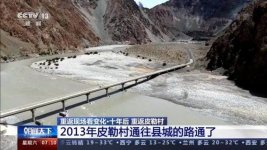
After the story became a hit on TV, the government hurriedly invested over ¥100 million ($18 million)to build a road into this Pili village, the road reached the village in 2013.

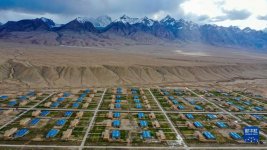
In 2021, 10 years after the report, the same reporting team revisited this Pili village, now the village is well connected to the outside, all primitive stones houses had been replaced by the government built earthquake resistent houses free for the local, all modern facilities, running water, electricity, internet are there.

Those children now have all grown up, they at least finished high school, they now work different jobs, police officers, teachers, drivers, business owners... now they got together again and talk about their future dreams

In the end of the first video 10 years ago, the reporter asked those kids about their future dreams, they said dreamed about having shoes, 10 years later,the same reporter asked those young dynamic guys and girls again the same question, they talked about expanding businesses and train to move up from their current positions.


What changes happened in Xinjiang's Pamir mountains in the past 10 years.


调整大小 8912183c-bf1a-41af-abbe-74e300f857b3 (1).jpg
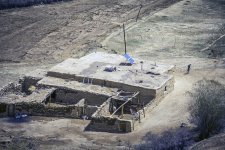
▲这是过去农牧民住的老房子 The old mud and stone dwelling Tajik herders used to live

调整大小 dcc0a632-a0f8-407f-85da-f3002132cbc5 (1).jpg
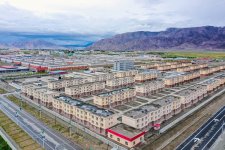
▲深圳援建的6.65万套安居富民房让农牧民有了宽敞明亮的新家。 Shenzhen aided 66,500 apartments gave every Tajik herder family a spacious and bright new home.
 
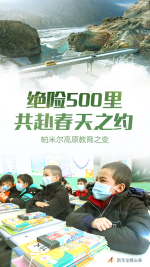
School run for the Pamiri kids 10 years after their death challenging school trips


1128485609_16476904603461n.png
60651600.jpeg
5d246299e4b02d62010fec5b.jpeg
调整大小 af43d9c8457740959dfe7125f94d934b.jpg
1125795006_15856573911071n.jpg
 
Last edited:
Chinese development capacity is incredible.
 
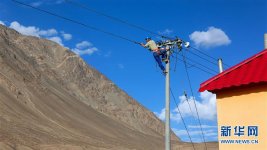
Arguably the most cut off, isolated corner on this planet, now local residents all have electricity, running water, heating and even 5G high speed internet, a massive improvement than a decade ago when they all lived in absoluste abject poverty.

666.jpg调整大小 1128672655_16531346616561n.jpg调整大小 這.jpg222.jpg999.jpg
 
Arguably the most cut off, isolated corner on this planet, now local residents all have electricity, running water, heating and even 5G high speed internet, a massive improvement than a decade ago when they all lived in absoluste abject poverty.

777.jpg调整大小 8f624975c833423db1f506088808bc5d.jpg006ncSK8ly4gg9ikehbihj30u00jzgo1.jpgt013b2a5a2c69f0908b.jpg
 
调整大小 微信图片_20250502182156.png

What can happen in 10 years, Tajik primary school teacher tells with his own personal experience. in 2011 he worked as a primariy school teacher in a rural village deep in the Pamir Mountains, he very often can't receive his salary for months and his students were so poor, they literally wore ragtags and many can't afford a pair of shoes.

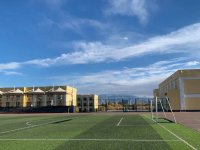
Fast forward through 8 years to 2019, the government built modern roads to every villege in the mountains, constructed brand new, modern schools with top notch all facilities, his salary raise to over ¥10,000 ( $1500). Almost all families now have their own cars including himself. now they can drive their own cars on the modern new roads to school, The region went from rags to riches in just 8 years time. schools also provide convenient school bus service to the students coming to the school and going back home.
 
Maybe the west would never understand why China invested hundreds of millions just for 42 school kids from a tiny deep mountain village.
Many repeatedly argue that China is crazy to build subways, highways, high speed railways at loss.
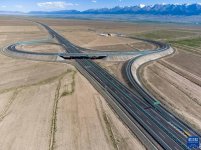
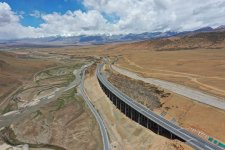
Cutting through the mountains, a modern road for 42 primary students was completed in less than 2 years, for the 42 school kids from Pili village.

15909961754133463630118996944344.jpeg
调整大小 9ce4caefec1946a08267d1f0837ae0e6_16x9.jpg2018071411060241903.jpg调整大小 56134322.jpeg
 
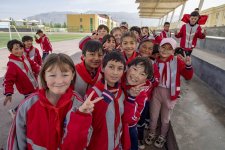
Billions of investment in the remotest corner of this planet, for the smile on the kids faces.

调整大小 5261807_6d1de9e5-d8a5-4094-93e2-744448d2a0cd.jpg
调整大小 600f768737438.jpg调整大小 调整大小 f41e324d8cfd423ab1251fbac64d0783.jpg调整大小 W020220601578686150376.jpeg
008eedO6ly4h2tzsgbd5dj30u00k0mzn.jpg008eedO6ly4h2tzse428pj30u00k077n.jpg
 
In 2011, a prime time TV News series aired for a whole week on the Chinese central TV (CCTV) featuring 42 Tajik children from Pili village in Pamir Plateau and their dangerous school run, the series shocked the whole nation and gripped the hearts of hundreds of millions in China. Government scrambled to respond and social media was flooded with angry comments. Even foreign media noticed it and made extensive coverage.


Many brainwashed foreign may believe such stories could never be reported on Chinese media, they couldn't be more wrong, public woes and grievances are being reported all across Chinese state's and social media every single day.

Chinese people don't insult the government just for being able to do so, they bring up the issues and ask for accountability and problem fixing, they even propose solutions for the government to study, no blame shifting, no finger pointing, no insults.

The government, in turn, addresses the issues in timely manner, hands down some punishement to those accountable, organizes task groups and sets timelines for the problems to be resolved or at least alleviated.

This mechanism works like clockwork, Chinese style of check and balance.
Taking Beijing as an example, a decade ago, public discontent about the city's air pollution, water pollution and water shortage flooded the government and social media, the government quickly responded and several policies and program were introduced within a couple of months, situation had been improved significant ever since, now they are almost all pretty much fixed.

In so called democracies, the public seem to be able to say whatever they want, criticize and insult whoever they don't like, but the problems stay unimproved forever, to most of the Chinese population, that is not something that they desire, Chinese nation is result oriented, not fancy about empty talking and undeliverable election promises.
 

Users who are viewing this thread

Back
Top