Localising Power: Saudi Defence Industrialisation as Strategic Bargain

Saudi Air Force

MIDDLE EAST

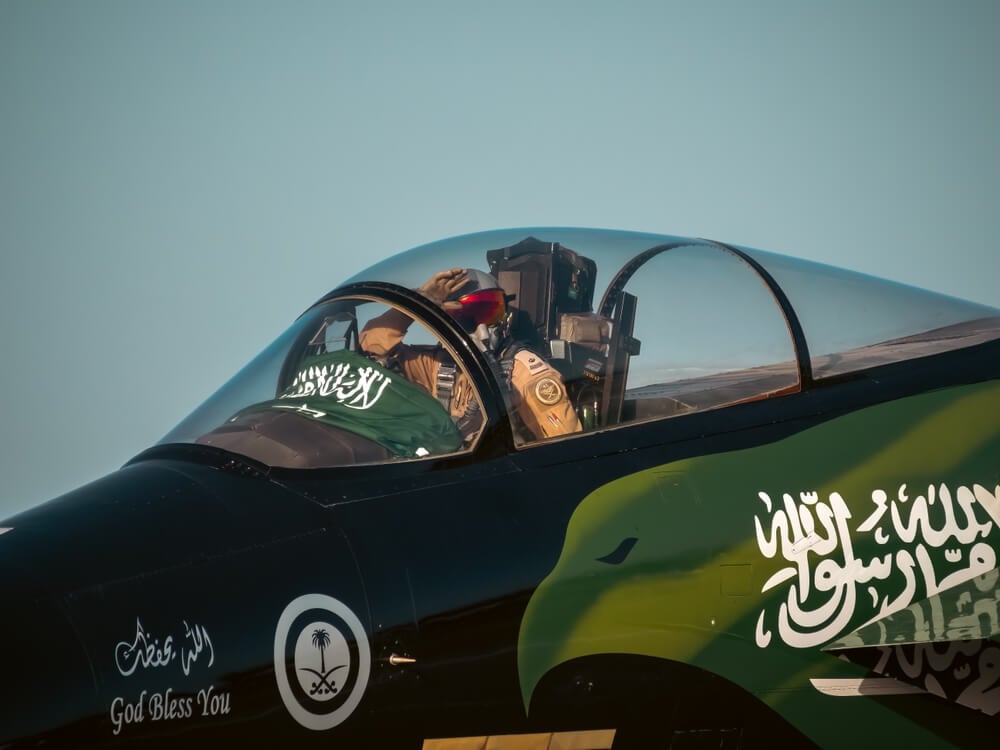
Why Saudi Arabia is building an Aerospace Force


When Royal Saudi Air Force Commander Lt. Gen. Prince Turki bin Bandar announced that the establishment of the Royal Saudi Air and Space Force (RSASF) had entered its final phase, the significance was not institutional. It was operational.

The Kingdom is now formalising a military transformation that has been developing since the beginning of the Yemen war in 2015.

The merger of the Royal Saudi Air Force (RSAF) and the Royal Saudi Air Defense Forces (RSADF), along with the incorporation of expanding military space capabilities, reflects a reality already evident on the battlefield.

Air operations, missile defence, intelligence, strategic warning, and space capabilities increasingly function as parts of the same combat system. The new force simply formalises this reality.

Saudi Arabia entered Yemen in 2015 with a large, technologically advanced, and well-equipped air force.

What it lacked was not aircraft, precision weapons, or resources. It continued to conduct warfare in a conventional manner, relying on traditional concepts of air power that were better suited to limited campaigns than to managing a prolonged and highly complex theatre.

A costly learning curve

The early years revealed significant weaknesses in targeting, intelligence fusion, command and control, and shortcomings in integrating military and political objectives.

Yemen became a steep and costly learning curve. Over the following decade, the RSAF progressed from conducting basic air operations to managing the entire battlespace.

By January 2026, that evolution was evident. RSAF operations in South Yemen demonstrated a mature, integrated C6ISR architecture operating at a level very different from the early years of the war.

By 2026, the RSAF was no longer using fighter jets solely to strike targets
The removal of the Abu Dhabi-backed Southern Transitional Council (STC) military position in South Yemen demonstrated the extent of the RSAF’s progress in surveillance, targeting, operational sequencing, and theatre command.

By 2026, the RSAF was no longer using fighter jets solely to strike targets. It was employing an integrated architecture of aircraft, intelligence, surveillance, missile defence, and C2 real-time command systems to control the battle itself.

Opposing forces were responding to Saudi decisions rather than shaping events themselves.

The scale of the Saudi challenge

The scale of the Saudi challenge is often underestimated. Saudi Arabia is the largest country in the Middle East.

It contains the world’s largest continuous concentration of energy infrastructure, sits atop the world’s largest proven conventional oil reserves, and lies astride some of the most important energy and commercial maritime corridors in the global economy.

Defending the Kingdom increasingly required maintaining awareness across all of Yemen
As the conflict evolved, defending the Kingdom increasingly required maintaining awareness across all of Yemen, including Bab al-Mandab, Socotra Island, and the air and maritime routes connecting them.

The mission was no longer limited to defending Saudi national airspace. It became the management of a theatre stretching from the Gulf to the Red Sea, through the Arabian Sea, and the Gulf of Aden.

Retaliatory strikes against Iranian military

The same capability became evident during the Iran war that began in February 2026. By then, the RSAF had developed a standalone fused C6ISR capability able to operate independently across multiple theatres simultaneously.

Separate from American CENTCOM unified military operations, the RSAF demonstrated the ability to identify threats, execute strikes, and assess results within a single command process.

RSAF's retaliatory strikes against Iranian military and security targets were deliberately calibrated to deter attacks on Saudi critical energy infrastructure while maintaining escalation control.

RSAF was no longer operating on a single front. It was managing Yemen, Iraq, and Iran simultaneously
At the same time, RSAF carried out simultaneous operations against Iranian-backed militia networks in southern Iraq responsible for missile and drone attacks on the Kingdom.

RSAF was no longer operating on a single front. It was managing Yemen, Iraq, and Iran simultaneously through an integrated C6ISR command system developed over a decade of war.

What began in 2015 as a large but operationally standard air force had, by 2026, evolved into a force capable of managing interconnected theatres across the region.

That evolution, more than any individual platform, explains the significance of the force now being established.

Strategic effect

The RSAF already has the scale needed to translate operational evolution into strategic effect.

It operates approximately 365 combat aircraft, including about 226 4.5 generation fighters composed of 154 F-15SA (Saudi Advanced) and 72 Eurofighter Tranche 2/3 Typhoons.

They are supported by approximately 59 F-15C/D 4.0+ fighters and around 80 Tornado IDS legacy 4.0 strike aircraft. Saudi Arabia is already the second-largest operator of the F-15 after the United States.

The air-defence architecture supporting this force is equally significant. THAAD (Terminal High Altitude Area Defense) provides the upper tier against higher-altitude ballistic missile threats, while Patriot batteries (PAC-2/PAC-3) form the middle layer, protecting critical infrastructure and population centres.

Beneath them lies a dense SHORAD network, including Shahine and Crotale-derived systems, which repeatedly proved effective against drones and low-flying threats during the Yemen and Iran conflicts.

Only the United States will have a larger layered air- and missile-defence architecture than Saudi Arabia once the Kingdom’s Patriot and THAAD deployments are complete.

Saudi Arabia has invested heavily in indigenous missile and unmanned systems production
One of the most important lessons from the wars in Yemen and Iran was that not every threat requires a strategic interceptor.

Ballistic missiles, cruise missiles, and drones require different defensive layers. Success resulted from integrating these layers rather than relying on a single defensive system.

The transformation extends well beyond combat aviation and missile defence.

Saudi Arabia has invested heavily in indigenous missile and unmanned systems production, with growing emphasis on domestic manufacturing of ballistic missiles, long-range strike systems, reconnaissance platforms, and one-way attack drones.

The objective is a more resilient defence-industrial base capable of sustaining prolonged operations and reducing dependence on external suppliers.

The Royal Saudi Strategic Missile Force (RSSMF) remains outside this restructuring and continues its own modernisation trajectory as Saudi Arabia's distinct strategic forces command.

Space – the next phase

Space is the next phase of the transformation. Saudi Arabia is investing heavily in geospatial intelligence, satellite constellations, secure communications, and strategic warning systems.

Modern military power increasingly depends on seeing further, identifying threats earlier, and responding more quickly.

This is where the transition from C6ISR to C7ISR becomes crucial. Cognition is not simply another sensor; it is the ability to convert information into action more rapidly than an adversary.

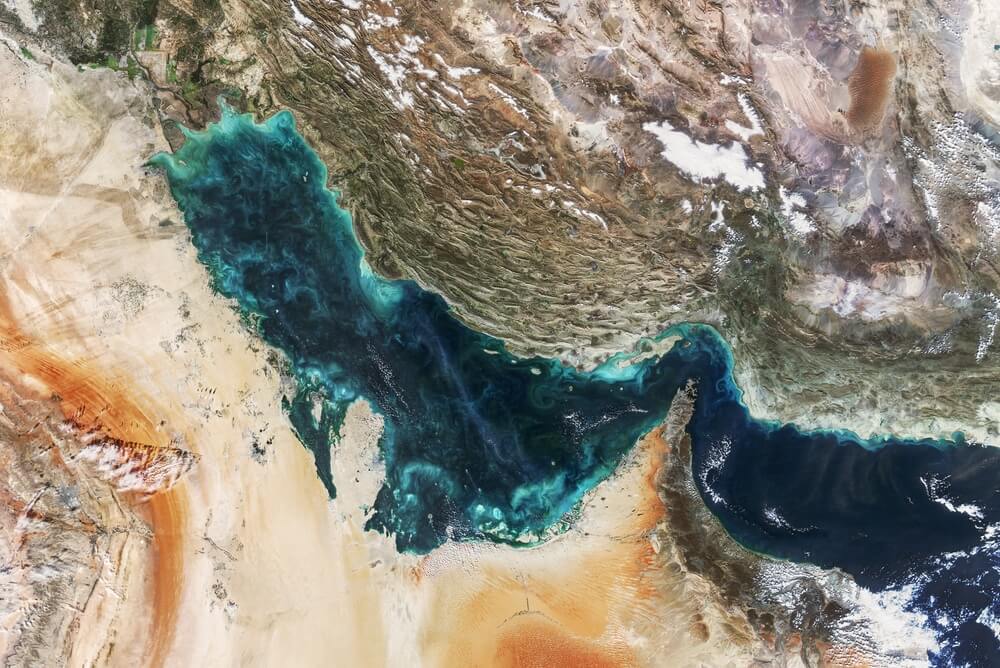
Persian Gulf Satellite
Saudi Arabia is investing heavily in geospatial intelligence, satellite constellations, secure communications, and strategic warning systems
The RSASF is integrating aircraft, missile defences, drones, intelligence systems, and space-based assets under a single command capable of managing the battlespace rather than merely participating in it.

Many programmes for modernising military systems, improving readiness, and strengthening institutional performance are underway. These reforms matter because sophisticated equipment alone does not create military power. Institutions do.

Saudi Arabia entered Yemen in 2015 with a large but operationally standard air force. A decade later, it fields a very different force.

It is supported by a layered missile defence network, increasing indigenous missile and drone production, expanding space capabilities, and an integrated command and control system tested in Yemen, Iraq, and Iran.

What RSASF is now building is the structure designed to preserve, expand, and exploit this over the next generation.

Dr Nawaf Obaid is a Senior Research Fellow at the Department of War Studies, King’s College London.

(The views expressed in this article are those of the author and do not necessarily reflect the editorial position of Tomorrow's Affairs.)
 
News June 10, 2026 at 11:44 am

The Sky Chase: How Saudi Arabia’s “Shaheen X” Is Changing The Drone Game​

By asia

Cover-Slide-v1-10.png


Imagine a drone that doesn’t wait for commands. A drone that detects a threat in the sky, calculates its trajectory, and launches itself into a high-speed chase entirely on its own.

This isn’t a scene from a sci-fi movie. It’s what is happening right now in Saudi Arabia’s defense tech sector

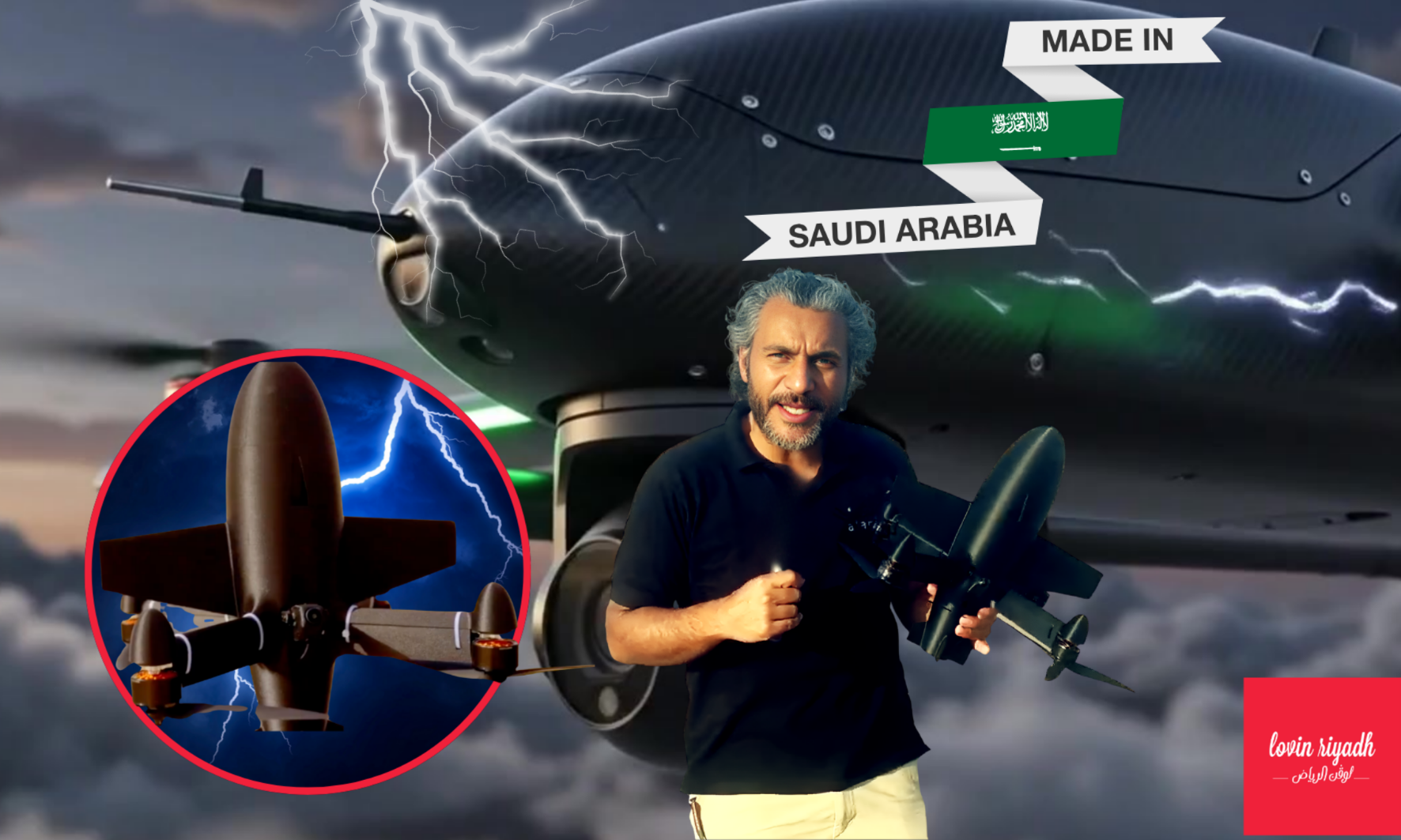
Meet Shaheen X, the newly revealed, AI-powered drone interceptor that is turning heads and shifting the paradigm of airspace security. Built from scratch by Saudi engineers, this local innovation is proving that the future of defense isn’t just automated; it’s highly intelligent

To view this content we will need your consent to set third party cookies.
For more detailed information, see our cookies page.


Built for the Chase​

At first glance, Shaheen X looks sleek and compact. But don’t let its size fool you. This drone is engineered for one specific, high-stakes job: hunting down hostile attack drones

When an unauthorized target enters the airspace, traditional defense systems can sometimes be slow to react. Shaheen X changes that completely. It cuts through the air at blistering speeds exceeding 300 km/h, making it fast enough to outrun and outsmart almost any tactical threat in its class. With a lightweight airframe designed for sharp, sudden maneuvers, it turns mid-air interception into a precise science


The Brain Inside the Machine​

What truly separates Shaheen X from standard drones is its brain

Equipped with advanced Artificial Intelligence (AI) and seamlessly integrated with live radar networks, the drone operates with full autonomy. Once a target is logged by the radar, Shaheen X is deployed. It doesn’t need a human pilot holding a controller on the ground; the AI takes over the flight, tracks the target’s movements, and locks onto it

To ensure the threat is completely neutralized, it carries a precise 500-gram explosive warhead just enough to take down the target cleanly in mid-air

2-2-250x150.png


Local Innovation on a Global Scale​

Perhaps the most impressive part of the Shaheen X story is where it comes from. The drone is developed entirely by local Saudi talent at United Defense

It’s a massive milestone for the Kingdom’s Vision 2030 goals of localizing defense industries. And they aren’t just making a few prototypes production is already moving at a massive scale, with 1,000 units being manufactured every single month. The scalable design allows the team to modify the drone’s size and capacity based on the mission’s needs, making it a highly adaptable shield for the skies


The game of airspace defense has officially changed. With Shaheen X, Saudi Arabia is making it clear that its skies are protected by the sharpest local minds and the smartest AI


The Shaheen X drone interceptor has a 1000 unit monthly production rate as explained in the Al Arabiya video.
 
Last edited:
To view this content we will need your consent to set third party cookies.
For more detailed information, see our cookies page.


"This news didn't get the media attention it deserved, and I’m certain that many people haven’t grasped the magnitude of the achievement and expertise reached by Saudi technical cadres. 🇸🇦

You all know what it means to complete the scheduled maintenance (overhaul) for the first Typhoon aircraft after it logged 2500 flight hours?

We’re not talking about routine maintenance or a standard inspection, but rather one of the most complex and critical stages of heavy maintenance for fighter jets, which requires a comprehensive inspection of the airframe and systems, along with conducting the necessary testsand repairs before returning the aircraft to service.

Most importantly, the maintenance work took 180 days and was carried out within the Kingdom at a center that’s the only one of its kind outside Europe, with Saudi cadres making up 80% of the workforce.

For those who don’t know, the Eurofighter Typhoon is a joint European project, and the advanced heavy maintenance for this type of aircraft has historically been tied to specialized centers inside Europe.

But today, having this center in the Kingdom means obtaining the necessary technical accreditations, transferring advanced knowledge and technologies, and building national capacity to perform these operations locally without needing to send the aircraft abroad.

In short, the news isn’t just about maintaining an aircraft; it’s about the Kingdom reaching an advanced level in localizing aviation technical and engineering capabilities for military aviation, and enhancing the independence and readiness of the Royal Saudi Air Force.
"
 
Last edited:
An overhaul like this means disassembling the whole plane bolt by bolt, verifying every little piece, replacing what needs to be replaced, making it like new again and assembling it completely..
 

Publications​

Home Publications INSS Insight The U.S.–Saudi Nuclear Agreement: Opportunities, Risks, and Policy Recommendations

The U.S.–Saudi Nuclear Agreement: Opportunities, Risks, and Policy Recommendations​

The complete guide to the nuclear deal signed between Washington and Riyadh — and policy recommendations for Israel​

INSS Insight No. 2177, July 29, 2026

Follow us on Google
עברית

Yoel Guzansky
Eldad Shavit

The nuclear agreement signed between the United States and Saudi Arabia marks a turning point in American nuclear policy and carries broad implications for the regional security architecture. After years in which Washington conditioned any nuclear cooperation on forgoing fuel-cycle capabilities, it is now adopting a more flexible approach that seeks to manage proliferation risks rather than prevent them entirely. In doing so, the agreement creates a significant precedent and raises questions regarding the future of the Nuclear Non-Proliferation Treaty (NPT) regime and the possibility of a regional nuclear race. For Israel, this presents a strategic dilemma. On the one hand, the agreement strengthens the United States’ standing in the Gulf, reduces the influence of China and Russia, and preserves American levers of influence over the Saudi program. On the other hand, if it fails to include clear restrictions on enrichment and reprocessing, as well as enhanced inspections, it could accelerate the spread of nuclear capabilities throughout the region. Therefore, Israel’s objective is not to try to block the agreement, but to influence its design through effective constraints, oversight mechanisms, and strategic understandings with Washington. Even if the agreement does not lead to normalization with Saudi Arabia, this should not be regarded as the final word. Rather, the deepening partnership between Washington and Riyadh may actually create an opportunity to renew Israeli-Saudi dialogue and gradually advance regional cooperation.

What Has Been Signed and What Remains Unclear?


The nuclear cooperation agreement signed last week between the United States and Saudi Arabia is designed to create the legal framework that will enable American companies to transfer technology, equipment, know-how, and materials to Riyadh for the establishment of a civilian nuclear program. Formally, this is an agreement under Section 123 of the U.S. Atomic Energy Act, which requires congressional approval before entering into force. However, its significance extends far beyond the energy sphere: the agreement reflects Washington’s desire to re-anchor Saudi Arabia within the U.S. partnership framework, prevent deepening Saudi dependence on China and Russia, and preserve influence over the development of one of the most important nuclear programs expected to emerge in the Middle East.


Despite the signing, some of the most essential issues remain unclear. Neither the full text of the agreement nor the details of the accompanying oversight mechanism have yet been made public. Consequently, it is difficult to determine the extent to which it restricts Saudi Arabia’s ability to enrich uranium, develop fuel-cycle infrastructure, or utilize non-American suppliers. Important questions also remain unanswered regarding the role of the International Atomic Energy Agency (IAEA) in overseeing the agreement and Riyadh's commitment to adopting the Agency's Additional Protocol, which provides for more intrusive inspections.


In addition, uncertainty remains regarding the agreement's connection to normalization with Israel. Negotiations over a nuclear agreement with Riyadh, which were conducted largely during President Biden's term, formed part of a broader diplomatic package that also included a security pact, arms agreements, and a potential path toward establishing relations with Israel. Signing the agreement separately raises concerns that the Saudis achieved one of their main objectives without providing any political quid pro quo on the Israeli front. However, subsequent statements by President Trump and other administration officials explicitly linking congressional approval of the agreement to Saudi Arabia's accession to the Abraham Accords suggest that, at least from the perspective of the U.S. administration, the connection between the two tracks remains subject to discussion.


Therefore, the agreement should perhaps be viewed as an important strategic framework rather than a completed move. The congressional process has yet to begin, and the supplementary agreements, oversight details, and political conditions may still alter its substance and significance. The question facing Israel is not whether the agreement is absolutely good or bad, but whether it can be shaped in a way that ensures that the benefits of American involvement outweigh the risks it poses.

The Shift in U.S. Policy


The agreement reflects an important, though not absolute, shift in American policy regarding civilian nuclear cooperation in the Middle East. Since signing its nuclear cooperation agreement with the United Arab Emirates in 2009, Washington has treated the renunciation of uranium enrichment and the reprocessing of spent nuclear fuel as the strictest benchmark for nuclear cooperation. This model, known as the "Gold Standard," was designed to prevent countries establishing civilian nuclear programs from simultaneously developing capabilities that could shorten the path to a military nuclear capability.


However, this standard never became a legally binding policy uniformly applicable to all of the United States' partners. U.S. law requires oversight and American consent for certain uses of materials and technology originating from the United States, but it does not mandate that every country preemptively and comprehensively forgo enrichment and reprocessing. Thus, the agreement with Saudi Arabia is not necessarily a breach of an existing legal rule, but rather a retreat from the aspiration to make the UAE model a binding norm.


This shift stems primarily from the United States' recognition that its ability to prevent the development of nuclear programs is limited. Over the years, Saudi Arabia has made clear that it is unwilling to accept a status inferior to that of Iran or to permanently forgo the option of controlling parts of the nuclear fuel cycle. For Riyadh, a civilian nuclear program is not merely a response to energy needs, but also a symbol of technological status, sovereignty, and its position as a regional power. American insistence on a total waiver did not alter this ambition; rather, it increased Saudi Arabia's willingness to explore alternative partnerships.


From here stems the current American approach: if establishing the Saudi program cannot be prevented, it is best to try to shape it from within. Rather than imposing conditions that Riyadh is unwilling to accept and risking the loss of American influence, Washington seeks to use the cooperation to create long-term dependence on American technology, fuel, workforce training, regulatory standards, and services. This is an approach based on recognizing reality and managing risk: not a complete elimination of sensitive capabilities, but an effort to restrict them, oversee them, and preserve levers of influence in the event of a deviation.


This policy shift also has a clear geopolitical dimension. The civilian nuclear market has become a central arena of competition among the United States, China, Russia, France, and South Korea. A nuclear supplier is not merely a contractor building a reactor, but a partner providing fuel, maintenance, training, regulation, and sometimes even financing, over decades. An American decision to forgo the Saudi market could have given its competitors a strategic foothold in one of the most important countries in the Arab world.


However, the transition from prevention to risk management carries a price. It weakens Washington's ability to demand that other countries relinquish similar capabilities, and it may be perceived as an acknowledgment that strategically significant countries can secure more lenient terms. It also sharpens the contrast between American policy toward Saudi Arabia and the stringent demands it places on Iran (see below for an elaboration on the agreement's disadvantages). Ultimately, the success of the new policy will not be measured by the mere signing of the agreement, but by the quality of the oversight mechanisms, the scope of the restrictions it imposes, and the United States' ability to ensure that American cooperation does not become an indirect pathway to a nuclear threshold capability.

Advantages and Disadvantages of the Agreement


The central argument in favor of the agreement begins with an acknowledgment of reality. For nearly two decades, Saudi Arabia has insisted on its ambition to establish a civilian nuclear program that includes control over the nuclear fuel cycle. Crown Prince Mohammed bin Salman has repeatedly made clear that the Kingdom views nuclear energy as a vital component of its development strategy, even emphasizing in the past that if Iran acquires a nuclear weapon, Saudi Arabia will seek to do the same. The question, therefore, is not whether a Saudi nuclear program will be established, but who will assist in its creation and under what conditions.


In this sense, the agreement may ensure that the United States, rather than China or Russia, is a key player. For Israel, this represents a significant advantage. American involvement is expected to include oversight, technological dependence, nuclear fuel supply, workforce training, and regulatory supervision spanning decades. All of these grant Washington levers of influence that would not have existed had Riyadh chosen a different partner. At the same time, American involvement in itself does not guarantee control over the Saudi program. Its effectiveness will depend on the scope of the agreement's applicability—namely, whether the restrictions and oversight will apply solely to equipment, materials, and technologies originating from the United States, or also to components supplied by other countries. The broader the coverage of the American framework across the program, the greater Washington's transparency and ability to exert influence will be.


The agreement may also strengthen the United States' standing in the Gulf at a time when countries in the region question its security commitment. After years of hedging risks and turning increasingly toward China and other partners, the agreement signals that Washington remains willing to invest political and strategic capital in its relations with Saudi Arabia. For Israel, a stronger American commitment to the Gulf serves the broader strategic interest of deterring Iran and maintaining regional stability.


Alongside its advantages, the agreement raises a number of weighty strategic questions. The primary concern relates to the nuclear non-proliferation regime. For years, the United States insisted that countries seeking American nuclear cooperation forgo enrichment and reprocessing capabilities. If the agreement with Saudi Arabia permits a deviation from this principle, it will be difficult for Washington to demand that other countries accept more stringent restrictions.


The significance of such a deviation is the creation of a precedent. Egypt, Turkey, and perhaps even additional countries might argue that if Saudi Arabia received American recognition of its nuclear rights, there is no reason to deny them the same. In such a scenario, the Middle East could gradually move closer to a reality in which multiple states possess advanced nuclear capabilities.


Even if the Saudi program is defined as purely civilian, over the years it will build a repository of expertise, trained personnel, infrastructure, and industrial experience. History shows that in many countries, the boundary between a civilian nuclear program and a military threshold capability is not always clear. While there is currently no indication that Saudi Arabia intends to deviate from a civilian path, infrastructure is built for decades, whereas policies and regimes can change.

Assessing the Agreement


Assessing the agreement requires comparing realistic alternatives rather than contrasting an existing reality with an ideal one. Had it been possible to prevent a Saudi nuclear program altogether, this might have been preferable from Israel's perspective. However, this option does not appear realistic. Riyadh has made the development of nuclear energy an integral part of its Vision 2030 agenda, and it would likely have continued to pursue this objective even without U.S. cooperation. Under these circumstances, the likely alternative to the agreement is not the absence of a nuclear program, but rather a nuclear program developed with the assistance of China, Russia, or other actors, and without the oversight mechanisms, transparency, and dependence provided by American involvement.


The central question, therefore, is not whether the agreement involves risks. It undoubtedly does. The question is whether those risks are smaller than the risks posed by the alternative. The agreement does not eliminate the problem of nuclear proliferation, but it allows for managing it under conditions that are more favorable to the United States and, by extension, to Israel. Still, the price cannot be ignored. The shift in U.S. policy could have broader implications for the Middle East as a whole, making it essential to establish rigorous oversight mechanisms and guarantee clear restrictions on every sensitive component of the nuclear fuel cycle.


From Saudi Arabia's perspective, the agreement is viewed not merely as an energy deal, but as a top-tier strategic and political achievement. Saudi media portrays the signing as American recognition of the Kingdom's new status as a leading regional power. The agreement is presented as the fulfillment of a long-standing strategic objective of bin Salman and as an integral part of Vision 2030, which seeks to diversify the Kingdom's energy sources, develop advanced industries, and reduce Saudi dependence on oil.


Beyond this, the achievement strengthens bin Salman's domestic political standing, following years of promoting the Kingdom's nuclear program while facing American opposition over the issue of uranium enrichment. In the eyes of the Saudi public and elite, the mere American consent is seen as proof of Riyadh's ability to negotiate from a position of strength, achieve international recognition, and place itself alongside the world's most advanced countries in the fields of energy and technology.

Recommendations for Israel


Israel should avoid a policy of public opposition to the agreement. Any attempt to thwart it is unlikely to succeed and could create unnecessary friction with Washington without preventing its progress. Israel's objective should not be to prevent the establishment of a Saudi nuclear program, but rather to ensure that the program remains as far removed as possible from a military threshold capability. To that end, Israel should conduct a quiet strategic dialogue with the U.S. administration aimed at influencing the design of the agreement: encouraging the strictest possible oversight mechanisms; strengthening IAEA involvement, including a Saudi signature on the "Additional Protocol"; and establishing clear and rapid response mechanisms for any future deviation.


At the same time, Israel should seek to ensure that any sensitive component of the program is subject to direct American involvement, whether through fuel supply, technology control, or oversight of facility operations. The deeper Riyadh's strategic dependence on the United States, the lower the risk of a unilateral policy shift in the future. In any case, complementary steps should be explored with Washington to preserve Israel's Qualitative Military Edge (QME) and to strengthen its capability to detect and address future changes in the Saudi program. However, these steps cannot serve as a substitute for effective nuclear restrictions. Security compensation for Israel does not, in itself, reduce proliferation risks or the possibility that the Saudi precedent will influence additional countries in the region.


Even if the agreement is ultimately not conditioned on advancing normalization with Israel, this should not be regarded as the final word. Precisely because the agreement is expected to deepen ties between Washington and Riyadh, Israel should seek to leverage this new dynamic to renew dialogue with Saudi Arabia and propose gradual pathways toward regional cooperation.

Conclusion


The nuclear agreement between the United States and Saudi Arabia reflects a profound shift in the American approach: rom a policy aimed at preventing the emergence of advanced civilian nuclear capabilities in the Middle East altogether to one focused on managing the risks associated with them. From Israel's perspective, this is not the agreement it would have preferred. However, given regional and international realities, it may be preferable to the alternatives. The Israeli interest lies not in focusing on how to block the agreement, but rather on how to shape it in a way that strengthens oversight, preserves Israel's strategic advantage, minimizes nuclear proliferation risks, and prevents it from becoming a precedent that triggers a regional nuclear arms race.


The debate does not have to be reduced to a binary choice between granting full enrichment capabilities and denying them completely. Creative models can be explored that would allow Saudi Arabia's civilian nuclear program to advance while significantly reducing nuclear proliferation risks. One idea worthy of consideration is the establishment of a regional nuclear fuel bank on Saudi territory, operated under stringent international oversight by the IAEA alongside the United States and additional partners. Such a model would allow for the regular supply of nuclear fuel to countries across the region, reduce the need for individual states to develop independent enrichment capabilities, and create a regional mechanism based on transparency, oversight, and mutual dependence. Although politically complex, this approach could offer a middle ground between Saudi ambitions for nuclear legitimacy and the international imperative to preserve the principles of the non-proliferation regime and prevent a nuclear arms race in the Middle East.
The opinions expressed in INSS publications are the authors’ alone.


Yoel Guzansky
Dr. Yoel Guzansky is a senior researcher and the Head of the Gulf Research Field at the Institute for National Security Studies (INSS), as well as an associate fellow at the Middle East Institute (MEI) in Washington, D.C. Prior to joining INSS, Dr. Guzansky coordinated Iran and Gulf-related affairs at the National Security Council in the Prime Minister’s Office, serving under four National Security Advisors and three Prime Ministers. He has also advised government ministries, including the Ministry for Strategic Affairs and the Ministry of Intelligence, as well as leading private-sector companies.


Eldad Shavit
Eldad Shavit joined INSS in early 2017 as a Senior Researcher following a long career in the IDF Intelligence Corps and the Prime Minister's Office in Tel Aviv. Col. (res.) Shavit's final post in the Intelligence Crops was an assistant for assessment to the head of the research division, and in the Prime Minister's Office, he served (2011-2015) as head of the research division. In these positions he was responsible for formulating the intelligence assessment regarding regional and international issues. In 1994-1995 he served as head of the intelligence unit in the office of the military secretary to the Prime Minister and the Defense Minister.


To view this content we will need your consent to set third party cookies.
For more detailed information, see our cookies page.
(ABC news)

To view this content we will need your consent to set third party cookies.
For more detailed information, see our cookies page.


Israeli perspective on the KSA-USA nuclear deal signed. Not yet read it as it is quite long, so I will refrain from any comments.

But it is clear that they are frustrated (same with the F-35 deal) but they cannot really prevent the rise of KSA.

To view this content we will need your consent to set third party cookies.
For more detailed information, see our cookies page.


I want to see them remove 5-10% of the world's uranium reserves located in KSA. Or our ballistic missile program, 100's of underground missile bases and likely nuclear warheads first.
 
Last edited:
Saudi Arabia now has all the capabilities:

Owns a research reactor

1784993013677.png


National human resources

1784993096003.png


Has the ability to operate nuclear reactor systems


1784993158324.png


Saudi Arabia owns 43% of the intellectual property rights for reactor SMART

1784993238119.png


1784993409783.png


Uranium reserves estimated at 5% of the world's reserves

The right to enrich uranium, build reactors, and many other points..


Rest of discussions:


In any case, regardless of what occurs short-term, it is imperative for KSA and the wider Arab world (in particular the remaining strong Arab countries on paper) to pursue nuclear energy and nuclear weapons - at least by becoming a nuclear threshold state.

Afterwards to focus on internal affairs and development almost exclusively. By 2050, Yemen, Iraq, Sudan and Egypt alone (ALL Arab neighbors of KSA) are estimated to have almost 500 million people. Let alone the remaining Arab world.

If regime policies in the failed/war-torn/unstable Arab countries do not change, outside Arab forces (strong Arab nations) will have to force changes upon Arab country x or y, in order for such regimes and states not to drag the rest of us down. Fifth columns, terrorist cults, incompetent regimes who do not work for the betterment of their countries and peoples, should not be accepted.

How Tech Is Advancing The Saudi Industrial Transformation

 
Last edited:
News June 10, 2026 at 11:44 am

The Sky Chase: How Saudi Arabia’s “Shaheen X” Is Changing The Drone Game​

By asia

Cover-Slide-v1-10.png


Imagine a drone that doesn’t wait for commands. A drone that detects a threat in the sky, calculates its trajectory, and launches itself into a high-speed chase entirely on its own.

This isn’t a scene from a sci-fi movie. It’s what is happening right now in Saudi Arabia’s defense tech sector

Meet Shaheen X, the newly revealed, AI-powered drone interceptor that is turning heads and shifting the paradigm of airspace security. Built from scratch by Saudi engineers, this local innovation is proving that the future of defense isn’t just automated; it’s highly intelligent

To view this content we will need your consent to set third party cookies.
For more detailed information, see our cookies page.


Built for the Chase​

At first glance, Shaheen X looks sleek and compact. But don’t let its size fool you. This drone is engineered for one specific, high-stakes job: hunting down hostile attack drones

When an unauthorized target enters the airspace, traditional defense systems can sometimes be slow to react. Shaheen X changes that completely. It cuts through the air at blistering speeds exceeding 300 km/h, making it fast enough to outrun and outsmart almost any tactical threat in its class. With a lightweight airframe designed for sharp, sudden maneuvers, it turns mid-air interception into a precise science


The Brain Inside the Machine​

What truly separates Shaheen X from standard drones is its brain

Equipped with advanced Artificial Intelligence (AI) and seamlessly integrated with live radar networks, the drone operates with full autonomy. Once a target is logged by the radar, Shaheen X is deployed. It doesn’t need a human pilot holding a controller on the ground; the AI takes over the flight, tracks the target’s movements, and locks onto it

To ensure the threat is completely neutralized, it carries a precise 500-gram explosive warhead just enough to take down the target cleanly in mid-air

2-2-250x150.png


Local Innovation on a Global Scale​

Perhaps the most impressive part of the Shaheen X story is where it comes from. The drone is developed entirely by local Saudi talent at United Defense

It’s a massive milestone for the Kingdom’s Vision 2030 goals of localizing defense industries. And they aren’t just making a few prototypes production is already moving at a massive scale, with 1,000 units being manufactured every single month. The scalable design allows the team to modify the drone’s size and capacity based on the mission’s needs, making it a highly adaptable shield for the skies


The game of airspace defense has officially changed. With Shaheen X, Saudi Arabia is making it clear that its skies are protected by the sharpest local minds and the smartest AI


The Shaheen X drone interceptor has a 1000 unit monthly production rate as explained in the Al Arabiya video.

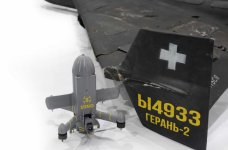
Isn't Shaheen X just a Saudi version of the Ukrainian Sting, designs for which Saudi Arabia brought from Ukraine earlier this year?

11/03/2026: Saudi Arabia in Talks with Ukraine to Buy Interceptor Drones: Militarnyi

1785360301583.jpeg
 
Isn't Shaheen X just a Saudi version of the Ukrainian Sting, designs for which Saudi Arabia brought from Ukraine earlier this year?

11/03/2026: Saudi Arabia in Talks with Ukraine to Buy Interceptor Drones: Militarnyi

View attachment 208671
Not quite (it was developed before the appearance of the Ukrainian suicide drones) but the concept is similar and KSA-Ukraine collaboration (military), close one in fact, dates back decades (started from what I am aware of in the late 1990's with small projects - first really kicked off in the early 2010's though), so there is definitely some sort of cooperation. Ukrainian drone experts and advisors have trained local partners in KSA since Ukraine is leading this field in the world and KSA has been helping Ukraine economically and diplomatically - ties remain rather close in other words.
Everyone is copying everyone else. After all you cannot reinvent the wheel twice.

But 1 Saudi Arabian defense firm in Buraydah (they have a factory there or in the Al-Qassim province at least - not sure if they have more - secrecy could be involved here) produces 1000 of them on a monthly basis with 90% of the workforce being local Saudi Arabians so that is extremely positive.
 
Last edited:
Not quite (it was developed before the appearance of the Ukrainian suicide drones) but the concept is similar ...
Show me a picture of the Saudi design that predates the Ukrainian design, which was first used in real combat in April 2025.

20/05/2025: Ukrainian VR-Piloted Sting Drone Takes Out Shahed UAV in First-Ever Recorded Strike, Video: United24 Media

If Saudi Arabia already had this design, why did it later turn to Ukraine? If you disagree, then tell us how many of the 918 Shahed drones the Shaheen X intercepted between 28 February 2026 and 8 April 2026.

11/03/2026: Saudi Arabia in Talks with Ukraine to Buy Interceptor Drones: Militarnyi

26/03/2026: Ukraine's Zelenskiy arrives in Saudi Arabia for 'important meetings': Reuters

10/04/2026: Iran targeted 7 Arab countries with 6,413 missiles, drones over past 41 days: Anadolu Ajansi

Please respond without giving me a long, irrelevant history lesson about the Ukrainian and Saudi defence industries.
 

Users who are viewing this thread

  • Pakistan Defence Latest

    Back
    Top