
F-22Raptor
Elite Member

The U.S. Air Force now anticipates buying more than 11,000 new JASSM and LRASM cruise missiles over the next five to seven years according to a notice of intent published Friday, dramatically expanding the Pentagon’s JASSM and LRASM topline inventory objectives for both weapons that have had their objectives periodically increased over the past decade.
The move comes amid large-scale reconstitution in the wake of Operation Epic Fury, as well as major demand signals from the Pentagon to push suppliers towards internal investments to support higher production rates of key weapons needed for a potential conflict in the Pacific.
The planned procurement would span JASSM Lots 27–33 and LRASM Lots 13–19, covering up to 11,200 missiles in multiple variants over the next five to seven years. The expansion would also increase sustainment capacity, missile repair infrastructure, software support, and production at Lockheed Martin’s two existing manufacturing facilities, with deliveries expected to begin 27 months after contract award.
The contract covers all current and future variants of the LRASM and JASSM, including the new LRASM-ER and JASSM-XR — two new variants of the shared missile family that add some of Lockheed Martin’s newest anti-spoofing and survivability equipment.
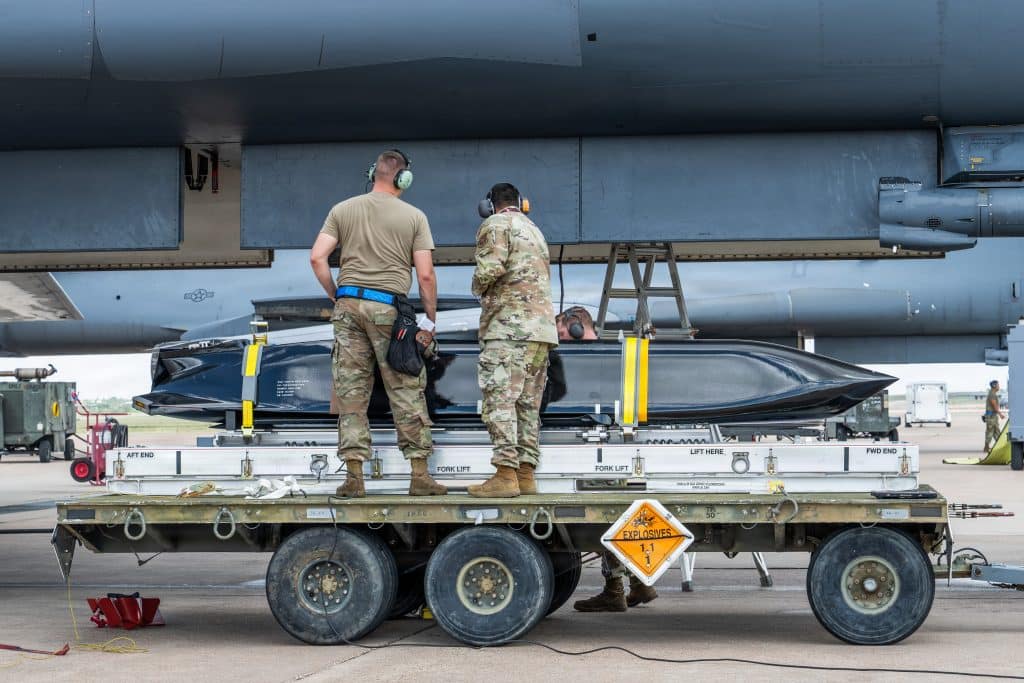 U.S. Airmen inspect a live AGM-158C Long Range Anti-Ship Missile on a munitions trailer alongside a B-1B Lancer at Dyess Air Force Base, Texas, June 2, 2026. (U.S. Air Force photo by Airman 1st Class Caleb Schellenberg)
The LRASM-ER also includes a series of sensor upgrades that Lockheed Martin considers “the key to the future growth of [LRASM]”, according to a Lockheed Martin spokesperson who provided comments to Naval News during the Sea Air Space Symposium in April.
Lockheed Martin has already met that demand with heavy investments across its supply chain and major manufacturing centers.
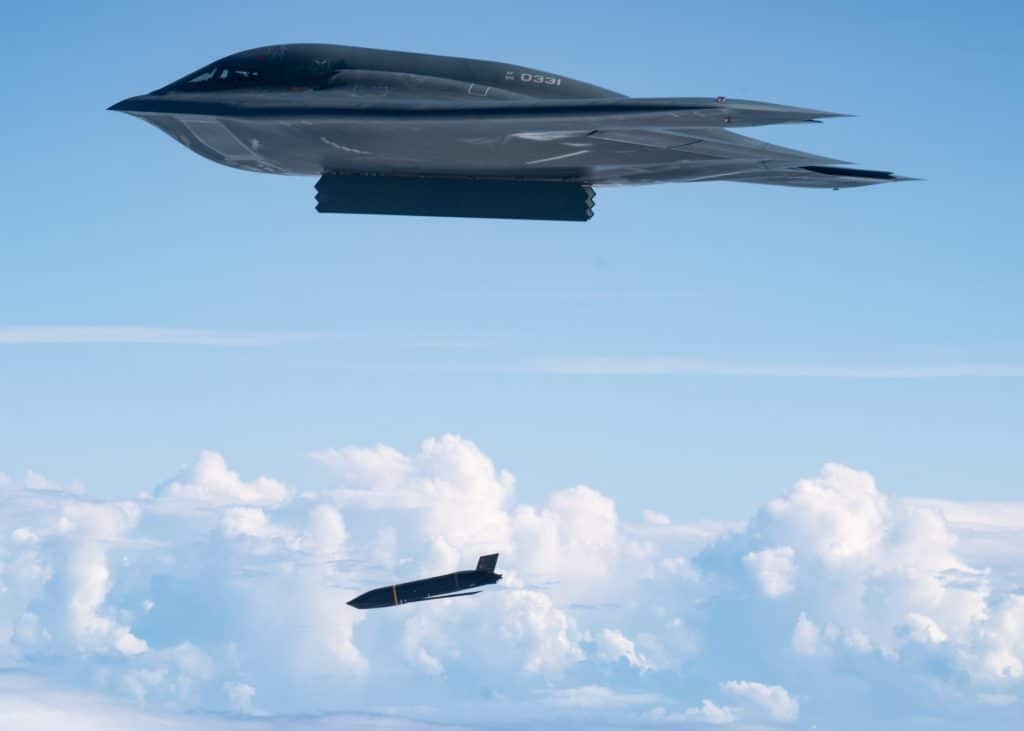 A U.S. Air Force B-2A Spirit fires an AGM-158C LRASM towards a SINKEX target during Valiant Shield 2026, a joint force field training exercise designed to test the limits of U.S. war strategy in the Pacific. (U.S. Air Force photo by Tech Sgt. Thomas Barley)
Lockheed Martin’s JASSM family has centered itself as the Pentagon’s major strike system for large-scale combat operations. Pentagon planners continue to construct long-range acquisition forecasts around a notional major regional conflict in the Pacific, with both JASSM and LRASM in the forefront of nearly every major simulated conflict.
The planned buy in the U.S. Air Force notice far exceeds publicly disclosed inventory objectives across both missile families, reflecting the Pentagon’s objective of scaling up production of its most critical weapons to wartime-adjacent levels.
The move comes amid large-scale reconstitution in the wake of Operation Epic Fury, as well as major demand signals from the Pentagon to push suppliers towards internal investments to support higher production rates of key weapons needed for a potential conflict in the Pacific.
The planned procurement would span JASSM Lots 27–33 and LRASM Lots 13–19, covering up to 11,200 missiles in multiple variants over the next five to seven years. The expansion would also increase sustainment capacity, missile repair infrastructure, software support, and production at Lockheed Martin’s two existing manufacturing facilities, with deliveries expected to begin 27 months after contract award.
The contract covers all current and future variants of the LRASM and JASSM, including the new LRASM-ER and JASSM-XR — two new variants of the shared missile family that add some of Lockheed Martin’s newest anti-spoofing and survivability equipment.
The LRASM-ER also includes a series of sensor upgrades that Lockheed Martin considers “the key to the future growth of [LRASM]”, according to a Lockheed Martin spokesperson who provided comments to Naval News during the Sea Air Space Symposium in April.
Air Force officials acknowledged that expanding production to support the larger procurement will require substantial upfront investment and an extended manufacturing ramp-up. The notice also says government-owned production equipment remains committed to Lockheed Martin’s existing JASSM and LRASM contracts in the interim, supporting the company’s initiative to begin investing heavily into its supply chains and current production lines to meet new production demands.“The LRASM C-3 is a new variant for the U.S. Navy, with increased technology and range capabilities. Its updated sensor package is the key to the future growth of our anti-surface warfare system. The C-3 also provides a secured data link to keep the warfighter out of harm’s way.”
Lockheed Martin spokesperson to Naval News
Lockheed Martin has already met that demand with heavy investments across its supply chain and major manufacturing centers.
“Lockheed Martin has invested more than $7 billion since President Donald Trump’s first term to expand capacity for priority systems, including approximately $2 billion dedicated to accelerating munitions production. These investments in facilities, tooling, suppliers and workforce are enabling higher production rates at speed and scale.”
Lockheed Martin spokesperson to Naval News
Lockheed Martin’s JASSM family has centered itself as the Pentagon’s major strike system for large-scale combat operations. Pentagon planners continue to construct long-range acquisition forecasts around a notional major regional conflict in the Pacific, with both JASSM and LRASM in the forefront of nearly every major simulated conflict.
The planned buy in the U.S. Air Force notice far exceeds publicly disclosed inventory objectives across both missile families, reflecting the Pentagon’s objective of scaling up production of its most critical weapons to wartime-adjacent levels.


