Made in China, Sold on Amazon.

Beijingwalker

VIP Member
Joined
Nov 4, 2011
Messages
92,277
Reaction score
113,090
Reputation
2,155.2
Country of Origin
Country of Residence

Made in China, Sold on Amazon,More than 70 percent of the products that wholesalers and retailers sell on Amazon are produced in China​

by Anna Fleck,
Nov 1, 2024

More than 70 percent of the products that wholesalers and retailers sell on Amazon are produced in China, according to a survey conducted by Jungle Scout and published by the ECDB. The United States is the second largest producer of items sold on Amazon, accounting for 30 percent of all total goods sold through the e-commerce giant. The retailers surveyed were able to list several countries in terms of source locations, which explains why the total share is above the 100 percent mark.

These figures illustrate the importance of China for Amazon's business. At the same time, Chinese companies such as the Pinduoduo Group are now trying to sell products from China directly to Western customers themselves. This is with growing success, as the example of the e-commerce app Temu illustrates.

According to media reports, Amazon is now planning to launch its own low-cost offering. A presentation seen by CNBC reveals the new store will offer a range of unbranded products with prices expected to be under $20. Items cited include massage devices, fitness weights and cell phone cases. As with Temu, the products will be shipped directly from sellers in China.

See the original version of this text, written in German by Matthias Janson,here.

33376.jpeg
 
Without sanctions and restrictions, the number will be over 90%
 

How Amazon uses closer China supply ties to counter tariffs

Amazon officially opened the world’s first GWD facility in Shenzhen to more sellers on Wednesday, marking the US e-commerce giant’s efforts to deepen its ties with the Chinese supply chain

Published: 7:00pm, 17 Apr 2026

For pet food container seller Chen Junbin, customs used to be a major bottleneck when shipping from Shenzhen in southern China to his customers in the US.

“In the past, we had to handle all the paperwork and coordinate with multiple logistics suppliers ourselves; a single [customs] inspection could delay our shipment by a week,” said Chen, founder of Shenzhen Lightning Technology.

As one of the first sellers to test Amazon’s Global Warehousing and Distribution (GWD) facility, the US giant’s new model for an “all-in-one” logistics hub, Chen has seen his shipping cycle slashed from an unpredictable two- to four-week period to as short as three days since joining the initiative last June.

By merging storage and customs clearance into one step, the facility allowed the company to deliver goods with “more frequent shipments” and “without repetitive paperwork”, Chen said.

Amazon officially opened the world’s first GWD facility in Shenzhen to more sellers on Wednesday, marking the US e-commerce giant’s efforts to deepen its ties with the Chinese supply chain. The move followed intensified competition from Chinese rivals Temu and Shein and a turbulent year of unpredictable tariff hikes for China’s “Made in China, sold on Amazon” community.

“With the GWD facility, Amazon is looking to ensure that more Chinese sellers and their supply chain are within its own scope of control,” said Wang Xin, executive chairman of Shenzhen Cross-Border E-Commerce Association.

“We are seeing an escalation of competition among the platforms,” Wang said. “They have been extending their reach not only to the consumer end, which is about the customer experience, but also to the business end, which is about mastery and control of the supply chain.”

Despite US-China trade tensions, China remains the most important supply source for Amazon. Chinese sellers accounted for half of Amazon’s global active seller base last September, marking the highest share ever, according to data from Marketplace Pulse.

Amazon’s Chinese competitors are also ramping up their investments to gain more control over local supply chains. In February, Shein founder Xu Yangtian pledged more than 10 billion yuan (US$1.4 billion) to build a “smart supply chain system” in southern China’s Guangdong province.
The rapid rise of online fashion retailer Shein and PDD Holding’s budget shopping site Temu over the past few years has left Amazon “deeply anxious”, according to Wang.

Temu’s market share surged to 24 per cent last year from less than 1 per cent, putting it on par with Amazon, according to a January survey published by the International Post Corporation. Shein held a 9 per cent share in 2025.

However, the overall Chinese cross-border seller community has been hit hard by new duty rules and tariffs imposed by the US government over the past year.

The US ended the “de minimis” exemption that allowed packages worth less than US$800 to enter the US duty-free, dealing a blow to Chinese merchants who relied on the rule to sell products to American customers at low prices through cross-border platforms including Amazon, Shein, Temu and ByteDance-owned TikTok Shop.

The value of China’s low-value goods exports to the US slumped by 51 per cent year on year in October, according to a report by AMZ123, a Shanghai-based cross-border e-commerce service provider.

Many Chinese sellers had to raise prices and squeeze profit margins on their products to remain competitive, while cutting operational costs to keep their businesses afloat.
“Amazon’s move can act as a buffer against current trade policy uncertainties; whether it’s tariffs or overseas customs clearance rules, it will affect the end-user experience,” Wang said.

According to Amazon, storing inventory at the Shenzhen GWD centre rather than in the destination market allows merchants to avoid prepaying high duties on goods that could sit in a US warehouse for months, giving them greater cash flow flexibility.

The GWD model is designed to handle the middle-mile logistics between the factory floor in China and Amazon’s warehouses in the US. This includes local storage, customs clearance, cross-border shipping and inventory transfers – steps that sellers previously had to coordinate themselves.

By consolidating these functions, Amazon pledged to reduce storage costs for Chinese merchants by up to 45 per cent compared with holding inventory in US warehouses, and to shorten the shipping time by up to seven days.

Amazon’s initiative also fits into Beijing’s support for cross-border e-commerce and its broader trade strategy.

China’s customs department has been working closely with e-commerce platforms to integrate clearance into logistic hubs to improve efficiency, said spokesman Lyu Daliang on Tuesday.

E-commerce exports reached 473.6 billion yuan in the first quarter of 2026, according to Lyu.

“Cross-border e-commerce used to rely heavily on experience and, frankly, a bit of luck,” said Chen, the pet goods seller. “By solving the compliance, speed and labour costs, [the GWD model] can open a wider door for us to expand globally.”
 

How Amazon uses closer China supply ties to counter tariffs

Amazon officially opened the world’s first GWD facility in Shenzhen to more sellers on Wednesday, marking the US e-commerce giant’s efforts to deepen its ties with the Chinese supply chain

Published: 7:00pm, 17 Apr 2026

For pet food container seller Chen Junbin, customs used to be a major bottleneck when shipping from Shenzhen in southern China to his customers in the US.

“In the past, we had to handle all the paperwork and coordinate with multiple logistics suppliers ourselves; a single [customs] inspection could delay our shipment by a week,” said Chen, founder of Shenzhen Lightning Technology.

As one of the first sellers to test Amazon’s Global Warehousing and Distribution (GWD) facility, the US giant’s new model for an “all-in-one” logistics hub, Chen has seen his shipping cycle slashed from an unpredictable two- to four-week period to as short as three days since joining the initiative last June.

By merging storage and customs clearance into one step, the facility allowed the company to deliver goods with “more frequent shipments” and “without repetitive paperwork”, Chen said.

Amazon officially opened the world’s first GWD facility in Shenzhen to more sellers on Wednesday, marking the US e-commerce giant’s efforts to deepen its ties with the Chinese supply chain. The move followed intensified competition from Chinese rivals Temu and Shein and a turbulent year of unpredictable tariff hikes for China’s “Made in China, sold on Amazon” community.

“With the GWD facility, Amazon is looking to ensure that more Chinese sellers and their supply chain are within its own scope of control,” said Wang Xin, executive chairman of Shenzhen Cross-Border E-Commerce Association.

“We are seeing an escalation of competition among the platforms,” Wang said. “They have been extending their reach not only to the consumer end, which is about the customer experience, but also to the business end, which is about mastery and control of the supply chain.”

Despite US-China trade tensions, China remains the most important supply source for Amazon. Chinese sellers accounted for half of Amazon’s global active seller base last September, marking the highest share ever, according to data from Marketplace Pulse.

Amazon’s Chinese competitors are also ramping up their investments to gain more control over local supply chains. In February, Shein founder Xu Yangtian pledged more than 10 billion yuan (US$1.4 billion) to build a “smart supply chain system” in southern China’s Guangdong province.
The rapid rise of online fashion retailer Shein and PDD Holding’s budget shopping site Temu over the past few years has left Amazon “deeply anxious”, according to Wang.

Temu’s market share surged to 24 per cent last year from less than 1 per cent, putting it on par with Amazon, according to a January survey published by the International Post Corporation. Shein held a 9 per cent share in 2025.

However, the overall Chinese cross-border seller community has been hit hard by new duty rules and tariffs imposed by the US government over the past year.

The US ended the “de minimis” exemption that allowed packages worth less than US$800 to enter the US duty-free, dealing a blow to Chinese merchants who relied on the rule to sell products to American customers at low prices through cross-border platforms including Amazon, Shein, Temu and ByteDance-owned TikTok Shop.

The value of China’s low-value goods exports to the US slumped by 51 per cent year on year in October, according to a report by AMZ123, a Shanghai-based cross-border e-commerce service provider.

Many Chinese sellers had to raise prices and squeeze profit margins on their products to remain competitive, while cutting operational costs to keep their businesses afloat.
“Amazon’s move can act as a buffer against current trade policy uncertainties; whether it’s tariffs or overseas customs clearance rules, it will affect the end-user experience,” Wang said.

According to Amazon, storing inventory at the Shenzhen GWD centre rather than in the destination market allows merchants to avoid prepaying high duties on goods that could sit in a US warehouse for months, giving them greater cash flow flexibility.

The GWD model is designed to handle the middle-mile logistics between the factory floor in China and Amazon’s warehouses in the US. This includes local storage, customs clearance, cross-border shipping and inventory transfers – steps that sellers previously had to coordinate themselves.

By consolidating these functions, Amazon pledged to reduce storage costs for Chinese merchants by up to 45 per cent compared with holding inventory in US warehouses, and to shorten the shipping time by up to seven days.

Amazon’s initiative also fits into Beijing’s support for cross-border e-commerce and its broader trade strategy.

China’s customs department has been working closely with e-commerce platforms to integrate clearance into logistic hubs to improve efficiency, said spokesman Lyu Daliang on Tuesday.

E-commerce exports reached 473.6 billion yuan in the first quarter of 2026, according to Lyu.

“Cross-border e-commerce used to rely heavily on experience and, frankly, a bit of luck,” said Chen, the pet goods seller. “By solving the compliance, speed and labour costs, [the GWD model] can open a wider door for us to expand globally.”

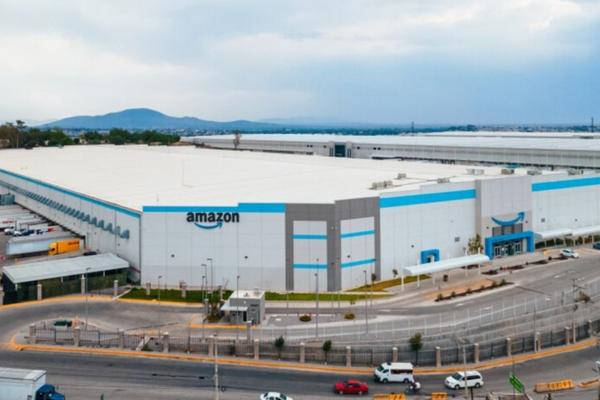
Amazon opens China distribution center for US-bound seller inventory​

The Shenzhen facility offers low-cost bulk storage near manufacturing origin before transit to the U.S., providing flexibility for merchants.

Published April 20, 2026

Dive Brief:​

  • Amazon sellers can now store U.S.-destined inventory in bulk at the e-commerce giant’s new distribution center in the manufacturing hotspot of Shenzhen, China, according to an April 9 announcement to sellers.
  • The Global Warehousing and Distribution location will allow sellers to “seamlessly replenish” goods for Amazon’s U.S. fulfillment network when needed, per the announcement. Global Warehousing and Distribution is positioned as a low-cost storage option at a product’s manufacturing origin, with cross-border transportation serviced via Amazon Global Logistics.
  • The company said benefits to using the Shenzhen facility include storage costs up to 45% lower than its U.S.-based bulk storage services, Amazon Warehousing and Distribution. Sellers can also get inventory to U.S. fulfillment centers up to seven days faster through the Shenzhen storage and Amazon Global Logistics combination, it added.

Dive Insight:​

Amazon called the services powered by the Shenzhen facility the first step in its ambition to help merchants sell their goods “globally from day one.” The e-commerce giant is growing its capabilities as an end-to-end supply chain services provider for sellers, in part by building up its global warehousing and cross-border logistics services. Amazon is facing steep competition in the space from rival Walmart, which has been scaling its own international logistics services for merchants.

The Shenzhen location enables sellers manufacturing in China to store inventory closer to the origin point, and then bring products into the U.S. only as demand builds, Sunny Jain, worldwide head of Fulfillment by Amazon, said in a LinkedIn post.

“It’s about cash flow, flexibility, and the ability to test new regions without excessive risk,” Jain said. “The response has been immediate. Within two days of our announcement, sellers are already booking shipments.”

Interested sellers can create a delivery request for the Shenzhen facility within Amazon’s Seller Central portal, according to Amazon’s announcement.

Jain said the Shenzhen location is only the beginning, with Amazon “expanding to more locations in China and building connectivity to fulfillment networks around the world.” He did not specify which locations, but the South China Morning Post reported that Amazon plans to extend its Global Warehousing and Distribution model to China’s Yangtze River Delta region and expand distribution to Europe and Japan.

China-based sellers play a significant role in powering sales on Amazon’s website, representing roughly half of the e-commerce giant’s global active seller base, per Marketplace Pulse research published in September 2025.
 
yes before we had FBA

then we had FBA + AGL in 2024

then FBA + AGL + AWD in 2025

and now FBA + AWD+ AGL+ GWD in 2026

overall saving per container is between $5,000 to $8,000 per month lower
 
USA government puts tarrif on Chinese products.

But the people are clueless why there's inflation in USA. Hahaha
 
USA government puts tarrif on Chinese products.

But the people are clueless why there's inflation in USA. Hahaha

To view this content we will need your consent to set third party cookies.
For more detailed information, see our cookies page.

24% Chinese Amazon Sellers Just Vanished And It’s GREAT News For You​

 
I have a portable Digital Audio Player.

Made by a Chinese company called Hiby. When it comes to digital audio players, their quality is second to none.

On a smaller note, I lost the stylist that came equipped with my mobile phone. Managed to buy a cheap replacement from a Chinese company and it actually works relatively well

Both bought on Amazon USA
 

Amazon Offers Chinese Merchants Helping Hand in Latin America​


On June 26th, Amazon Global Selling announced in Hangzhou the launch of the "Latin America Express Program". The program aims to provide support such as assistance in registering local companies in Brazil, solutions for the Mexican RFC tax number, subsidies of up to $12,000, and logistics cost exemptions to 3,000 Chinese brands willing to make long - term investments by 2026, helping sellers fully establish themselves in the Latin American market.

Latin America is becoming a new hot spot for cross - border e - commerce. According to eMarketer data, the scale of the Latin American retail e - commerce market will be close to $190 billion in 2025, with a growth rate 1.5 times the global average. Brazil and Mexico contribute the vast majority of the sales volume.

Amazon data also confirms this growth trend: In the first quarter of 2026, the sales volume of Chinese sellers on the newly launched Brazilian and Mexican sites was more than twice that of the same period last year; during the Mexican Hot Sale promotion, this figure reached more than four times. In 2025, the number of Chinese sellers with sales of over $1 million on these two sites was nearly twice that of 2023.

Zhao Weilin, COO of GameSir, said in an interview that after the company shifted from the European and American markets to Latin America in 2022, the growth rate of the Brazilian and Mexican markets far exceeded expectations. "After completing the local layout in Brazil, the sales volume directly multiplied several times." IMOU started operating on the Amazon Mexican site in 2025. Yuan Weigui, the overseas e - commerce director of IMOU, revealed that the sales volume on the first day of this year's Prime Day increased by six times.

For sellers who have entered Latin America, localization is no longer an option but a must. Zhao Weilin mentioned that there are significant differences between the Brazilian and Mexican markets. Brazil has over 100 million game users, mainly PC and mobile game players, and they are price - sensitive. In Mexico, the penetration rate of Xbox users is high, and the consumption habits are similar to those in the United States. Based on this, GameSir has formulated a differentiated strategy: promoting Xbox - authorized gamepads in Mexico and gamepads with better compatibility for PC and mobile games in Brazil.

Logistics also needs to be adapted to local conditions. The shipping cycle in Brazil is long, and inventory planning needs to be done three months in advance. Zhao Weilin admitted, "We need to start planning inventory for Black Friday now." Currently, GameSir has established branches in the United States, Brazil, and Singapore, gradually promoting the local layout.

IMOU's localization focuses more on the product side. Yuan Weigui observed that the security needs in Latin America are more inclined to outdoor scenarios, and users have a strong demand for long - term continuous video recording and multi - angle monitoring. Based on this, the company has developed differentiated products such as solar - powered cameras, AOV (Always On Video) long - term video recording, and multi - camera systems. In addition, considering that young consumers in Latin America prefer short - form videos, the company has focused on vertical short - form videos in marketing. "Latin American users prefer video - based media, and we closely follow this characteristic to localize our marketing," Yuan Weigui said.

Meanwhile, the compliance threshold for e - commerce in Latin America is rising rapidly. The tax reform in Brazil is continuing, and compliance requirements are becoming increasingly strict. Zhang Qi, Vice President of Amazon China and Head of Emerging Markets at Amazon Global Selling, believes that this is an inevitable process for the market to become more standardized. "In the past, these markets were relatively extensive, but in the future, supervision will only become stricter. The goal is to ensure fair competition on a level playing field. And compliance is the foundation for long - term development."

Sellers also have a clear understanding of this. Zhao Weilin believes that regions with strict customs clearance and tax requirements actually have more long - term potential. Yuan Weigui said that compliance is a threshold that must be crossed. Although it requires time and patience, it is not insurmountable.

For sellers interested in entering Latin America, Zhang Qi suggests starting with products that have been proven in the European and American markets. "For most products that have been proven in the European and American markets, introducing them to emerging markets is a relatively stable strategy."

It is worth noting that the improvement of payment and logistics infrastructure is also lowering the entry threshold for the Latin American market. Zhang Qi mentioned that local logistics and distribution were pain points in the early years, but the situation has improved significantly. For example, Amazon now offers same - day delivery in major Mexican cities; in Brazil, Amazon has added 100 logistics facilities in the past year alone. In addition, the habit of young consumers in Latin America to prefer installment - plan payments has effectively released their purchasing power.

With the improvement of infrastructure and the large population base, Zhang Qi is optimistic about the long - term growth of the market: "Since it is an incremental market, when more people enter, everyone can share the dividends brought by market expansion."
 
Last edited:

Users who are viewing this thread

Back
Top