The SC
INT'L MOD

- Thread starter
- #1,246
The Korean Patriot strengthens Saudi air defenses. 10 M-SAM II batteries on delivery in 2027
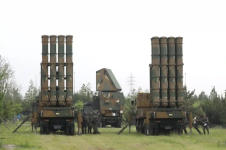
Saudi Arabia is preparing to receive the South Korean M-SAM II air defense system, also known as Cheongung-II (KM-SAM Block II), with the delivery program expected to enter its implementation phase in 2027, according to a report by the South Korean company Kiwoom Securities.
The Kingdom signed a contract with South Korea in November 2023 to acquire 10 batteries of the M-SAM II Cheongung-2 air defense system, for a total value of approximately $3.2 billion, before officially announcing the deal in February 2024. This deal represents one of South Korea's most significant defense export contracts and makes the Kingdom the largest publicly announced foreign buyer of this system, in a deal that marks a significant step in enhancing Saudi Arabia's air defense capabilities.
One of the most significant advantages of the M-SAM II is the lower cost of its interceptor missiles compared to some American systems. Furthermore, it can be operationally integrated into a multi-layered air defense network that includes the Patriot and THAAD systems, thus enhancing the diversity of means to counter aerial and missile threats.
The cost of a single interceptor missile for the M-SAM II is estimated at approximately $1.1 million, compared to about $3.7 million for the PAC-3 missile used in the Patriot system and around $12.7 million for the THAAD system. This gives the South Korean system a significant economic advantage, especially when dealing with attacks requiring the launch of large numbers of interceptor missiles.
In terms of operational performance, the system gained further attention after its deployment in the United Arab Emirates, which operated two batteries of the system during countermeasures against Iranian attacks, providing it with field experience in a real-world operational environment.
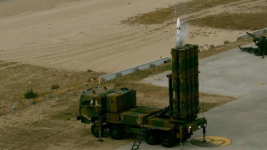
The South Korean M-SAM II (Cheonghong-2) is a leading medium-range air defense system, developed to intercept fighter jets, drones, cruise missiles, and tactical ballistic missiles. It offers an engagement range of approximately 40–50 kilometers against aerial targets and about 20 kilometers against ballistic missiles, with an engagement capability at altitudes up to approximately 20 kilometers.
The system uses an interceptor missile that is about 4.6 meters long, weighs approximately 400 kilograms, has a diameter of 275 mm, and travels at speeds of Mach 4.5 to Mach 6. The missile employs an active radar seeker in its terminal phase and utilizes hit-to-kill technology, enabling it to destroy ballistic missiles through direct impact.
The M-SAM II relies on a multi-mission radar operating with active electronically scanned array (AESA) technology in the X-band, providing 360-degree coverage with the ability to detect, track, and guide interceptor missiles toward aerial targets. The declared detection range, according to some estimates, reaches approximately 100 kilometers, with the capacity to track dozens of targets simultaneously.
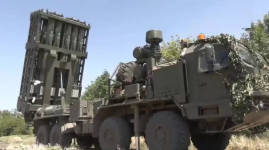
A typical battery comprises four mobile launch platforms, each carrying eight missiles, for a total of 32 missiles ready for launch, along with a multi-mission radar and a command and control center. Based on this configuration, the ten batteries contracted by Saudi Arabia could provide up to 40 launch platforms and 320 missiles ready for launch.
One of the system's most significant advantages is its lower operating costs compared to more expensive American systems. The cost of a single interceptor missile is estimated at approximately $1.1 million, compared to about $3.7 million for the PAC-3 missile used in the Patriot system and about $12.7 million for the THAAD missile. This provides Saudi Arabia with an additional, more economical option for dealing with aerial and missile threats within a multi-layered air defense network.
The technical roots of South Korea's M-SAM air defense system can be traced back to military and technical cooperation with Russia, which began in the 1990s. This cooperation took place within the framework of technology transfer agreements and the utilization of Russian expertise in air defense systems and interceptor missiles. The collaboration included contributions from specialized Russian companies, most notably Almaz-Antey and Fakel, which provided expertise and technologies that contributed to the early stages of the program's development, particularly in the areas of missile design and guidance and interception systems.
South Korea benefited from some technologies associated with the Russian 9M96 missile, used in Russian air defense systems, before undertaking the development and production of the system domestically under the leadership of the Korea Agency for Defense Development and with the participation of national defense industries. With the transition to the upgraded M-SAM II version, Seoul enhanced the system's capabilities, particularly in intercepting ballistic missiles, transforming it into an independent Korean air defense system in terms of production and operational integration, despite retaining technological roots stemming from Russian-Korean cooperation.
Saudi Arabia is preparing to receive the South Korean M-SAM II air defense system, also known as Cheongung-II (KM-SAM Block II), with the delivery program expected to enter its implementation phase in 2027, according to a report by the South Korean company Kiwoom Securities.
The Kingdom signed a contract with South Korea in November 2023 to acquire 10 batteries of the M-SAM II Cheongung-2 air defense system, for a total value of approximately $3.2 billion, before officially announcing the deal in February 2024. This deal represents one of South Korea's most significant defense export contracts and makes the Kingdom the largest publicly announced foreign buyer of this system, in a deal that marks a significant step in enhancing Saudi Arabia's air defense capabilities.
One of the most significant advantages of the M-SAM II is the lower cost of its interceptor missiles compared to some American systems. Furthermore, it can be operationally integrated into a multi-layered air defense network that includes the Patriot and THAAD systems, thus enhancing the diversity of means to counter aerial and missile threats.
The cost of a single interceptor missile for the M-SAM II is estimated at approximately $1.1 million, compared to about $3.7 million for the PAC-3 missile used in the Patriot system and around $12.7 million for the THAAD system. This gives the South Korean system a significant economic advantage, especially when dealing with attacks requiring the launch of large numbers of interceptor missiles.
In terms of operational performance, the system gained further attention after its deployment in the United Arab Emirates, which operated two batteries of the system during countermeasures against Iranian attacks, providing it with field experience in a real-world operational environment.
The South Korean M-SAM II (Cheonghong-2) is a leading medium-range air defense system, developed to intercept fighter jets, drones, cruise missiles, and tactical ballistic missiles. It offers an engagement range of approximately 40–50 kilometers against aerial targets and about 20 kilometers against ballistic missiles, with an engagement capability at altitudes up to approximately 20 kilometers.
The system uses an interceptor missile that is about 4.6 meters long, weighs approximately 400 kilograms, has a diameter of 275 mm, and travels at speeds of Mach 4.5 to Mach 6. The missile employs an active radar seeker in its terminal phase and utilizes hit-to-kill technology, enabling it to destroy ballistic missiles through direct impact.
The M-SAM II relies on a multi-mission radar operating with active electronically scanned array (AESA) technology in the X-band, providing 360-degree coverage with the ability to detect, track, and guide interceptor missiles toward aerial targets. The declared detection range, according to some estimates, reaches approximately 100 kilometers, with the capacity to track dozens of targets simultaneously.
A typical battery comprises four mobile launch platforms, each carrying eight missiles, for a total of 32 missiles ready for launch, along with a multi-mission radar and a command and control center. Based on this configuration, the ten batteries contracted by Saudi Arabia could provide up to 40 launch platforms and 320 missiles ready for launch.
One of the system's most significant advantages is its lower operating costs compared to more expensive American systems. The cost of a single interceptor missile is estimated at approximately $1.1 million, compared to about $3.7 million for the PAC-3 missile used in the Patriot system and about $12.7 million for the THAAD missile. This provides Saudi Arabia with an additional, more economical option for dealing with aerial and missile threats within a multi-layered air defense network.
The technical roots of South Korea's M-SAM air defense system can be traced back to military and technical cooperation with Russia, which began in the 1990s. This cooperation took place within the framework of technology transfer agreements and the utilization of Russian expertise in air defense systems and interceptor missiles. The collaboration included contributions from specialized Russian companies, most notably Almaz-Antey and Fakel, which provided expertise and technologies that contributed to the early stages of the program's development, particularly in the areas of missile design and guidance and interception systems.
South Korea benefited from some technologies associated with the Russian 9M96 missile, used in Russian air defense systems, before undertaking the development and production of the system domestically under the leadership of the Korea Agency for Defense Development and with the participation of national defense industries. With the transition to the upgraded M-SAM II version, Seoul enhanced the system's capabilities, particularly in intercepting ballistic missiles, transforming it into an independent Korean air defense system in terms of production and operational integration, despite retaining technological roots stemming from Russian-Korean cooperation.