Navigation
Install the app
How to install the app on iOS
Follow along with the video below to see how to install our site as a web app on your home screen.
Note: This feature may not be available in some browsers.
More options
Style variation
You are using an out of date browser. It may not display this or other websites correctly.
You should upgrade or use an alternative browser.
You should upgrade or use an alternative browser.
Made in KSA
- Thread starter The SC
- Start date
More options
Who Replied?

The SC
INT'L MOD
- Thread starter
- #1,158
Saudi Arabia launches the comprehensive guide to managing military industry risks 2026
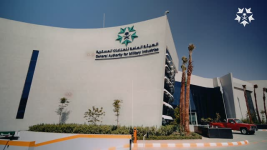
The General Authority for Military Industries launched the guide and guidance package for risk management in the military industries sector for the year 2026, in a step that reflects the Authority's role in supporting and empowering the sector, in line with the goals of Saudi Vision 2030 in localizing more than 50% of military spending by 2030, and reaching a local and sustainable sector.
The guide aims to enable establishments operating in the sector to enhance risk management, to contribute to implementing their operations with the necessary efficiency, and to achieving their strategies in accordance with best practices, by providing an integrated framework that helps identify, analyze, evaluate, treat and monitor risks, in a way that enhances the ability to achieve strategic objectives efficiently and effectively.
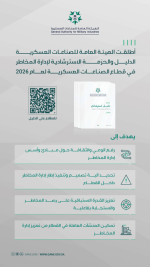
The Authority has prepared a guide in accordance with leading international standards and global practices in the field of risk management, including the ISO 31000 standard issued by the International Organization for Standardization, known as ISO (ISO), the COSO Enterprise Risk Management Framework, the British Risk Management Institute standard, in addition to the National Framework for Risk Management, Emergencies and Business Continuity issued by the General Secretariat of the National Risk Council, and the requirements of the Digital Government Authority.
The guide contributes to achieving three objectives: raising awareness and culture about the principles and foundations of risk management, defining the mechanism for designing and implementing a risk management framework within the military industries sector, and enhancing its proactive capacity to monitor and respond to risks.
Risk management is one of the basic factors that contribute to enhancing the effectiveness and efficiency of operations within the military industries sector, as it helps achieve its strategic, financial and operational objectives, and continuously enhances and raises the culture of risk awareness and practices at the sector level, in addition to raising the sector’s capabilities to proactively identify risks, deal with cases of uncertainty, and take the necessary preventive and corrective measures to address them, in addition to its role in protecting and enhancing reputation, and supporting the strategic decision-making process based on levels of risk acceptance and tolerance.
The launch of this guide comes within the efforts of the General Authority for Military Industries to regulate and develop the military industries sector, and to develop policies, strategies and legislation, in a way that contributes to achieving its goals and enhancing its role in achieving stable security and a prosperous homeland.
The SC
INT'L MOD
- Thread starter
- #1,161
Deal of 3 additional corvettes (avantes) for the Saudi Navy
The ships will bear the following names:
His Majesty the King's Ship Medina (838)
His Majesty's Ship NEOM (840)
His Majesty's Ship Al-Ula (842)
The sixth ship, His Majesty the King's Ship Medina (838), is ready for inauguration, and is scheduled to be inaugurated soon
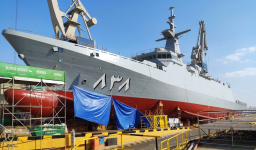
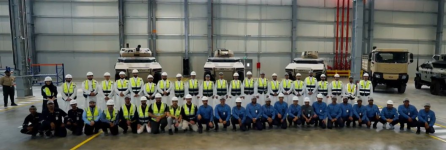
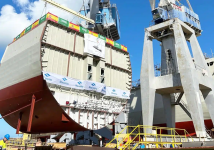
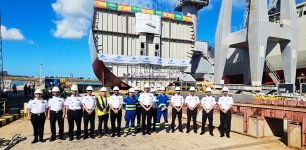
The Spanish company "Navantia" announced today a new completion station in the frigate construction project for the Royal Saudi Navy, where a keel laying ceremony was held for the seventh "Avanti 2200" frigate, which will be called "His Majesty's Ship NEOM".
Armament:
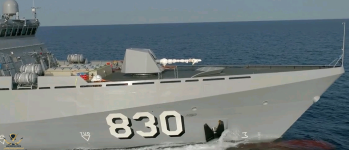
Oto Melara 76 Super Rapid main gun
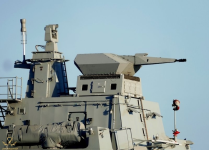
Rheinmetall GDM-008 35mm gun
Two Narwhal 20B 20mm guns produced by Nexter
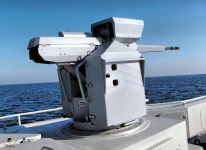
The ships will bear the following names:
His Majesty the King's Ship Medina (838)
His Majesty's Ship NEOM (840)
His Majesty's Ship Al-Ula (842)
The sixth ship, His Majesty the King's Ship Medina (838), is ready for inauguration, and is scheduled to be inaugurated soon
The Spanish company "Navantia" announced today a new completion station in the frigate construction project for the Royal Saudi Navy, where a keel laying ceremony was held for the seventh "Avanti 2200" frigate, which will be called "His Majesty's Ship NEOM".
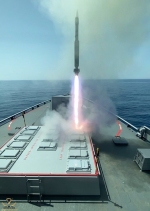
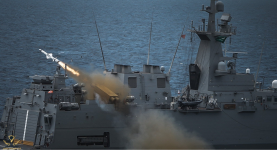
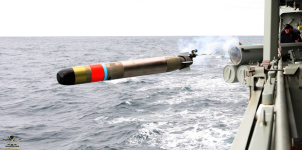
Armament:
Oto Melara 76 Super Rapid main gun
Rheinmetall GDM-008 35mm gun
Two Narwhal 20B 20mm guns produced by Nexter
The SC
INT'L MOD
- Thread starter
- #1,163
Saudi Arabia obtained the intellectual property of the Corvette
Important excerpts from the Defense Hair interview: Alvaro Lobo, Director of Defense for the Middle East and Africa at Navantia, stated that the company currently manages three entities in the Kingdom: a branch office, its subsidiary Navantia Arabia, and the joint venture "Sami Navantia Marine Industries".

Navantia's activities in the Kingdom focus primarily on contracts with the Royal Saudi Navy to build Corvette Avante 2200 warships. Lobo explained that the first contract included five ships, all of which were delivered. A second agreement was later signed for three additional Corvette ships of the same model, which are currently in various construction stages.
The company is also working on finalizing an additional agreement covering various support services for the Royal Saudi Navy.
As part of these efforts, Saudi engineers underwent extensive training in Spain. Lobo pointed out that the first phase included three years of training for Saudi software engineers. As part of the second batch of corvette contracts, more than 100 additional engineers are receiving training in Spain in marine engineering and shipbuilding programmes.
According to Lobo, Navantia is also transferring the intellectual property rights for the Avanti 2200 design to the General Authority for Military Industries to enable the ships to be manufactured locally in Saudi Arabia for the benefit of the Royal Saudi Navy and potential regional export markets.
In parallel, contracts were signed with local Saudi companies to manufacture the structural and body parts for the corvettes, which are currently being built.
Source: Navantia expands naval programs, industrial cooperation in Saudi Arabia - Defensehere
Important excerpts from the Defense Hair interview: Alvaro Lobo, Director of Defense for the Middle East and Africa at Navantia, stated that the company currently manages three entities in the Kingdom: a branch office, its subsidiary Navantia Arabia, and the joint venture "Sami Navantia Marine Industries".
Navantia's activities in the Kingdom focus primarily on contracts with the Royal Saudi Navy to build Corvette Avante 2200 warships. Lobo explained that the first contract included five ships, all of which were delivered. A second agreement was later signed for three additional Corvette ships of the same model, which are currently in various construction stages.
The company is also working on finalizing an additional agreement covering various support services for the Royal Saudi Navy.
As part of these efforts, Saudi engineers underwent extensive training in Spain. Lobo pointed out that the first phase included three years of training for Saudi software engineers. As part of the second batch of corvette contracts, more than 100 additional engineers are receiving training in Spain in marine engineering and shipbuilding programmes.
According to Lobo, Navantia is also transferring the intellectual property rights for the Avanti 2200 design to the General Authority for Military Industries to enable the ships to be manufactured locally in Saudi Arabia for the benefit of the Royal Saudi Navy and potential regional export markets.
In parallel, contracts were signed with local Saudi companies to manufacture the structural and body parts for the corvettes, which are currently being built.
Source: Navantia expands naval programs, industrial cooperation in Saudi Arabia - Defensehere
The SC
INT'L MOD
- Thread starter
- #1,164
US-Saudi partnership to build drone factory near Riyadh
The Kingdom of Saudi Arabia is moving to enhance its defense and manufacturing capabilities in the field of drones, through a new partnership that brings together an American start-up company with a Saudi company to develop a specialized factory near Riyadh. This step comes at a time when the Middle East is witnessing an escalation in reliance on drones, because modern warfare has become increasingly dependent on low-cost, high-impact unmanned systems.
The project also reflects the growing defense cooperation between Washington and Riyadh, as the Kingdom seeks to localize military industries and develop regional deterrence capabilities within a long-term strategic vision.
Saudi Arabia has moved to build its own industrial-scale fleet of long-range one-way attack drones as the U.S.-Saudi joint venture SR2Vector began constructing a production facility near Riyadh for the SkyWasp UAV, according to Semafor on May 25, 2026. The program signals a major shift in Gulf military planning toward sustained attrition warfare and mass drone strike capability, giving Riyadh a domestically produced platform designed to overwhelm air defenses and maintain pressure on critical infrastructure during prolonged regional conflict.
The SkyWasp mirrors the operational logic of Iran’s Shahed-136 with a 1,500 km strike radius, low-cost delta-wing design, and simplified navigation architecture optimized for large-scale saturation attacks rather than precision penetration missions. Its emergence reflects a broader global trend in which states increasingly prioritize expendable drones with scalable wartime production capacity to exhaust interceptor inventories, sustain operational tempo, and impose long-term economic pressure on adversaries through persistent infrastructure strikes.
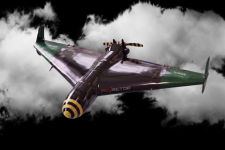
On May 25, 2026, Semafor announced that the U.S.-Saudi company SR2Vector started the construction of a drone production facility near Riyadh for the SkyWasp one-way attack drone, establishing Saudi Arabia’s first domestic program focused on serial production of expendable long-range strike UAVs. The joint venture combines Utah-based Vector and Saudi company SR2 Defense Systems under a localized manufacturing structure integrating U.S.-origin UAV engineering with Saudi industrial infrastructure, financing, and sustainment. Reminding the Iranian Shahed-136 drone, the SkyWasp has a strike radius of 1,500 km, sufficient to reach Tehran, Bushehr, Bandar Abbas, and western Iranian military infrastructure from Saudi territory.
The announcement followed the 2026 Iranian strikes on Arab countries, during which Iran launched thousands of Shahed drones and missiles against Gulf airports, energy terminals, logistics hubs, radar systems, military facilities, hotels, and data centers. Although interception rates remained high, the attacks forced continuous radar coverage, permanent interceptor readiness, and dispersed infrastructure protection across Gulf states. Saudi military planning, therefore, increasingly appears focused on prolonged infrastructure attrition campaigns driven by industrial-scale drone production and repeated strike waves rather than short-duration conventional air operations.
The industrial framework of SR2Vector was formalized during World Defense Show 2026 in Riyadh, when Vector CEO Andy Yakulis and SR2 Defense Systems CEO Idris Alzakari signed a memorandum covering localized assembly, manufacturing, sustainment, operational integration, and supply chain development. SR2Vector later became the dedicated structure responsible for the SkyWasp production and export activity. Financing is being provided through MASNA Ventures, a Saudi defense investment structure linked to SR2 leadership that is targeting a fund exceeding $100 million. The Riyadh-area facility is intended for sustained serial output supporting both Saudi procurement and exports to allied Gulf states.
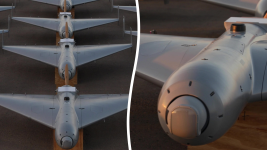
Unlike previous Saudi localization programs centered on maintenance infrastructure, licensed assembly, and sustainment contracts, the SkyWasp focuses on sovereign production capacity within the strategic strike category. The objective is to establish scalable wartime manufacturing able to replenish inventories during prolonged regional conflict rather than relying on imported systems and externally controlled logistics networks. The SkyWasp drone uses a delta-wing airframe with a rear-mounted pusher propeller configuration closely matching the Iranian Shahed-136 and Russian Geran-2.
The UAV prioritizes manufacturing simplicity, fuel efficiency, low production cost, and long-range endurance rather than penetration of advanced integrated air defense systems. Claimed operational reach stands at 1,500 km, while navigation combines inertial navigation, GNSS guidance, and anti-jamming systems. Strike operations rely primarily on pre-programmed waypoint routing instead of continuous operator-controlled terminal guidance, reducing onboard complexity and communication requirements during mass UAV attacks. Drones in this category generally carry warheads between 30 and 50 kg, maintain total launch weights between 180 and 250 kg, and cruise between 150 and 200 km/h.
Operational employment will likely mirror Russian Geran-2 tactics in Ukraine, where dozens of expendable UAVs are launched simultaneously to saturate defenses, exhaust interceptor inventories, and maintain continuous pressure against infrastructure and air-defense networks. The SkyWasp’s central driver is the cost asymmetry observed during recent drone warfare campaigns in Ukraine and the Gulf region. Iranian Shahed-136 drones are generally estimated to cost between $20,000 and $60,000, depending on electronics configuration and component sourcing, while interceptor missiles used against them frequently cost several hundred thousand dollars per engagement.
For instance, Patriot PAC-3 interceptors can exceed $3 million per missile, depending on variant and procurement structure, creating an exchange ratio clearly favoring the attacker during sustained drone operations. During the 2026 Iranian strikes on Arab countries, Iranian drone salvos repeatedly forced Gulf states to maintain continuous air defense operations despite high interception rates. Saudi military planners increasingly appear to assess that large inventories of expendable drones can impose greater long-term operational and economic pressure than smaller inventories of advanced combat aircraft or cruise missiles.
The strategic objective of the SkyWasp drone, therefore, centers on sustained strike volume, industrial replenishment capacity, and operational persistence rather than maximizing survivability or individual precision. Saudi Arabia’s pursuit of localized loitering munition production is directly tied to its Vision 2030 objectives, which require the localization of 50% of national defense procurement spending by 2030. Despite annual military expenditures exceeding $70 billion in several recent years, Saudi Arabia has historically depended on imported combat aircraft, missile systems, sensors, and sustainment infrastructure supplied primarily by the United States and Europe.
Previous localization efforts focused mainly on maintenance facilities, licensed assembly, armored vehicle support, and sustainment activities rather than sovereign production of strategic strike assets. Loitering munitions inspired by the Shahed provide a more accessible industrial entry point because they rely on commercial piston engines, simplified avionics, composite airframes, low-cost electronics, and basic assembly infrastructure, especially when compared with ballistic missiles or combat aircraft production. Saudi military planning also appears increasingly influenced by the operational lessons of Ukraine, where prolonged strike campaigns required continuous regeneration of expendable systems rather than limited inventories of expensive precision weapons.
Saudi Arabia joins a rapidly expanding group of states replicating either the aerodynamic configuration, operational logic, or industrial philosophy associated with Iran's Shahed-136. Russia localized production under the Geran-2 designation at the Alabuga facility in Tatarstan, where production planning reportedly targeted 6,000 UAVs by 2025. Belarus introduced the Nomad variant during the July 2024 Independence Day parade in Minsk, while China developed analogous systems, including the DFX-50, DFX-100, ASN-301, Feilong-300, Sunflower-200, and Loong M9. Türkiye’s STM developed the Kuzgun UAV using similar low-cost strike architectures, while Israel created the Delta-wing RS2 for realistic air defense training.
In the United States, systems such as the LUCAS and MQM-172 Arrowhead emerged within the same category of low-cost long-range expendable UAVs, which are intended to provide scalable attritable strike capability without relying exclusively on cruise missiles or tactical aviation. Combat experience in Ukraine demonstrated that mass-produced loitering munitions can sustain operational pressure against national infrastructure over multi-year campaigns even when interception rates remain high. Russian Geran-2 strikes repeatedly targeted electrical grids, transformer stations, fuel depots, logistics hubs, radar installations, and air defense systems, forcing continuous nationwide radar surveillance and permanent interceptor readiness.
Although Ukraine intercepted a large proportion of incoming drones, Russia repeatedly regenerated drone inventories faster and more cheaply than defenders could replenish interceptor stocks. Shahed-class UAVs also reduced Russian dependence on expensive cruise missiles for routine deep-strike missions, preserving higher-end precision weapons for hardened facilities and time-sensitive targets. The broader spread of Shahed-inspired drones reflects an implicit acknowledgement that Iran's relatively inexpensive expendable UAVs can generate multiple key strategic effects through saturation attacks, industrial scalability, inventory depth, and sustained operational tempo rather than technological sophistication alone.
The factory would produce "operationally relevant volumes consistent with the kingdom's strategic deterrence requirements"
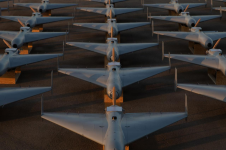
SR2Vector's factory is backed by MASNA Ventures, which aims to capitalize on deepened U.S.-Saudi defense cooperation following Saudi Arabia's designation as a major non-NATO ally in November, when Crown Prince Mohammed bin Salman met Trump at the White House.
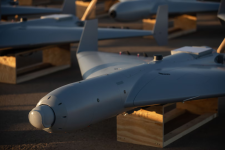
The drone will be produced for both the Saudi market and export to allied nations.
The SC
INT'L MOD
- Thread starter
- #1,165
The Saudi company "AirShield" develops the "BARQ" system to confront drone threats
BARQ System
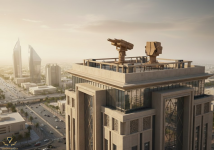
The BARQ system is an advanced Saudi air defense system dedicated to the rapid physical interception of unmanned aerial vehicles (UAVs). The system was developed by AirShield, a company specialized in defense technology, and was officially unveiled during the World Defense Exhibition (WDS) 2026 in Riyadh. The system represents a technical response to the weaknesses of conventional defense systems, focusing on neutralizing low-cost pathfinders with high economic and technical effectiveness.
The concept and technical innovation classify "Park" as a short-range interception system based on physical collision (Kinetic Interception) instead of electronic warfare or traditional explosive missiles.
Additive manufacturing (3D printing)
The concept and technical innovation classify "Park" as a short-range interception system based on physical collision (Kinetic Interception) instead of electronic warfare or traditional explosive missiles.
The Barq interceptor aircraft are manufactured using advanced 3D printing technologies. This strategy provides competitive advantages that include:
- Production speed: Significantly reduce the time required for manufacturing.
- Design flexibility: The ability to quickly modify and update the interceptor design to keep pace with evolving air threats.
- Quantitative production: Supporting the armed forces’ ability to scale up operations during crises to confront “saturation attacks.”
Operational characteristics
The system is based on a technical architecture that combines artificial intelligence and flight biomechanics:
The system is based on a technical architecture that combines artificial intelligence and flight biomechanics:
- AI Guidance: The system has the ability to track and engage targets completely autonomously in the final stages, reducing the burden on the human operator and allowing multiple simultaneous targets to be engaged.
- Lift-disabling warhead: Instead of using explosive fragments, “Barq” uses a patented warhead that disrupts the lift and flight control surfaces of the enemy drone, causing it to lose its dynamic stability and fall immediately.
- Reduced collateral damage: Thanks to the “lift disable” mechanism, the system reduces the spread of debris and air explosions, making it ideal for protecting energy facilities, oil and gas fields, and border areas.
Flexibility and deployment platforms
The "Park" system features a multi-platform publishing concept, as it can be launched from:
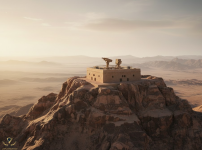
- Fixed ground platforms to protect military bases.
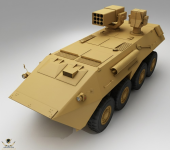
- Systems mounted on armored vehicles (such as HEET) for field support.
- Air and sea platforms to provide integrated defense layers.
Strategic analysis
According to defense analysts, the Barq system occupies an intermediate position (modular layer) in the air defense architecture, bridging the gap between:
- Electronic measures: which may fail against pre-programmed paths or with variable frequencies.
- Expensive defensive missiles: which are considered economically infeasible when used against cheap drones
Static
Mobile
Classification: Direct kinetic interception (Hard-Kill / Kinetic)
Range: 3 – 4 kilometers
Mission: Final interception of targets in the final phase of the engagement (last line of defence).
Capabilities
1- Solid fuel rocket engine
AP composite solid propellant rocket engine — sealed cartridge, sub-second ready, local sovereign supply chain.
2-Dual warhead
A latex-based lift-disrupting warhead (cloud with ~60 m range and urban safe) for targeting reconnaissance and surveillance (ISR) drones, or a high explosive (HE) warhead for confirmed suicide threats.
3- Fire and forget
Ballistic trajectory · Without seeker, without in-flight guidance, and without radio communication (RF) link. Resistant to electronic jamming and phishing.
4- Quad radar with a 360° angle
Four 90° radar sectors provide complete coverage of the internal defense range, with the ability to detect small quadcopter aircraft with a low radar signature (RCS) up to a range of 10 km.
5-Engagement engine
The command and control (C2) system evaluates the intercept geometry for each threat trajectory, then selects the optimal launch platform and direction for engagement.
6-Very low cost
Two orders of magnitude (2 decimal places) lower cost than conventional SAM responses, re-balancing the economics of engagement against dense drone swarms.
Final interdiction within range, at a cost tailored to the nature of the threat.
Barq is the final stage interceptor within the AirShields system — a short-range missile launched from land, vehicles or sea platforms, carrying either a soft latex-based Lift-Disruptor payload (cloud with ~60 m range and urban safe) or a high-explosive (HE) warhead to counter confirmed suicide threats.
Guidance is based on a deliberately simplistic philosophy: “fire and forget” — no seeker and no in-flight guidance. The result is complete immunity to jamming, electronic deception and electronic warfare (EW), with a cost per launch two orders of magnitude lower (two decimal places) than conventional SAM responses.
The combat configuration follows the AirShields standard: four 90° radars, a command and control (C2) node, a x88 electro-optical (EO) camera, and two launch cells, all integrated via the Sphere system. It has a speed of Mach 0.7, and a range of 3–4 km — specifically designed for inland defense.
Threats being addressed
Suicide drones (Kamikaze UAV) · Reconnaissance and surveillance drones (ISR Drone) · Elements of drone squadrons · Small loitering munitions.
Operating environment
Military bases · Border areas · Oil and gas facilities · Open terrain · Military convoy escort · Inland urban surroundings.
Force composition
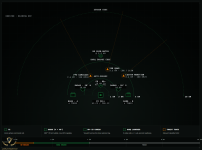
4× radars (90° for each radar, 10 km range)
1× command and control node (C2)
1× EO electro-optical camera with 88× zoom (10 km range)
2× launch systems
2× lightning launch cells.
Decision making loop
Monitoring → Classification → Operator Approval → Automated Release Within 6–10 seconds.
New missile from the company
Shaheen
A high-speed hybrid interceptor missile combining a missile and a drone, designed to intercept loitering munitions and long-range air threats.
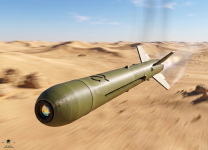
Kinetic/hybrid interception (missile-drone)
Range: 15 km
Mission: High-speed strategic interception of long-range air threats
Capabilities
1- Solid missile booster: A solid-fuel booster propels the structure to high speed during the acceleration phase, reaching a thrust speed of Mach 1.9.
2-Electric streamlined flight: Electric propulsion handles the smooth flight phase, within a fixed-wing drone structure in one integrated platform.
3-Infrared (IR) thermal seeker: A downstream cryogenic thermal seeker with a tracker powered by Edge AI. It does not rely on a continuous radio frequency (RF) connection, which gives it a high ability to resist electronic interference.
4-Mid-course guidance (GPS + INS): GPS guidance supported by inertial navigation reference (INS). Semi-autonomous engagement, designed to operate effectively in high-jammage and electronic contention environments.
5- 360° quad radar: A standard radar grid of 4 x 90° sectors (radar screen), supported by an electro-optical (EO) camera with 88x magnification, handles detection, target tracking and track hand-off (Track Hand-off).
6-Sovereign manufacturing: KSA-manufactured airframe and electronics. Designed for high-value / high-speed threats.
Electronic structure and systems manufactured within the Kingdom of Saudi Arabia. Designed to address high-value, high-velocity threats.
Overview · Mission and threat
Shaheen is a hybrid hypersonic missile within the AirShields system — a drone powered by a missile, not a traditional missile.
The process begins with a propulsion phase via a solid-fuel rocket booster, which accelerates the structure to a speed of up to Mach 1.9 (supersonic), and then the platform transitions to a fixed-wing aerodynamic flight phase using electric propulsion.
In the final stage, guidance is done via a cooled infrared thermal seeker powered by an Edge AI (Edge AI) tracker. The middle of the path relies on GPS + INS guidance without the need for a continuous wireless connection, which provides high resistance to interference and operation in contested electronic environments.
The combat configuration follows the AirShields standard: four 90° radars, a command and control (C2) node, a x88 electro-optical camera, and two launch cells. It has a range of approximately 15 km, with a 1.5–2.5 kg fragmentation warhead, and is designed to intercept loitering munitions, high-speed drones, and long-range aerial threats.
Threats being addressed
(Loitering munitions · High-speed drones · Long-range air threats · Strategic defense scenarios.)
Operating environment
Defending strategic sites, air bases, oil fields, royal complexes, and depth areas in open terrain.
Deployment Tactical layer
An interception layer dedicated to protecting strategic sites within a multi-layered air defense environment.
Decision making loop
Detect → Track → Sphere Classification → Operator Approval → Launch · Within 20–35 seconds.
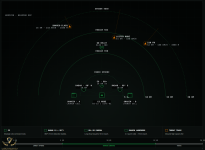
The company recently updated its website and posted information about its new and even old products
This is the website link for anyone who would like to know more details and the rest of their products: https://airshields.ai/index.html#overview
The SC
INT'L MOD
- Thread starter
- #1,167
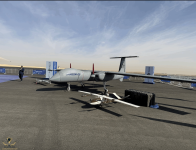
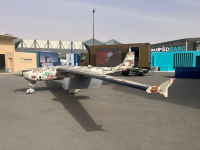
Saudi company Intra Defense Technologies unveiled the Nathir X Mobile Electronic Support (ESM) platform, a system that aims to help drones avoid entering areas of electronic interference that deprive them of satellite navigation signals (GNSS).
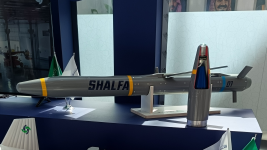
The company also displayed a guided light ammunition called "Shalfa". This ammunition features inertial navigation systems (INS), a satellite navigation system (GNSS), and a semi-active laser seeker. In the launch and mid-track phases, the ammunition relies on INS and GNSS, while in the final phase it relies on a laser seeker, and the software can switch between guidance modes depending on the surrounding environment.
The company also announced its progress in developing the surveillance balloon system (aerostat), which has reached the experimental demonstration stage with a marine radar and an optical/electronic gimbal, and conducted a mission in southern Saudi Arabia to survey international waters up to 12 nautical miles and beyond. In an experiment carried out by the Saudi Armed Forces last November, the system succeeded in identifying threatening boats and low-altitude drones, and exceeded the operating requirements of the radar.
Company officials pointed out that the presence of a radar at an altitude of 150 meters gives the advantage of a wider view, as threats can be detected early across the Red Sea. The company is currently developing three different sizes of balloons, each 15, 22 and 34 metres long.
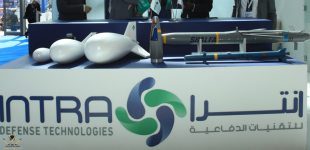
Intra is known in the region for its drone manufacturing, especially the ASEF and Samoom models it has been producing for several years, and the ASEF UAV model was also on display at the company's pavilion.
HABOOB
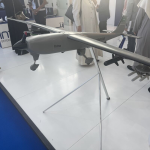
SkyGuardian
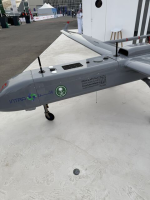
Meteksan Savunma and INTRA Defence Technologies, based in Saudi Arabia, signed a cooperation agreement targeting UAV subsystems at SAHA 2026. We wish this agreement, which strengthens international collaborations in the defense industry, to be auspicious for both parties.
The company also displayed a guided light ammunition called "Shalfa". This ammunition features inertial navigation systems (INS), a satellite navigation system (GNSS), and a semi-active laser seeker. In the launch and mid-track phases, the ammunition relies on INS and GNSS, while in the final phase it relies on a laser seeker, and the software can switch between guidance modes depending on the surrounding environment.
The company also announced its progress in developing the surveillance balloon system (aerostat), which has reached the experimental demonstration stage with a marine radar and an optical/electronic gimbal, and conducted a mission in southern Saudi Arabia to survey international waters up to 12 nautical miles and beyond. In an experiment carried out by the Saudi Armed Forces last November, the system succeeded in identifying threatening boats and low-altitude drones, and exceeded the operating requirements of the radar.
Company officials pointed out that the presence of a radar at an altitude of 150 meters gives the advantage of a wider view, as threats can be detected early across the Red Sea. The company is currently developing three different sizes of balloons, each 15, 22 and 34 metres long.
Intra is known in the region for its drone manufacturing, especially the ASEF and Samoom models it has been producing for several years, and the ASEF UAV model was also on display at the company's pavilion.
HABOOB
SkyGuardian
Meteksan Savunma and INTRA Defence Technologies, based in Saudi Arabia, signed a cooperation agreement targeting UAV subsystems at SAHA 2026. We wish this agreement, which strengthens international collaborations in the defense industry, to be auspicious for both parties.


Users who are viewing this thread
Total: 3 (members: 0, guests: 3)
Pakistan Defence Latest
-
 PTI Murad Saeed in Afghanistan, was 'controlling KP govt' from there: Rana Sanaullah (19 Viewers)
- Latest: 313Ghazi
-
 Federal cabinet gives nod to imposition of emergency in KP; summary sent to president (24 Viewers)
- Latest: Forsvaret
-
-

-

Country Watch Latest
-
 Iran - Israel/US War: Israel-US declare war on Iran, Iran responds (225 Viewers)
- Latest: Master Chief
-

-
-
-

Latest Posts
-
PTI Murad Saeed in Afghanistan, was 'controlling KP govt' from there: Rana Sanaullah (19 Viewers)
- Latest: 313Ghazi
-
Iran - Israel/US War: Israel-US declare war on Iran, Iran responds (225 Viewers)
- Latest: Master Chief
-
Federal cabinet gives nod to imposition of emergency in KP; summary sent to president (24 Viewers)
- Latest: Forsvaret
-

-