SAMI and L3Harris Partner to Manufacture Thousands of Military Radios in Saudi Arabia and Expand into Artificial Intelligence
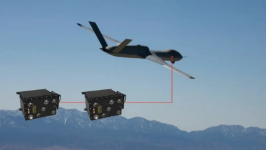
Arab Defense Website – November 18, 2026: The partnership between the Saudi Arabian Military Industries Company (SAMI) and the American company L3Harris Technologies is entering a new phase of localizing defense industries, following the transition from supplying systems to local manufacturing, engineering development, and maintenance within the Kingdom of Saudi Arabia.
The collaboration has already resulted in the establishment of a Saudi production line for military communications and radio systems, which has successfully delivered thousands of devices to the Saudi Ministry of Defense. The partnership is now focused on expanding manufacturing and technology transfer to include artificial intelligence (AI) applications, command, control, communications, computers, intelligence, surveillance, and reconnaissance (C4ISR) solutions.
The areas of cooperation include a range of defense technologies, most notably software-defined tactical radio and communications (SDR) systems. These systems have already entered the local manufacturing phase in Saudi Arabia, although no official announcement has been made regarding the specific models being produced within the Kingdom.
The cooperation also encompasses WESCAM MX systems for electro-optical/infrared (EO/IR) surveillance, reconnaissance, and targeting. These multi-sensor systems include the MX-8, MX-10, MX-15, MX-20, and MX-25 models, designed for air, land, and sea platforms.
The products also include the WESCAM MX-15D RSTA system for reconnaissance, surveillance, and target acquisition. This system can be integrated onto combat, reconnaissance, and amphibious vehicles, offering multispectral imaging capabilities and day/night operation. Furthermore, the cooperation includes flexible communications and networking solutions, mission and sensing systems, missile defense, and technologies operating across air, land, sea, space, and cyber domains.
On August 28, 2023, SAMI inaugurated its Software-Defined Radio (SDR) production line at the Advanced Electronics Company (AEC) factory, in partnership with the Ministry of Defense, represented by the Royal Saudi Land Forces, and with the support of the General Authority for Military Industries (GAMI), in collaboration with SAMI L3Harris Technologies and L3Harris Technologies of the United States.
The inauguration of the line marked a practical transition from the stage of agreements and technology transfer to production within the Kingdom. The local manufacturing line has successfully delivered several thousand radios to the Saudi Ministry of Defense.
The collaboration extended beyond device manufacturing to include radio wave development and the execution of engineering activities within Saudi Arabia, supporting the development of national capabilities in military communications technologies.
The partnership also expanded to include electro-optical and thermal (EO/IR) sensing technologies and special mission systems, in addition to the establishment of an authorized maintenance, repair, and overhaul (MRO) center within the Kingdom for WESCAM multi-sensor systems, making Saudi Arabia one of only 10 countries to host such an authorized center.
The next stage is to expand the scope of local manufacturing and development to include artificial intelligence applications and C4ISR systems, opening the way for developing Saudi capabilities in military communications, sensing, command and control.

L3Harris Technologies, a leading American defense and military electronics company, boasts a broad portfolio of products and technologies spanning air, land, sea, space, and cyber domains. Its activities extend beyond manufacturing military equipment to include the development of communications, command and control, reconnaissance, electronic warfare, and missile defense systems.
Among its most prominent products are tactical radio and communications systems, including the Falcon III and Falcon IV families, which provide secure, jam-resistant voice and data communications. The company also develops Link 16 tactical data exchange systems, used to connect aircraft, ships, and military units for field information sharing. Furthermore, L3Harris develops multi-channel radios such as the AN/PRC-163, as well as satellite communication solutions and military networks.
In the field of reconnaissance and targeting, the company is renowned for its WESCAM MX series, which includes multi-sensor electro-optical and thermal imaging systems such as the MX-10, MX-15, MX-20, and MX-25, designed for aircraft, helicopters, drones, and maritime and land-based platforms. These systems provide thermal and daytime imaging capabilities, target acquisition, and target tracking and positioning, supporting intelligence, surveillance, and reconnaissance (ISR) missions.
In the field of electronic warfare, L3Harris develops advanced systems such as the Viper Shield AN/ALQ-254, designed to protect F-16 fighter jets from radar and missile threats by detecting and analyzing threats and providing electronic countermeasures and jamming. Its products also include CORVUS electronic warfare systems, Signal Detection, Analysis, and Electronic Intelligence (SIGINT) technologies, and counter-drone systems.
In the field of air and missile defense, the company is involved in the development and production of components and systems related to missile interception, including rocket propulsion systems for PAC-3 MSE missile engines and GMLRS rocket engines. It also contributes to US missile defense programs, including THAAD and advanced missile interception programs.
The company's portfolio also includes night vision and thermal imaging systems, such as ENVG-B night vision goggles, sensor and radar systems, jam-resistant navigation and positioning equipment, aircraft control and mission systems, and electronics for ships and submarines.
In the maritime sector, the company develops autonomous underwater vehicles, maritime sonar and communication systems, and ship management, power, and control systems. Its space activities include satellite communication technologies, missile early warning systems, and space-based sensing.
L3Harris also develops autonomous systems, artificial intelligence, and data processing solutions, along with Modular Open Systems Architecture (MOSA) technologies, which enable the integration and modernization of hardware and software from different vendors without requiring a complete system redesign.
The company's product portfolio spans from military radios and optical sensors to electronic warfare, missile defense, and space communications systems, making it a supplier of a wide range of technologies and components used in equipping fighter jets, ships, submarines, military vehicles, and unmanned aerial vehicles.









 Pakistan-China Deal for 700 Advanced VT-4B Tanks: A Major Challenge for India (6 Viewers)


