Navigation
Install the app
How to install the app on iOS
Follow along with the video below to see how to install our site as a web app on your home screen.
Note: This feature may not be available in some browsers.
More options
Style variation
You are using an out of date browser. It may not display this or other websites correctly.
You should upgrade or use an alternative browser.
You should upgrade or use an alternative browser.
Made in KSA
- Thread starter The SC
- Start date
More options
Who Replied?

The SC
INT'L MOD
- Thread starter
- #1,069
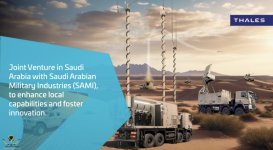
The radar in the picture is the GM 200 mm/A radar, which has a range of 350 km, which is the radar that will accompany the Shikra system instead
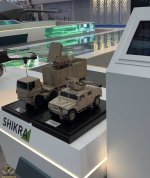
The radar, as well as Rapidranger and the LMM MARTLE missile, will be manufactured in the Kingdom through a joint project between Sami and Thales
Pascale Sourisse, President and CEO of Thales International, revealed: They are in the process of agreeing with the Saudi Military Industries Company (SAMI) regarding establishing a specialized center for manufacturing radar, in addition to another center specialized in air defense systems, which will be established in a joint project
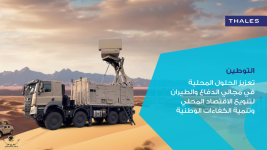
The system (Shikra) is also known as (Forceshield) is the name of the integrated system that includes (Radar for Research and Track and Integrated Systems V-SHORAD / ShoraD / MRAD)
RAPID RANGER is the name of the built-in system on the VAMTAC vehicle and it covers the V-Shorad layer
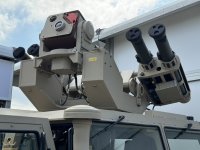
The radar, as well as Rapidranger and the LMM MARTLE missile, will be manufactured in the Kingdom through a joint project between Sami and Thales
Pascale Sourisse, President and CEO of Thales International, revealed: They are in the process of agreeing with the Saudi Military Industries Company (SAMI) regarding establishing a specialized center for manufacturing radar, in addition to another center specialized in air defense systems, which will be established in a joint project
The system (Shikra) is also known as (Forceshield) is the name of the integrated system that includes (Radar for Research and Track and Integrated Systems V-SHORAD / ShoraD / MRAD)
RAPID RANGER is the name of the built-in system on the VAMTAC vehicle and it covers the V-Shorad layer
The SC
INT'L MOD
- Thread starter
- #1,071
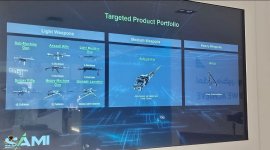
Industrial Ammunition Complex
A big strategic project, displayed at the International Defense Gallery
More than 80 types of ammunition..
Light ammunition:
5.56mm
7.62mm
9mm
12mm
Medium ammunition
20mm
25mm
30mm
30mm lv
Mortar munitions
60mm
81mm
120mm
Artillery
105mm
155mm
Tanks
105mm
120mm
Bombs
40mm
A big strategic project, displayed at the International Defense Gallery
More than 80 types of ammunition..
Light ammunition:
5.56mm
- Ball
- BLANK
- AP
- Track
- M856
- M193
7.62mm
- Ball
- AP
- BLANK
- Ep
- Special
- Track
9mm
- Ball
- 38 Ball
- 45 Ball
12mm
- Ball
- AP
- Track
- Nato API
Medium ammunition
20mm
- MK244 APDS
- Saphei
- TP PGU-27
- TP-T
25mm
- APFSDS-T
- Hei-T M792
- TP-T
30mm
- Hei-T MK238
- MK266 Hei-T
- MK310 Pabm-T
- TP-T
- M788
- Pabm-T
- PGU-13 D/B Hi
- PGU-14
- PGU-15
- PGU-46/b HeI
- Pou-158 tP
30mm lv
- Pt
- Hei-T
- TP-T
- Hedp
Mortar munitions
60mm
- He
- Ill-Vis
- Il-Yir
- SMK-Wp
- SMK-Rp
81mm
- He
- Ill-Vis
- Il-Yir
- SMK-Wp
- SMK-Rp
120mm
- He
- Ill-Vis
- Il-Yir
- SMK-Wp
- SMK-Rp
Artillery
105mm
- He M107
- He
- E-BB
- SMK-Wp
- IL M314 A3
155mm
- He M107
- He
- Illum
- Illum-Yir
- E-BB
- SMK-Wp
- SMK-Rp
Tanks
105mm
- APFSDS-T
- Heat-MP
- Can
- HEP-T
- TPFSDS-T
120mm
- APFSDS-T
- Heat-MP
- Can
- HEP-T
- TPFSDS-T
- He
Bombs
40mm
- HV-heedp
- HV -abm He
- HV -abm f & b
- LV-is He
- LV-IIS TP
The SC
INT'L MOD
- Thread starter
- #1,073
Korean missiles, Riyadh: Lig Nex1 establishes its defensive presence in Saudi Arabia
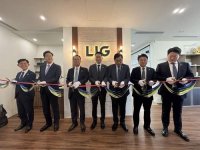
The South Korean Lig Nex1 company, which specializes in producing guided missiles and micro -weapons, has announced the expansion and transportation of its office in the Kingdom of Saudi Arabia, as part of its plan to enhance its presence in the Middle East.
The new office was opened last Thursday in Riyadh, in the presence of the CEO of the company, Shin Ike-Hyun, along with Saudi government officials and representatives of local defense companies.
The expanded office is expected to form a regional center for communication, in line with the company's strategy to enhance its business in the Middle East, especially in light of the increasing regional demand for advanced armament systems such as the long-term air defense system.
The company also established operational and other research and development sections (R&D) with the aim of supporting its military exports to the region, and building a reliable network for after -sales management in partnership with local institutions.
"We expect the new office to contribute to facilitating cooperation with our customers in Saudi Arabia and other countries in the region, and we will work to consolidate our position through continuous expansion and adopt localization strategies," a company official said.
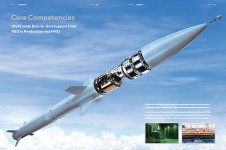
Source: Yonhap News
The South Korean Lig Nex1 company, which specializes in producing guided missiles and micro -weapons, has announced the expansion and transportation of its office in the Kingdom of Saudi Arabia, as part of its plan to enhance its presence in the Middle East.
The new office was opened last Thursday in Riyadh, in the presence of the CEO of the company, Shin Ike-Hyun, along with Saudi government officials and representatives of local defense companies.
The expanded office is expected to form a regional center for communication, in line with the company's strategy to enhance its business in the Middle East, especially in light of the increasing regional demand for advanced armament systems such as the long-term air defense system.
The company also established operational and other research and development sections (R&D) with the aim of supporting its military exports to the region, and building a reliable network for after -sales management in partnership with local institutions.
"We expect the new office to contribute to facilitating cooperation with our customers in Saudi Arabia and other countries in the region, and we will work to consolidate our position through continuous expansion and adopt localization strategies," a company official said.
Source: Yonhap News
The SC
INT'L MOD
- Thread starter
- #1,074
Autonomous Navigation in Denied Environments Inertial Systems as a Strategic Game-Changer in the Middle East
This research deals with the importance of high -precision self -deficiency navigation systems in future wars in the Middle East, as how this technology provides a decisive strategic feature in the environments where traditional navigation signals such as GPS are interrupted. The research highlights the military applications of these systems on land, sea and air, and their ability to enhance operational sovereignty and regional deterrence.
Due to the full document (about 50,000 words), a detailed source file for an in -depth study has been prepared, containing technical analyzes, operational scenarios and full technical data. We present this file to researchers and those interested to benefit from it in future studies.
https://defense-arab.com/vb/attachments/808353/
The SC
INT'L MOD
- Thread starter
- #1,075
A historical Saudi-Swiss partnership to localize air defense technologies and systems
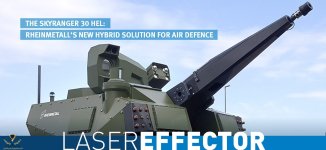
Rheinmetall will work through "Rad Al Arabiya" company as well as through its Multiple relationships in the Kingdom on a number of future projects, as it has a number of ideas currently being discussed and this is with the aim of bringing new technologies and skills as well as renewal And the development of projects in the Kingdom and providing them with the latest technologies.
"Rad Al Arabiya" company will localize the manufacture and development of weapons and technologies for air defense systems through its factory in Jeddah, which has an area of 25 thousand square meters. It will also maintain the equipment and the production of spare parts for these systems that are used to defend against air targets.. Such as missiles, drones and projectiles.
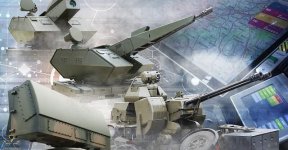
Rad Al Arabiya will also serve its customers In the Kingdom and the Middle East and Africa..
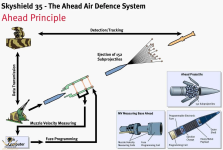
Rheinmetall will work through "Rad Al Arabiya" company as well as through its Multiple relationships in the Kingdom on a number of future projects, as it has a number of ideas currently being discussed and this is with the aim of bringing new technologies and skills as well as renewal And the development of projects in the Kingdom and providing them with the latest technologies.
"Rad Al Arabiya" company will localize the manufacture and development of weapons and technologies for air defense systems through its factory in Jeddah, which has an area of 25 thousand square meters. It will also maintain the equipment and the production of spare parts for these systems that are used to defend against air targets.. Such as missiles, drones and projectiles.
Rad Al Arabiya will also serve its customers In the Kingdom and the Middle East and Africa..
The SC
INT'L MOD
- Thread starter
- #1,076
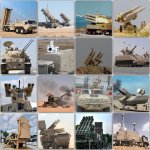
A brief schedule for all Saudi air defense systems
| The system | Type | Range max | Altitude max | Number of batteries |
| THAAD | Long -range | 200 km | 150 km | 7 |
| Patriot -3 | Medium-l R | 160 km | 24 km | 30 |
| KM-SAM II | Medium | 50 km | 20 km | 10 |
| MIM-23 Hawk | Medium | 40 km | 20 km | 16 |
| Pantsir S1M | Short range | 30 km | 18 km | 39 platforms |
| Vl- Mica | Short range | 20 km | 10 km | 5 |
| Shaheen-2 | Short range | 14 km | 6 km | 44 |
| Crotale | Short range | 10 km | 5.5 km | 22 |
| Mistral | Short range | 8 km | 6 km | Unknown |
| Shikra | Short range | 8 km | 5 km | 12 |
| QW-2 | MANPADS | 6 km | 3.5 km | Unknown |
| Skyguard-3 | Artillery SR | 4 km | 3 km | 91 |
| M163 Vulcan | artillery Self-P | 3 km | 2.5 km | 92 Platforms |
| AMX-30SA | artillery Self-P | 3 km | 3 km | 54 Platforms |
| Silent Hunter | Lazer SR | 4 km | 3 km | Unknown |
| Adrian | Jamming EW | undefined | undefined | Unknown |
| JN1101 | Jamming EW | undefined | undefined | Unknown |
| DroneSentry | Jamming EW | undefined | undefined | Unknown |
| Ghost Jamm | Jamming EW | 6 km | 5 km | Unknown |
| Lightning Shield | Jamming Indv | undefined | undefined | Unknown |
The SC
INT'L MOD
- Thread starter
- #1,077
Long-term strategic partnership with Saudi Arabia: Exclusive interview with Song Il, President of Hanwha Aerospace for the Middle East and Africa
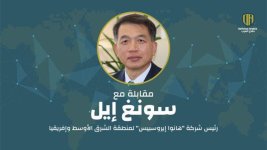
The Arab Defense Team conducted an exclusive interview with Mr. Song Il, President of Hanwha Aerospace for the Middle East and Africa, on the occasion of the official opening of the company's new regional headquarters in Riyadh.This strategic move marks a significant turning point in Hanwha Aerospace's expansion into the Middle East and North Africa, positioning Saudi Arabia at a pivotal position within its long-term vision for defense cooperation, industrial localization, and industrial partnership building.
In this interview, Mr. Song Il shares his vision on the strategic importance of the regional headquarters in Riyadh, and its compatibility with Saudi Vision 2030. He also shares Hanwha's plans to provide advanced defense solutions, enhance technology transfer, and build sustainable partnerships in the region. It shows how Hanwa seeks to balance global competitiveness with deep localization, and its vision of itself not only as a defense resource, but as a reliable long-term partner for the Kingdom and the entire region.
Q1: What is the strategic importance of establishing the Regional Headquarters (RHQ)?
A1: The regional headquarters in Riyadh elevates Hanwha Aerospace's status from a mere supplier to a sustainable strategic partner in the Middle East. It provides a leadership and coordination platform for integrating partnerships, accelerating industrial cooperation, and supporting defense modernization efforts in the region. At the same time, it connects the Middle East to the company's global R&D, production and supply networks, making the region an integral part of our global strategy.
Q2: Why was Saudi Arabia chosen to establish the regional headquarters?
A2: Saudi Arabia is the geopolitical center of the Middle East, and constitutes an essential link with the Gulf Cooperation Council countries and global supply chains. The Kingdom is leading the way in modernizing defense and diversifying industry, thanks to Vision 2030. As a leading country in security and defense cooperation, Saudi Arabia is the ideal location for our regional headquarters. From Riyadh, we will consolidate our partnerships and expand cooperation to include the entire Middle East and North Africa region.
Q3: How does the regional headquarters align with Saudi Vision 2030?
A3: Vision 2030 emphasizes industry diversification, technological self-sufficiency, and job creation. Hanwha supports this vision through investment in local production, technology transfer, maintenance, repair and development (MRO) facilities, and training programmes. This contributes not only to strengthening the Kingdom's defense capabilities, but also to developing its industrial base and achieving sustainable economic growth.
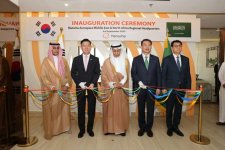
Q4: What are the most prominent capabilities that Hanwa will provide to the region?
A4: Hanwha offers a comprehensive range of solutions covering land, sea, air and space. In the Middle East, we focus on ground systems such as the K9 self-propelled howitzer (battle-mounted fire and kinetic force) and the "Tigon" armored vehicle (multi-mission), along with advanced air defense systems such as M-SAM and L-SAM, radars, and precision-guided munitions. We are also ready to cooperate in space fields such as satellite systems, space launch vehicles, and avionics. In addition, the Hanwha Group has diverse activities in energy, chemicals, materials and finance, giving us industrial capabilities and broader partnership opportunities. All of this enables us to contribute to the security of the region and achieve self-sufficiency, and not only that, but also to long-term economic development.
Q5: How important is localization and industrial cooperation in your strategy?
A5: Localization is the core of Hanwha's global strategy. In Australia, we have established a local factory; in Poland, we are implementing massive defense programs through strong local partnerships; and in Romania, we are preparing to invest in future localization initiatives. Based on this path, we will apply the same model in Saudi Arabia and the region, to enhance the flexibility of supply chains, ensure technology transfer, and create jobs, thus promoting sustainable joint growth.
Q6: How does the regional headquarters fit into Hanwha's global defense strategy?
A6: Hanwha Aerospace is a major subsidiary of Hanwha Group, a Fortune Global 500 company, and implements a "multinational" strategy around the world. The regional headquarters in Riyadh integrates the Middle East into our global network alongside Europe, Asia-Pacific and North America, ensuring that Saudi Arabia and the region have direct access to our R&D, production and supply networks.
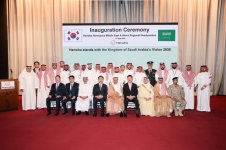
Q7: What are Hanwha's future plans in the Middle East?
A7: Our vision is to be a reliable and long-term partner for the region. We will work on joint research and development projects, training programs, and expanding industrial participation, in addition to expanding the scope of cooperation to include other fields such as clean energy, advanced materials, and space. The regional headquarters will play the role of the central hub for coordinating all these strategic initiatives.
Q8: Why "Hanwa"? What makes it a distinguished and reliable partner?
A8: Hanwha is a Fortune Global 500 group and the seventh largest conglomerate in South Korea, with a diverse industrial group that includes defense, energy, materials, and finance. Hanwha Aerospace is the group's defense arm, offering advanced solutions across land, sea, air, and space. Our proven track record in localization programs in markets such as Australia, Poland, Romania, and the United States proves that we are not just a supplier, but a long-term strategic partner. What distinguishes us is the combination of technological expertise, the ability to cooperate industrially, and financial stability, factors that make us a reliable and unique partner.
Q9: How does Hanwha plan to balance technology transfer with maintaining competitiveness in the presence of strong global competitors?
A9: Technology transfer is not just the delivery of documents, but a cumulative process based on experience, trial and error, and the sharing of practical knowledge. Unlike some countries that are reluctant to share advanced technologies, Korea has developed strong domestic capabilities. Our goal is to gradually build Saudi Arabia's capabilities, from basic levels to advanced cooperation over time. The ultimate goal is for the Kingdom to have its own technological expertise supported by Hanwha's expertise.
Q10: Saudi Arabia has a diverse mix of air defense systems from China, Europe, and the United States. How do Hanwha technologies fit into this reality?
A10: This is an important question. In Korea, our defense forces operate American, French, and Korean systems simultaneously. We have developed the ability to integrate these different platforms into a unified system. Hanwha provides solutions that enable multiple systems, whether American (PAC-3), Korean (M-SAM and L-SAM) or European, to be connected and operated within a single integrated network. This capability is one of the most important solutions we can offer to Saudi Arabia.
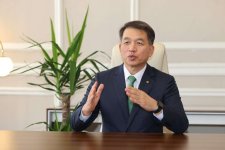
Q11: Will Hanwha adapt its products to suit Middle Eastern conditions, or will they remain as they were designed in Korea?
A11: Technically, we are already testing and operating our systems in different environments ranging from harsh polar climates to very high temperatures. We recognize the challenges posed by the Middle East climate, and trust our ability to adapt and improve our products to meet those requirements. In short, yes, our systems are fully tested, and we are committed to ensuring their reliable performance in difficult circumstances within the Kingdom.
The SC
INT'L MOD
- Thread starter
- #1,078
Mohammed bin Salman: We will raise defense capabilities to the highest advanced levels globally
The speech of Saudi Crown Prince Mohammed bin Salman confirms two basic paths in the Kingdom's vision: strengthening defense capabilities through the localization of military industries, which amounted to 19%, and Riyadh's firm commitment to defending Arab issues, as it condemned the Israeli aggression on Qatar and Gaza, stressing that the land of Palestine is a fixed right that cannot be taken away by aggression.
Arab Defense Website -
September 10, 2025:
Prince Mohammed bin Salman, the Saudi Crown Prince, outlined the Kingdom's vision in two pivotal aspects: strengthening defense capabilities internally, and defending Arab and Islamic issues externally.
On the military side, the Crown Prince stressed that the defense programs that the Kingdom is working on aim to raise Saudi defense capabilities to the ranks of advanced global levels, in line with modern developments in the military field and strengthening the Kingdom's position as an effective regional power. He explained that cooperation with strategic partners constitutes a fundamental pillar in this path, as it contributes to accelerating the steps of localizing military industries, which have jumped in recent years from a rate not exceeding 2% to more than 19%, in an indicator that reflects the extent of ambition and insistence on building a solid military industrial base within the Kingdom.
On the political and national side, the Saudi position was decisive in condemning the ongoing Israeli aggression. Prince Mohammed bin Salman stressed the Kingdom's "rejection and categorical condemnation of the attacks carried out by Israel, the latest of which was the brutal aggression against the sisterly State of Qatar," stressing that "this attack requires Arab, Islamic and international action to confront it, and to take strict measures to deter the occupation from its practices that target the stability and security of the region." He declared that Saudi Arabia stands by Qatar in all the steps it takes to protect its sovereignty, harnessing all Saudi capabilities to support it unconditionally.
In the same context, the Crown Prince renewed the Kingdom's condemnation of the ongoing attacks on the Palestinian people in Gaza, and the crimes of siege, starvation and forced displacement they are subjected to, stressing that the land of Gaza is Palestinian in identity, and the right of its people to it is a fixed right that is not overthrown by aggression and whose legitimacy is not nullified by threats. He stressed that the Saudi position is firm in protecting Palestinian rights and working hard to prevent their violations, reflecting the Kingdom's permanent commitment to the Palestinian cause as the central issue of Arabs and Muslims.
With this speech, the Saudi Crown Prince painted a comprehensive picture of the Kingdom's approach, internally by building an advanced and independent military force, and externally by defending the issues of the Arab and Islamic nation, especially Palestine, and confronting any threats that affect the security and stability of the region.
In recent years, the Kingdom of Saudi Arabia has been moving towards redrawing its armament map in line with its strategic vision for 2030 and its desire to enhance the independence of its military decision-making, by diversifying weapons sources and not being satisfied with traditional partnerships with the United States and European countries. This trend reflects a growing Saudi realization that exclusive reliance on a single source may restrict freedom of movement in political and military situations, while openness to rising powers such as South Korea and China gives Riyadh a wider range of options and greater flexibility in building its defense capabilities.
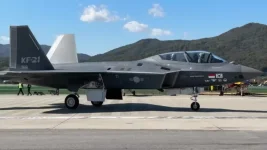
South Korea stands out as one of the most prominent potential partners in this field, thanks to its rapid industrial development in the defense sector and the diversity of its military products. Among what may constitute Saudi interest is the KF-21 "Boraimi" multi-role fighter, which represents a transitional step towards fifth-generation fighters, and is characterized by advanced capabilities in terms of stealth and armament. Such an aircraft could provide the Kingdom with an additional option to modernize its air fleet, away from the restrictions imposed by some Western countries on the export of modern fighter aircraft. In addition, Korean air defense systems such as KM-SAM, and newer versions of it L-SAM, which were developed with technical cooperation inspired by Russian expertise, constitute an alternative or complement to American Patriot systems, giving Saudi Arabia an opportunity to diversify its defense options against air threats. The Korean KTSSM tactical missiles, known for their precise ability to target fortifications, may also represent a qualitative addition to the Saudi arsenal, at a time when reliance on missiles in modern battles is increasing. In addition, there are possibilities for cooperation in the field of drones and electronic technologies, areas in which South Korea demonstrates high efficiency and the ability to transfer technology, which is consistent with the Kingdom's goals of localizing its military industries within Vision 2030.
On the other hand, China represents a potential pivotal partner in strengthening Saudi military capabilities, especially since relations between the two countries in the field of armament are not new. The Kingdom has previously obtained long-range DF-3 and DF-21 ballistic missiles from Beijing, which reflects the level of trust that binds the two sides. Today, China is offering broader and more advanced options, including the J-35 stealth fighter intended for export, which may give Saudi Arabia the opportunity to own a fifth-generation aircraft on more flexible terms than those that Washington places on its F-35 fighters. Attack drones such as the Wing Loong and CH-5, previously acquired by the kingdom, could also form the basis for deeper cooperation that could reach joint local manufacturing. Regarding missiles, China is offering advanced systems such as the DF-17 hypersonic, which represents a strategic shift in deterrence, despite the political sensitivities this may raise on the international scene. In the field of air defense, the HQ-9 systems represent an effective alternative to the Russian S-300/S-400 systems, and may enhance Saudi Arabia's ability to diversify its air defense network.
Through this openness to South Korea and China, Saudi Arabia confirms that it is pursuing a policy based on multiple sources of armament, which guarantees it freedom of decision-making and flexibility in dealing with various challenges. This trend does not mean abandoning traditional partnerships with the United States, France, and Britain, but it reflects a strategic realization that the future requires building a broad network of military partnerships, based on diversity, technology transfer, and local manufacturing. Thus, the Kingdom combines strengthening its internal strength by developing the national military industry, and opening up to new partners globally to secure its defense superiority and the independence of its sovereign decision-making in a region teeming with transformations and challenges.
BTW:
South Korea intends to develop the KF-21 Boramae fighter to transform it into a fifth-generation stealth aircraft, by adding internal weapons compartments, advanced materials to reduce the radar footprint, and an advanced domestic engine, with plans to develop a long-range air-to-air missile and integrate the aircraft with drones, in a move to enhance defense self-sufficiency and the local aviation industry.
KAI aims to complete development of Block 1 by the end of 2026, followed by expanding ground attack capability testing within Block 2. As for Block 3, it will offer a complete stealth version equipped with internal compartments capable of carrying four Meteor air-to-air missiles or precision-guided bombs. It will also include integrated electronic warfare systems and a new internal visual targeting system instead of the current external containers. The move toward stealth goes beyond simply designing the structure; The Ministry of Defense is also developing a long-range air-to-air missile similar to the European Meteor missile currently equipped with the KF-21. The Korean missile is planned to feature a guided jet propulsion system (ramjet), giving it a longer range and improved acceleration in the final stage of engagement.
The upgraded aircraft will also be integrated with accompanying drones, thanks to a high-speed and high-capacity data link, allowing the pilot aircraft to control squadrons of combat drones. In disputed airspace, these drones can undertake disinformation missions or carry out strikes, while the manned aircraft remains in a safe, remote location.
The SC
INT'L MOD
- Thread starter
- #1,079
In terms of budgets, reports say that the Kingdom has added reserve allocations to its defense budget, which are directed to finance urgent purchases of defense systems, radars, and early warning systems, as well as to finance deals for naval and land equipment, drones, and precision weapons that enhance deterrence and rapid response capabilities. These moves are said to be not just an emotional reaction, but are based on intelligence and evaluative insights that were deemed pressing enough to re-prioritize procurement.
The political and diplomatic aspects remain the focus of extensive discussions. At the same time, Saudi Arabia seeks to diversify its sources of armament and industrial cooperation to reduce absolute dependence on a single supplier, while at the same time being keen to localize defense industries within a longer-term economic vision. The relationship with Turkey and the technological transfer it may result in, in addition to the open possibilities for cooperation with European countries that welcome industrial partnership, all constitute a framework that requires careful follow-up.
In light of the above, it is clear that Saudi Arabia is moving towards a new phase of reshaping its defense doctrine, based on a combination of emergency spending, strengthening air and naval capabilities, and opening up to military-industrial partnerships that allow it to localize technology and expand its margin of strategic independence. These moves reflect a deep awareness of the magnitude of the threats posed by the volatile regional environment, and a desire for the Kingdom to remain a player capable of protecting its interests and vital corridors. With the escalation of the possibilities of confrontation between Iran and Israel and the latter's bombing of the Qatari capital, Doha, Riyadh seems determined to possess tools of deterrence and rapid response to ensure its national security and the stability of the region, even amid political and security storms that may last a long time.
The political and diplomatic aspects remain the focus of extensive discussions. At the same time, Saudi Arabia seeks to diversify its sources of armament and industrial cooperation to reduce absolute dependence on a single supplier, while at the same time being keen to localize defense industries within a longer-term economic vision. The relationship with Turkey and the technological transfer it may result in, in addition to the open possibilities for cooperation with European countries that welcome industrial partnership, all constitute a framework that requires careful follow-up.
In light of the above, it is clear that Saudi Arabia is moving towards a new phase of reshaping its defense doctrine, based on a combination of emergency spending, strengthening air and naval capabilities, and opening up to military-industrial partnerships that allow it to localize technology and expand its margin of strategic independence. These moves reflect a deep awareness of the magnitude of the threats posed by the volatile regional environment, and a desire for the Kingdom to remain a player capable of protecting its interests and vital corridors. With the escalation of the possibilities of confrontation between Iran and Israel and the latter's bombing of the Qatari capital, Doha, Riyadh seems determined to possess tools of deterrence and rapid response to ensure its national security and the stability of the region, even amid political and security storms that may last a long time.
The SC
INT'L MOD
- Thread starter
- #1,080
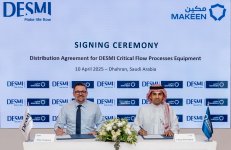
In line with the Kingdom of Saudi Arabia's strategic efforts to localize the marine systems industry, the Saudi Engine Manufacturing Company (Makin) signed a strategic agreement with the Danish company Desmi, which specializes in pumping systems and advanced flow solutions.
The agreement includes the distribution of advanced pumping systems and flow solutions from Desmi throughout the Kingdom, and also paves the way for the localization of Desmi's marine systems industry in the Kingdom of Saudi Arabia in the future, a step that supports the Kingdom's goals in developing national industrial sectors.
The agreement embodies the two companies' joint commitment to enhancing the Kingdom's industrial capabilities, supporting local manufacturing efforts, accelerating the pace of innovation and technical progress, in addition to building a strong and self-reliant maritime industry. By collaborating with leading global companies such as Desmi, Makin seeks to strengthen its position as a future manufacturer of high-quality marine systems and solutions produced in the Kingdom of Saudi Arabia.

Users who are viewing this thread
Total: 2 (members: 0, guests: 2)
Pakistan Defence Latest
-
 Federal cabinet gives nod to imposition of emergency in KP; summary sent to president (23 Viewers)
- Latest: flyingorca
-

-
PTI Murad Saeed in Afghanistan, was 'controlling KP govt' from there: Rana Sanaullah (15 Viewers)
- Latest: Blain2
-

-
Country Watch Latest
-
Iran - Israel/US War: Israel-US declare war on Iran, Iran responds (317 Viewers)
- Latest: BananaRepublic
-

-
-

-

Latest Posts
-
Iran - Israel/US War: Israel-US declare war on Iran, Iran responds (317 Viewers)
- Latest: BananaRepublic
-

-

-
Federal cabinet gives nod to imposition of emergency in KP; summary sent to president (23 Viewers)
- Latest: flyingorca