Navigation
Install the app
How to install the app on iOS
Follow along with the video below to see how to install our site as a web app on your home screen.
Note: This feature may not be available in some browsers.
More options
Style variation
You are using an out of date browser. It may not display this or other websites correctly.
You should upgrade or use an alternative browser.
You should upgrade or use an alternative browser.
Makkah Defence Alliance: Turkey, Saudi Arabia, and Pakistan, news & updates
- Thread starter hyperman
- Start date
More options
Who Replied?

RescueRanger
Meme Lord

Mod notice: guys please keep War news out of this thread. There is a entire thread for this. This thread is about the Makkah Pact.
Also if you feel someone is needlessly trolling rather than argue, just use the report button.
Also if you feel someone is needlessly trolling rather than argue, just use the report button.

retaxis
Trusted Member


Interesting development from Indonesia.
Indonesia i would normally say would want to stay out of MENA conflicts but its current leader is not that bright and is a military strongman so he might.
Previous president was small framed man but was very wise and smart, current leader not so much.
hyperman
INT'L MOD
- Thread starter
- #4,790
Indonesia i would normally say would want to stay out of MENA conflicts but its current leader is not that bright and is a military strongman so he might.
Previous president was small framed man but was very wise and smart, current leader not so much.
New leader is a lot better than the old one on defense policy, not treating Indonesia like some small state and actually investing.
retaxis
Trusted Member
The old leader focused on economy and did a good jobNew leader is a lot better than the old one on defense policy, not treating Indonesia like some small state and actually investing.
Right now Indonesia in big trouble economically but has no enemies in the world
therefore there was no need for defence. Old leader was much more liked by the people but current leader has run the country to the ground
Indonesia on The Brink: Will Indonesia Face a Financial Crisis | IR UI
 ir.fisip.ui.ac.id

PakAl
Elite Member
View attachment 223034
@Ali_Baba This guy battalion25 was telling me 2 days ago, that Saudi was winning, and that its stupid to do a ceasefire and negotiate with the Houthis, when I said its not sustainable, I was "uninformed" and "The Houthis have been exiled from Bab Al-Mandab!"
2 days later the entire front collapsed around the Bab Al Mandab.
Its because he is well informed within his sources on how much billions Saudi Zionists are pumping in to Yemen, to brainwash young people in to Wahabissm in order to fight their wars. The same plan worked in Syria, in Libya its a stalemate, and Yemen will soon fall, can Houthis stand alone against the world and mighty Saudis and their terrorist zombies. So history shows Saudis will topple them and install Jolani like puppet, it took Syria 8 odd years to fall. The difference is Houthis are tribal so may take a while. The Islah and Mudakalis zionists are working overtime.

Distant_Observer
Trusted Member

RescueRanger
Meme Lord
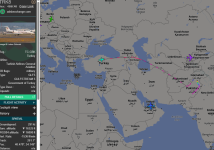
Its been a busy day of diplomacy:

K2RULEZ
Elite Member

The Mecca Alliance’s Deterrence Paradox: How Collective Defence Could Invite Conflict with Israel
Türkiye’s parliament approved legislation supporting ratification of the Mecca defence agreement on November 5, advancing the security partnership that Saudi Arabia, Pakistan, and Türkiye signed on August 7. The arrangement is acquiring institutions while its members continue to negotiate how collective protection will work. Its significance for Israel begins before those arrangements become fully operational.
A successful alliance could increase the military and political costs of Israeli action across the region. That prospect creates a preventive incentive: preserving freedom of action may appear easier before cooperation matures. Present weaknesses can make early pressure seem affordable, but future strength supplies the reason for exerting it. An alliance can therefore invite confrontation because an opponent expects it to succeed.
This is the Mecca Alliance’s deterrence paradox. Its members seek protection through greater collective weight, yet the transition towards that weight can intensify competition with Israel. Whether competition becomes armed conflict depends on where protection extends, how Israeli leaders interpret the emerging capabilities, and whether the parties can negotiate limits before a crisis forces their decisions.
The Commitment Taking Shape
The published agreement promises immediate assistance following external armed attack, while leaving the nature and extent of support to assessment and decision. Türkiye’s explanatory memorandum makes consultation and agreement central to implementation. International entry into force requires the last ratification deposit; parliamentary approval alone does not establish that this has occurred. The public text contains no express nuclear guarantee.
On October 5, the alliance’s strategic committee approved practical implementation and measures for rapidly deploying agreed forces and capabilities to Saudi Arabia. The statement addressed attacks on Saudi territory and the holy cities. It announced decisions, rather than demonstrating completed deployment, and did not announce an anti-Israel campaign. Pakistan’s foreign ministry described the organization on November 6 as still being formalized, with further operationalization ahead.
National discretion does not itself make collective defence hollow. NATO’s founding treaty also leaves each member discretion over its response. Credibility depends on timely decisions and delivery of agreed assistance. Jointly chosen restraint is different from an inability to act.
What Israel Could Lose
The potential constraint reaches beyond aggregate military strength. Integrated air defence and shared intelligence could complicate unilateral operations; industrial cooperation could improve the partners’ ability to replenish equipment and sustain military activity. These remain prospective developments. Yoel Guzansky and Gallia Lindenstrauss identify them as the changes that could turn the agreement into a substantive alliance capable of restricting Israeli and Iranian room for manoeuvre.
Political consequences could emerge sooner. A regional security arrangement that gives Riyadh additional partners may reduce the bargaining value of security cooperation with Israel. Guzansky and Jesse Weinberg argue that the emerging triangle could diminish Israel’s centrality within regional security arrangements. Riyadh’s wider choices can strengthen its bargaining position without making it an Israeli adversary.
Israeli threat perceptions also reflect overlapping rivalries. Israel’s deepening defence partnership with India links it to Pakistan’s principal adversary; its security ties with the UAE intersect with Saudi–Emirati competition, including support for opposing forces in Yemen. Mecca could therefore appear to Israeli planners as a mechanism connecting pressures on Israel and its partners across previously separate theatres.
Such concern extends across government and opposition. In February, Netanyahu proposed an India-inclusive network against an emerging Sunni axis; Bennett called Türkiye “the New Iran” and warned of a “Pakistani nuclear rear.” In August, Israeli strategists Gabi Siboni and Erez Winner urged a response to the emerging alignment while it remained at an early stage. Their concern is the combination of state militaries, industry, finance, and nuclear capability into a durable constraint on Israel. These statements establish a serious strand of Israeli threat perception, without demonstrating unanimity or an operational nuclear guarantee.
Brett Benson and Bradley Smith’s research on alliance formation explains the temporal problem: anticipated military benefits can create preventive incentives before implementation delivers them. Applied here, Israeli concern would arise from a consequential future loss of options. Incomplete coordination could influence the perceived cost of resisting that shift now. An alliance expected to become capable can therefore be more provocative during formation than one expected to remain ineffective.
The bargaining difficulty concerns the durability of restraint. Robert Powell’s work on commitment problems shows why a changing distribution of power can undermine agreements that would otherwise avoid costly fighting. Applied to Mecca, assurances of defensive intent may leave Israeli leaders uncertain about how stronger partners would behave later. Conversely, those partners may regard limits demanded by Israel as an attempt to preserve their vulnerability. A settlement must address both concerns: credible protection for the members and sufficiently dependable limits on how the resulting power will be used.
How Prevention Becomes Conflict
Preventive competition can begin through diplomacy. Israel could seek arrangements with individual partners that reduce their interest in a common position against it. Timothy Crawford’s research on wedge strategies emphasizes selective accommodation: concessions and inducements can prevent adverse coalitions from consolidating. Preserving bilateral relationships could therefore serve Israeli interests while also reducing the likelihood of war.
Military prevention carries a different risk. Israel’s 2015 strategy document connects campaigns between wars with limiting adversaries’ strengthening and improving conditions for future conflict. Itamar Lifshitz and Erez Seri-Levy’s study describes how limited campaigns became a sustained doctrine for obstructing adversary military development. This establishes a historical approach, not a current decision to apply it against the Mecca partners. Extending practices developed principally against substate adversaries to nuclear-armed or NATO-linked states would involve substantially different risks.
Preventive action addresses an anticipated deterioration in the balance of power; preemption responds to an imminent attack. The alliance’s development could influence the former calculation without supplying evidence of the latter. Explaining that incentive neither establishes an intention to use force nor provides a legal justification for doing so.
Syria provides a concrete possible intersection. On October 31, Foreign Minister Asaad al-Shaibani discussed potential Syrian participation in regional defence arrangements, including the Mecca framework. Accession remains prospective. Türkiye had already condemned an Israeli strike on Abu al-Duhur airbase on August 18. This documents an existing disagreement over Syrian military infrastructure, although it does not establish that the strike responded to the Mecca agreement.
If Syrian participation brought military reconstruction or joint protection into that arena, Israeli leaders could anticipate greater costs from intervening later. Pressure intended to preserve current options could then strengthen Damascus’s demand for protection. Partners might respond by accelerating cooperation, which Israel could interpret as confirmation of the threat it sought to prevent. The sequence would turn defensive integration and preventive action into mutually reinforcing sources of escalation.
The form of involvement would matter. Syrian accession, assistance to a nonmember, and the presence of partners’ personnel would create different obligations and exposures. Military assistance alone would not place Syrian territory under the agreement, and an attack on personnel abroad would raise separate questions about its application. Yet political expectations could develop before those boundaries were settled. An incident might then force a partner to choose between accepting a setback and using force to demonstrate protection. Israel could interpret the response as confirmation that its operational freedom was already disappearing. A confrontation could widen even if neither side initially sought general war.
The distinction between targeting a nonstate actor and violating a host state’s sovereignty already has regional precedent. The UN Security Council condemned the September 9, 2025, strikes in Doha, without naming Israel, and underlined its support for Qatar’s sovereignty. The episode demonstrates why an operation’s declared target cannot settle the political meaning that other governments attach to the territory struck.
The Burden of Deciding Together
The partners would enter such a crisis with different priorities. Riyadh would weigh the exposure of infrastructure and investment; Ankara would consider its regional position and existing alliances; Islamabad would assess the implications for its South Asian security commitments. Their capabilities cannot simply be added together as though political authority and willingness to accept losses were already pooled.
Agreement on preventing attacks would not settle the desired political outcome. In a future crisis, one partner might consider a limited response sufficient to restore deterrence; another might demand restrictions on Israeli operations or a broader settlement before accepting de-escalation. These are possible divergences, not established national positions. They would nevertheless determine how much force each government considered necessary and when it wanted operations to end. An alliance could mobilize successfully and still divide over what its collective effort was meant to achieve.
Material constraints reinforce these differences. David Roberts’s research on Gulf security shows how American equipment, maintenance, software, and contractor relationships preserve dependencies alongside growing regional autonomy. A new treaty cannot immediately replace those arrangements. Masahiro Kurita’s study of Pakistan’s nuclear strategy examines deterrence directed towards India; it supplies no basis for assuming that Islamabad has extended the same commitments to Middle Eastern contingencies. Türkiye’s NATO membership similarly does not automatically place its new partners under NATO protection.
Glenn Snyder’s alliance security dilemma captures the resulting tension. A threatened member fears abandonment; its partners fear entrapment in a confrontation they did not choose. Disagreement could concern attribution, whether an incident falls within the commitment, or the proportionality of a response. Political solidarity can coexist with opposition to a particular military action.
Repeated crises could deepen those divisions if burdens remain unequal and promised assistance does not arrive. An opponent might gain strategic leverage without defeating the partners’ forces, by reducing confidence that collective protection will be delivered when needed. But that outcome is conditional. Conspicuous aggression could instead align threat perceptions, accelerate cooperation, and make individual accommodation politically unacceptable. The attempt to divide an alliance can supply its strongest reason to cohere.
Managing the Strategic Transition
Accommodation remains a serious alternative. Stronger Saudi defences against missiles and drones can serve Israeli interests in regional stability. Preserving channels with Riyadh and Ankara could make their cooperation less threatening without requiring its abandonment. The INSS analysis accordingly warns that overt Israeli opposition could strengthen alliance cohesion. An emerging partnership is not necessarily a fixed hostile camp.
For Israel, the strategic choice is how much restraint to accept in exchange for a more stable regional order. Preserving every present option could become prohibitively expensive if doing so turns partners with divergent interests into a common adversary. The alliance’s members face a corresponding choice about whether their additional bargaining power will support negotiated security or progressively wider commitments. Both calculations concern the political order that military capabilities are meant to sustain.
Speed alone will not resolve the paradox. Benson and Smith show that rapid implementation can shorten the opportunity for preventive war while also making an anticipated power shift more urgent to an opponent. The practical task is to develop credible protection alongside comprehensible limits. Consultation procedures, agreement on assistance in plausible contingencies, and communication about deployments matter because they shape both partners’ expectations and outsiders’ calculations.
The most revealing indicators will be demonstrated joint readiness, enlargement decisions, and Israeli responses to anticipated alliance capabilities. Reliable assistance would strengthen deterrence; repeatedly disputed commitments would weaken it. Negotiated limits could reduce preventive incentives. These developments will distinguish a manageable redistribution of influence from an escalating contest over who may act where.
The alliance’s grand-strategic challenge begins before its first collective military response. Its expected success can give Israel a reason to resist its consolidation; incomplete implementation can make doing so appear less costly. Managing that transition requires credible defence and a political settlement that makes accommodation preferable to prevention. The ultimate test is whether greater collective power produces a sustainable regional order or an increasingly urgent struggle to prevent that power from becoming effective.
Last edited:

Cookie Monster
Trusted Member
Alternative is to keep the tinderbox away for now...the 3 core member need to work hard for at least a decade if not more without adding more members for anything close to resembling NATO like coordination, training, interoperability, and rapid deployment to come to each other's aid before they add anyone else.It is the only reason!
Syria simply cannot face zion alone. Though it makes Syria not only a flash point but the weakest link in the chain... but what is the alternative?
Users who are viewing this thread
Total: 22 (members: 8, guests: 14)
Pakistan Defence Latest
-
Pakistan-China Deal for 700 Advanced VT-4B Tanks: A Major Challenge for India (10 Viewers)
- Latest: iron shrapnel
-
 India 'facilitating' Awami League-Jamaat campaign against BNP, says PM aide Rashed Khan (5 Viewers)
- Latest: AbuShalehRumi
-

-
-

Country Watch Latest

Latest Posts
-

-
Pakistan-China Deal for 700 Advanced VT-4B Tanks: A Major Challenge for India (10 Viewers)
- Latest: iron shrapnel
-
Makkah Defence Alliance: Turkey, Saudi Arabia, and Pakistan, news & updates (21 Viewers)
- Latest: Cookie Monster
-

-