Minorities serving in Pakistan Military

Yahoodis and Hindus ko bhi do chance

diversity is your strength, Pakistan !
 
Pakistan previously had Christian Major generals such as Noel Israel Khokhar and Julian Peter
 
cj-r-pak.jpg


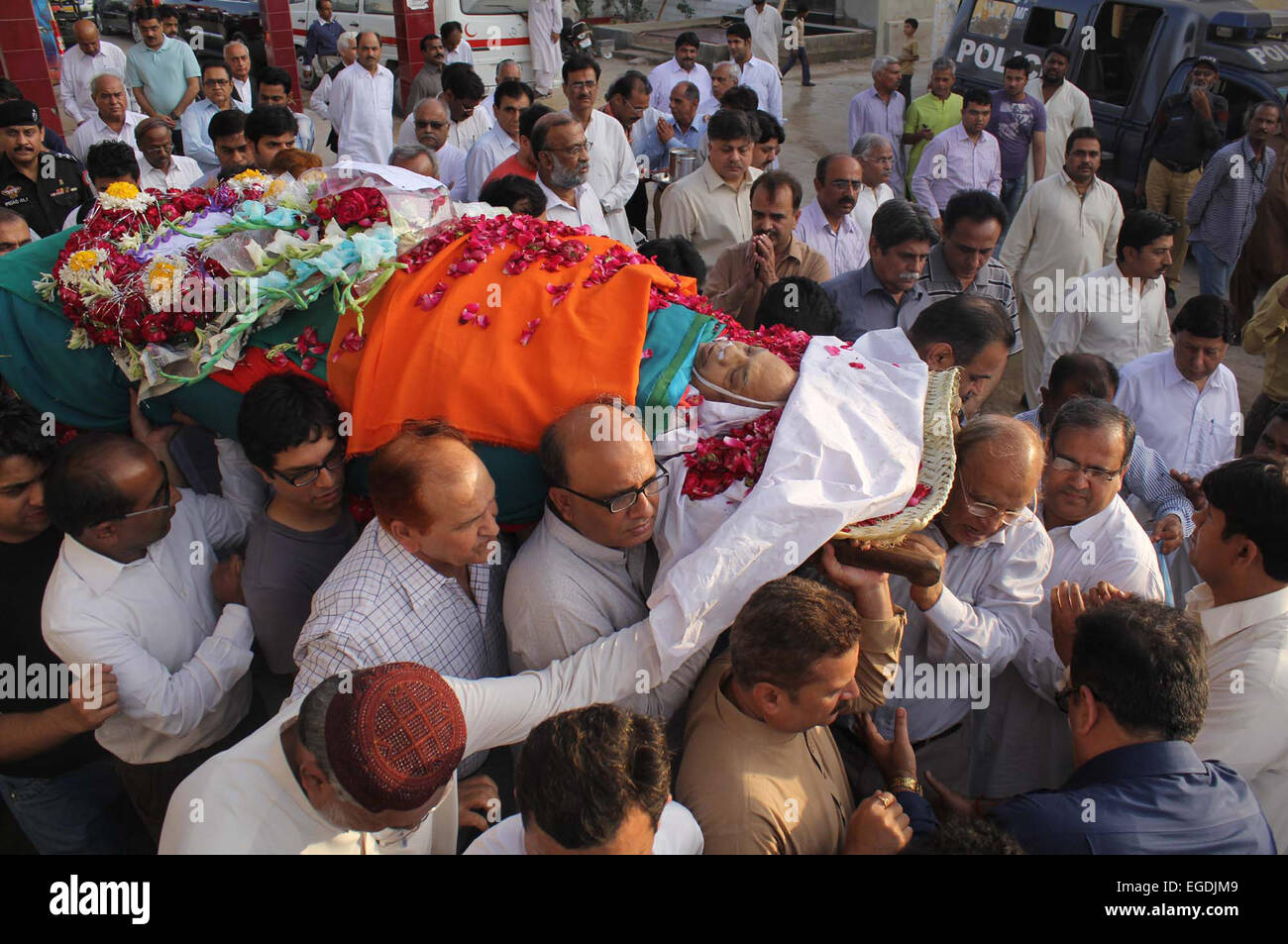
Rana Bhagwandas - a highly respected member of the country's judiciary - was the first Hindu and the second non-Muslim to serve as chief of the highest court in Pakistan.

He was the acting Chief Justice of Supreme Court during the 2007 judicial crisis. He also briefly acted as the CJ when incumbent Iftikhar Chaudhry went on foreign tours in 2005 and 2006. He had been a Supreme Court judge since February 2000. He retired in December 2007

The former judge of the country's apex court was highly respected for his professional competency and personal integrity.

Considered an expert at constitutional law, Justice (retd) Bhagwandas also had a postgraduate degree in Islamic Studies.

Rana Bhagwandas served as the Chairman of Federal Public Service Commission (FPSC) from November 2009 to December 2012 and till his demise remained Member of Selection Board of Sindh Madressatul Islam University, Karachi.

Born in Naseerabad, Larkana District (now Qamber Shahdadkot District) in Sindh in Dec 1942, he joined the bar in 1965 and assumed his responsibility as lower court judge in 1967 later also served as a session judge, and subsequently, a judge of the Sindh High Court in 1994.

The former acting chief justice of the country was a firm believer in the sanctity of the Constitution of Pakistan and its legal system.

He repeatedly established that the law is equal for all religious communities in Pakistan and while staunchly defending Pakistan's society and legal system against charges of bias and suppression of minorities, Justice (retd) Rana Bhagwandas was also a vocal opponent of the practice of honour killings of women in the provincial rural areas.


images


23nlook.jpg


funeral-of-former-supreme-court-judge-justice-retired-rana-bhagwandas-EGDJM9.jpg
 
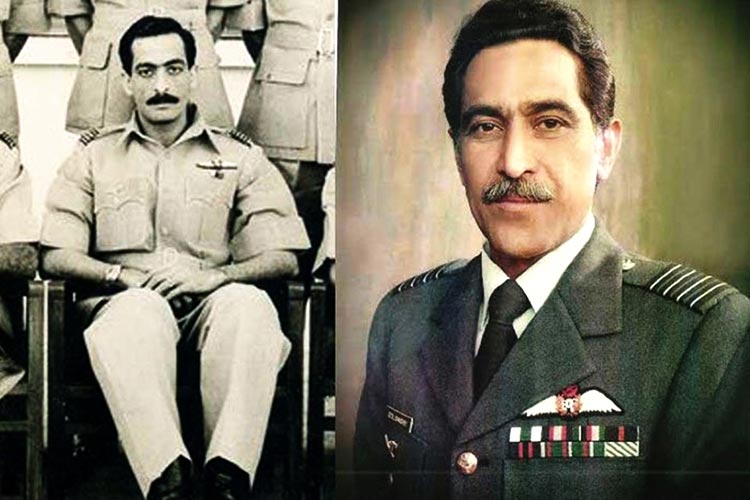
Group Captain Cecil Chaudhry Sitara-e-Jurat.


non-muslim-heroes-of-the-armed-forces-3.jpg


December 07, 1971
Zafarwal-Shakargarh Sector

“Lead you are on fire! your left wing is hit. Eject”

His No.2 Flight Lieutenant Irfan was shouting on the radio. But he ignored and focused on the tanks in his gun sight. Suddenly his aircraft jerked and he saw that his left wing was on fire. Seeing this, he jettisoned his fuel tanks and pulled up.

”Lead you have a sheet of fire under you! Eject.”

His No.3 Rashid Chauhdary shouted this time.

“O.K! You bomb the bastards. Leave me alone”.

He replied and turned the aircraft towards Pakistani area. Suddenly the engine took a violent jerk and all the instruments in the cockpit went haywire. He looked back and saw nothing but fire.

“Eject Lead”, Irfan shouted.

“Relax No.2. Keep calm and carry on the mission”. He calmly replied.

The pilot, his No.2 Flight lieutenant Irfan and his No.3 Squadron Leader Rashid Chauhdary, were accompanied by Group Captain Sajjad Haider and Wing Commander Imam Bukhari. Where the formation Leader was hit by an anti aircraft shell.

With a loud shriek, the left wing separated and the plane started to role horribly. it was suicidal to eject from a rolling aircraft. Remembering God, he ejected. Something felt like piercing thorough his right side of face and arm but he ignored. When he opened the parachute he felt a deep pain in his ribs.

It was not clear that where he was falling now. The area where he got shot was the Indian Territory and he tried to turn towards Pakistani Territory. Suddenly his aircraft exploded like a bomb, filling his heart with sorrow as if any good friend has died. He could see his fellows flying over the enemy area, bombing and firing. The vision got clearer as he got close to the ground. After 2 minutes, he landed on the ground.

The smoke rising from the destroyed Indian installations told him that opposite side is Pakistani side. He was the king of skies just moments ago, but losing his plane made him feel helpless. He walked a few steps when a machine gun burst hit the ground in front of him.

”Hands up, throw your revolver”, a loud voice alerted him.
He looked at his left side and saw a troop of 7 soldiers, with the uniforms without any insignia or identification mark on it. It could be any one, whether Indian or Pakistani. It was a fighting patrol.
“Who are you?”, asked the patrol leader.

“I am a Pakistani”, replied the pilot.

“Show me some identification”, Patrol Leader asked.

Not in a million years. Who the hell are you to ask me for that? Call your superior to talk to me, Pilot leader replied bluntly. The Patrol leader came with a gun brandishing towards the pilot and forcefully searched him and discovered an ID card of PAF from Pilot’s pocket, and his hand lowered.

“Sir take off your helmet please”, in a lower voice Patrol Leader said.

As he took off the helmet, Patrol leader introduced himself as a Pakistan Army Sergeant. Pilot told him the complete account of being shot down over the battle area and landing in the trees.

“Sir you are lucky it was us”, Patrol Leader told with a smile.
What you mean?, asked Pilot.

“Sir there is a mine field just a few steps away from you”, Patrol leader told.

A chilled wave travelled through the pilot’s spine.

Suddenly Indians started firing and the bullets were flying around them inches away, as their position was just 200 meters away from the enemy.

“Sir please go back, we will take care of these goons”, patrol leader replied while pointing towards the indian bunkers and ordered one of his men to escort the pilot, he took off his steel helmet and gave it to the Pilot.

“You wear it, you need it”, pilot handed it back.

“No sir you need it. Pilots like you are only few while soldiers like me are countless. Your safety comes first”, Patrol leader replied.

They just walked only a few hundred meters when he felt immense pain in his left ribs and right side of his face and arm. Solider accompanying told him that his face is bleeding and arm too. It actually happened when he was ejecting something scratched him. It was later discovered that his ribs were also broken when he opened his parachute.

He was taken to the nearby army field head quarters, where a Major and a Captain greeted him. Meanwhile enemy started shelling the area, but they were still standing outside the shelters.

“Why don’t you go inside? Pilot asked them in a surprised manner.

“Sir it’s our music and we are really enjoying it and it is to be enjoyed in the open. Not in a 4x4 bunker”, major replied with a smile.

The Pilot was taken to the airbase by a helicopter after 2 hours. His x-ray confirmed that he has 2 ribs broken. Medical Officer Squadron Leader Arif told him that he is not fit for action. But pilot requested him to declare fit as he is not feeling any pain. Seeing this Arif declared him fit for flight.
The Pilot continued his flight missions and struck the enemy brutally till the war ended. He flew 10 sorties after his ejection, destroying numerous enemy vehicles and and a SU-7 of the IAF. Everytime his plane landed on the ground, the crew took him out as he couldn’t move and he always requested his crew not to tell anyone about his severe condition. He got treatment after the end of war.

Today the world knows the valiant aviator as Group Captain Cecil Chaudhry Sitara-e-Jurat.


Group+Captain+Cecil+Chaudhry+(retired),+a+veteran+fighter+pilot+of+the+Pakistan+Air+Force.JPG
 
Jamsheed Kaikobad Ardeshir Marker

Jamsheed Kaikobad Ardeshir Marker, Hilal-e-Imtiaz is a veteran Pakistani diplomat. He is listed in the Guinness Book of Records as having been ambassador to more countries than any other person. He speaks English, Urdu, Gujarati, French,German, and Russian and was Pakistan’s top envoy to the United States and more than a dozen other countries for more than three decades and earned the distinction as the world’s longest-serving ambassador.

There is no better description for Jamsheed Marker than the foreword penned by historian Stanley Wolpert for the former diplomat’s autobiography, Quiet Diplomacy: Memoirs of an Ambassador of Pakistan: “One of Pakistan’s wisest diplomats, whose career as its most brilliant Ambassador started in 1964, ending with the Security Council of the United Nations in 1994.”

Jamsheed Kaikobad Ardeshir Marker (1922-2018), who died at his home in Karachi on June 21 at the age of 95, served Pakistan for three decades from Ghana to Romania and Bulgaria, the USSR and Finland, Canada, Germany, Ireland, Japan, France, and the United States of America. The multilingual diplomat—he spoke six languages—was honored for his lifetime of service with Pakistan’s second-highest civilian award, the Hilal-i-Imtiaz, in 2003. However, it would not be an exaggeration to say that Pakistan recognized his skills and talent only after realizing how greatly admired he was among the international community. In 1997, then-U.N. Secretary General Kofi Annan tapped him to head a campaign to persuade Indonesia to do the legal thing by East Timor and allow it to become independent. Marker was instrumental in the success of that mission, as outlined in his second book, East Timor: A Memoir of the Negotiations for Independence.

Born on Nov. 24, 1922, Marker was from a distinguished Parsi family of Quetta. He rose to prominence in the 1950s as a radio cricket commentator alongside Omar Kureishi. The diplomatic career that defined the rest of his life began in 1964 when Aziz Ahmed, the foreign secretary under President Ayub Khan, offered him an ambassador’s post in Africa. As detailed in his memoirs, Marker picked Ghana for his post because he hoped to witness and get to know Kwame Nkrumah, the Ghanaian revolutionary who led his nation to independence from Britain.

In his 1997 book Pakistan: A Dream Gone Sour, Marker’s friend and one-time co-author Roedad Khan says that they were both attracted to Marxism while studying at Lahore’s Forman Christian College. If this was the case, Marker’s disenchantment from that political philosophy likely began in Ghana and filled the years that followed, culminating in the career of Zulfikar Ali Bhutto. His views on the Ghana founder can be applied to lot of socialist leaders that he also got to observe, and of course Bhutto of Pakistan, whom he would serve later on: “Nkrumah’s policies, an amalgam of dynamic idealism, vainglorious self-promotion and ruthless repression, constituted a vivid enigma whose early impact continues to resonate on the African continent.”

Charisma accompanied autocratic enforcement of socialist utopia tipped with nationalization and state sector dominance, eventually resulting in the perfect mix for dictatorship. Marker could see the crisis that could result from replacing capitalism with socialism without adequate planning and told Nkrumah that Ghana was a rich country with poor people.

There is wisdom in this remark. The post-colonial presumption was that the resources exploited by colonial states would now be fully available to the liberated nations and that, by replacing capitalism with socialism, these would enrich the people. Marker appeared to realize that they were wrong on both counts. Without making too much a point of it, he outlined the crises facing Pakistan in his survey of the Foreign Office led by Bhutto: “My third observation was that the policy orientation of the Foreign Ministry was more than a few points to the left of the center, and that it was being pushed further in that direction by Bhutto, despite Ayub’s reluctance and disinclination, and notwithstanding the undisguised suspicion of the Americans.”

Marker’s disenchantment with socialism was perhaps also linked to his career trajectory, which saw him represent Pakistan in many states that were trying to distance themselves from capitalism. After Ghana, he was sent to the Socialist Republic of Romania, which was followed by his first major mission in Moscow in 1969. The following year, election results prompted East Pakistan to succumb to a national campaign for independence. The global community reluctantly sided with the people of the newly minted Bangladesh. Moscow also backed India’s support for the new nation on the basis of a mutual defense treaty in 1972. Pakistan’s struggling democracy was perhaps summed up best by American diplomat Henry Kissinger, who told Marker: “Everywhere else in the world elections help to solve problems; in Pakistan they seem to create them.”

marker-author-pic.png


The author, Khaled Ahmed, right, interpreting for Marker in Moscow, 1971

While Marker’s autobiography is full of insights worth reading in full, the chapters on the USSR are particularly interesting in that they show the former diplomat in his true colors under pressure, standing up to the wrath of the Soviet leadership and defending a dictator at home who had mishandled the uprising in East Pakistan. It is apparent that this was not to Marker’s liking, but he was nonetheless the best ambassador Islamabad could have had in Moscow after losing East Pakistan. He was well-liked despite his tit-for-tat meetings with Soviet ministers and his circle of diplomatic friends was wide and his personal conduct immaculate, complete with an undying admiration for Russian literature and music. Everybody in the embassy thought he would be drummed out as a non grata ambassador, but just the opposite happened. When he left the Soviet Union in 1972 for a post in Canada, he was made a permanent citizen of Moscow by a visibly moved Soviet bureaucracy.

Marker, by now his nose for character quite developed, thought East Pakistan fell because of three men: “Mujibur Rehman, Zulfikar Ali Bhutto, and Yahya Khan, the first two because the compulsions of their fascist character precluded the compromise and sharing of power implicit in a democratic polity; and the third because he completely lost his earlier political acumen, and committed strategic blunders of the highest magnitude.”

Marker did not win the battle for East Pakistan in Moscow, but he benefited in the shape of the friends he made in the world of diplomacy: the Western world sent its best men as envoys to the USSR. His friends Gunnar Jarring and Javier Pérez de Cuéllar both played their roles at the U.N. By then, Pakistan had also recognized that he was a good man to have for matters of multilateral diplomacy and began asking him to attend important sessions at the U.N.

After a decade spent at postings in Tokyo, Geneva and Germany, Marker found himself in France in 1982. It was during this tenure that Shahnawaz Bhutto was found dead in Nice. Recalling the incident in his book, he says: “The final report, conveyed to me verbally by [French official] de Grossouvre after about six weeks, was that the incident had commenced in a restaurant in Nice, where the immediate Bhutto family, comprising Begum Nusrat, Benazir, Sanam, Murtaza, and Shahnawaz, together with their wives, had gathered for dinner. There was a heated conversation, reportedly over money matters, and the brothers came to blows.”

He goes on: “The party then broke up, and Shahnawaz and his wife, after returning to their hotel room, were followed by Murtaza, and another altercation took place between the brothers. The French police, when they arrived at the scene a little later found that Shahnawaz was dead and accordingly arrested his wife and Murtaza. The latter was released on production of a Syrian diplomatic passport and immediately fled the country. Shahnawaz’s wife was charged under a French law that imposes culpability on any person that fails to assist or call for assistance, in aid of a victim in distress.”

He concludes: “I was told that she had obtained a lawyer and was prepared to defend herself but was dissuaded from doing so by the family, and eventually left the country. Although no autopsy was carried out, the French thought that a drug overdose was the cause of death. I was told that the French Law Minister Robert Badinter, who was a friend of the Bhutto family, had helped in bringing the unsavory affair to a close.”

Four years later, in 1986, Marker was appointed Pakistan’s ambassador to the U.S., serving in the position for a year that would serve as the climax to his distinguished career. He has been attributed with helping negotiate the Soviet military’s withdrawal from Afghanistan, while also dealing with General Zia-ul-Haq’s furtive development of nuclear weapons at home. Marker, thanks to his contacts across the world, was just the man to repeatedly postpone the many threats of sanctions facing Pakistan over its uranium enrichment, especially following the passage of the Pressler amendment a year earlier.

Writing in The New York Times in 1989, journalist Robert Pear noted Marker’s diplomatic success in the U.S.: “Jamsheed KA Marker, the Ambassador of Pakistan, is described as tough, shrewd and cultivated by State Department officials and members of Congress. Of all the diplomats in Washington, few work so intimately with the Reagan Administration as Mr. Marker. He has helped forge a joint strategy with the United States in one of the great geopolitical battles of the 1980s, the effort to expel the Soviet army from Afghanistan. In the process he has dramatically strengthened relations between Pakistan and the United States, American, officials say.”

6103223947_f7074ee16e_b.jpg


For his part, Marker loved then-U.S. President Ronald Reagan, and was frequent host to diplomats Henry Kissinger and Zbigniew Brzezinski. He also got along with the intellectually aloof Egyptian diplomat Boutros Boutros-Ghali, and enjoyed the company of many U.S. Congressmen. Facilitated by his friend Roedad Khan, Marker also felt comfortable with Zia-ul-Haq and Ghulam Ishaq Khan. This bonhomie did not continue into the government of Benazir Bhutto, formed after elections in 1988, despite Marker’s brother-in-law Darayus Cyrus Minwalla’s enthusiasm for the PPP leader.
 
RUSTAM S. SIDHWA

JUDGE ON THE SUPREME COURT OF PAKISTAN

Birth 1 September 1927
Death 31 March 1997 (aged 69 years)


Rustam Sohrabji Sidhwa (1 September 1927 – 31 March 1997) was a former judge on the Supreme Court of Pakistan as well as one of the original eleven judges of the International Criminal Tribunal for the former Yugoslavia.


CAREER

Pakistan


He passed the Bar in 1951 and was elevated to a judge of the Lahore High Court in 1978. Between 14 December 1989 and 31 August 1992 he served on the Supreme Court of Pakistan.

International Criminal Tribunal for the Former Yugoslavia


Sidhwa served as a judge in the Appeals Chamber of the International Criminal Tribunal for the Former Yugoslavia from 1993 until his resignation in July 1996.


PHILATELIST
Justice Sidhwa was also a keen philatelist and wrote a catalogue.


BOOKS
  • The Lahore High Court and its principal bar, Pakistan Times Press, Lahore, 1967
  • Sidhwa's Catalogue, Pakistan stamps, errors & varieties, 1947–78, Kermin, Lahore 1978
 
.

4a.jpg


716.jpg


Major General (Retd) Kaizad Maneck Sopariwala was the first Parsi to obtain the position of a Major General in the Pakistan Army.

A 1986 graduate of US Army Command and Staff College, he was awarded Hilal-e-Imtiaz by former president Musharraf in 2002.
 
7a.jpg


143.jpg


Wing Commander Mervyn Leslie Middlecoat, a triple decorated war hero, shot down two Indian jets over Karachi during the 1965 war.

In December 1971, he crashed into the Gulf of Kutch but his body was not found. King Hussein of Jordan requested his funeral to have a Jordanian flag along with a Pakistani flag and regarded his death as a personal loss.

He was awarded Sitara-e-Jurat in 1965 and 1971 and Sitara-i-Basalat in 1971.
 
.............Salute......................

Raising the white flag: A tribute to our heroes

After all his efforts for the nation, Quaid-e-Azam Muhammad Ali Jinnah selflessly dedicated a portion of our flag to the minorities of Pakistan.

They may represent just a small part of this country, but dedicating their lives and leaving their homes to serve this country has made it what it is today.

This Independence Day, join hands with us as we pay tribute to a small part of the “White of Pakistani flag.”

2a.jpg


218.jpg


Nathaniel served as Quaid-e-Azam Muhammad Ali Jinnah’s nurse in 1948 in Ziarat, Balochistan. She remained dedicated to her field for 42 years and retired in 1980. Famous for her humbleness and meritorious services, Nathaniel became a recipient of Tamgha-i-Imtiaz in 2000.

14a.jpg


127.jpg


A renowned columnist, philanthropist and social activist, Cowasjee was a strong supporter of Jinnah’s ideology. Though known best for his bold articles, through the Cowasjee Foundation, he has funded the education of countless Pakistani students.

Cowasjee was laid to rest in November 2012 and as he had insisted, his funeral was open to followers of all faiths, thus albeit after his death, a sense of unity was seen when everyone regardless of their status in society came together to mourn him.

1a.jpg


317.jpg


Sister John Berchmans Conway, Principal Convent of Jesus and Mary Karachi, in 2012 received Sitara Quaid-e-Azam for her services in the field of education and promoting interfaith harmony in Pakistan.

Having spent over 60 years teaching young girls from various parts of Pakistan, the 86-year-old has touched the lives of countless Pakistani schoolgirls as a mentor, counsellor, friend and teacher.
 
List of Christian heroes of the Pakistan Air Force:

hero4.jpg


Eric Hall, group captain

hero5.jpg


Air Commodore Nazir Latif

hero2.jpg


Wing Commander Mervyn Leslie Middlecoat

hero3.jpg


Group captain Cecil Chaudhry

hero1.jpg


Squadron Leader Peter Christy

...I salute every single one of them...
 
General Noel Israel

1720525615341.png
 

Users who are viewing this thread

Pakistan Defence Latest

Back
Top