Pakistan's administrative structure is organized into five hierarchical tiers to distribute administrative and revenue management below the provincial level.
1. Provinces (Level 1): The four main federating units—Punjab, Sindh, Khyber Pakhtunkhwa (KP), and Balochistan—along with territories like Islamabad (ICT), Azad Kashmir, and Gilgit-Baltistan.
2. Divisions (Level 2): Administrative clusters of several districts. Pakistan currently has 40 divisions across its provinces and territories (e.g., Lahore Division, Quetta Division), led by a Divisional Commissioner.
3. Districts / Zillas (Level 3): The primary unit of civil administration, law and order, and public service delivery. Pakistan has over 170 districts nationwide, managed by a Deputy Commissioner (DC).
4. Tehsils / Talukas (Level 4): A tehsil (called a taluka in Sindh) is a sub-district administrative unit focused on local municipal services, land records, and tax revenue collection. There are over 500 tehsils across Pakistan.
5. Union Councils (Level 5): The lowest grassroots tier of governance, representing a single large village or a cluster of small urban neighborhoods.
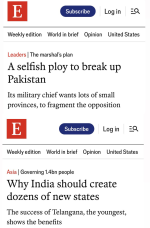
Why the Province Split Issue Persists
Despite having these districts and tehsils, the debate to split the four main provinces into 12 to 20 smaller ones stems from how power is distributed:
Power Bottlenecks at the Capital: While tehsils manage local land records and municipal offices, tax revenues and major budget approvals remain locked at the provincial capital (Lahore, Karachi, Peshawar, Quetta). District and tehsil administrators must constantly defer upward for development projects.
Weak Local Government: Unlike China's empowered prefectures. Pakistan's local body elections at the tehsil/district level are often delayed, leaving local officials with minimal independent power or financial authority.




 Federal cabinet gives nod to imposition of emergency in KP; summary sent to president (10 Viewers)


