
Michael
VIP Member

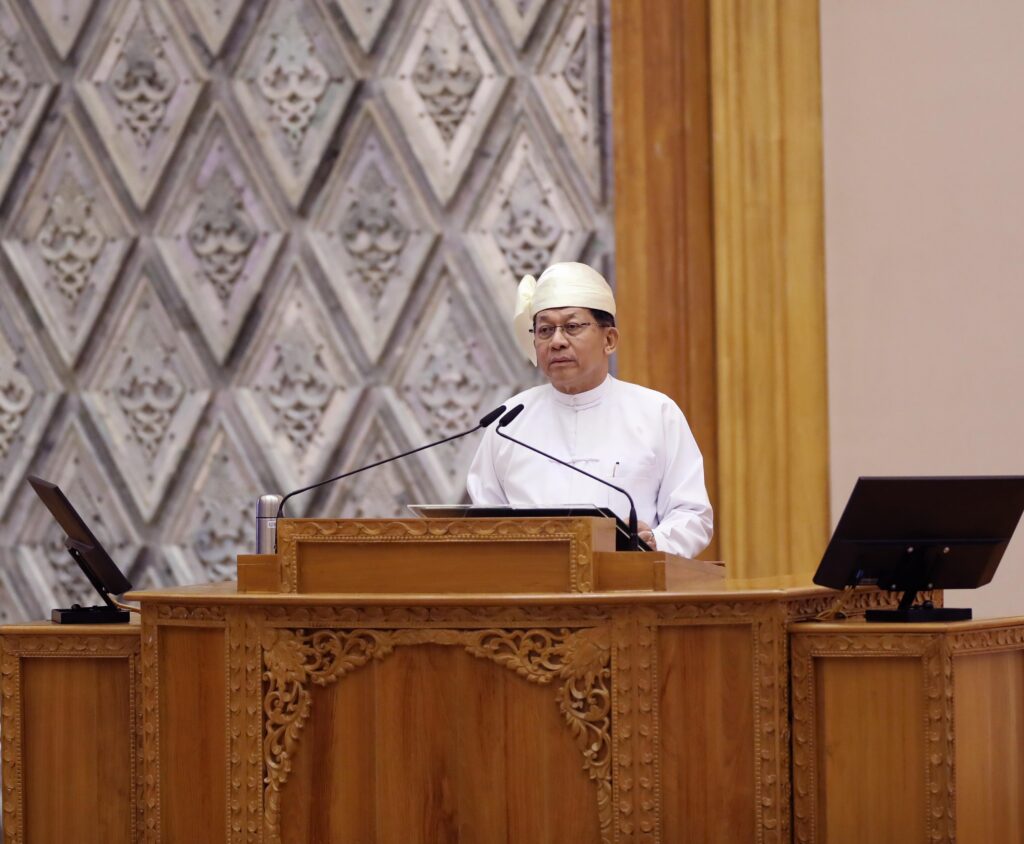
On November 18, 2026, Myanmar’s President U Min Aung Hlaing addressed the nation’s overall situation and state policies at the Third Pyidaungsu Hluttaw. The official news report is provided below; those interested may read the full text.
 www.gnlm.com.mm
In the official original text, this section warrants our particular attention.
On political governance, the President reiterated the commitment to building a Union based on democracy and federalism through a genuine, disciplined multiparty democratic system. He noted that the Proportional Representation (PR) system was introduced during the administration’s tenure to ensure smaller parties and ethnic parties gain representation in the Hluttaw, urging lawmakers to accurately voice their constituents’ needs and resolve differing views through constructive dialogue that respects both majority rule and minority perspectives. Regarding federalism, he explained that while global federations such as India, Malaysia, the United States, Australia, Germany, and Switzerland operate under constitutional power-sharing, Myanmar will prioritize a region-based federal model over an ethnicity-based one, pointing out that states such as Kachin, Shan, Kayin, and Mon are home to diverse, coexisting ethnic populations.
Pursuing lasting domestic peace, the President announced plans to convene a peace conference around Union Day in 2028 through the National Solidarity and Peacemaking Negotiation Committee (NSPNC). Building on the 2015 Nationwide Ceasefire Agreement (NCA) – achieved after over 5,000 meetings – and 160 dialogues held between 2021 and 2025 with ethnic armed organizations and political parties that produced 43 preliminary constitutional amendment agreements now submitted to parliament, he underscored the necessity of political negotiations to end decades of internal armed conflict. He reported that clashes between 2021 and 2025 caused casualties and K1,398.251 billion in damage to public infrastructure, roads, bridges, communications, and railways, attributing widespread destruction of public property to violent acts by groups labelled as PDF terrorists and certain EAOs, and calling for collective efforts to rebuild affected areas while safeguarding citizens’ lives and livelihoods.
=====================================
IMO.
There may be a new turning point regarding the critical Rohingya issue between Myanmar and Bangladesh.
It should be noted that the federal system he proposes is based on geography, rather than on ethnicity, religion, or other such criteria. Consequently, any attempt to implement this in practice would encounter numerous, highly complex challenges. Nevertheless, it is clear that a first step is being taken.
Achieving genuine, peaceful integration requires the various groups involved—including different ethnic and religious communities—to engage in negotiations and reach mutual compromises through peaceful means. If any party categorically refuses to make concessions, then peaceful integration will be difficult to attain.
I can only say that this presents an opportunity to address the Rohingya issue. However, whether the problem can truly be resolved will depend on the concerted efforts of all parties involved.
BTW. Earlier this year, representatives from various major ethnic armed organizations in Myanmar held face-to-face talks with Myanmar’s leader, Min Aung Hlaing, in the country’s capital. This includes the MNDAA, the initiator of "Operation 1024".
President U Min Aung Hlaing Addresses Nation’s Overall Situation and State Policies at Third Pyidaungsu Hluttaw - Global New Light Of Myanmar
President of the Republic of the Union of Myanmar U Min Aung Hlaing delivered an address on the policies of the State and the overall situation of the nation
www.gnlm.com.mm
In the official original text, this section warrants our particular attention.
On political governance, the President reiterated the commitment to building a Union based on democracy and federalism through a genuine, disciplined multiparty democratic system. He noted that the Proportional Representation (PR) system was introduced during the administration’s tenure to ensure smaller parties and ethnic parties gain representation in the Hluttaw, urging lawmakers to accurately voice their constituents’ needs and resolve differing views through constructive dialogue that respects both majority rule and minority perspectives. Regarding federalism, he explained that while global federations such as India, Malaysia, the United States, Australia, Germany, and Switzerland operate under constitutional power-sharing, Myanmar will prioritize a region-based federal model over an ethnicity-based one, pointing out that states such as Kachin, Shan, Kayin, and Mon are home to diverse, coexisting ethnic populations.
Pursuing lasting domestic peace, the President announced plans to convene a peace conference around Union Day in 2028 through the National Solidarity and Peacemaking Negotiation Committee (NSPNC). Building on the 2015 Nationwide Ceasefire Agreement (NCA) – achieved after over 5,000 meetings – and 160 dialogues held between 2021 and 2025 with ethnic armed organizations and political parties that produced 43 preliminary constitutional amendment agreements now submitted to parliament, he underscored the necessity of political negotiations to end decades of internal armed conflict. He reported that clashes between 2021 and 2025 caused casualties and K1,398.251 billion in damage to public infrastructure, roads, bridges, communications, and railways, attributing widespread destruction of public property to violent acts by groups labelled as PDF terrorists and certain EAOs, and calling for collective efforts to rebuild affected areas while safeguarding citizens’ lives and livelihoods.
=====================================
IMO.
There may be a new turning point regarding the critical Rohingya issue between Myanmar and Bangladesh.
It should be noted that the federal system he proposes is based on geography, rather than on ethnicity, religion, or other such criteria. Consequently, any attempt to implement this in practice would encounter numerous, highly complex challenges. Nevertheless, it is clear that a first step is being taken.
Achieving genuine, peaceful integration requires the various groups involved—including different ethnic and religious communities—to engage in negotiations and reach mutual compromises through peaceful means. If any party categorically refuses to make concessions, then peaceful integration will be difficult to attain.
I can only say that this presents an opportunity to address the Rohingya issue. However, whether the problem can truly be resolved will depend on the concerted efforts of all parties involved.
BTW. Earlier this year, representatives from various major ethnic armed organizations in Myanmar held face-to-face talks with Myanmar’s leader, Min Aung Hlaing, in the country’s capital. This includes the MNDAA, the initiator of "Operation 1024".
Source:
N/A


