NASA Space Program

To view this content we will need your consent to set third party cookies.
For more detailed information, see our cookies page.


WDR has started….if everything goes smoothly we’re looking at a launch next Sunday night
 
To view this content we will need your consent to set third party cookies.
For more detailed information, see our cookies page.


Artemis 2 launch window has been pushed back to March
 
sounds more like the cold weather is causing something like the O-Ring problem of Challenger.

F5WUhg7ETYZuFKQhqVNUJ5-840-80.jpg.webp

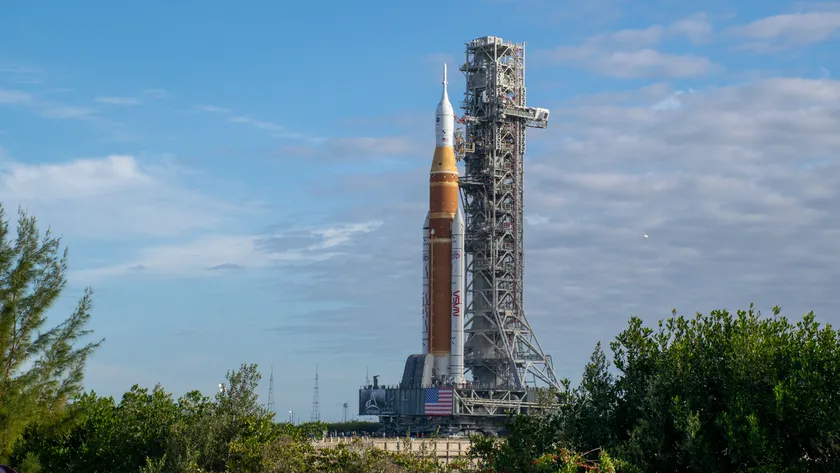
NASA had 3 years to fix fuel leaks on its Artemis moon rocket. Why are they still happening?​

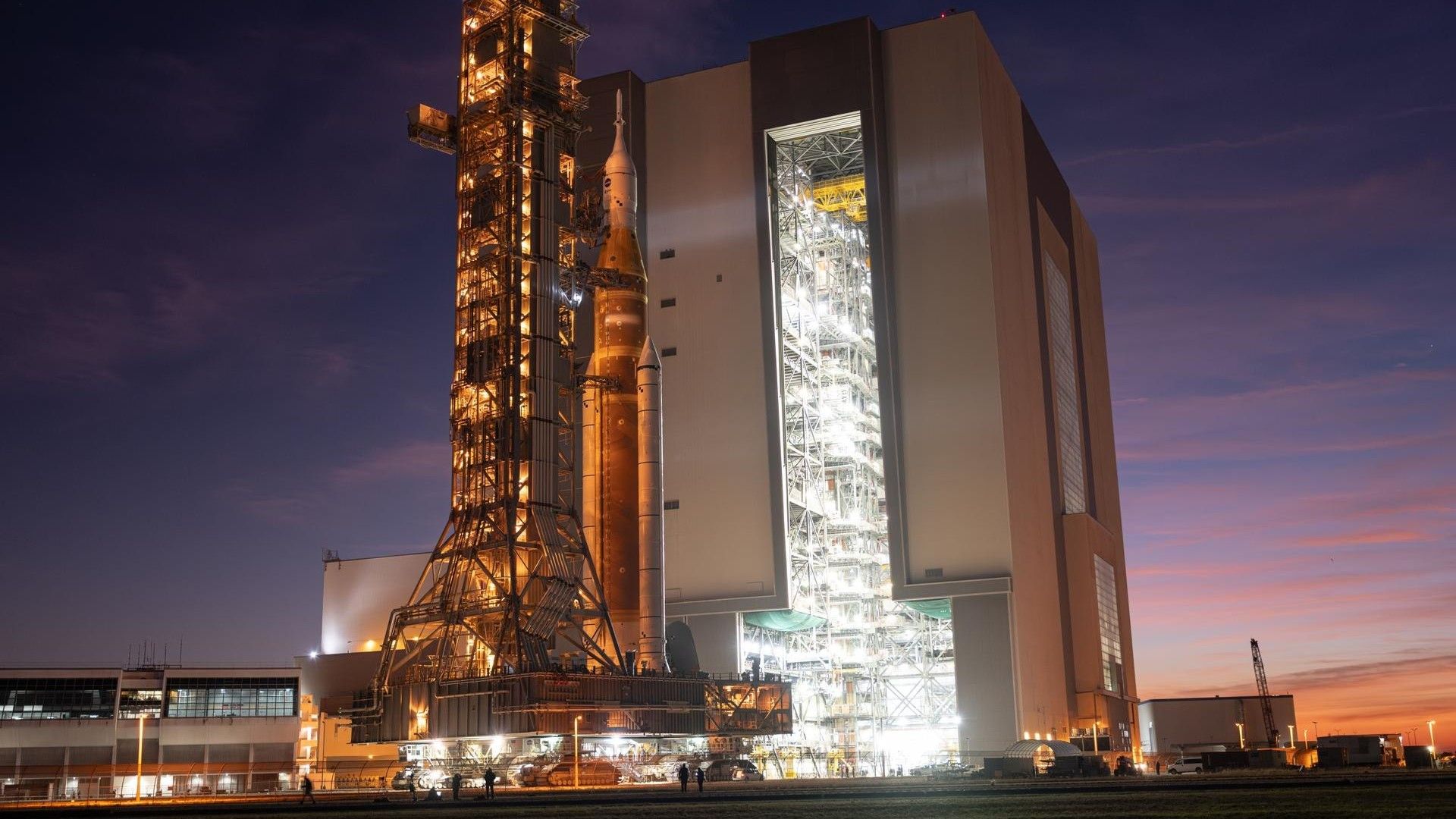
NASA was forced to end a critical fueling test of its giant Artemis 2 rocket early in the wee hours of Tuesday, delaying its mission to launch astronauts around the moon by at least a month. Now that a new day has dawned on the big orange launch vehicle, the space agency is attempting to shed some light on what exactly went wrong — and a lot of what it's saying sounds familiar.


The fueling testfor NASA's Artemis 2 Space Launch System (SLS) rocket began late Saturday (Jan. 31), and ran until Tuesday morning. Called a "wet dress rehearsal," it's a test to put the SLS launch vehicle and ground teams through a simulated countdown clock to fully power-on and fuel the rocket with the more than 700,000 gallons of liquid hydrogen and liquid oxygen it needs to get off the ground.

Tanking operations began smoothly yesterday (Feb. 2) after mission managers polled "go" to begin procedures, but hydrogen leaks detected at the SLS tail service mast umbilical quick disconnect on the launch platform put technicians into a troubleshooting mode most of the afternoon.

If that sounds familiar, it's because the Artemis 1 SLS experienced hydrogen leaks in the same location during its wet dress rehearsal three years ago. Those leaks resulted in three separate rollbacks to NASA's cavernous Vehicle Assembly Building (VAB) over the course of six months before Artemis 1 would finally launch.


Artemis 1 launched in November 2022 and flew an uncrewed Orion spacecraft on a month-long mission to lunar orbit and back.

With Artemis 2, NASA will test Orion's ability to sustain astronauts in deep space. NASA astronauts Reid Wiseman, Victor Glover and Christina Koch, and Canadian astronaut Jeremy Hansen, will ride aboard Orion on a 10-day mission around the far side of the moon. The flight will qualify the spacecraft's systems for Artemis 3, which NASA is planning as the mission to land astronauts back on the lunar surface.

"We really did learn a lot from the Artemis 1 mission, and we implemented a lot of the lessons learned yesterday through wet dress," Lori Glaze, NASA's Exploration Systems Development Mission Directorate acting associate administrator, said during a post-wet dress rehearsal press conference on Tuesday.

"Everyone's aware of some of the challenges with the hydrogen tanking from Artemis 1, and we've made some changes," Glaze said.

To NASA's credit, the Artemis 2 wet dress rehearsal went far smoother than Artemis 1's first fueling test.

Despite the hours of troubleshooting the persistent hydrogen leak — which NASA officials say was stabilized within acceptable limits (but never eliminated) —mission operators managed to fully fuel both SLS stages and carry the test down to the simulated clock's terminal count (the last 10 minutes before liftoff). But the team didn't quite get as close to T-0 as needed in order to earn NASA's gold stamp of approval to launch with a crew onboard.

"The fact that we got to full tanking yesterday on the first try was a tremendous success, and we gathered an enormous amount of data in the processes and how we want to go forward with that in the future," Glaze said.

At T-5 minutes 15 seconds, the SLS ground launch sequencer terminated the count due to a spike in the same quick disconnect hydrogen leak it had experienced all afternoon, which was cause to abort the test, NASA said.

"As we began that pressurization, we did see that the leak within the cavity came up pretty quick," Artemis Launch Director Charlie Blackwell-Thompson said during Tuesday's press briefing, referring to a cavity on the rocket's mast umbilical. The activity triggered safety procedures already in place for such contingencies, she added.

"We got into our safety steps. We saw the hydrogen concentration come down and then later in the evening, we got into our drain operation," she said.

While maintaining the wet dress rehearsal an overall success in terms of data gathered and the accolade of filling SLS's tanks on the first try, Blackwell-Thompson also assured that, unlike Artemis 1, the hydrogen hiccups can likely be addressed at the pad, and don't seem to warrant a rollback to the VAB for maintenance.

"During Artemis 1, we found out that we can do some work on these plates at the pad," Blackwell-Thompson said. "I had hoped that we would not have to demonstrate that again for Artemis 2, but we showed that we can go do this work at the pad and be ready for launch."

As for why SLS is still experiencing these same hydrogen leaks after three years between missions, NASA officials have some theories, but haven't quite nailed down a definitive cause. "These are very bespoke components," NASA Associate Administrator Amit Kshatriya said Tuesday, describing each SLS as its own unique vehicle to learn and understand.

The leaky seal could possibly be a result of vibrations incurred during the rocket's initial rollout to the pad,, Kshatriya said. It took the Artemis 2 SLS rocket nearly 12 hours to make the 4-mile trip to the pad from the VAB at a top speed of 1 mile an hour last month.

"That rollout environment is very complicated," he added, noting that the Artemis 1 SLS was put through different acceleration tests on its way between the VAB and the pad at Launch Complex-39B specifically to help determine the effect of such stresses on the rocket and launch platform. "We think that's a contributor. But again, we have to tear the seal apart and see what happened."

"This is the first time this particular machine has borne witness to cryogens. And how it breathes, and how it vents, and how it wants to leak is something we have to characterize," Kshatriya said, and testing before the launch pad can only go so far.

Even with an "aggressive approach" to dealing with hydrogen leaks during Artemis 1, "we're pretty limited as to how much realism we can put into the test," said John Honeycutt, the chair of NASA's Artemis Mission Management team. "We try to test like we fly, but this interface is a very complex interface, and when you're dealing with hydrogen, it's a small molecule, it's highly energetic," he said, admitting he and mission managers weren't expecting these issues to crop up again.

"This one caught us off guard," Honeycutt added. "The initial things that we were seeing in the technical team felt like we either had some sort of misalignment or some sort of deformation or debris on the seal."

NASA needs to evaluate the rocket and ground infrastructure at the pad before determining the next possible date to attempt another wet dress rehearsal, and has opted to forgo Artemis 2's February launch opportunity, which, had the test gone successfully, spanned from Feb. 8-11.

"With more than three years between SLS launches, we fully anticipated encountering challenges," NASA Administrator Jared Isaacman said in a post on X early Tuesday. "That is precisely why we conduct a wet dress rehearsal. These tests are designed to surface issues before flight and set up launch day with the highest probability of success."

Mission managers are now targeting next month's window, which is open March 6-9 and March 11, with about five days available around the first week of each month thereafter.
 
Last edited:
geez so many people being sent up to space it's hard to keep track of them all

NASA Sets Coverage for Agency’s SpaceX Crew-12 Launch, Docking​

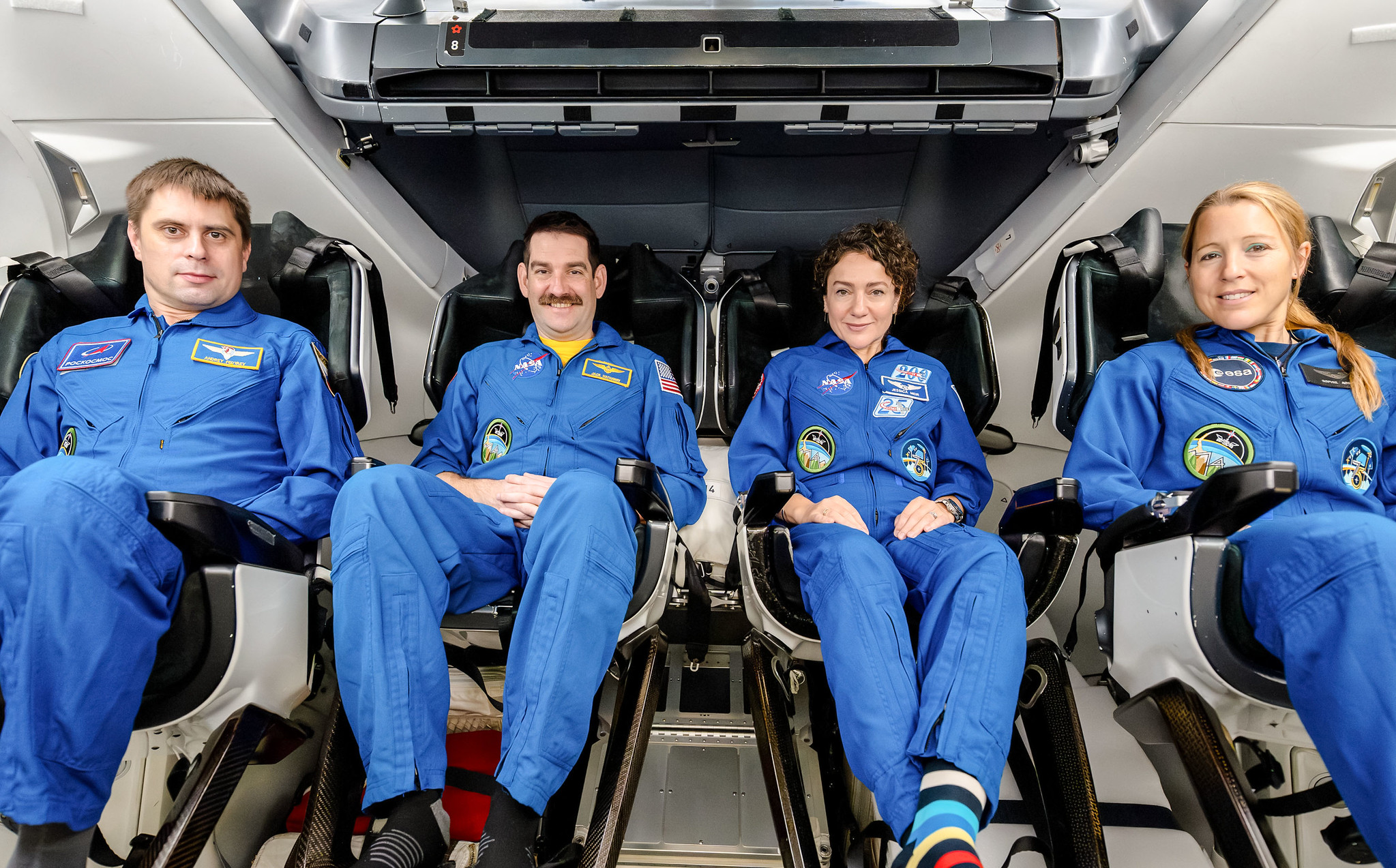
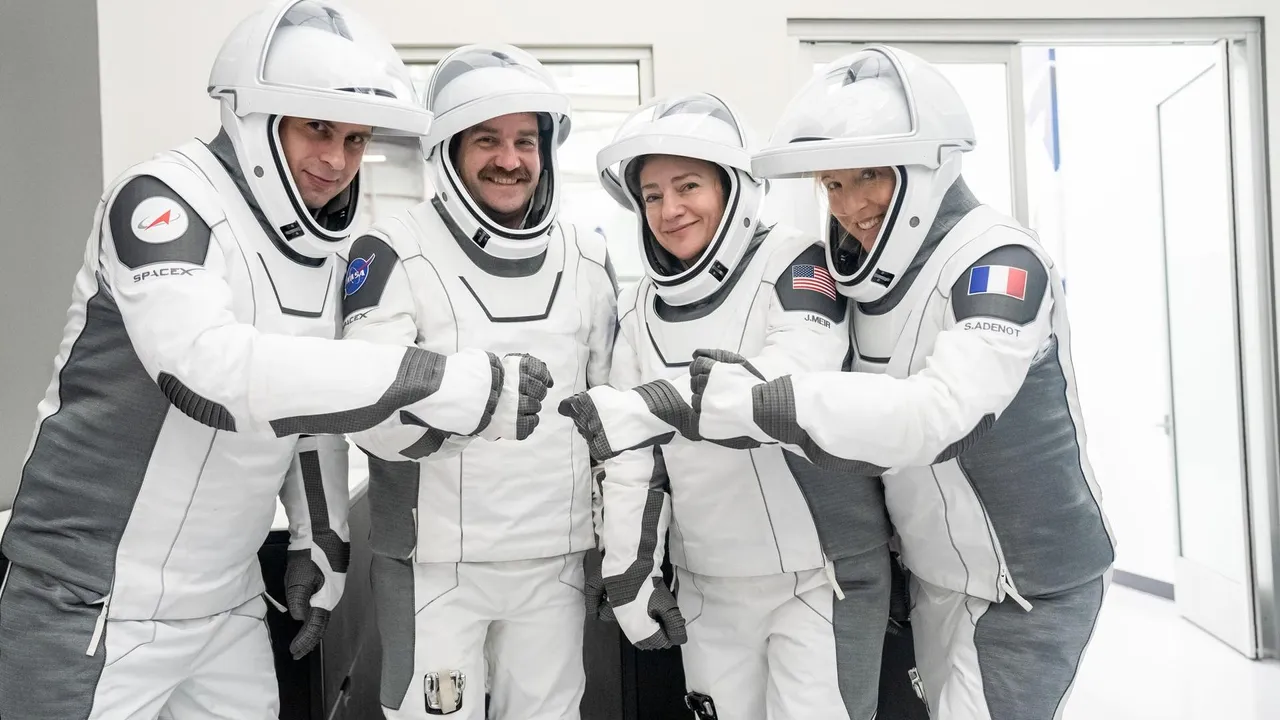
The four members of NASA's SpaceX Crew-12 mission to the International Space Station pose together for a crew portrait inside a SpaceX Dragon spacecraft at SpaceX headquarters in Hawthorne, California. From left are, Roscosmos cosmonaut and Mission Specialist Andrey Fedyaev, NASA astronauts Jack Hathaway and Jessica Meir, Pilot and Commander respectively, and ESA (European Space Agency) astronaut and Mission Specialist Sophie Adenot.
The four members of NASA’s SpaceX Crew-12 mission to the International Space Station pose together for a crew portrait inside a SpaceX Dragon spacecraft at SpaceX headquarters in Hawthorne, California. From left are, Roscosmos cosmonaut and Mission Specialist Andrey Fedyaev, NASA astronauts Jack Hathaway and Jessica Meir, pilot and commander respectively, and ESA (European Space Agency) astronaut and Mission Specialist Sophie Adenot.
SpaceX


Nyt4PaLfrz97rEtdS7WWZg-1280-80.jpg.webp

This advisory was updated Feb. 10, 2026, to reflect changes to NASA’s live launch coverage for the agency’s SpaceX Crew-12 mission. Teams now are targeting launch no earlier than Friday, Feb. 13.
 
Last edited:
Last edited:
To view this content we will need your consent to set third party cookies.
For more detailed information, see our cookies page.

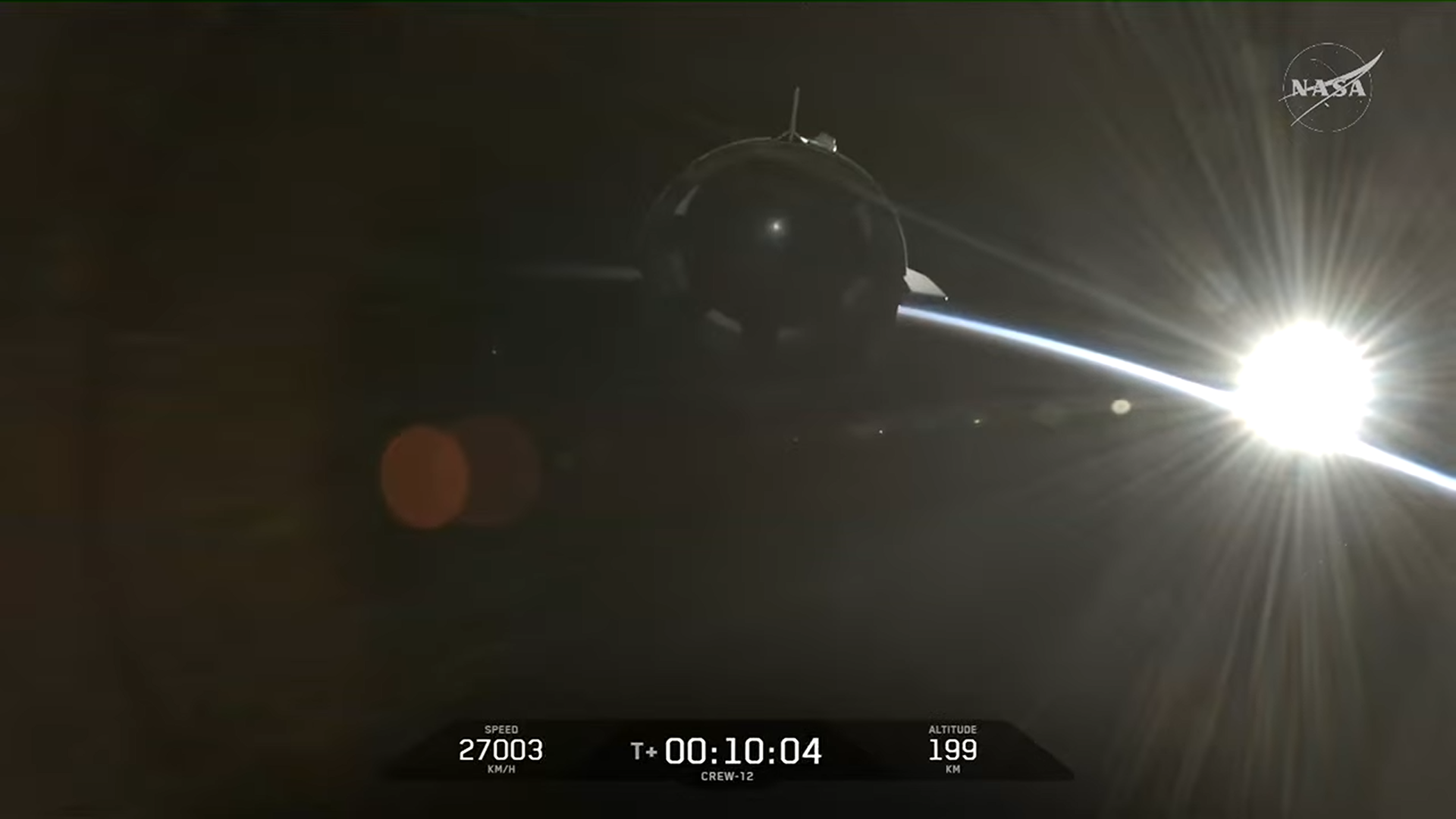
NASA's SpaceX Crew-12 enters space station after docking
 
To view this content we will need your consent to set third party cookies.
For more detailed information, see our cookies page.
 

NASA's Perseverance Mars rover completes its 1st drive planned by AI​


NASA's Perseverance rover has completed its first-ever drive on Mars fully planned by artificial intelligence, the space agency announced.


The demonstration, carried out on Dec. 8 and Dec. 10 of 2025, showed that generative AI could safely plan rover routes across Mars' rugged terrain without manual input, automating a labor-intensive decision-making process typically performed by human planners on Earth.

"This demonstration shows how far our capabilities have advanced and broadens how we will explore other worlds," NASA Administrator Jared Isaacman said in a statement.

Autonomous technologies like this, he added, could help future missions operate more efficiently, respond to hazardous terrain, and "increase science return" as spacecraft venture farther from Earth. "It's a strong example of teams applying new technology carefully and responsibly in real operations."


Because Mars is an average of 140 million miles (225 million kilometers) from Earth, communication delays make real-time control impossible. For decades, mission teams have instead planned daily routes by hand; human "drivers" analyze terrain and rover status data, then map out paths using waypoints typically spaced no more than about 330 feet (100 meters) apart to avoid hazards.

Those plans are sent to Mars via NASA's Deep Space Network, where the rover executes them, according to NASA.

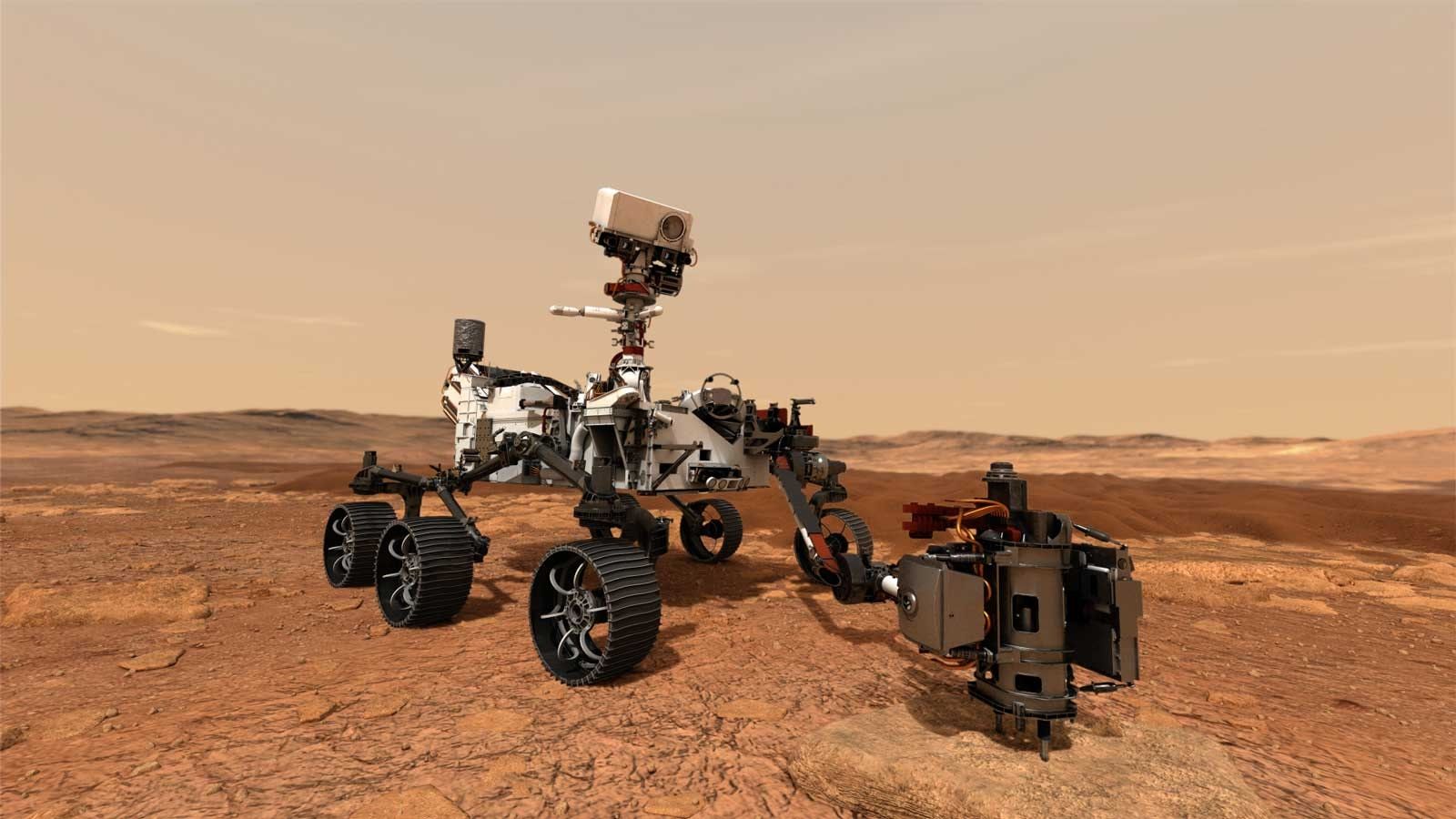
Perseverance's recent AI-driven test drive was led by NASA's Jet Propulsion Laboratory in California, which built and operates the car-sized rover, in collaboration with Anthropic using the company's Claude AI models.

To plan the routes, the AI analyzed the same images and data used by human planners. According to NASA, this included images captured by a camera aboard the agency's Mars Reconnaissance Orbiter as well as terrain-slope data from computer models. From this information, the AI identified key surface features such as rocks, steep slopes and boulder fields, then mapped out a route for the rover to follow.

That route included navigation waypoints, which are fixed surface coordinates that the rover is instructed to reach in sequence. In the video above from the rover's Dec. 10 drive along the rim of Jezero Crater, a waypoint appears as a blue circle. Pale blue lines trace the rover's wheel tracks, while black lines show the alternate route options the rover evaluated, NASA said.

During the two test drives, Perseverance traveled nearly 1,500 feet (456 meters), the space agency said. Before sending commands to Mars, the mission team extensively tested the instructions using a detailed "digital twin" of Perseverance to confirm the rover could safely carry out the plan, according to the statement.

"The fundamental elements of generative AI are showing a lot of promise in streamlining the pillars of autonomous navigation for off-planet driving," Vandi Verma, a space roboticist at JPL and a member of the Perseverance engineering team, said in the statement.

"We are moving towards a day where generative AI and other smart tools will help our surface rovers handle kilometer-scale drives while minimizing operator workload," she added, "and flag interesting surface features for our science team by scouring huge volumes of rover images."

To view this content we will need your consent to set third party cookies.
For more detailed information, see our cookies page.


distance2.png

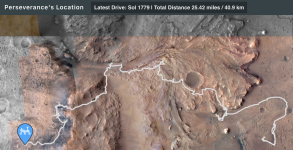
At 25.42 miles the Perserverance rover is approaching the 28.06 mile record set by the Opportunity Rover
 
Last edited:
Major news from NASA this morning:

Artemis 3 will no longer be a moon landing. It will be a low earth orbit mission with Orion docking with one of the landers from SpaceX or Blue Origin. It will also be a test for the new spacesuits. This mission is scheduled for next year 2027.

Artemis 4 will be the moon landing mission scheduled for early 2028. NASA wants to have an SLS turnaround time of 10 months and another moon landing in late 2028 for Artemis 5.
 
Major news from NASA this morning:

Artemis 3 will no longer be a moon landing. It will be a low earth orbit mission with Orion docking with one of the landers from SpaceX or Blue Origin. It will also be a test for the new spacesuits. This mission is scheduled for next year 2027.

Artemis 4 will be the moon landing mission scheduled for early 2028. NASA wants to have an SLS turnaround time of 10 months and another moon landing in late 2028 for Artemis 5.

i hope US can slow down and not rush things just to get 'back' to the moon before China does. Beating China should not be the priority, I have no idea the crazy obsession with CHYNA. I was listening to the interview with the new NASA Administator and boy was he pissed with China.
Just test the spacecraft properly and make sure it is safe.
 

NASA repairs Artemis 2 moon rocket in hopes of an April lunar launch​


NASA has repaired its Artemis 2 rocket, apparently keeping things on track for a possible April launch of the first crewed moon mission in more than 50 years.


Engineers made a fix that aims to restore consistent helium flow to the upper stage of Artemis 2's Space Launch System (SLS) rocket, agency officials announced in an update on Tuesday (March 3).

"Work on the rocket and spacecraft will continue in the coming weeks as NASA prepares for rolling the rocket out to the launch pad again later this month ahead of a potential launch in April," NASA wrote in the update.
 

Vast raises $500 million to keep developing 'Haven' private space stations​


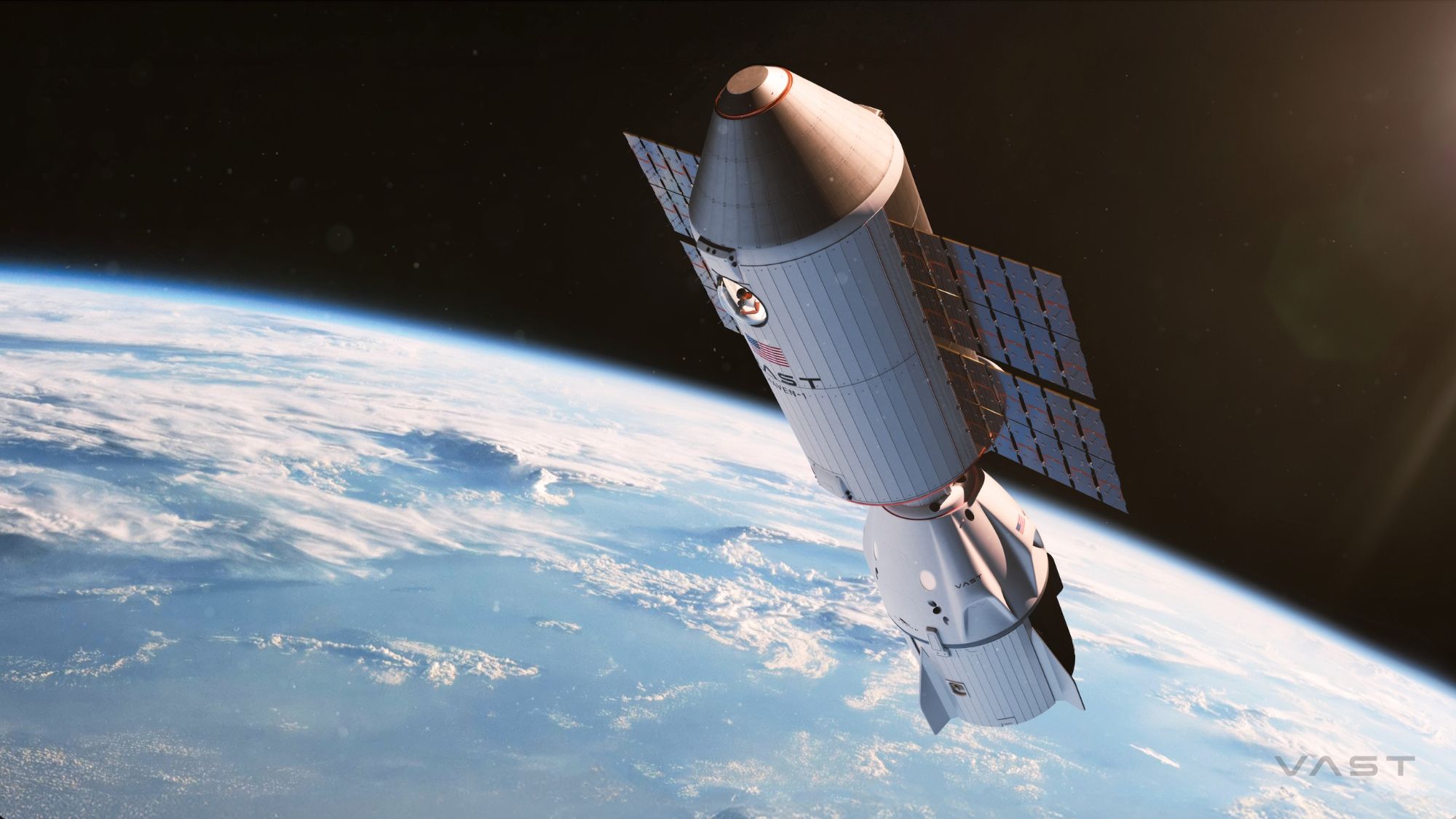
illustration of a small cylindrical space station and a white space capsule docked together in earth orbit
Artist's illustration of Vast's Haven-1 space station in orbit, with a SpaceX Dragon capsule docked to it. (Image credit: Vast)

Vast wants to extend humanity's footprint into the final frontier, and it now has a lot more money to funnel toward that goal.


The California startup, which is developing a line of private space stations called "Haven," announced today (March 5) that it has raised $500 million in new funding.

"This investment underscores the market's strong conviction in both our strategy and our engineering," VAST CEO Max Haot said in a statement. "The low Earth orbit economy is at a pivotal inflection point, poised for rapid growth. Vast's Haven stations are engineered to deliver safe, cost-effective access to microgravity research and in-space manufacturing, empowering government and commercial partners to unlock the full commercial promise of this next era for space."

The financing consists of $300 million in "Series A" equity and $200 million in debt, according to Vast. (Series A funding is the round that follows initial "seed capital.")


"The funds will be used to expand facilities, grow the team, and advance the company's proposed successor to the ISS, Haven-2, designed to ensure continuous human presence in low Earth orbit for the United States and its allies," Vast wrote in the statement.

Balerion Space Ventures led the financing round, with participation from IQT, Qatar Investment Authority, Mitsui & Co. Ltd, MUFG, Nikon Corporation, Stellar Ventures, Space Capital, Earthrise Ventures, and Jed McCaleb, Vast's founder and first investor, according to the statement. A.C. Charania, current Balerion advisor and former NASA chief technologist, will join the Vast board as part of the transaction.

"Vast was founded with a long-term vision of billions of people living and thriving in space. Achieving a goal of this magnitude requires deliberate stepping stones, and our strategy of building, testing and iterating with real hardware is delivering results," McCaleb said in the same statement.

"It is exciting to welcome additional investors who recognize Vast's long-term potential and share our belief in making this vision a reality," he added.

The International Space Station is scheduled to retire at the end of 2030. Vast plans to launch the first Haven-2 module in 2028 and add another module roughly every six months thereafter until 2032.

The company, which was founded in 2021, will get some practice before then: It plans to launch the single-module Haven-1 pathfinder station next year atop a SpaceX Falcon 9 rocket. And NASA recently selected Vast to operate the sixth private astronaut flight to the ISS, which will launch no earlier than summer 2027 and employ SpaceX hardware (a Falcon 9 and a Dragon crew capsule).

Vast has already tested some of Haven-1's key technologies on the uncrewed, 1,100-pound (500-kilogram) Haven-Demo spacecraft, which launched to low Earth orbit this past November.

Vast isn't the only company working to get a private space station up and running in Earth orbit.

For example, Houston-based Axiom Space plans to launch a handful of modules to the ISS beginning in 2027; these modules will then detach and become a free-flying private outpost. Jeff Bezos' Blue Origin and Sierra Space are developing an outpost called Orbital Reef, and a consortium that includes NanoRacks and Voyager Space are working on a different one known as Starlab.
 

Users who are viewing this thread

Back
Top