Navigation
Install the app
How to install the app on iOS
Follow along with the video below to see how to install our site as a web app on your home screen.
Note: This feature may not be available in some browsers.
More options
Style variation
You are using an out of date browser. It may not display this or other websites correctly.
You should upgrade or use an alternative browser.
You should upgrade or use an alternative browser.
National Strategic Command (NSC)
- Thread starter ghazi52
- Start date
More options
Who Replied?


ghazi52
THINK TANK: CONSULTANT
- Thread starter
- #18
General Syed Amir Raza — The New Architect of Pakistan's Strategic Defense
Written by: Syed Hasan Ali
⠀
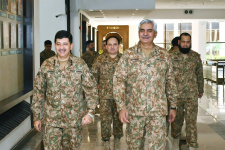
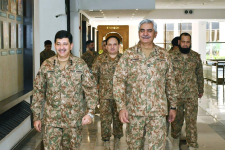
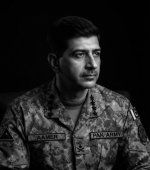
Some appointments in Pakistan’s military history are not just promotions for an officer, but also become declarations of the future direction of defense thinking, command structure, and national security. The elevation of General Syed Amir Raza to the rank of four-star general and his appointment as the country’s first commander of the National Strategic Command is one such decision.
⠀
Prime Minister Muhammad Shehbaz Sharif announced the promotion and appointment of General Amir Raza on July 24, 2026. He was previously serving as the Chief of General Staff of the Pakistan Army, which is considered one of the most important operational and planning positions in the army.
⠀
It is important to clarify the correct official name of the position here. General Amir Raza has not been appointed “Chief of Strategic Command”, but “Commander National Strategic Command”. This is a new four-star position established in Pakistan’s top defense structure, the main purpose of which is to make operational coordination between the strategic capabilities of the land, navy and air forces more effective.
⠀
In other words, this appointment is not just the selection of a new commander, but the beginning of a new era of joint planning, unity of command, and inter-service coordination in Pakistan's defense system.
⠀
A military journey spanning nearly four decades
⠀
General Syed Amir Raza’s military journey began in 1988, when he was commissioned into the Pakistan Army’s prestigious Armoured Regiment 6 Lancers through the Officers Training School. The journey from a young cavalry officer to a four-star general has involved various stages such as the battlefield, military education, defence industry, high-level planning and leadership of large military formations.
⠀
During his career, he commanded 6 Lancers, an Armoured Brigade, an Infantry Brigade in South Waziristan, an Infantry Division and IV Corps in Lahore. He was also Chief of Staff of II Corps and Director General Weapons and Equipment at General Headquarters.
⠀
These responsibilities demonstrate that his experience is not limited to armored warfare. He has seen firsthand various aspects of conventional warfare, counterterrorism, military operations in difficult terrain, formation command, weapons and equipment planning, and high-level military management.
⠀
Leading an infantry brigade in South Waziristan is a particularly important part of his military experience. Giving an armoured officer command of an infantry formation in the tribal region is a sign of the confidence that the military leadership has placed in his professionalism, decision-making and ability to deal with a variety of operational situations.
⠀
In such deployments, conventional combat skills alone are not enough. Intelligence, difficult geography, communication between small units, understanding of local conditions, and rapid decision-making in a changing situation are also essential.
⠀
A commander, a teacher and a military thinker
⠀
A prominent aspect of General Amir Raza's career is his commitment to military education, teaching and ideological work. According to the available professional introduction, he is a graduate of the Command and Staff College Quetta and the National Defense University Islamabad, while he also pursued higher education in international relations at the University of Nottingham.
⠀
He also served as an instructor at the School of Armor and Mechanized Warfare, Director of the Faculty of Research and Doctoral Studies, and Chief Instructor at the Command and Staff College, Quetta.
⠀
These responsibilities not only indicate an officer's academic ability, but also the ability to understand military theories, adapt them to practical needs, develop analytical thinking in officers, and train future commanders.
⠀
This experience is of exceptional importance for leading a new institution like the National Strategic Command. General Amir Raza will not only have to run an existing system, but also consolidate the professional culture of a new headquarters, joint planning procedures, division of responsibilities, training standards, and principles of inter-service cooperation.
⠀
In this sense, his teaching and ideological background positions him not just as a field commander, but also as an effective institution builder.
Written by: Syed Hasan Ali
⠀
Some appointments in Pakistan’s military history are not just promotions for an officer, but also become declarations of the future direction of defense thinking, command structure, and national security. The elevation of General Syed Amir Raza to the rank of four-star general and his appointment as the country’s first commander of the National Strategic Command is one such decision.
⠀
Prime Minister Muhammad Shehbaz Sharif announced the promotion and appointment of General Amir Raza on July 24, 2026. He was previously serving as the Chief of General Staff of the Pakistan Army, which is considered one of the most important operational and planning positions in the army.
⠀
It is important to clarify the correct official name of the position here. General Amir Raza has not been appointed “Chief of Strategic Command”, but “Commander National Strategic Command”. This is a new four-star position established in Pakistan’s top defense structure, the main purpose of which is to make operational coordination between the strategic capabilities of the land, navy and air forces more effective.
⠀
In other words, this appointment is not just the selection of a new commander, but the beginning of a new era of joint planning, unity of command, and inter-service coordination in Pakistan's defense system.
⠀
A military journey spanning nearly four decades
⠀
General Syed Amir Raza’s military journey began in 1988, when he was commissioned into the Pakistan Army’s prestigious Armoured Regiment 6 Lancers through the Officers Training School. The journey from a young cavalry officer to a four-star general has involved various stages such as the battlefield, military education, defence industry, high-level planning and leadership of large military formations.
⠀
During his career, he commanded 6 Lancers, an Armoured Brigade, an Infantry Brigade in South Waziristan, an Infantry Division and IV Corps in Lahore. He was also Chief of Staff of II Corps and Director General Weapons and Equipment at General Headquarters.
⠀
These responsibilities demonstrate that his experience is not limited to armored warfare. He has seen firsthand various aspects of conventional warfare, counterterrorism, military operations in difficult terrain, formation command, weapons and equipment planning, and high-level military management.
⠀
Leading an infantry brigade in South Waziristan is a particularly important part of his military experience. Giving an armoured officer command of an infantry formation in the tribal region is a sign of the confidence that the military leadership has placed in his professionalism, decision-making and ability to deal with a variety of operational situations.
⠀
In such deployments, conventional combat skills alone are not enough. Intelligence, difficult geography, communication between small units, understanding of local conditions, and rapid decision-making in a changing situation are also essential.
⠀
A commander, a teacher and a military thinker
⠀
A prominent aspect of General Amir Raza's career is his commitment to military education, teaching and ideological work. According to the available professional introduction, he is a graduate of the Command and Staff College Quetta and the National Defense University Islamabad, while he also pursued higher education in international relations at the University of Nottingham.
⠀
He also served as an instructor at the School of Armor and Mechanized Warfare, Director of the Faculty of Research and Doctoral Studies, and Chief Instructor at the Command and Staff College, Quetta.
⠀
These responsibilities not only indicate an officer's academic ability, but also the ability to understand military theories, adapt them to practical needs, develop analytical thinking in officers, and train future commanders.
⠀
This experience is of exceptional importance for leading a new institution like the National Strategic Command. General Amir Raza will not only have to run an existing system, but also consolidate the professional culture of a new headquarters, joint planning procedures, division of responsibilities, training standards, and principles of inter-service cooperation.
⠀
In this sense, his teaching and ideological background positions him not just as a field commander, but also as an effective institution builder.
ghazi52
THINK TANK: CONSULTANT
- Thread starter
- #19
Defense industry and self-reliance experience
⠀
Another important stage in General Amir Raza’s professional career was the leadership of Heavy Industries Taxila. He assumed the leadership of this institution on April 28, 2020, and held this position until he was given command of IV Corps in 2023.
⠀
Heavy Industries Taxila is a central organization in Pakistan's defense production, manufacturing of armored vehicles, tanks, combat systems, repairs, upgrades, and indigenous defense technology.
⠀
During his leadership, the organization prioritized defense self-reliance, local production, research and development, modernization of combat vehicles, and cooperation with external technology partners.
⠀
On the occasion of the Golden Jubilee of Heavy Industries Taxila, self-reliance in the defense industry, changing security environment and the productivity of the organization were highlighted. Later, during the visit of the President of Pakistan to HIT, various projects on bulletproofing of military vehicles, protection against explosives, preparation of tank and gun barrels, upgrading of combat vehicles and various local research and development projects were also presented.
⠀
This experience is very relevant to his current responsibility. Strategic defense is not just about having weapons. It requires production, maintenance, modernization, research, secure communications, a trained workforce, and a reliable industrial base.
⠀
General Amir Raza had the opportunity to understand the relationship between military necessity and industrial capacity at a practical level. This understanding could prove valuable for future strategic planning and Pakistan's defense self-reliance.
⠀
Another important stage in General Amir Raza’s professional career was the leadership of Heavy Industries Taxila. He assumed the leadership of this institution on April 28, 2020, and held this position until he was given command of IV Corps in 2023.
⠀
Heavy Industries Taxila is a central organization in Pakistan's defense production, manufacturing of armored vehicles, tanks, combat systems, repairs, upgrades, and indigenous defense technology.
⠀
During his leadership, the organization prioritized defense self-reliance, local production, research and development, modernization of combat vehicles, and cooperation with external technology partners.
⠀
On the occasion of the Golden Jubilee of Heavy Industries Taxila, self-reliance in the defense industry, changing security environment and the productivity of the organization were highlighted. Later, during the visit of the President of Pakistan to HIT, various projects on bulletproofing of military vehicles, protection against explosives, preparation of tank and gun barrels, upgrading of combat vehicles and various local research and development projects were also presented.
⠀
This experience is very relevant to his current responsibility. Strategic defense is not just about having weapons. It requires production, maintenance, modernization, research, secure communications, a trained workforce, and a reliable industrial base.
⠀
General Amir Raza had the opportunity to understand the relationship between military necessity and industrial capacity at a practical level. This understanding could prove valuable for future strategic planning and Pakistan's defense self-reliance.
ghazi52
THINK TANK: CONSULTANT
- Thread starter
- #20
From 4 Corps to Chief of General Staff
⠀
In May 2023, General Amir Raza was appointed commander of IV Corps in Lahore. Corps command is one of the most important operational responsibilities of any military officer's career.
⠀
While in this position, he had the opportunity to oversee the combat readiness of large military formations, training, logistics, inter-service exercises, and security cooperation at the provincial level.
⠀
Practical coordination between the Army, Army Aviation and Pakistan Air Force was demonstrated during field fire and combat exercises near Jhelum in August 2023. On this occasion, the Army Chief was welcomed by General Amir Raza, Commander of IV Corps.
⠀
This experience is directly relevant to his new responsibility, as the success of the National Strategic Command will depend on effective coordination between various forces, weapons, surveillance systems, and operational capabilities.
⠀
He was later appointed as the Chief of General Staff. This is one of the most important operational and planning positions in the Pakistan Army. An officer in this position has a broad overview of military operations, national preparedness, force structure, defense priorities, and high-level decision-making at the General Headquarters.
⠀
According to reports, as Chief of General Staff, General Amir Raza played a key role in the process of organizational changes and the formation of a new defense structure necessitated by the 27th Constitutional Amendment. This reorganization also included the establishment of the Army Rocket Force Command.
⠀
Thus, he not only became the first head of the National Strategic Command, but also remained familiar with the practical steps of the vast defense reorganization that resulted in the creation of this new position.
⠀
In May 2023, General Amir Raza was appointed commander of IV Corps in Lahore. Corps command is one of the most important operational responsibilities of any military officer's career.
⠀
While in this position, he had the opportunity to oversee the combat readiness of large military formations, training, logistics, inter-service exercises, and security cooperation at the provincial level.
⠀
Practical coordination between the Army, Army Aviation and Pakistan Air Force was demonstrated during field fire and combat exercises near Jhelum in August 2023. On this occasion, the Army Chief was welcomed by General Amir Raza, Commander of IV Corps.
⠀
This experience is directly relevant to his new responsibility, as the success of the National Strategic Command will depend on effective coordination between various forces, weapons, surveillance systems, and operational capabilities.
⠀
He was later appointed as the Chief of General Staff. This is one of the most important operational and planning positions in the Pakistan Army. An officer in this position has a broad overview of military operations, national preparedness, force structure, defense priorities, and high-level decision-making at the General Headquarters.
⠀
According to reports, as Chief of General Staff, General Amir Raza played a key role in the process of organizational changes and the formation of a new defense structure necessitated by the 27th Constitutional Amendment. This reorganization also included the establishment of the Army Rocket Force Command.
⠀
Thus, he not only became the first head of the National Strategic Command, but also remained familiar with the practical steps of the vast defense reorganization that resulted in the creation of this new position.
ghazi52
THINK TANK: CONSULTANT
- Thread starter
- #21
What will change the National Strategic Command?
⠀
The 27th Constitutional Amendment brought significant changes to Pakistan's top defense structure. The post of Chairman Joint Chiefs of Staff Committee was abolished and new arrangements for the Chief of Defense Forces and Commander National Strategic Command were introduced.
⠀
According to the constitutional and legal provisions, the Commander of the National Strategic Command is appointed from among the serving generals of the Pakistan Army on the recommendation of the Prime Minister, the Chief of Army Staff, and the Chief of Defense Forces.
⠀
The new command aims to integrate the strategic commands of the land, naval, and air forces under a unified operational system.
⠀
However, the ultimate authority over Pakistan's nuclear policy and the use of strategic weapons remains with the National Command Authority headed by the Prime Minister, while the Strategic Plans Division maintains its status as the central secretariat and coordinating body of the system.
⠀
Thus, the new command provides professional and operational unity, but the collective state system of national policy, political authority, and highly sensitive decisions remains in place.
⠀
This division provides two important advantages to Pakistan's defense system. On the one hand, operational command can be more coherent and effective, while on the other hand, the most important strategic decisions will continue to be made through a regular national and institutional process.
⠀
⠀
The 27th Constitutional Amendment brought significant changes to Pakistan's top defense structure. The post of Chairman Joint Chiefs of Staff Committee was abolished and new arrangements for the Chief of Defense Forces and Commander National Strategic Command were introduced.
⠀
According to the constitutional and legal provisions, the Commander of the National Strategic Command is appointed from among the serving generals of the Pakistan Army on the recommendation of the Prime Minister, the Chief of Army Staff, and the Chief of Defense Forces.
⠀
The new command aims to integrate the strategic commands of the land, naval, and air forces under a unified operational system.
⠀
However, the ultimate authority over Pakistan's nuclear policy and the use of strategic weapons remains with the National Command Authority headed by the Prime Minister, while the Strategic Plans Division maintains its status as the central secretariat and coordinating body of the system.
⠀
Thus, the new command provides professional and operational unity, but the collective state system of national policy, political authority, and highly sensitive decisions remains in place.
⠀
This division provides two important advantages to Pakistan's defense system. On the one hand, operational command can be more coherent and effective, while on the other hand, the most important strategic decisions will continue to be made through a regular national and institutional process.
⠀
ghazi52
THINK TANK: CONSULTANT
- Thread starter
- #22
How will this appointment strengthen Pakistan's defense?
⠀
It would be wrong to limit the impact of General Amir Raza's appointment to the advancement of just one person. This decision provides the basis for making Pakistan's defense more integrated, modern, and agile.
⠀
The first improvement can be found in unity of command and joint planning. Modern warfare is no longer confined to the realm of a single organization: the army, the air force, or the navy.
⠀
Missiles, air defense, naval capabilities, space surveillance, drones, cybersecurity, electronic warfare, intelligence, and secure communications are now deeply interconnected.
⠀
In such an environment, a joint operational headquarters for the strategic capabilities of the three forces can reduce planning gaps, communication bottlenecks, and unnecessary delays.
⠀
The second advantage is the speed and clarity of decision-making. When the strategic commands of different forces operate under a coordinated system, responsibilities, priorities, information exchange, and emergency response procedures can be made clearer.
⠀
Rapid decision-making in a crisis is not just a display of strength. It is also a means of avoiding misunderstandings, unnecessary provocations, conflicting information, and disorganized reactions.
⠀
The third advantage is the better link between conventional and strategic defense. General Amir Raza's professional life has been in conventional military operations, corps command, defense equipment, military education, and high-level planning.
⠀
They are therefore in a position to view strategic capabilities as an integrated national defense structure rather than a sector isolated from the rest of the military system.
⠀
The fourth benefit is to strengthen the link between defense modernization and local industry. His experience in Heavy Industries Taxila and the Weapons and Equipment Directorate makes him well aware of the fact that in times of external pressure, sanctions, or a prolonged crisis, simply purchased weapons are not enough.
⠀
A true defense force is one that is backed by local production, repair, research, training, availability of spare parts, and continuous modernization.
⠀
The fifth benefit is to make Pakistan's credible defensive deterrence more organized. The primary purpose of deterrence is not to wage war, but to convince a potential adversary that Pakistan's defense capability is organized, credible, and ready for immediate response.
⠀
A clear, coherent, and professional command structure can reduce ambiguity about Pakistan's preparedness and defense commitment. Strong and responsible deterrence is also important for regional peace, as it limits the potential for aggressive adventurism.
⠀
The sixth advantage is institutional preparedness for future threats. Areas such as cyberattacks, artificial intelligence, autonomous weapons, unmanned systems, long-range missiles, and space surveillance will be a core part of defense planning in the coming years.
⠀
General Amir Raza's operational, theoretical, and defense industrial experience make him well-suited to unify these diverse fields under a broad defense concept.
⠀
It would be wrong to limit the impact of General Amir Raza's appointment to the advancement of just one person. This decision provides the basis for making Pakistan's defense more integrated, modern, and agile.
⠀
The first improvement can be found in unity of command and joint planning. Modern warfare is no longer confined to the realm of a single organization: the army, the air force, or the navy.
⠀
Missiles, air defense, naval capabilities, space surveillance, drones, cybersecurity, electronic warfare, intelligence, and secure communications are now deeply interconnected.
⠀
In such an environment, a joint operational headquarters for the strategic capabilities of the three forces can reduce planning gaps, communication bottlenecks, and unnecessary delays.
⠀
The second advantage is the speed and clarity of decision-making. When the strategic commands of different forces operate under a coordinated system, responsibilities, priorities, information exchange, and emergency response procedures can be made clearer.
⠀
Rapid decision-making in a crisis is not just a display of strength. It is also a means of avoiding misunderstandings, unnecessary provocations, conflicting information, and disorganized reactions.
⠀
The third advantage is the better link between conventional and strategic defense. General Amir Raza's professional life has been in conventional military operations, corps command, defense equipment, military education, and high-level planning.
⠀
They are therefore in a position to view strategic capabilities as an integrated national defense structure rather than a sector isolated from the rest of the military system.
⠀
The fourth benefit is to strengthen the link between defense modernization and local industry. His experience in Heavy Industries Taxila and the Weapons and Equipment Directorate makes him well aware of the fact that in times of external pressure, sanctions, or a prolonged crisis, simply purchased weapons are not enough.
⠀
A true defense force is one that is backed by local production, repair, research, training, availability of spare parts, and continuous modernization.
⠀
The fifth benefit is to make Pakistan's credible defensive deterrence more organized. The primary purpose of deterrence is not to wage war, but to convince a potential adversary that Pakistan's defense capability is organized, credible, and ready for immediate response.
⠀
A clear, coherent, and professional command structure can reduce ambiguity about Pakistan's preparedness and defense commitment. Strong and responsible deterrence is also important for regional peace, as it limits the potential for aggressive adventurism.
⠀
The sixth advantage is institutional preparedness for future threats. Areas such as cyberattacks, artificial intelligence, autonomous weapons, unmanned systems, long-range missiles, and space surveillance will be a core part of defense planning in the coming years.
⠀
General Amir Raza's operational, theoretical, and defense industrial experience make him well-suited to unify these diverse fields under a broad defense concept.
ghazi52
THINK TANK: CONSULTANT
- Thread starter
- #23
An unconventional but purposeful choice
⠀
According to public records, General Amir Raza has not previously been directly assigned to the Strategic Plans Division, the Army Strategic Forces Command, or the country's strategic missile program. Most of his career has been associated with conventional operations, defense production, force development, teaching, and high-level planning.
⠀
It may seem like an unconventional choice, but this aspect may also be the real wisdom of this appointment.
⠀
Pakistan already has a Strategic Plans Division, technical experts, relevant security agencies, and experienced strategic forces. The new commander's primary responsibility is not to be an individual expert in each technical field, but to integrate the various institutions, forces, and capabilities into an effective operational system.
⠀
This job required an officer who understood field command, had worked on military theories, was familiar with the defense industry, had planned at General Headquarters, and had experience in high-level liaison with the three services.
⠀
⠀
According to public records, General Amir Raza has not previously been directly assigned to the Strategic Plans Division, the Army Strategic Forces Command, or the country's strategic missile program. Most of his career has been associated with conventional operations, defense production, force development, teaching, and high-level planning.
⠀
It may seem like an unconventional choice, but this aspect may also be the real wisdom of this appointment.
⠀
Pakistan already has a Strategic Plans Division, technical experts, relevant security agencies, and experienced strategic forces. The new commander's primary responsibility is not to be an individual expert in each technical field, but to integrate the various institutions, forces, and capabilities into an effective operational system.
⠀
This job required an officer who understood field command, had worked on military theories, was familiar with the defense industry, had planned at General Headquarters, and had experience in high-level liaison with the three services.
⠀
ghazi52
THINK TANK: CONSULTANT
- Thread starter
- #24
General Amir Raza's overall career makes him a comprehensive and all-round officer of this type.
⠀
A notable aspect of his promotion is that at the time of his appointment, he was ranked eighth in the seniority list of Lieutenant Generals.
⠀
This gives the impression that the decision for this new position was not made solely on the basis of formal seniority, but also gave primary importance to relevant experience, institution-building ability, operational understanding, and the trust of the top leadership.
⠀
However, the government has not publicly released detailed internal selection criteria, so this aspect should only be viewed as a reasonable analysis.
⠀
Trust, experience and responsibility for the future
⠀
Pakistan currently faces multiple simultaneous challenges such as conventional warfare, terrorism, missile technology, cyber threats, drones, information warfare, space surveillance, and rapidly changing regional alliances.
⠀
In such circumstances, coordination between defense agencies has become not just an administrative necessity, but a fundamental condition of national security.
⠀
A notable aspect of his promotion is that at the time of his appointment, he was ranked eighth in the seniority list of Lieutenant Generals.
⠀
This gives the impression that the decision for this new position was not made solely on the basis of formal seniority, but also gave primary importance to relevant experience, institution-building ability, operational understanding, and the trust of the top leadership.
⠀
However, the government has not publicly released detailed internal selection criteria, so this aspect should only be viewed as a reasonable analysis.
⠀
Trust, experience and responsibility for the future
⠀
Pakistan currently faces multiple simultaneous challenges such as conventional warfare, terrorism, missile technology, cyber threats, drones, information warfare, space surveillance, and rapidly changing regional alliances.
⠀
In such circumstances, coordination between defense agencies has become not just an administrative necessity, but a fundamental condition of national security.

Hakikat ve Hikmet
VIP Member

It shows the Pak Deep State wants a smooth transition in decision making for the deployment of its strategic assets. Especially now that a "transitional phase" has arrived in the geo-political/strategic/financial/technological etc. arenas one needs to be extremely alert. It's once in a century event by HIS DESIGN. Old guards (aka Sheyatin) are going down for HIS RAHMET wins over HIS AZAB vis-a-vis the Muslims (it's opposite for the Mujrimin)....
Pakistan's area of ops for security is gradually extending to the Arabian Peninsula (aka Muslim heartlands that haven't seen a single day of peace since the collapse of the Ottoman Empire), wishing the general the best of luck. May Allah-u Azimushshan keep his path open....
Pakistan's area of ops for security is gradually extending to the Arabian Peninsula (aka Muslim heartlands that haven't seen a single day of peace since the collapse of the Ottoman Empire), wishing the general the best of luck. May Allah-u Azimushshan keep his path open....
Users who are viewing this thread
Total: 1 (members: 0, guests: 1)
Pakistan Defence Latest
-
KP govt backs out of counterterrorism commitments during talks: Naqvi (17 Viewers)
- Latest: SteppeWolff
-
Lt Gen Wajid Aziz is expected to be appointed as the head/chief of this combined joint intelligence service Umer Cheema (17 Viewers)
- Latest: White Privilege
-
-
-

Country Watch Latest


Latest Posts
-

-

-
-
KP govt backs out of counterterrorism commitments during talks: Naqvi (17 Viewers)
- Latest: SteppeWolff
-