NATO Has A Problem: Eurofighter Typhoon Fighters Were ‘Shot Down’ 9-0 Against China’s J-10C

Beijingwalker

VIP Member
Joined
Nov 4, 2011
Messages
93,384
Reaction score
113,734
Reputation
1,949.6
Country of Origin
Country of Residence

NATO Has A Problem: Eurofighter Typhoon Fighters Were ‘Shot Down’ 9-0 Against China’s J-10C

By Steve Balestrieri
June 2, 2026

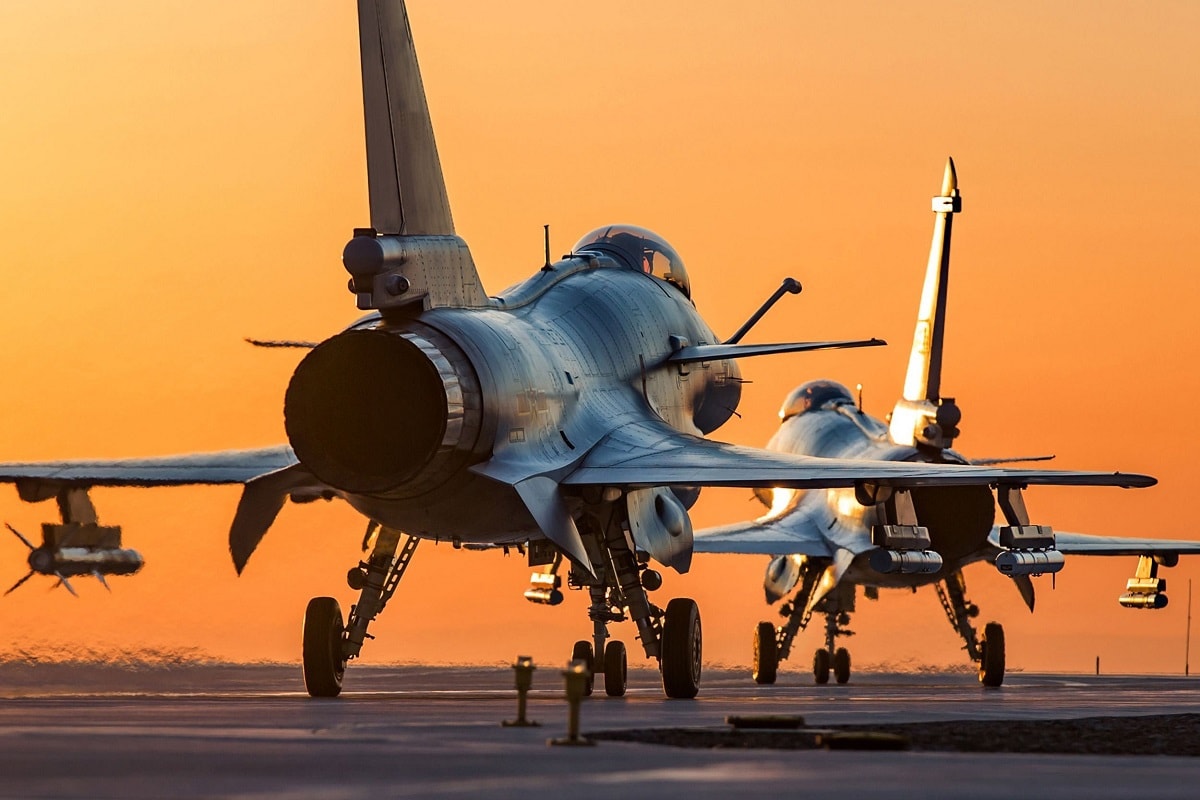
J-10CE Fighter

J-10CE Fighter. Image Credit: Creative Commons.

Summary and Key Points: Chinese state broadcaster CCTV has reported that Pakistan Air Force J-10C fighters posted a perfect 9-0 record against Qatari Eurofighter Typhoons in simulated dogfights and beyond-visual-range engagements during a 2024 joint exercise.

No exercise parameters were released, and the claim comes from Chinese state media — but the reported result has become a propaganda win for China’s aviation industry and a marketing tool as Beijing pushes the J-10C to buyers from Pakistan and Egypt to Iran, which has called it a better aircraft than the F-16.

J-10C vs. Eurofighter Typhoon: Who Wins?

J-10

J-10. Image Credit: Creative Commons.

The Chinese state broadcaster CCTV has published reports that J-10C fighters operated by the Pakistan Air Force won overwhelming victories in simulated air-to-air engagements against Qatar Emiri Air Force Eurofighter Typhoon combat jets in an exercise.

The South China Morning Post reported that during the “Zilzal-II” joint air exercises, Chinese J-10C fighters posted a perfect 9-0 record against Qatari Eurofighter Typhoons in simulated air engagements, both in close-range dogfights and beyond-visual-range (BVR) scenarios.

Media outlets from various Gulf countries confirmed the results of the one-sided aerial engagements that took place in Qatar in 2024.

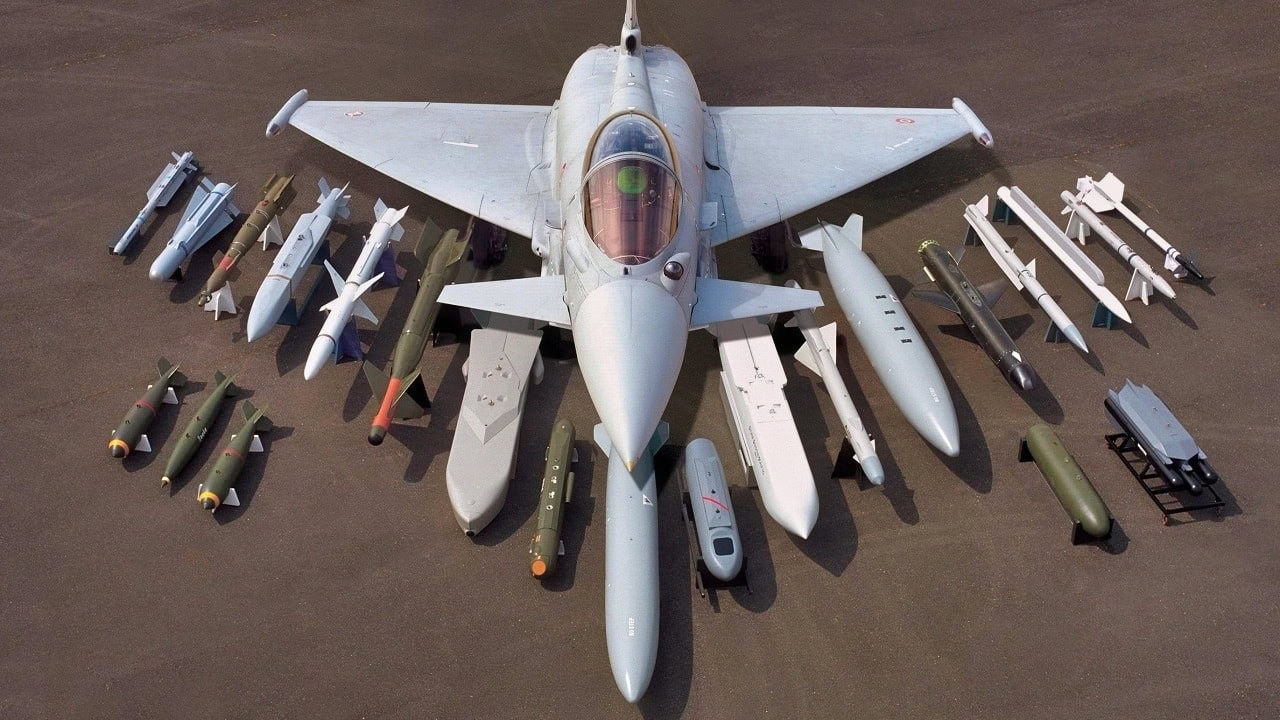
Military Watch Magazine posted that, “Qatar operates some of the world’s few Tranche 3A or Tranche 4 variants, which are significantly more advanced than those fielded by the European partner states that developed the aircraft, and integrate the new Captor-E active electronically scanned array radar.

Eurofighter Typhoon Upgrade

Eurofighter Typhoon Upgrade. Image Credit: Creative Commons.

Despite no exercise parameters being released, this was a huge propaganda win for the Chinese aviation industry and a massive setback for the Eurofighter, which has been steadily losing ground to the US-built F-35 on the continent.

Meet The J-10C “Vigorous Dragon”

The Chengdu J-10C “Vigorous Dragon” (NATO code-named “Firebird”) is a 4.5-generation medium-weight, single-engine, multi-role combat aircraft with a delta-wing design, AESA radar, and a diverse weapons array.

With 11 hardpoints, it carries air-to-air, anti-ship, and air-to-surface missiles, as well as laser-guided bombs. It was designed and built in China.

The J-10C is powered by a WS-10B afterburning turbofan engine, producing roughly 130–144 kN of thrust with afterburner. The engine powers the aircraft to a top speed of Mach 2.0 (1,319 mph at altitude).

The J-10C “Vigorous Dragon” Is Being Vigorously Exported

The Chengdu J-10C is being aggressively exported to the Middle East, with sales to Bangladesh and Pakistan, and Egypt, Saudi Arabia, and Algeria are interested. Iran is also reportedly interested, calling it a rival with better performance than the F-16.

The Iranians Are Interested In “A Better Aircraft Than The F-16”

Iranian Air Force Commander Brigadier General Hamid Vahedi met with his Chinese counterpart, General Chang Dingqiu, to discuss possible areas of cooperation between the two services while discussing the J-10’s capabilities.

Iran has yet to acquire a Chinese combat aircraft, with money likely the driving factor. However, the Iranian Air Force Commander’s inspection of the J-10C had drawn media interest and attendance, which was probably the intent. Although military officers attending observed that the aircraft was a viable option for the Iranian Air Force in terms of capability and price.

A government-controlled Iranian news media outlet called ‘Iran Observer’ wrote on the social media site X: “With a price tag of $40 million, 100 J-10s will cost $4 billion. The J-10s are better than the F-16s in terms of weapons and flight performance.”

China offered it to Brazil, but the Brazilian government declined.

Apparently, China wanted access to the Alcântara Launch Center. But China could have triggered concerns within Brazil’s traditional allies, particularly the United States, given the site’s strategic importance and the implications for regional security dynamics. It should be noted that China’s offer of the J-10CE is not just about exporting fighter jets—it’s about extending its influence into Latin America’s defense sector.

The J-10C’s Capabilities

The J-10CE (export version) integrates advanced avionics, weaponry, and stealth features that mark a significant upgrade over its predecessors in the J-10 family.

At the core of the J-10CE’s design is its aerodynamic configuration, featuring a delta wing and canard layout. This design choice enhances maneuverability and control at high angles of attack, making the aircraft highly agile in dogfights. The airframe incorporates composite materials to reduce weight and radar cross-section, contributing to its semi-stealth capabilities.

It looks remarkably like the F-16, except for the canards. And we all know China’s penchant for industrial appropriation; their espionage is well known and considered a typical modus operandi for them.

At the Zhuhai Air Show in November 2024, China displayed a Chengdu J-10CE fighter jet, marked with tail numbers 74825 and 9001, the latter of which was widely anticipated to join the Pakistan Air Force (PAF) after the exhibition.

The J-10CE model includes additional upgrades, such as a staggered dual-missile pylon system incorporating two short-range missiles, six beyond-visual-range (BVR) missiles, and external drop tanks, thereby expanding its payload and operational range.

The J-10CE has added the KLJ-10 Active Electronically Scanned Array (AESA) radar, which aims to improve detection and targeting in environments with significant jamming interference.

Positioned on the aircraft’s nose, the AESA radar, the Chinese claim, has an approximately 50-kilometer detection range advantage over the F-16C Block 52 radar system, giving the J-10CE the advantage to engage enemy aircraft from a greater distance

The powerplant for the J-10CE was the Russian-made AL-31FN; now, they are transitioning to the domestically produced WS-10B turbofan engine. Both options provide a thrust-to-weight ratio that supports the aircraft’s agility and allows it to easily achieve supersonic speeds of Mach 1.8.


The WS-10B is especially noted for its reliability and performance improvements, including increased thrust and reduced maintenance needs compared to the Russian powerplant.

The J-10C’s Varied Armaments

The 11 external hardpoints allow the aircraft to carry a variety of weapons. Air-to-air missiles include the Chinese-made Python PL-8 and the Russian-made Vympel R-73 or R-77. The J-10 can also carry anti-ship missiles. Plus, air-to-surface missiles and laser-guided bombs.

The J-10C also uses the PL-15 (Thunderbolt-15), an advanced, Chinese active radar-guided, very long-range beyond-visual-range (BVR) air-to-air missile.

Developed by the China Airborne Missile Academy (CAMA), it features a dual-pulse solid-rocket motor and an active electronically scanned array (AESA) radar, enabling it to strike targets at ranges of 200–300 km at speeds exceeding Mach 5.

Airforce-Technology.com wrote, “The aircraft can be fitted with a forward-looking infrared and laser target designator pod, which supports deployment of laser and satellite navigation guided weapons.”

Military aviation analysts believe that, given the success the aircraft had against the Eurofighter Typhoons and the very positive general reviews of the aircraft, it could lead to many countries in Southeast Asia, Central Asia, and the Middle East becoming interested in purchasing the J-10C
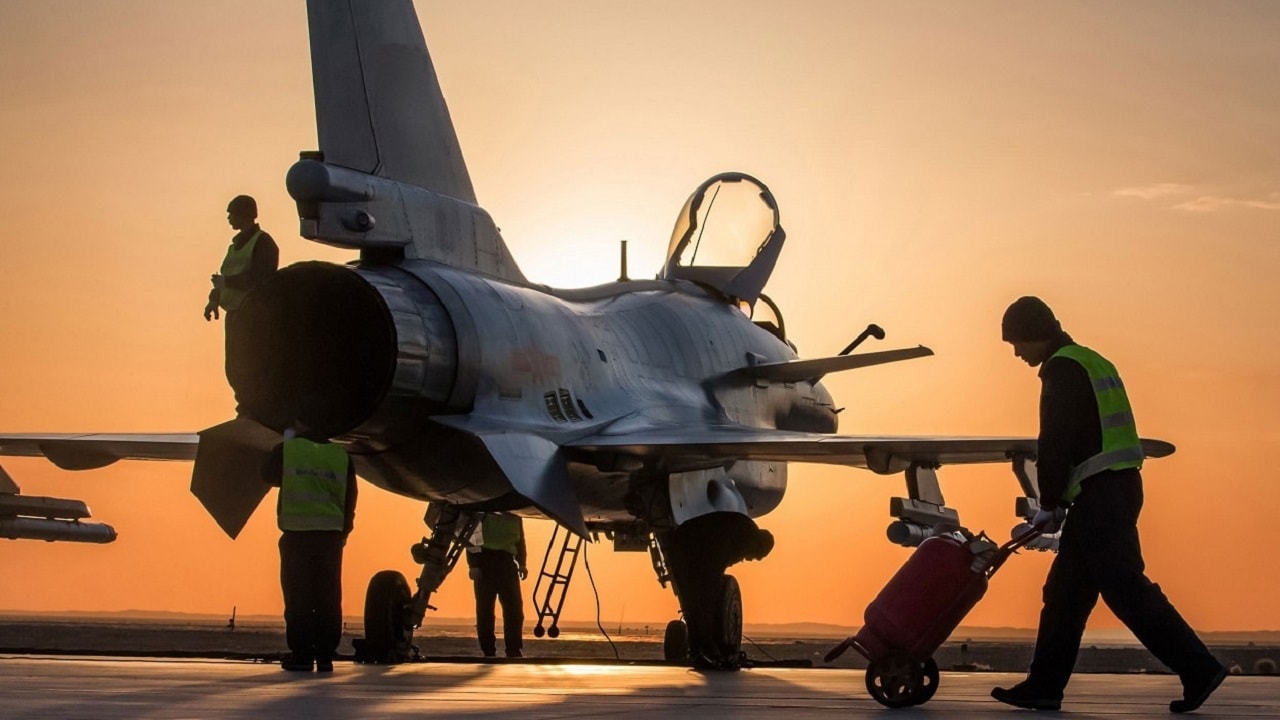
 

A Chinese J-10CE Fighter Went Head-To-Head With A Eurofighter Typhoon For The First Time In History, And It Happened Over Qatar​


Chinese state broadcaster CCTV has confirmed what circulated for months as rumour: J-10CE fighters posted a perfect 9-0 record against Qatari Eurofighter Typhoons during the Zilzal-II exercise in January 2024. Reporting since indicates the J-10CE prevailed in all five close-range dogfights and all four beyond-visual-range engagements.

August 27 2026

Chinese J-10 fighter. Image Credit: Creative Commons.

Chinese J-10 fighter. Image Credit: Creative Commons.

A two-year-old mock dogfight has suddenly become one of the most talked-about stories in military aviation circles this year. Chinese state broadcaster CCTV recently confirmed what had circulated as a rumor for months: that the Chengdu J-10CE, the export version of China’s J-10CE fighter, went a perfect nine-for-nine against Eurofighter Typhoon jets in simulated air combat exercises.

The South China Morning Post reported that during the 2024 “Zilzal-II” joint air exercises, Chinese J-10CE fighters posted a perfect 9-0 record against Qatari Eurofighter Typhoons in simulated air engagements, both in close-range dogfights and beyond-visual-range (BVR) scenarios.

Media outlets from various Gulf countries confirmed the results of the one-sided aerial engagements that took place in Qatar in 2024.

Military Watch Magazine posted that “Qatar operates some of the world’s few Tranche 3A or Tranche 4 variants, which are significantly more advanced than those fielded by the European partner states that developed the aircraft, and integrate the new Captor-E active electronically scanned array radar.

Chinese media left out the specifics, but outlets in Pakistan quickly filled the gaps. Pakistani media reported that the mock battles took place during the “Zilzal-II” joint air exercise in Qatar in January 2024, in which Pakistan’s J-10CE fighters defeated Eurofighter Typhoons belonging to Qatar’s air force.

Multiple outlets have since added texture to the claim, reporting that the J-10CE reportedly prevailed in all five close-range dogfights and all four beyond-visual-range engagements during the exercise

This was a massive setback for the Eurofighter, which has been steadily losing ground in aviation sales to the US-built F-35 on the continent.

Meet The J-10CE “Vigorous Dragon”

The Chengdu J-10CE “Vigorous Dragon” (NATO code-named “Firebird”) is a 4.5-generation medium-weight, single-engine, multi-role combat aircraft with a delta-wing design, AESA radar, and a diverse weapons array.

With 11 hardpoints, it carries air-to-air, anti-ship, and air-to-surface missiles, as well as laser-guided bombs. China designed and built it.

The J-10C is powered by a WS-10B afterburning turbofan engine, producing roughly 130–144 kN of thrust with afterburner. The engine powers the aircraft to a top speed of Mach 2.0 (1,319 mph at altitude).

The Chengdu J-10CE is being aggressively exported to the Middle East and being sold to Bangladesh and Pakistan, with Egypt, Saudi Arabia, and Algeria being interested. Iran is also reportedly interested, calling it a rival with better performance than the F-16.

Iranian Air Force Commander Brigadier General Hamid Vahedi met with his Chinese counterpart, General Chang Dingqiu, to discuss possible areas of cooperation between the two services while discussing the J-10’s capabilities.

A government-controlled Iranian news media outlet called ‘Iran Observer’ wrote on the social media site X: “With a price tag of $40 million, 100 J-10s will cost $4 billion. The J-10s are better than the F-16s in terms of weapons and flight performance.”

China offered it to Brazil, but the Brazilian government declined. It should be noted that China’s offer of the J-10CE is not just about exporting fighter jets—it’s about extending its influence into Latin America’s defense sector.

The J-10CE’s Capabilities

The J-10CE (export version) integrates advanced avionics, weaponry, and stealth features, marking a significant upgrade over its predecessors in the J-10 family.

At the core of the J-10CE’s design is its aerodynamic configuration, featuring a delta wing and canard layout.

This design choice enhances maneuverability and control at high angles of attack, making the aircraft highly agile in dogfights. The airframe incorporates composite materials to reduce weight and radar cross-section, contributing to its semi-stealth capabilities.

It looks remarkably like the F-16, except for the canards. And we all know China’s penchant for industrial appropriation; their espionage is well known and considered a typical modus operandi for them.

The J-10CE has added the KLJ-10 Active Electronically Scanned Array (AESA) radar, which aims to improve detection and targeting in heavily jammed environments.

The J-10CE’s powerplant is the Russian-made AL-31FN; it is now transitioning to the domestically produced WS-10B turbofan engine. Both options provide a thrust-to-weight ratio that supports the aircraft’s agility and allows it to easily achieve supersonic speeds of Mach 1.8.

The WS-10B is especially noted for its reliability and performance improvements, including increased thrust and reduced maintenance needs compared to the Russian powerplant.

The J-10C’s Armaments

With 11 external hardpoints, the aircraft can carry a variety of weapons. Air-to-air missiles include the Chinese-made Python PL-8 and the Russian-made Vympel R-73 or R-77. The J-10 can also carry anti-ship missiles. Plus, air-to-surface missiles and laser-guided bombs.

The J-10C also uses the PL-15 (Thunderbolt-15), an advanced Chinese active-radar-guided, very long-range, beyond-visual-range (BVR) air-to-air missile.

Developed by the China Airborne Missile Academy (CAMA), it features a dual-pulse solid-rocket motor and an active electronically scanned array (AESA) radar, enabling it to strike targets at ranges of 200–300 km at speeds exceeding Mach 5.

Airforce-Technology.com wrote, “The aircraft can be fitted with a forward-looking infrared and laser target designator pod, which supports deployment of laser and satellite navigation guided weapons.”

Military aviation analysts believe that, given the aircraft’s success against the Eurofighter Typhoons and the very positive general reviews, it could lead many countries in Southeast Asia, Central Asia, and the Middle East to become interested in purchasing the J-10C.

Why the Story Is Spreading Now

The exercise itself is old news; it happened in early 2024, but its resurfacing in 2026 has taken on new significance.

China’s defense-industry oversight body formally recognized the achievement as one of its “Top 10 Achievements” for 2025, described the J-10CE as having downed enemy aircraft in actual combat conditions, and asserted that the U.S. Department of Defense had independently verified aspects of the episode.

J-10 Fighter

J-10 Fighter. Image: Creative Commons.

That last claim in particular has not been corroborated by any U.S. government statement and should be treated with skepticism until an official source confirms it.

Reasons for Caution

Several outlets have pushed back hard against treating a 9-0 scoreline as definitive proof of anything.

As one analysis put it, exercises are inherently imperfect measures of real combat capability; they take place in controlled, curated environments, and their scores rarely translate cleanly into real-world performance.

One example of that is the now-famous shootdown of an F-22 Raptor in a controlled exercise.

The same piece notes that the more important question isn’t whether China’s claim is accurate, but what conclusions can reasonably be drawn either way.

There’s also a matter of motive. Qatar’s fleet has reportedly not been a showcase of the type’s best form: one report notes that Qatar has reportedly tried to sell off its Eurofighters only a few years after they arrived.

That detail matters, since a fleet the operating nation is looking to offload isn’t necessarily flown, maintained, or postured the same way a frontline European Eurofighter squadron would be.

China Has Milked The Marketing Angle

Whatever actually happened over Qatari skies in January 2024, China has clearly recognized the propaganda value of the result.

Commentators note China is treating the outcome as a calling card for prospective arms buyers, a challenge aimed squarely at Western, Russian, and European export markets.

That’s consistent with a broader pattern: Chinese and Pakistani state-linked media have also promoted a separate claim that J-10Cs performed well against Rafale fighters, and have highlighted J-16 performance in older joint exercises with Pakistan, all part of a wider effort to market Chinese-made combat aircraft on the international stage.

The Bottom Line: China’s Marketing Is Growing

The headline claim — a clean 9-0 sweep of a respected Western fighter — makes for a striking talking point, and it’s easy to see why it has generated so much attention two years after the fact.

But mock exercises are shaped by rules of engagement, aircraft configurations, pilot experience, and scoring conventions that outsiders rarely get to examine.

Neither Qatar nor the aircraft manufacturers involved have offered an independent account of what happened, and claims of U.S. verification remain unconfirmed.

For now, the story says as much about China’s growing confidence in marketing its defense exports as it does about any settled judgment on how the J-10C stacks up against the Eurofighter in a real fight.

 
The J-10C is a beast. PAF proved it against the Indian Rafale.

Only a fool would today deny the capabilities of the J-10C.
 
Still never expected that Eurofighter Typhoons are such lousy machines.

maxresdefault.jpg
 
The J-10C is a beast. PAF proved it against the Indian Rafale.

Only a fool would today deny the capabilities of the J-10C.
But all the publicity for J10 has taken away sales from the JF-17, a more affordable and appropriate plane for most Global south air forces.
 
But all the publicity for J10 has taken away sales from the JF-17, a more affordable and appropriate plane for most Global south air forces.

The J-10C was always the more potent platform. The JF-17 Block 3 is a very good bang for buck fighter, but the J-10 is simply a tier higher.
 
But all the publicity for J10 has taken away sales from the JF-17, a more affordable and appropriate plane for most Global south air forces.
Use more JF-17 jets when you beat IAF for fun next time.
 
We should not underestimate China's rise as a technological powerhouse. China has worked tirelessly to reach this stage.

We should not overestimate a military that has not been tested in combat either in quite some time - lets get some real perspective and context here.
 
We should not overestimate a military that has not been tested in combat either in quite some time - lets get some real perspective and context here.

The Chinese made J-10C has proved it can defeat Western elite fighters.
 

Users who are viewing this thread

Pakistan Defence Latest

Back
Top