Navigation
Install the app
How to install the app on iOS
Follow along with the video below to see how to install our site as a web app on your home screen.
Note: This feature may not be available in some browsers.
More options
Style variation
You are using an out of date browser. It may not display this or other websites correctly.
You should upgrade or use an alternative browser.
You should upgrade or use an alternative browser.
New record: China wins 90% of global shipbuilding orders in August
- Thread starter Beijingwalker
- Start date
More options
Who Replied?

ety
Trusted Member

That amounts to highway robbery. China should charge fees for US made airplanes coming to China.China shipyard orders strong despite US port fees on China vessels, report says
By Lisa Baertlein
September 26, 20254:45 AM GMT+8
Starting October 14, ships built in China - or operated or owned by Chinese entities - will need to pay a fee at their first port of call in the United States.
That fee could top $1 million for a ship carrying more than 10,000 containers and is slated to rise annually through 2028, according to analyst estimates.

Beijingwalker
VIP Member
- Thread starter
- #18
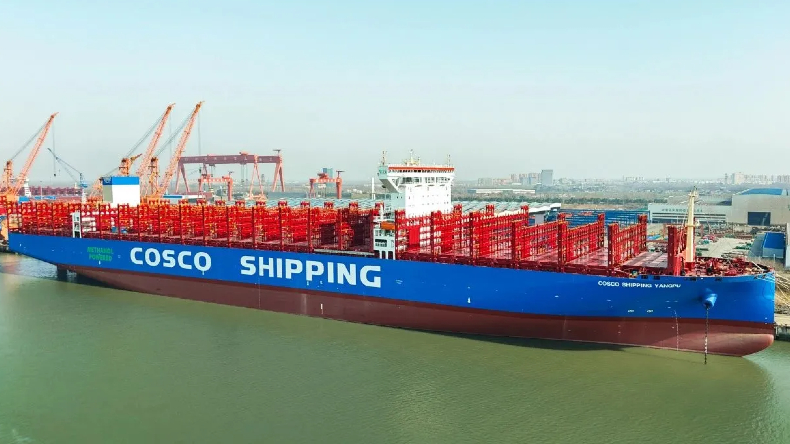
China secures 75% of third-quarter newbuild orders
- China’s shipbuilding industry regained dominance in 3Q25 after losing market share in 2Q25
- This rebound followed a dip due to US trade policy concerns
- Containership orders were strong but bulker and tanker orders were sharply down on last year’s levels
- 26 Sep 2025
Beijingwalker
VIP Member
- Thread starter
- #19
Beijingwalker
VIP Member
- Thread starter
- #20
China Leads Global Shipbuilding with Record Output
October 17, 2025
China has maintained its dominant position in the global shipbuilding industry across all major metrics, output, new orders, and backlog, during the first three quarters of 2025, according to the Ministry of Industry and Information Technology (MIIT).
From January to September 2025, the country’s completed shipbuilding output rose 6 per cent year-on-year to 38.53 million deadweight tons (DWT). Meanwhile, new orders reached 66.6 million DWT, and the order backlog climbed 25.3 per cent to 242.24 million DWT by the end of September.
China’s global market share remained unmatched, accounting for 53.8% of total completed output, 67.3% of new orders, and 65.2% of order backlog. When measured in compensated gross tonnage (CGT), its shares stood at 47.3%, 63.5%, and 58.6%, respectively.
The China Association of the National Shipbuilding Industry (CANSI) reported that the ongoing 14th Five-Year Plan (2021–2025) has driven sustained growth across all indicators, with the sector achieving major milestones, including the delivery of high-end vessels such as 300,000-ton very large crude carriers (VLCCs), dual-fuel car carriers, and China’s first domestically built large cruise ship, Adora Magic City. Construction of the second large cruise ship at Shanghai Waigaoqiao Shipbuilding is now 85 per cent complete.
The sector’s profitability has also reached new highs, with leading shipbuilders recording a 9.71 per cent profit margin as of June 2025, the highest ever.
With innovation, quality, and profitability rising in tandem, China’s shipbuilding industry is not just leading the world in volume, it’s redefining global standards in maritime engineering.

China Leads Global Shipbuilding with Record Output - The Daily CPEC
China has maintained its dominant position in the global shipbuilding industry across all major metrics, output, new orders, and backlog, during the first three quarters of 2025, according to the Ministry of Industry and Information Technology (MIIT). From January to September 2025, the...
 thedailycpec.com
huanghong
Registered Member

This is normal. For shipping companies, China provides times more transportation business than the United States. Unless they are crazy, they will continue ordering Chinese transport ships.
Beijingwalker
VIP Member
- Thread starter
- #22
South Korea shipbuilders capture 18% of October orders as China leads with 73%
By Lee In-ahPublished 2025.11.07. 10:54
The downturn in the global shipbuilding market is lengthening. Last month, global ship orders fell by nearly 40% from a year earlier. Korean shipbuilders’ order share was only 18%.
According to Clarksons Research on the 7th, global ship orders in October were 2.91 million CGT (compensated gross tonnage), totaling 118 ships. This is down 38% from a year earlier (4.71 million CGT) and down 33% from the previous month (4.37 million CGT).
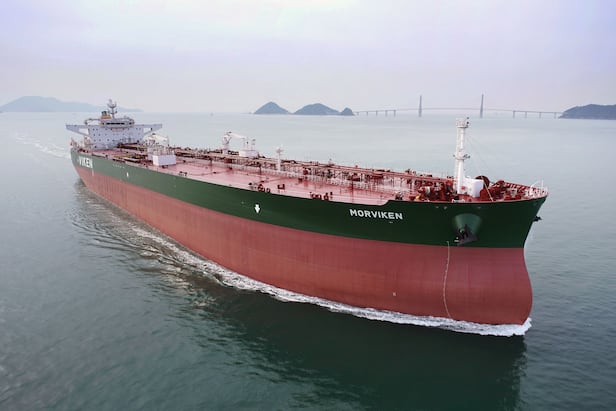
An S-MAX crude oil carrier built by Samsung Heavy Industries. /Courtesy of Samsung Heavy Industries
Of that, Korean shipbuilders won 520,000 CGT (nine ships), for an 18% share. China’s share was 73% with 2.13 million CGT (98 ships).
Cumulative global orders this year through October were 37.89 million CGT (1,392 ships), down 43% from 66.49 million CGT (2,768 ships) a year earlier.
Of that, domestic shipbuilders accounted for 8.06 million CGT (182 ships), or a 21% share. China’s share was 59% (22.39 million CGT, 895 ships).
As of the end of October, the global order backlog was 167.79 million CGT. Korea held 34.28 million CGT (20%), up 500,000 CGT from the previous month, while China held 101.96 million CGT (61%), down 630,000 CGT. Compared with the same period last year, Korea fell by 3.46 million CGT and China rose by 8.24 million CGT.

South Korea shipbuilders capture 18% of October orders as China leads with 73%
South Korea shipbuilders capture 18% of October orders as China leads with 73%
 biz.chosun.com
Beijingwalker
VIP Member
- Thread starter
- #23
2025 Global Shipbuilding Report: China Maintains No.1 Position with 63% Market Share Despite Annual Order Decline
01/08/2026In 2025, global new shipbuilding orders saw an overall decline, but the order data in December showed a month-on-month and year-on-year increase, the first time this has happened in 2025. Chinese shipyards continued to dominate the market with 223 newbuildings.
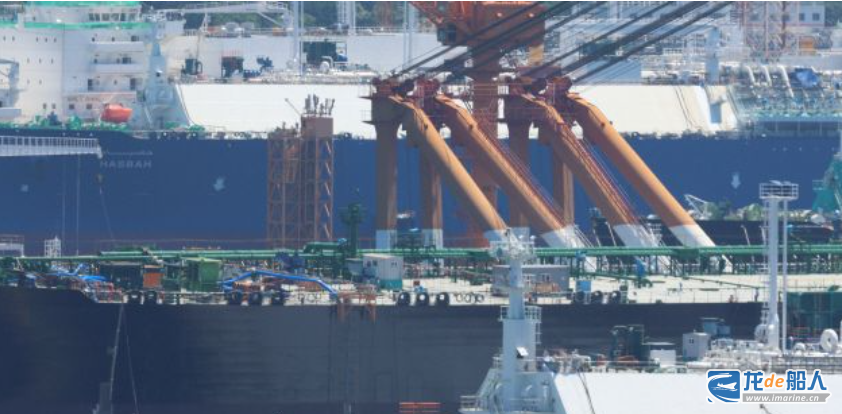
According to Clarksons data released on January 7, 2026, global new ship orders in December 2025 totaled 8.09 million compensated gross tonnages (CGT, 264 vessels). Measured in CGT, this represents a 69% increase compared to the same period last year (4.79 million CGT) and a 23% rise month-on-month (6.59 million CGT).
By country, Chinese shipyards received new orders totaling 5.71 million CGT (223 vessels), securing a 71% market share and maintaining their leading position. South Korean shipyards received new orders totaling 1.47 million CGT (23 vessels), with a market share of 18%, ranking second. Compared to the data from November 2025, China’s market share increased from 50% to 71%, while South Korea’s market share dropped from 38% to 18%. The market share difference between Chinese and South Korean shipyards surged from 12% to 53%, reflecting the strong market competitiveness of Chinese shipbuilders.
Data shows that from January to December 2025, the total number of global new shipbuilding orders was 56.43 million CGT (2,036 vessels), a decrease of approximately 27% compared to the same period last year (76.78 million CGT, 3,235 vessels). During this period, Chinese shipyards received orders totaling 35.37 million CGT (1,421 vessels), accounting for a 63% market share. This represents a 35% decrease in order volume compared to the previous year (54.24 million CGT, 2,261 vessels), placing China first. South Korean shipyards received orders totaling 11.60 million CGT (247 vessels), accounting for a 21% market share, an increase of approximately 8% compared to the previous year (10.78 million CGT, 254 vessels), ranking them second.
Global shipbuilding order backlogs are showing an upward trend. As of the end of December 2025, the global backlog of newbuilding orders totaled 173.91 million CGT, an increase of 3.12 million CGT compared to the previous month. By country, Chinese shipyards held 107.48 million CGT in orders, an increase of 10.01 million CGT compared to the same period last year and a month-on-month increase of 1.91 million CGT, maintaining their leading market share of 62%. South Korean shipyards held 35.12 million CGT in orders, a decrease of 2.45 million CGT compared to the same period last year but a month-on-month increase of 1.21 million CGT, securing the second position with a market share of 20%.
Throughout 2025, based on monthly data, Chinese shipbuilders topped the rankings for 10 months: February, April, May, June, July, August, September, October, November, and December, securing the monthly championship for nine consecutive months. South Korean shipbuilders led for two months: January and March. Notably, December 2025 marked the first instance of year-on-year growth for the entire year, as well as the first month to demonstrate both year-on-year and month-on-month growth.
As of the end of December 2025, the Clarkson Newbuilding Price Index stood at 184.65, marking a slight increase of 0.32 points from the previous month (184.33) and maintaining overall stability. Compared to the level recorded in December 2020, the index has risen by 47%, indicating a sustained upward trend in ship prices.
By vessel type, the newbuilding price for a 174,000 m³ liquefied natural gas (LNG) carrier is approximately $248 million; for a very large crude carrier (VLCC), it is approximately $128 million; and for a very large container ship (22,000 TEU–24,000 TEU), it is approximately $262 million.
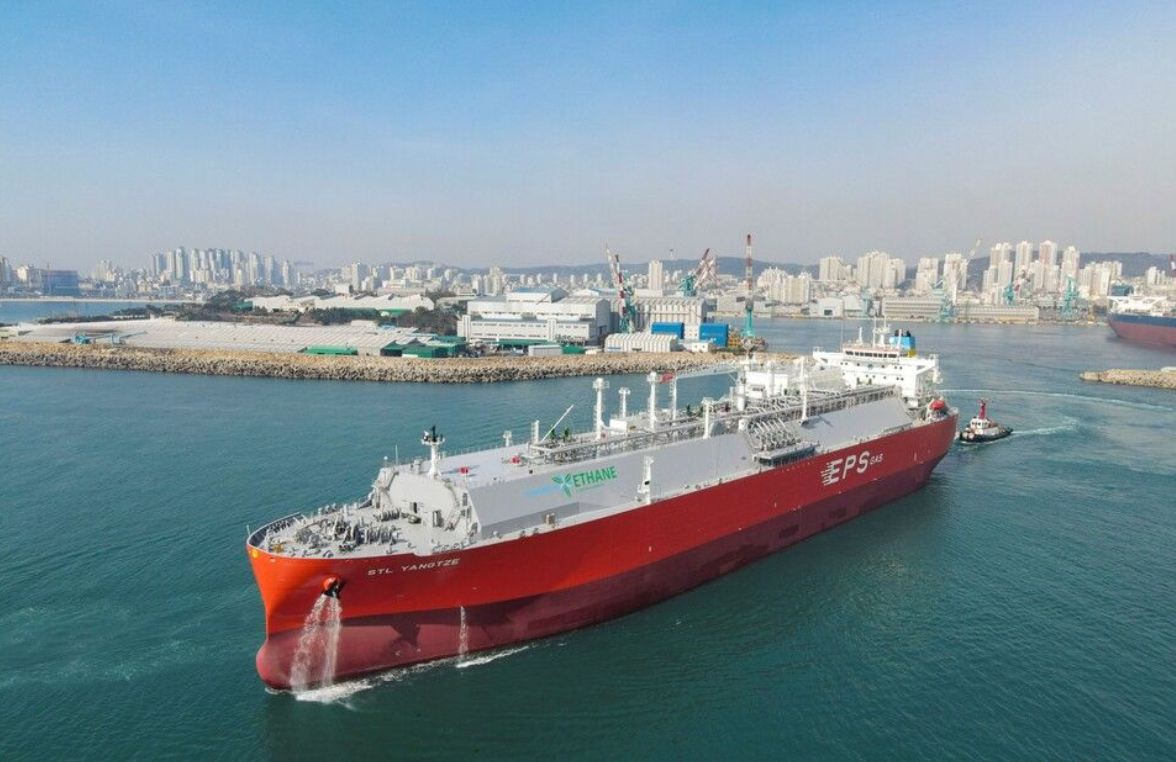
2025 Annual Data Review:
- In January, global new ship orders totaled 1.46 million CGT (51 vessels), marking a 74% year-on-year decline.
- In February, global new ship orders totaled 2.07 million CGT (50 vessels), marking a 56% year-on-year decline from 5.41 million CGT and a 16% month-on-month increase from 1.78 million CGT.
- In March, global new ship orders totaled 1.5 million CGT (58 vessels), down 4% year-on-year (2.597 million CGT) and down 27% month-on-month (2.07 million CGT).
- In April, global new ship orders totaled 3.64 million CGT (75 vessels), marking a 56% year-on-year decline from 8.36 million CGT and an 82% month-on-month increase from 2.00 million CGT.
- In May, global new ship orders totaled 1.66 million CGT (71 vessels), marking a 55% year-on-year decline from 3.66 million CGT and a 64% month-on-month decrease from 4.60 million CGT.
- In June, global new ship orders totaled 2.56 million CGT (84 vessels), marking an 81% year-on-year decline from 13.26 million CGT and a 44% month-on-month increase from 1.78 million CGT.
- In July, global new ship orders totaled 2.03 million CGT (58 vessels), marking a 58% year-on-year decline from 4.87 million CGT and a 43% month-on-month decrease from 3.54 million CGT.
- In August, global new ship orders totaled 2.44 million CGT (82 vessels), marking a 65% year-on-year decline from 6.93 million CGT and an 18% decrease from the previous month.
- In September, global new ship orders totaled 3.5 million CGT (123 vessels), marking a sharp 44% year-on-year decline from 6.29 million CGT and a 3% month-on-month decrease.
- In October, global new ship orders totaled 2.91 million CGT (118 vessels), marking a 38% year-on-year decline from 4.71 million CGT and a 33% month-on-month decrease from 4.37 million CGT.
- In November, global new ship orders totaled 5.13 million CGT (152 vessels), marking a slight 1% year-on-year decrease from 5.17 million CGT and a 72% month-on-month increase from 2.99 million CGT.
- In December, global new ship orders totaled 8.09 million CGT (264 vessels), marking a 69% increase year-on-year (4.79 million CGT) and a 23% rise month-on-month (6.59 million CGT).
2025 Global Shipbuilding Report: China Maintains No.1 Position with 63% Market Share Despite Annual Order Decline - iMarine
2025 Global Shipbuilding Report: China Maintains No.1 Position with 63% Market Share Despite Annual Order Decline
 www.imarinenews.com

FuturePAF
THINK TANK: CONSULTANT

Beyond shipbuilding, China should consider gaining a greater share of the global shipping industry. Per google, the fastest growth is expected in the North Africa -Asia route, as well as in Latin America. Vertical integration.
Beijingwalker
VIP Member
- Thread starter
- #25
Beyond shipbuilding, China should consider gaining a greater share of the global shipping industry. Per google, the fastest growth is expected in the North Africa -Asia route, as well as in Latin America. Vertical integration.
View attachment 170778
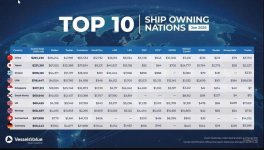
Top 10 Shipowning Nations by Total Asset Value for 2025
ChineseTiger1986
Trusted Member
In ten years, China's navy will dominate the seas and the US navy will be a huge rusting hulk. The US has no industrial capacity to remotely compete with the Chinese behemoth.
During the wartime, China can quickly convert so many cargo ships into missile battleships.
The USN did use the same strategy during the WWII by overwhelming the Japanese navy by converting more then hundred cargo ships into temporary aircraft carriers.
Beijingwalker
VIP Member
- Thread starter
- #27

March 21, 2026 at 7:21 AM GMT+8
China's Second Domestically Built Cruise Ship, Adora Flower City, Floated Out
China advances its domestic cruise industry with the float-out of the Adora Flower City
China marked the next milestone in its efforts at expanding the domestic cruise industry with the float-out of its second large domestically built cruise ship. Built for China's Adora Cruises, the ship will enter service this year.An enlarged and upgraded design
The second cruise ship, named Adora Flower City, is an enlarged version of the first domestically built ship, which was based on a design developed by Carnival Corporation and Fincantieri. The Adora Flower City will be 141,900 gross tons when completed, with a length of 341 meters, compared to the first cruise ship, Adora Magic City, which is 136,200 gross tons with a length of 324 meters.The extra length permitted an increase in the number of passenger cabins to 2,130 and a redesign of the cabins. The central atrium was doubled in size and public spaces were redesigned. The ship will feature 26 restaurants and bars, a theater, a gym/spa, an enlarged shopping mall, and children's spaces. Adora says it is a comprehensive upgrade from the first ship, both in space and technology, including interactive technology in the cabins. The design features a flower theme, and the company reports it increased the essence of Chinese culture and the Chinese cruise experience aboard.
Future orders and construction details
The company also entered into a memorandum of understanding with China State Shipbuilding Corporation for the design and construction of two additional cruise ships and an option for a third newbuild. CSSC's Shanghai Waigaoqiao Shipbuilding built the company's first two cruise ships. It said the new ships will be a Chinese design with the goal of delivering the first ship by 2030.The Adora Flower City is reported to be 95 percent complete. It was floated on March 14 and moved to the outfitting berth. CSSC highlights the complexity of the construction, noting the ship has over 4,700 kilometers of cabling, nearly 40,000 square meters of public space, and thousands of systems.
Construction for the second cruise ship began in August 2022. CSSC highlights that it shortened the construction period by eight months compared to Adora Magic City, with efficiency improved by more than 20 percent.
Upcoming schedule and operations
The new ship is scheduled to start sea trials in May. It will be delivered in late 2026 and will homeport at the Guangzhou Nansha International Cruise Home Port in southern China. The company reports the new ships will permit it to continue to plan its overseas homeport operations and accelerate the pace of Chinese cruise expansion to international markets.
Adora Flower City: China's New Domestic Cruise Ship Advances Industry - News and Statistics - IndexBox
China's Adora Flower City cruise ship floated out, set to enter service this year
 www.indexbox.io
Beijingwalker
VIP Member
- Thread starter
- #28
China's second domestically built large cruise ship undocked in Shanghai
Mar 20, 2026
China's second domestically built large cruise ship was undocked in Shanghai on Friday and has now moved into dockside testing
With a gross tonnage of over 140,000, 2,130 cabins and capacity for more than 5,200 passengers, it will sail international routes from Nansha, Guangzhou, capital of south China's Guangdong Province.
Sea trials are set for late May, with delivery expected by year-end.
Beijingwalker
VIP Member
- Thread starter
- #29
Adora Cruises Expands Its Fleet with Adora Flora City, China’s Sleek New Mega Ship Aiming to Redefine the Cruise Experience Worldwide
Published on March 21, 2026
Image generated with Ai
Adora Cruises has taken a major step in transforming the cruise industry with the float-out of its newest vessel, the Adora Flora City, at Shanghai Waigaoqiao Shipyard. Designed as a sleek, flower-themed mega ship, it features 2,130 cabins, space for over 5,200 passengers, advanced AI-driven systems, and culturally inspired amenities, all aimed at delivering a next-level cruise experience. By expanding its fleet with this state-of-the-art vessel, the company is positioning itself to offer luxurious, immersive voyages that combine modern technology with Chinese cultural elements, setting a new benchmark for cruise travel both domestically and internationally.
The float-out phase is a defining moment in shipbuilding, as it confirms that the core framework of the vessel is complete and seaworthy. From here, the focus shifts to transforming the ship into a fully operational floating resort. The Adora Flora City will now undergo extensive interior construction, where thousands of workers will fit out cabins, entertainment zones, dining areas, and leisure facilities. At the same time, complex onboard systems will be installed and tested to ensure safety, performance, and operational efficiency.
Delivery of the ship is scheduled before the close of the year. Once ready, it will begin its journey in the global cruise market with international sailings departing from Guangzhou. This planned deployment highlights Guangzhou’s growing importance as a major cruise gateway, connecting China to key destinations across Asia and beyond while supporting the region’s tourism growth.
The Adora Flora City stands as a symbol of China’s rising strength in cruise ship construction. As the second large-scale, modern cruise vessel built domestically, it follows the earlier debut of the Adora Magic City. Together, these ships represent a new era for the country’s shipbuilding industry, showcasing its ability to produce sophisticated cruise liners that meet international standards. This progress also signals a strategic shift towards self-reliance and global competitiveness in the cruise sector.
Compared to its sister ship, the Flora City introduces noticeable improvements in both scale and design. The vessel is 17.4 metres longer, offering expanded capacity and enhanced comfort. It houses 2,130 cabins and can accommodate up to 5,232 passengers, making it one of the largest cruise ships built in China. The additional space allows for broader walkways, larger gathering areas, and more diverse onboard attractions, all designed to elevate the passenger experience.
A standout feature of the Adora Flora City is its distinctive floral theme, which sets the tone for the entire onboard environment. The ship is designed to celebrate the beauty of flowers, with artistic elements woven into its interiors, entertainment, and dining concepts. This theme not only enhances visual appeal but also creates a calm and immersive atmosphere for travellers.
Beyond aesthetics, the ship will integrate elements of Chinese culture into its core experience. From cuisine inspired by regional flavours to performances that reflect traditional art and storytelling, passengers will encounter a unique blend of heritage and modern luxury. This cultural integration aims to offer more than just a holiday, turning each voyage into an enriching journey.
Technology is another key highlight of the Adora Flora City. The vessel will feature next-generation smart systems and artificial intelligence to streamline onboard operations and improve guest convenience. These innovations are expected to enhance everything from check-in procedures to in-room services, creating a seamless and personalised travel experience. Smart navigation tools, automated services, and digital connectivity will help redefine how passengers interact with the ship.
The design of the vessel also focuses on comfort and efficiency. With a sleeker profile and upgraded infrastructure, the Adora Flora City promises smoother sailing and better use of space. Public areas have been expanded to include larger lounges, entertainment venues, and relaxation zones, ensuring that guests have ample room to unwind and enjoy their journey.
As Adora Cruises continues to expand its fleet, the addition of the Flora City reflects a long-term vision of growth and innovation. The company is working to strengthen its presence in the global cruise industry by offering high-quality travel experiences that combine modern design with cultural depth. This approach is expected to attract a wide range of travellers, from domestic tourists to international visitors seeking new and unique cruise experiences.
The new Adora Flora City joins Adora Cruises’ fleet, combining luxury, smart technology, and Chinese-inspired design to set a new standard for cruise travel globally.
The progress of the Adora Flora City is more than just the launch of another ship. It represents a turning point for China’s cruise ambitions, demonstrating the country’s ability to compete on a global stage. As the vessel moves towards completion, it is set to play a key role in shaping the future of cruise travel, offering a new standard of comfort, technology, and cultural richness.

Adora Cruises Expands Its Fleet with Adora Flora City, China’s Sleek New Mega Ship Aiming to Redefine the Cruise Experience Worldwide - Travel And Tour World
Adora Cruises has taken a major step in transforming the cruise industry with the float-out of its newest vessel, the Adora Flora City, at Shanghai Waigaoqiao Shipyard.
 www.travelandtourworld.com
Beijingwalker
VIP Member
- Thread starter
- #30
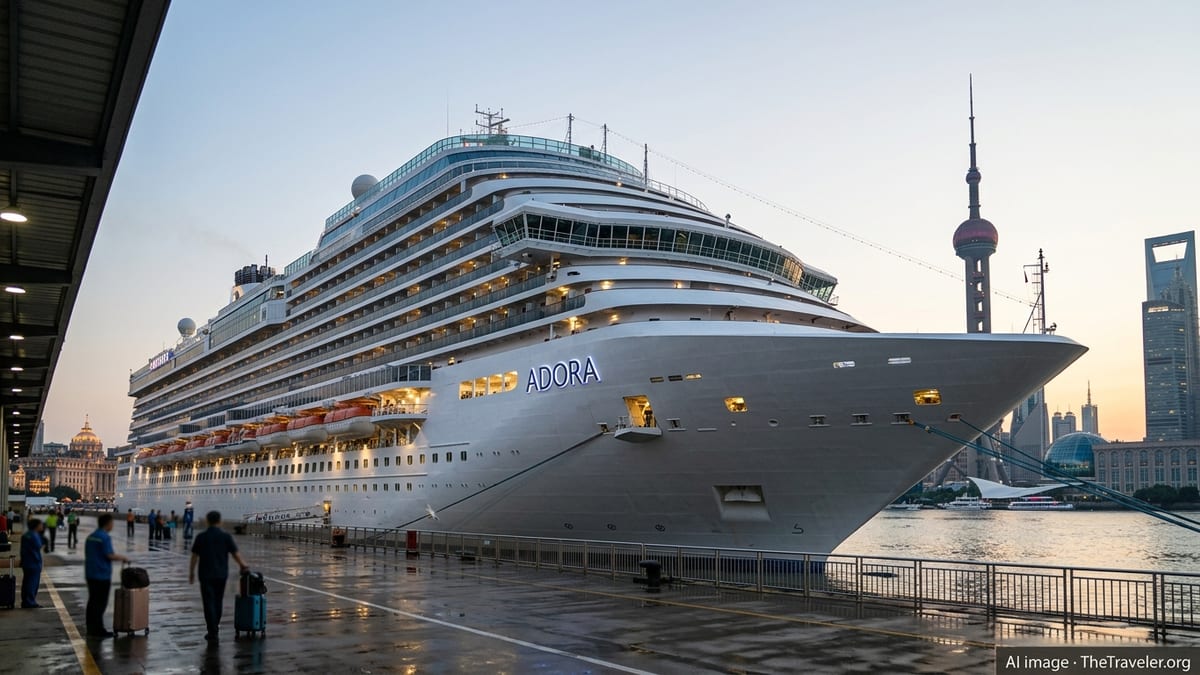
China’s Adora Cruises Orders Two Next-Gen Mega-Ships
Adora Cruises has moved to expand China’s ocean-cruise footprint with an order for two next-generation mega-ships, sharpening the country’s ambitions at sea.·Mar 22, 2026
China’s fast-rising cruise brand Adora Cruises has placed an order for two next-generation mega-ships, deepening the country’s push to build and operate its own large cruise fleet and signaling a new phase in its high-seas ambitions.
New Orders Build on Adora’s First Homegrown Flagship
Publicly available information indicates that the latest order will add two large vessels to the Adora Cruises pipeline, following China’s first domestically built cruise ship, Adora Magic City, and its larger sister ship Adora Flora City. Industry coverage describes the fresh order as part of a long-planned series that positions Adora as the core platform for China’s homegrown cruise development.Adora Magic City, built at Shanghai Waigaoqiao Shipbuilding, has been widely reported as a milestone vessel for China’s shipbuilding sector. Entering commercial service in early 2024, the ship has already completed dozens of sailings from Shanghai and introduced many first-time Chinese travelers to the modern cruise experience. The ship’s performance has given Chinese yards and designers crucial operational data and real-world feedback.
The second China-built ship, Adora Flora City, is under construction with delivery targeted around the end of 2026, according to Chinese media and cruise-industry reports. Flora City is described as larger and more advanced than Adora Magic City, featuring higher gross tonnage, more cabins, and expanded public spaces designed to handle greater passenger volumes and longer itineraries.
Reports on the new two-ship order indicate that these coming vessels will again be built in China, in cooperation with established cruise-ship designers. That structure mirrors the earlier collaboration between China State Shipbuilding Corporation and experienced European partners, while gradually shifting more design and systems integration work into Chinese hands.
Next-Generation Design Aimed at Global Standards
While detailed specifications have not yet been made public, industry analyses suggest that Adora’s next-generation mega-ships will be similar in scale to the world’s larger contemporary cruise vessels, with capacities in the several-thousand-passenger range. The new ships are expected to incorporate more efficient propulsion, upgraded hotel systems, and enhanced environmental technology to meet tightening international standards.Reports on Adora Flora City already highlight improvements such as optimized hull design, upgraded emissions-control systems, and more efficient energy management compared with the first ship. Observers expect the additional two vessels to push that evolution further, with incremental gains in fuel efficiency and digitalization, from smart-cabin energy controls to more advanced navigation and safety systems.
Publicly available coverage of the Chinese cruise program notes that each successive build is intended to reduce construction time, increase local content, and refine the onboard product for Chinese travelers. The two new ships are likely to feature layouts tailored for multigenerational family travel, extensive retail and entertainment zones, and culinary offerings reflecting both Chinese regional cuisines and international tastes.
If the projected timelines hold, Adora’s enlarged fleet would give China a series of increasingly sophisticated ships broadly aligned with global mainstream brands, but with hardware and onboard concepts designed primarily in and for the Chinese market.
China’s Bid to Become a Cruise-Building Powerhouse
The decision to add two more large ships underscores Beijing’s broader objective of mastering the full life cycle of modern cruise vessels, from concept and construction to operation and maintenance. Large cruise ships are often described in Chinese media and industry materials as among the most complex civilian products to engineer and build, involving thousands of suppliers and highly integrated hotel, safety, and marine systems.China’s first two large cruise builds for Adora have already showcased rapid learning in areas such as modular construction, interior outfitting, and systems integration. Reports indicate that build times and productivity have improved from the first to the second ship, and the expectation is that the newly ordered mega-ships will benefit from further standardization and accumulated expertise.
Analysts view the multi-ship program as a strategic hedge in the wider maritime sector. Chinese yards already hold strong positions in container ships and bulk carriers, and are vying for more advanced segments such as liquefied natural gas carriers. Cruise vessels, which demand tight tolerances and premium interior quality, offer a high-profile proving ground for capabilities that can spill over into other complex ship types.
For Adora Cruises, anchoring its growth in domestically built hardware also aligns with policy goals favoring local manufacturing and technology. It helps create a full cruise-industry ecosystem in China, supporting specialized suppliers for everything from cabin components and galley equipment to digital booking systems and port logistics.
Implications for Asia’s Cruise Routes and Port Cities
As Adora’s fleet expands, the deployment of these ships is expected to focus primarily on Asia, with Chinese port cities as homeport hubs. Existing reports already point to Shanghai and Guangzhou’s Nansha cruise terminal as key bases for the first two homegrown ships, and industry watchers anticipate that additional Chinese ports along the Bohai Rim, the Yangtze River Delta, and the southern coast will compete for future deployments.Larger, more advanced ships give Adora the flexibility to broaden itineraries beyond domestic coastal runs to regional routes across Northeast and Southeast Asia. Potential patterns include loops to Japan and South Korea, as well as tropical cruises to destinations in Vietnam, Thailand, and other Southeast Asian nations, depending on port infrastructure and regulatory arrangements.
For destination ports, the rise of a sizable China-based fleet could alter passenger flows and seasonal patterns. Asian ports that can accommodate mega-ships may see larger, more concentrated arrivals, driving demand for shore excursions, local transportation, and hospitality services. Ports that cannot yet handle very large vessels may feel pressure to upgrade berths, terminals, and access roads if they wish to tap into the growing China-sourced cruise market.
Travel planners and regional tourism boards are watching China’s cruise trajectory closely, as more hardware based in East Asia could shift some capacity away from traditional hubs in Europe and North America during certain seasons. The eventual deployment strategy for Adora’s next two mega-ships will be a key indicator of how aggressively the brand intends to expand beyond Chinese home waters.
Competitive Pressures in the Global Cruise Market
Adora’s fleet expansion arrives at a time when major global cruise groups are also introducing their own latest-generation mega-ships, many of them targeted at North American and European travelers. However, relatively few of those vessels are dedicated to the Asian market, leaving room for a China-focused brand with purpose-built hardware and distribution networks.According to international orderbook summaries, the cruise sector continues to invest in larger and more efficient ships, even as it works through debt burdens accumulated during the pandemic. In this context, China’s decision to double down on cruise construction through Adora stands out as a bet that domestic demand and regional tourism flows will justify a sizable, locally based fleet over the coming decade.
For global competitors, an expanded Adora fleet could introduce new dynamics in areas such as charter partnerships, port access, and seasonal redeployments in Asia. Some analysts suggest that foreign brands may eventually seek deeper cooperation with Chinese ports or cross-marketing arrangements to maintain visibility among Chinese travelers who are increasingly choosing home-based lines.
Much will depend on how quickly Chinese consumers embrace longer and more diverse itineraries, and on how effectively Adora’s next-generation ships deliver on expectations for service, entertainment, and value. The order for two additional mega-ships signals confidence that demand will continue to grow, and that China intends not only to sail the world’s seas, but to build more of the ships that traverse them.
China’s Adora Cruises Orders Two Next-Gen Mega-Ships
Adora Cruises has moved to expand China’s ocean-cruise footprint with an order for two next-generation mega-ships, sharpening the country’s ambitions at sea.
 www.thetraveler.org
Users who are viewing this thread
Total: 5 (members: 0, guests: 5)
Pakistan Defence Latest
-

-

-
 Federal cabinet gives nod to imposition of emergency in KP; summary sent to president (4 Viewers)
- Latest: hussain0216
-

-


