New Report: Busy Summer for Arctic Shipping on Russia’s Northern Sea Route

冖_冖

Registered Member
Joined
May 31, 2024
Messages
1,735
Reaction score
587
Reputation
563.6
Country of Origin
Country of Residence

New Report: Busy Summer for Arctic Shipping on Russia’s Northern Sea Route​

Published at: Sep 17 2024 - 13:35 / Updated at: Sep 17 2024 - 13:35
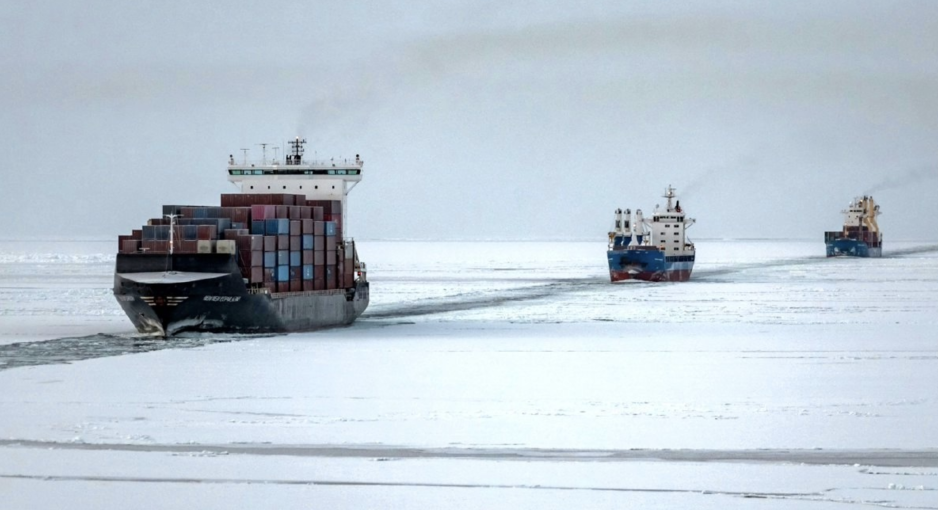
NewNew%20Polar%20Bear%20convoy%20NSR%20october%202023%20eastbound%20via%20Rosatom%20Telegram.png

China's NewNew Polar Bear in a convoy on the Northern Sea Route during eastbound voyage in October 2023. (Source: Rosatomflot)

Traffic between Russia and China continues to be the driver for Arctic transit shipping traffic on the Northern Sea Route, a new report by Center for High North Logistics shows. Crude oil, coal, and iron ore are flowing from Russia to China, while container shipping is occurring almost equally in both directions.

The first two months of the 2024 summer and fall navigation season on Russia’s main Arctic shipping lane have already seen 30 transit voyages carrying around 1.3 million tons of cargo, a new report by Norway’s Center for High North Logistics (CHNL) details.

The analysis of shipping traffic highlights that the Russia-China connection for Arctic development and shipping continues to dominate, with 98 percent of cargo flowing between ports of the two countries.

The cargo flow from Russia to China is dominated by crude oil and bulk items like coal and iron ore.

900,000 tons of crude oil​

Thus far nine oil tankers have traveled from the Baltic port of Primorsk, Murmansk and the Prirazlomnaya oil platform to China with around 900,000 tons of crude oil.

Five bulk carriers delivered approximately 416,000 tons, a mix of coal, iron ore and mineral fertilizers. Vessels again originated in the Baltic Sea and Murmansk.

The opposite direction has seen less traffic with bulk vessels and tankers vessels frequently returning in ballast.
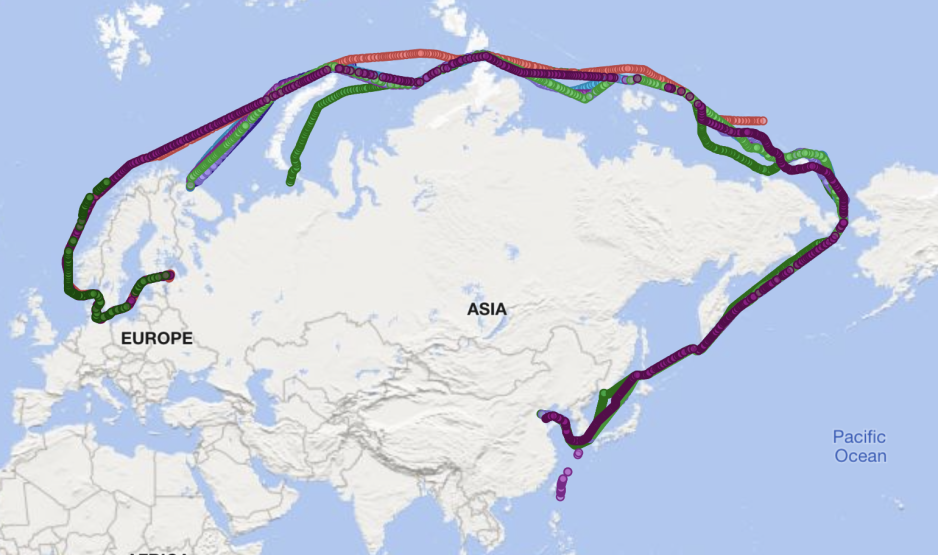
crude%20oil%20chnl.png

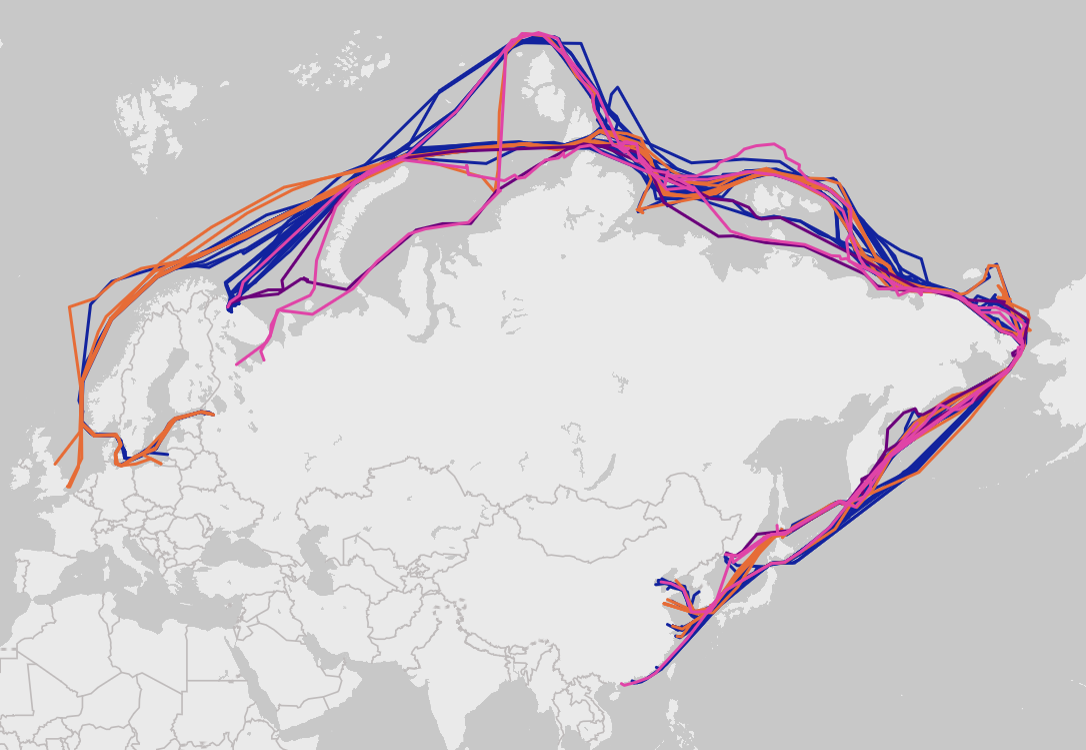
Crude oil traffic transiting through the Northern Sea Route during the first half of the summer navigation season through August 28, 2024. (Source: CHNL)

But container shipping represents an exception to this with vessels carrying cargo in similar measures in both directions.

Four Chinese or Hong Kong-based box ships carried around 17,000 tons of containerized cargo from China to the Russian port of Arkhangelsk, with two making the return voyage loaded with 11,000 tons.
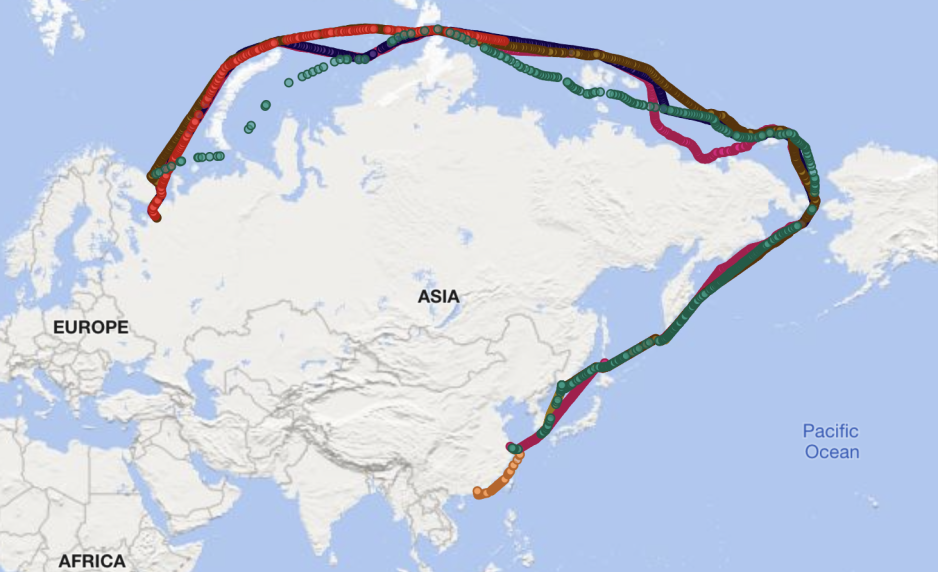
container%20traffic%20chnl.png

Container traffic transiting through the Northern Sea Route during the first half of the summer navigation season through August 28, 2024. (Source: CHNL)

Those figures look set to grow substantially during the coming two months as several larger container ships have entered the route in recent days, including the first-ever Panamax, Flying Fish 1, passing through the Arctic.

Concentrated on Russia and China​

While transit shipping experiences significant seasonal variability, it by and large remains highly concentrated on Russian ports. The experts at CHNL note that during the first two months of this summer’s shipping season, no international transits have been recorded.

All vessels either originated or arrived in a Russian port. During previous summers, especially prior to the full-scale invasion of Ukraine, the route saw some international traffic connecting port pairs outside of Russia.

At the current rate, and taking into account that September is the busiest month, the CHNL suggests that 2024 transit traffic will surpass last year’s record of 2.1 million tons.

Near Murmansk​

Transit traffic routinely continues into November and possibly longer depending on vessel ice-classification and ice conditions. However, in some years conditions can rapidly deteriorate trapping vessels in quickly forming sea ice requiring rescue by Russia’s icebreaking fleet.

Additional volume may come from Russia’s emerging LNG shadow fleet. Several cargo loads of LNG from the sanctioned Arctic LNG 2 project have initially been transported in a westerly direction to a holding point near Murmansk.

They may eventually be transshipped and flow in an easterly direction to Asia adding to the transit traffic contingent. Some changes to the Northern Sea Route traffic pattern may also emerge next summer as an EU-wide transshipment ban on Russian LNG comes into effect in March 2025.
 
Source:
、

First Panamax Containership Sprints Across Arctic Reaching China In Just Three Weeks​

September 25, 2024

Flying Fish 1 loaded

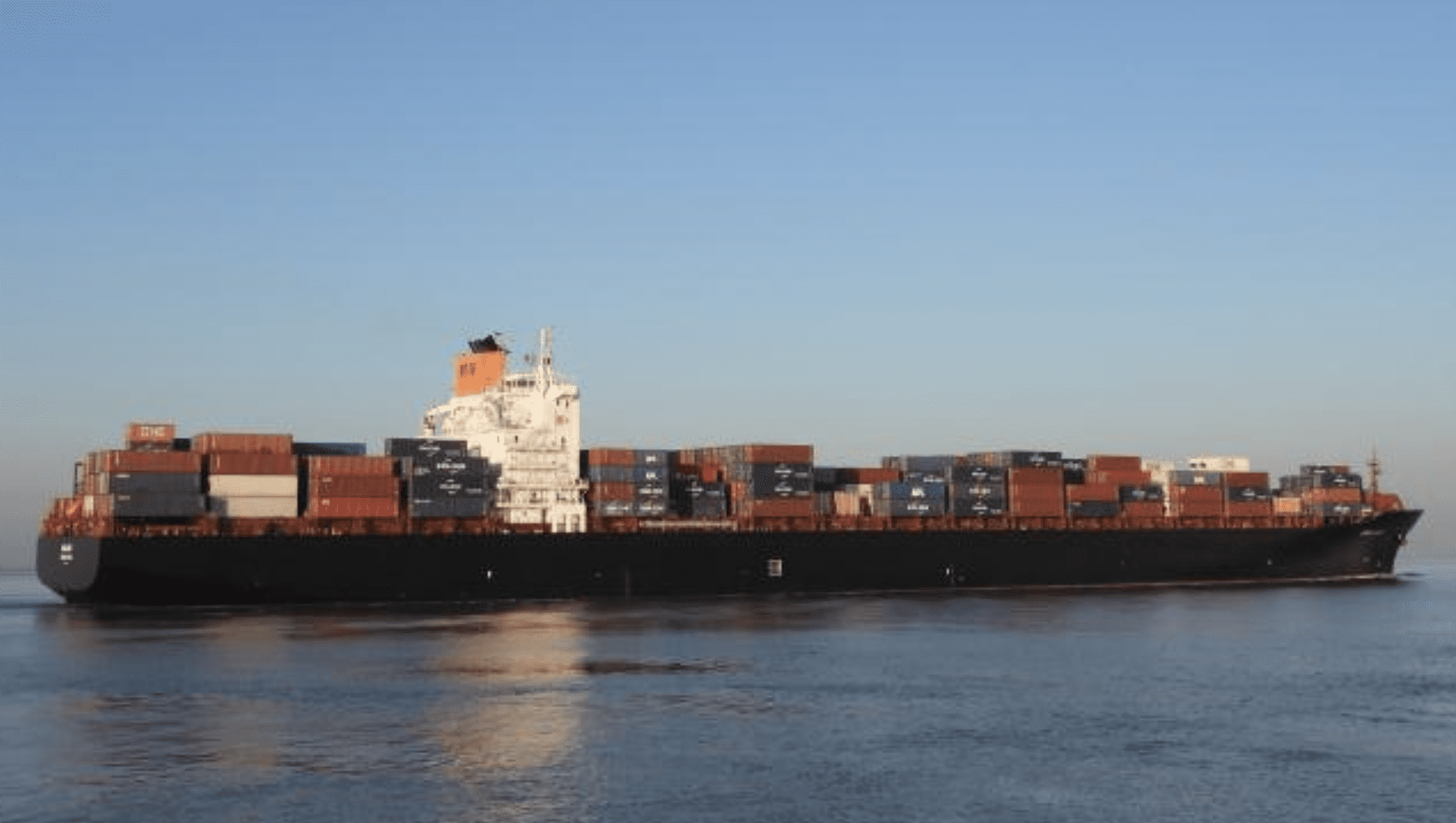
Container ship Flying Fish 1 close to fully loaded. (Source: Courtesy of Peter Faas)

The first Arctic transit of a large container ship has gone off without a hitch. The 294 meter-long Panamax vessel Flying Fish 1, traveled from St. Petersburg in the Baltic Sea to China in just over three weeks, shaving around two weeks off a standard voyage via the Suez Canal.

It is set to arrive at its destination in Shanghai early on September 26. The vessel is operated by EZ Safetrans Logistics out of Hong Kong.

The proposition of regular summer season box shipping across Russia’s Northern Sea Route seemed impossible to most just a decade ago. This year the Arctic Ocean will see close to 20 transit voyages, all connecting Russian and Chinese ports via the Arctic shortcut.

Capable of carrying 4,890 twenty-foot equivalent containers it sets a new standard for Arctic container shipping. Prior to this summer only smaller box carriers holding around 1,500-2,000 gave the Arctic shortcut a try. Over the past three months several larger feeder vessels have established a seasonal liner service between ports and China and Arkhangelsk and St. Petersburg.

Flying Fish 1 departed from St. Petersburg on September 3 and entered the Northern Sea Route at the top of Novaya Zemlya a week later. Shortly thereafter it crossed paths with another Chinese container ship, the first encounter of two large box carriers high in the Arctic. The nighttime rendezvous occurred just 850 nautical miles from the North Pole, with no sea ice in sight.

Flying Fish 1 in Arctic
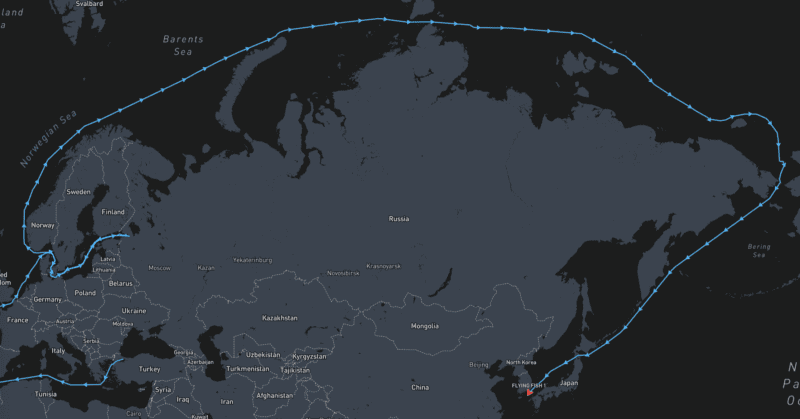
Flying Fish 1’s efficient route across the Arctic from St. Petersburg to Shanghai. (Source: Shipatlas)

The vessel was able to maintain a speed of 16 knots across the entire length of the route, indicative of how Arctic ice conditions have dramatically changed over just the last two decades. Flying Fish 1 continued through the Laptev and East Siberian Sea, avoiding some late-summer ice near Wrangel Island.

It exited from the route and passed through the Bering Strait near Alaska on September 17, without requiring any icebreaker assistance, just six days after entering the Russian Arctic.

Once complete, its journey from the Baltic Sea to Shanghai will measure approximately 8,000 nautical miles, around 4,000 nautical miles shorter than the traditional route via the Suez Canal. The current detour for most vessels around South Africa due to instability in the Red Sea adds another 4,000 miles to the standard route to Asia.

For now shipping services between Europe and Asia via the North remain limited to a 3-4 months summer window, but as sea ice retreats earlier in summer and returns later in winter more operators will surely look to the Arctic for new opportunities.
 

China’s coastguard takes part in first Arctic patrol with Russia​

Published: 7:30pm, 2 Oct 2024

Chinese state media released photos and footage on Wednesday to mark the country’s first coastguard patrol in the Arctic in a joint exercise with Russia.
 

Overview of NSR Transit Voyages as of September 30, 2026​

Arctic shipping reaches new record

Chinese operators are expanding seasonal Arctic services, while South Korea has completed its first government-backed container voyage via the route

Main-Map-1024x577.png

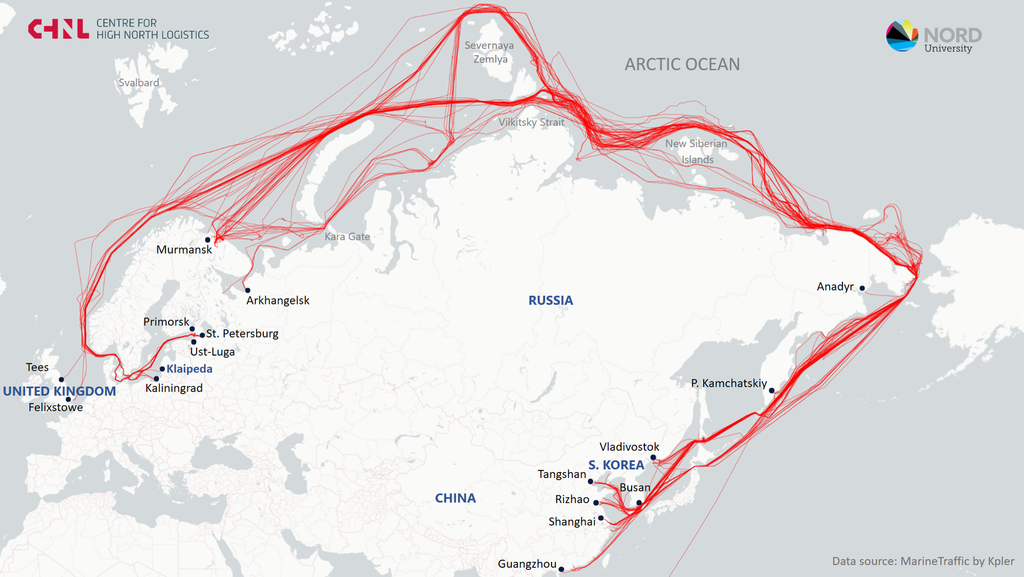
Figure 1. Map of all NSR Transit Voyages as of September 30, 2026. Source: MarineTraffic by Kpler; analysis and visualization by CHNL.

Key Results

As of September 30, 2026, we had identified 104 confirmed NSR transit voyages, already exceeding the 103 transits recorded during the entire 2025 navigation season. The confirmed traffic represented approximately 7.8 million tonnes DWT, while transit cargo is estimated at approximately 3.7 million tonnes.

Traffic was broadly balanced by direction, with 51 eastbound and 53 westbound voyages. The structure of traffic, however, differed significantly by direction. Eastbound tanker and bulk carrier voyages were predominantly cargo-carrying, while a substantial share of westbound bulk carrier traffic was related to fleet repositioning.

The 2026 season has also seen increased participation by large conventional commercial vessels, particularly tankers and bulk carriers, as well as a rise in international Asia-Europe transits. By September 30, four such voyages had been completed, compared with one during the entire 2025 season.

Navigation remained active at the end of September. In addition to the 104 confirmed transits, 25 vessels were already within the NSR and another 20 voyages were underway and expected to include an NSR transit. If the majority of these voyages complete their NSR passage, the season could approach 150 confirmed transits. Based on completed and ongoing voyages, we cautiously estimate that total transit cargo could exceed 4.5 million tonnes. Both the 150-transit and 4.5-million-tonne figures are scenario-based estimates and should not be treated as final season results.


South Korea hails success of its first Arctic shipping trial

A South Korean container ship has returned from a trial voyage through the Arctic, testing an alternative route opened by melting sea ice as conflict in the Middle East disrupts global shipping.

President Lee Jae Myung hailed the successful voyage, saying it “shortened the one-way sailing time by 10 days compared with the conventional route via the Suez Canal”.


Korea Targets Arctic Sea Route by 2030​

A concrete roadmap for the regular opening of the Arctic sea route was presented at the parliamentary inspection of the Agriculture, Food, Rural Affairs, Oceans and Fisheries Committee of the National Assembly, held for the first time at the relocated Ministry of Oceans and Fisheries building in Busan on Oct. 12.

Minister of Oceans and Fisheries Hwang Jong-woo announced through his opening remarks on this day that he would closely analyze the results of the Arctic sea route test operation conducted this year to prepare a more substantial test operation plan for next year. The Ministry of Oceans and Fisheries plans to open a regular service route for the Arctic sea route by 2030 after undergoing additional test operation processes.
 

Users who are viewing this thread

Back
Top