Modern Buildings, Electric Cars, and High Technology: North Korea Bypasses Sanctions and Experiences Economic Improvement
- By strengthening ties with partners like Russia and China, Kim Jong Un's government has eradicated housing problems in Pyongyang and modernized counties outside the capital
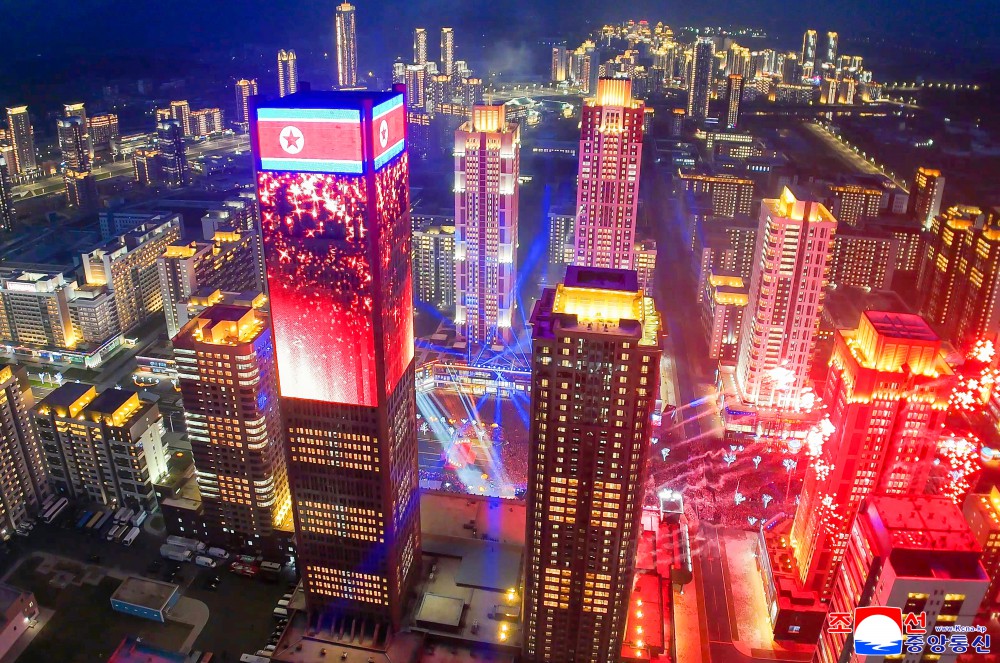
- When the fourth phase of the Hwaseong district construction project – the region that in 2026 promises to become the most developed area of the North Korean capital Pyongyang – entered its final stage on January 10, leader Kim Jong Un associated the speed of the transformations in the country with the "progress of the socialist revolution." He also assured that the
local population "must experience new miracles at the end of each year."
"The Hwaseong region is a symbol of the times that convinces us of the magnificent preaching of our cause, which advances with greater vigor and takes a bigger leap day by day toward the goal of building a strong and civilized country," declared Kim, in a speech quoted by the state news agency KCNA.
The Hwaseong project is one of the symbols of the leap in North Korean economic growth this century, and how it has been visible to the population, especially in the aspect of infrastructure modernization.
Started in 2021, it is part of a government initiative that, in recent years, has given greater focus to urban development. For this, special attention was directed to housing construction in the capital, with the main objective of eradicating housing problems. In this context, the North Korean leader set the goal of building 50 thousand additional apartments in just five years.
"In the construction of 50 thousand housing units in Pyongyang, which has been stubbornly promoted during the 8th term of the Central Committee of the Party, our architectural field is making remarkable progress and still recharging the potential of our country," praised Kim.
The "speed" characteristic pointed out by the North Korean leader is witnessed by Brazilian citizens who have been in Pyongyang at different times. Opera Mundi spoke with Lucas Rubio, founder of the Paektu Institute dedicated to strategic studies on the Democratic People's Republic of Korea (DPRK), who traveled to the Asian country in the years 2018, 2024, and 2025. His last visit brought a clearer view of the speed of the transformations the country has been undergoing.
"North Korea is currently full of cars, has traffic jams. I said: 'I came here in April and now, in October, and I can no longer see that calm and peaceful city that existed, because now it's horns. From one year to the next, many things changed," he reported.
Rubio emphasizes the speed with which changes are happening in the country. "It's speed in all aspects, both in what the government can do, but I would say even in the change of people's attitude in the face of the scenario, because new districts are born that are totally technological and modern, and it seems that even the local culture very quickly adapts to it. You walk down the street, there are residential buildings, but the base of the buildings are shops, many shops. It's barbecue places, breweries, video game stores...," he stressed.
In its news broadcast, the state agency KCNA has disclosed the practical results of the policy adopted by Kim through images showing tall and modern buildings erected in Pyongyang. Rubio described how architecture in North Korea has evolved from the initial Soviet style to reforms in the 70s and, more recently, in the current government, which "presents a very modern style, with tall buildings and LED technology."
"Under the direction of the great Party, our people, in the last five years, has achieved surprising results, making them worth 10 years, 50 years, and unfolded the new dazzling era in which the country really changes and the people's living environment is fundamentally improved," emphasized the North Korean government, in a statement.
The note continues saying that "the road that shows and clarifies this admirable transformation that elevated our national prestige and status to a dizzying height is precisely the construction sector, the field of architecture, and the monumental creations that have arisen like bamboo shoots after the rain throughout this land."
Growing Economy
Even the institutions of its neighbor and arch-rival territory and ideology recognize Pyongyang's good moment.
The Central Bank of South Korea reported that in 2024, the
North Korean economy had grown 3.7%, a percentage that solidified as the fastest annual rate recorded in eight years in that country. According to the entity, in 2023 a high of 3.1% was verified. The agency associated the growth with the expansion of economic ties with Russia.
"This is mainly due to significant increases in manufacturing, construction, and mining industries, influenced internally by the strengthening of projects linked to national policies, and externally by the expansion of economic cooperation with Russia," explained an institute official, emphasizing the accentuated growth of 10.7% in the heavy chemicals sector, which he assessed as having been driven by the expansion of production of metal items for armaments exported to Moscow.
According to Rubio, the North Korean economy is based on state-owned industries and means of production, without counting on foreign investments or foreign companies, except for agricultural cooperatives. However, a severely economy affected by Western sanctions and blockades is taken into account, despite the land borders with China and Russia.
Currently, the main engine of the economy in North Korea is the basic industry, which has boosted civil construction, including the Hwaseong project. While the country imports electric power and high-tech products, such as Chinese cars (electric) – albeit in a limited way –, it also exports, for example, textile products through Chinese territory. At one point, Brazil was also a buyer from North Korea.
"A few years ago, during President Dilma Rousseff's government, Brazil bought chips, computer boards, and televisions from North Korea. Internal boards for you to assemble the circuits, LCD screens, for television, for computers... And Brazil sold to North Korea, in that period, products like coffee and corn," added Rubio.
In 2024, a comprehensive agreement was also signed with Moscow, the largest since the Soviet period, allowing a major economic leap in Pyongyang. According to the Paektu Institute founder, establishments in the Asian country have Russian products and there is a growing trend of tourists of Russian nationality in North Korean territory.
It is no novelty the bond shared between Kim Jong Un and his Russian counterpart, Vladimir Putin. However, their tightening was proven once again amid Russia's special operation against Ukrainian forces, when the North Korean leader
sent his soldiers to assist Moscow's troops.
In addition, according to the North Korean state agency KCNA, both exchanged greetings on the eve of the recent New Year: on that occasion, Kim praised the "invincible friendship and alliance" between Russia and North Korea.
20×10 Regional Development Policy
Started between 2023 and 2024, the so-called
"20×10 Regional Development Policy" in North Korea had as its objective the construction of state-of-the-art industrial facilities and infrastructures in 20 counties of the country over a decade.
When announcing the initiative, leader Kim Jong Un spoke of "industrial revolution," predicting the revitalization of the local economy and the balancing of living conditions of the population in these areas with the capital Pyongyang, the country's most developed city.
Already in December last year, KCNA reported that the construction of industry factories and the Kangdong County Services Complex had been completed. Again, the "speed" characteristic was raised by Rubio, who stated that North Korean military personnel, through an engineering corps, actively participate in civil construction.
The role of North Korean military personnel should be observed through a different lens from that of the West, according to the academic. In the 90s, in North Korea, the army became more than a national defense organism.
To avoid paralyzing the country in a context of imminent war, the idea was for soldiers to also have other training, such as, for example, being farmers, builders, and engineers. That is, many North Koreans see military service as a way to fulfill their role as citizens and as an opportunity for employment and advancement.
"It's all at the same time. If war breaks out, a school van becomes a troop transport. But if there's a natural disaster, an attack helicopter becomes a civilian population rescue helicopter. The idea of having everything ready all the time, because anything can happen at any moment. So the entire economy revolves around keeping the country ready to face these scenarios," he explained.
-------------
Note: With the decline of the US, the West, and liberalism(all controled by Zionism), it's time to revise the narratives that have been imposed on us.North Korea is one of those narratives that needs revision.
Note 2: This is the path Iran must follow.