Nusantara City Development Update

Why Has IKN Become a New Tourism Magnet?​


Sucipto

To view this content we will need your consent to set third party cookies.
For more detailed information, see our cookies page.


What can you learn from this article?​

  1. How high is the number of tourist visits to IKN during this year’s Lebaran holiday?
  2. Why has IKN now become a tourist destination?
  3. What destinations can be visited in IKN and its surrounding areas?
  4. How easy is access to the IKN area?
  5. What are the public’s expectations regarding IKN’s impact on the local economy?

How high is the number of tourist visits to IKN during this year’s Lebaran holiday?​


To view this content we will need your consent to set third party cookies.
For more detailed information, see our cookies page.


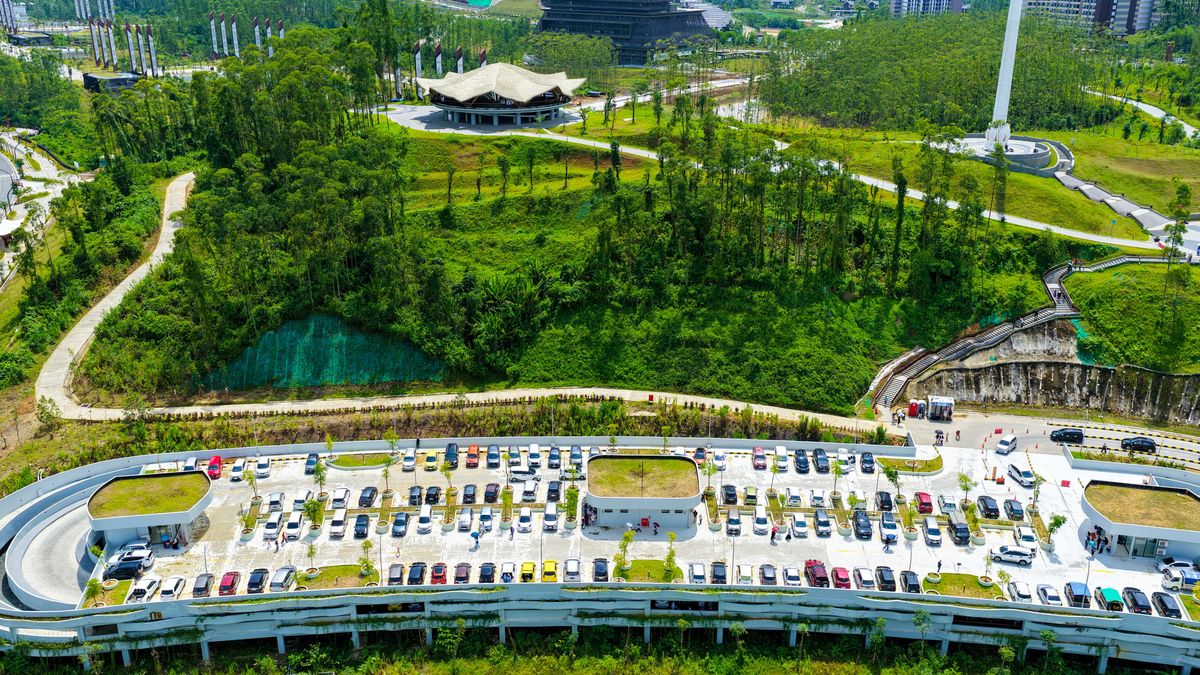
The Nusantara Capital City (IKN) area experienced a significant surge in visits during the Lebaran 2026 holiday.

As of March 24, 2026, a total of 30,544 vehicles had entered the IKN area, with the number of visitors reaching 143,126 people. This figure reflects the strong public enthusiasm to directly observe the development of Indonesia’s new capital.

Visits did not only come from East Kalimantan, but also from various other regions across Indonesia. In addition, there were also international tourists who happened to be in Kalimantan and took the opportunity to visit IKN.

This phenomenon marks a shift in the area’s function—from a previously restricted construction zone into a public space that is gradually opening and attracting visitors.


Surpassing 352,000 Visitors in 12 Days, IKN Becomes a New Tourism Magnet​


Hilda B Alexander

31 Maret 2026


1775007007428.png


NUSANTARA, KOMPAS.com — The appeal of the Nusantara Capital City (IKN) as a new national destination continues to strengthen.

The IKN Authority recorded a significant surge in public visits to the Core Government Area (KIPP) during the long holiday period in March 2026.

Official data shows that 352,102 visitors crowded the area over a 12-day period, from March 18 to March 29, 2026.

The enthusiasm was also reflected in the number of vehicles, which reached 80,105 units, including private vehicles and tourist buses.

Key locations such as:

  • The State Palace
  • The National Mosque
  • The Glass Bridge in the glamping area
  • The Sepaku Semoi Dam
became major gathering points.

Meanwhile, areas such as Plaza Seremoni and Plaza Bhinneka have transformed into vibrant public spaces, supported by growing culinary facilities and emerging social activities.

Educational facilities such as Sentra Massa, featuring a mini theater and the IKN Mini Control Center, provide visitors with a comprehensive overview of the future of this smart city.

To view this content we will need your consent to set third party cookies.
For more detailed information, see our cookies page.


Visitor Impressions​

A tourist from the Netherlands, Michael De Jong, described IKN’s architecture as beautiful, clean, and comfortable.

“It’s amazing to see a modern city being built in the middle of a forest. I hope the government continues to protect this beautiful nature so it can coexist,” he said.
Similarly, Sopiansah, a visitor from North Kalimantan, highlighted the improved accessibility through toll road connections.

“The journey feels comfortable. As a Kalimantan resident, we are proud to see this level of activity. Visitors come from various regions—it is never quiet,” he said.

Services and Security​

The high volume of visitors requires heightened readiness from the Public Visit Service Team.

Under the coordination of:

  • Bimo Adi Nursanthyasto (Secretary of the IKN Authority)
  • Thomas Umbu Pati Tena Bolodadi (Deputy for Development Control)
operations involve cross-sector collaboration, including:

  • The military (TNI)
  • Police (Polri)
  • Ministry of Public Works
  • Healthcare personnel
On-the-ground situations vary, from handling lost items to assisting visitors separated from their groups.

Sri Wahyuni, a security officer at Joint Office 1, described the team’s responsiveness:

“There are always unique moments. We are often asked to help locate children separated from their parents or find lost belongings. We must always be ready to serve amid the crowd,” she said.

Commitment Toward the Future​

The development of IKN has now expanded to strengthening the social ecosystem, including the completion of supporting infrastructure such as:

  • Markets
  • Educational facilities
  • Higher education institutions, including Gunadarma University and Taruna Nusantara School
Special Staff to the Head of the IKN Authority for Public Communication and spokesperson Troy Pantouw emphasized that transparency in development is key.

Through the principle of “seeing is believing,” the public is invited to witness firsthand that Nusantara is not merely a collection of government buildings.

“People can directly see how the ecosystem of the area continues to develop. IKN belongs to all of us, built by the nation’s children for Indonesia’s bright future,” Troy concluded.

 
Last edited:
Latest video

To view this content we will need your consent to set third party cookies.
For more detailed information, see our cookies page.
 

Users who are viewing this thread

Latest Posts

Back
Top