OGDC finds geothermal lithium in Sindh formation water, a first for Pakistan

Lets wait for Bhutto to claim this as their birth right, because the sindhi put Lithium in the ground. Same old Tribal stupidity holding Pakistan back.


now, I know, why there is so much nationalism and separatism, in Pak.!


as I understand, these reserves (if this news is true) belong to Sindh and the party which rules over it!

this post had a tinge of ethnic bias towards ethnicities

of course, you are entitled to your opinion, but dont be amazed when you hear things like 'i have been Sindhi for 5,000 years, what Pak. has given us!)

which I have to agree with!

lastly, mentality behind your post, sheds light towards, how MQM came into being and why there are so many Afghanis, occupying entering points in Karachi

why Karachi is facing mass internal immigration, bec. of course, it is Sindh, it is not part of PAkistan!!!

sorry, truth hurts!
 
When I First Read This News My Initial Expectations Were Chagai Kharan Region I Was Pleasantly Surprised When I Found Out It Was Sindh

That would have been bad news, not just because of security but the fact that world is moving away from mining rocks for lithium. This in turn have great chance of attracting foreign investment and technology.
 
now, I know, why there is so much nationalism and separatism, in Pak.!


as I understand, these reserves (if this news is true) belong to Sindh and the party which rules over it!

this post had a tinge of ethnic bias towards ethnicities

of course, you are entitled to your opinion, but dont be amazed when you hear things like 'i have been Sindhi for 5,000 years, what Pak. has given us!)

which I have to agree with!

lastly, mentality behind your post, sheds light towards, how MQM came into being and why there are so many Afghanis, occupying entering points in Karachi

why Karachi is facing mass internal immigration, bec. of course, it is Sindh, it is not part of PAkistan!!!

sorry, truth hurts!

Sindh govt give licences to find minerals, in this case to OGDC. Now if OGDC is successful in bringing investment then Sindh govt will take royalties and taxes. The indirect benefits are thousands of jobs for locals. The federal govt will benefit from taxes and FX earning. And the fact that OGDC is owned by federal.
 
If Pakistan really did have $8 trillion worth of economically recoverable mineral reserves, major economic powers would already be rushing to extract them. However, I think one of two things is true:
  1. Pakistan simply does not have reserves on that scale; or
  2. If such deposits do exist, they are currently too expensive or too difficult to extract and transport profitably.
Pakistan also lacks much of the infrastructure required to support mining on that scale, including roads, railways, ports, power, and other logistics networks.

There are smaller mining ventures underway, but I don't see large-scale extraction becoming commercially viable in the foreseeable future.

I fundamentally believe that Pakistan has incredible reserves because of the below

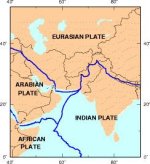
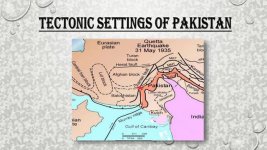
tectonics-zones-of-pakistan-b10edd5f-095b-4790-806f-e1b83503d98-resize-750.jpgtectonicsettingsofpakistan1-210225134934-thumbnail.jpg


Fundamentally Pakistan is the point where THREE different tectonic plates meet

The Arabian plate
The Eurasian plate
The Indian plate


This causes natural consequences, the earth being pushed up to form our valley and mountain ranges


Even without evidence, I believe that once proper attempts are made to review our resources, that we will find that we are sitting on TRILLIONS

I think Afghanistan and Central asia are in a similar position and the Muslim world can benefit from this
 
Sindh govt give licences to find minerals, in this case to OGDC. Now if OGDC is successful in bringing investment then Sindh govt will take royalties and taxes. The indirect benefits are thousands of jobs for locals. The federal govt will benefit from taxes and FX earning. And the fact that OGDC is owned by federal.
sorry, I dont understand, how your reply is relevant to my post?!

atleast, I dont get the connection
 
Update on this, these guys confirm 1 liter water had 275mg of lithium. This is big deal

To view this content we will need your consent to set third party cookies.
For more detailed information, see our cookies page.


"If OGDCL's water contains 275 milligrams (mg) of lithium per liter, they have hit the jackpot in terms of quality.

In the water chemistry world, 275 mg/L is roughly equivalent to 275 Parts Per Million (ppm).

  • Anything above 50 ppm is considered economically viable for modern Direct Lithium Extraction (DLE).
  • 150 ppm is considered a very strong commercial reserve (typical in Europe).
  • 275 ppm puts Pakistan on par with the absolute best geothermal brine reserves on the planet, such as the Salton Sea in California or the Smackover Formation in Arkansas.
At 275 mg/L, the chemical filtering process is highly efficient, meaning it costs much less to extract the lithium than it would from a lower-grade brine."


OGDCL, PINSTECH Partner to Develop Lithium Extraction Technology Following Major Discovery in Sindh​

August 5, 2026 Admin


The partnership follows OGDCL’s confirmation of Pakistan’s first significant lithium discovery in geothermal brines at the **Wahid Bakhsh Well** in Khairpur, Sindh, where advanced geochemical analysis revealed a lithium concentration of **275 milligrams per litre (mg/L)**—more than three times the internationally accepted threshold of **90 mg/L** generally considered suitable for commercial evaluation.

Encouraged by the discovery, OGDCL has identified **eight to ten additional wells** in Sindh for geothermal brine exploration to assess the extent of lithium-bearing formations and identify further deposits of the strategic mineral.

Officials said the company is simultaneously advancing exploration activities while working with PINSTECH to develop indigenous lithium extraction technology, reducing reliance on imported expertise and supporting Pakistan’s long-term critical minerals strategy.

The discovery has also attracted interest from **Heavy Mechanical Complex (HMC)**, which is exploring the potential use of locally produced lithium for electric vehicle (EV) batteries and defence-related applications. Sources indicated that HMC is planning to establish a large-scale electric vehicle manufacturing facility, making domestic lithium supplies strategically important for Pakistan’s emerging clean-energy and advanced manufacturing sectors.

The lithium was identified through advanced geochemical analysis of formation water produced from a high-temperature geothermal well under OGDCL’s pilot geothermal programme. Company officials described it as Pakistan’s first confirmed occurrence of lithium in geothermal brines.

The breakthrough places Pakistan among a growing number of countries exploring geothermal brines as an environmentally sustainable source of lithium, a critical mineral that plays a central role in the global energy transition.

Lithium is a key component in rechargeable batteries used in electric vehicles, grid-scale energy storage systems, smartphones, laptops and other advanced technologies. Nearly **80% of global lithium demand** currently comes from the electric vehicle sector, with consumption expected to rise significantly over the next decade as countries accelerate the shift toward electrification and low-carbon energy systems.

Beyond batteries, lithium is also widely used in aerospace, defence, specialty chemicals, glass and ceramics, industrial lubricants, aluminium alloys, consumer electronics and pharmaceutical products, making it one of the world’s most strategically important minerals.

According to OGDCL, the lithium concentration recorded at the Wahid Bakhsh Well is comparable to higher-grade geothermal brine projects currently under commercial development in Europe and North America. Geothermal brines are increasingly regarded as one of the most sustainable sources of lithium because they enable simultaneous geothermal energy production and lithium extraction, reducing the environmental footprint associated with conventional mining.

Despite the promising discovery, officials emphasized that extensive scientific and technical work remains before commercial production can begin. OGDCL has launched a comprehensive evaluation programme that includes detailed brine chemistry studies, reservoir mapping, resource confirmation and economic feasibility assessments in accordance with internationally recognized standards. The company is also working with leading international consultants to ensure future resource estimates and feasibility studies meet global technical benchmarks.

If subsequent exploration confirms commercially recoverable reserves, the discovery could significantly strengthen Pakistan’s position in global critical mineral supply chains, attract foreign investment, support the development of a domestic battery and electric vehicle industry, reduce dependence on imported battery materials, and create new opportunities for industrial growth and exports.

The discovery also reflects OGDCL’s broader strategy of diversifying beyond conventional oil and gas exploration into geothermal energy and critical minerals—two sectors expected to play an increasingly important role in the global clean energy transition.

While commercial production remains subject to the outcome of detailed technical and economic studies, the confirmation of high-grade lithium concentrations in Sindh marks a significant milestone for Pakistan’s mining and energy sectors and could position the country as an emerging player in the rapidly expanding global critical minerals market.

Story by Khalid Mustafa
 

OGDCL, PINSTECH Partner to Develop Lithium Extraction Technology Following Major Discovery in Sindh​

August 5, 2026 Admin


The partnership follows OGDCL’s confirmation of Pakistan’s first significant lithium discovery in geothermal brines at the **Wahid Bakhsh Well** in Khairpur, Sindh, where advanced geochemical analysis revealed a lithium concentration of **275 milligrams per litre (mg/L)**—more than three times the internationally accepted threshold of **90 mg/L** generally considered suitable for commercial evaluation.

Encouraged by the discovery, OGDCL has identified **eight to ten additional wells** in Sindh for geothermal brine exploration to assess the extent of lithium-bearing formations and identify further deposits of the strategic mineral.

Officials said the company is simultaneously advancing exploration activities while working with PINSTECH to develop indigenous lithium extraction technology, reducing reliance on imported expertise and supporting Pakistan’s long-term critical minerals strategy.

The discovery has also attracted interest from **Heavy Mechanical Complex (HMC)**, which is exploring the potential use of locally produced lithium for electric vehicle (EV) batteries and defence-related applications. Sources indicated that HMC is planning to establish a large-scale electric vehicle manufacturing facility, making domestic lithium supplies strategically important for Pakistan’s emerging clean-energy and advanced manufacturing sectors.

The lithium was identified through advanced geochemical analysis of formation water produced from a high-temperature geothermal well under OGDCL’s pilot geothermal programme. Company officials described it as Pakistan’s first confirmed occurrence of lithium in geothermal brines.

The breakthrough places Pakistan among a growing number of countries exploring geothermal brines as an environmentally sustainable source of lithium, a critical mineral that plays a central role in the global energy transition.

Lithium is a key component in rechargeable batteries used in electric vehicles, grid-scale energy storage systems, smartphones, laptops and other advanced technologies. Nearly **80% of global lithium demand** currently comes from the electric vehicle sector, with consumption expected to rise significantly over the next decade as countries accelerate the shift toward electrification and low-carbon energy systems.

Beyond batteries, lithium is also widely used in aerospace, defence, specialty chemicals, glass and ceramics, industrial lubricants, aluminium alloys, consumer electronics and pharmaceutical products, making it one of the world’s most strategically important minerals.

According to OGDCL, the lithium concentration recorded at the Wahid Bakhsh Well is comparable to higher-grade geothermal brine projects currently under commercial development in Europe and North America. Geothermal brines are increasingly regarded as one of the most sustainable sources of lithium because they enable simultaneous geothermal energy production and lithium extraction, reducing the environmental footprint associated with conventional mining.

Despite the promising discovery, officials emphasized that extensive scientific and technical work remains before commercial production can begin. OGDCL has launched a comprehensive evaluation programme that includes detailed brine chemistry studies, reservoir mapping, resource confirmation and economic feasibility assessments in accordance with internationally recognized standards. The company is also working with leading international consultants to ensure future resource estimates and feasibility studies meet global technical benchmarks.

If subsequent exploration confirms commercially recoverable reserves, the discovery could significantly strengthen Pakistan’s position in global critical mineral supply chains, attract foreign investment, support the development of a domestic battery and electric vehicle industry, reduce dependence on imported battery materials, and create new opportunities for industrial growth and exports.

The discovery also reflects OGDCL’s broader strategy of diversifying beyond conventional oil and gas exploration into geothermal energy and critical minerals—two sectors expected to play an increasingly important role in the global clean energy transition.

While commercial production remains subject to the outcome of detailed technical and economic studies, the confirmation of high-grade lithium concentrations in Sindh marks a significant milestone for Pakistan’s mining and energy sectors and could position the country as an emerging player in the rapidly expanding global critical minerals market.

Story by Khalid Mustafa

Shit is getting serious, this discovery could be "game changer" (no kidding) for Pakistan local battery production.
 

Users who are viewing this thread

Pakistan Defence Latest

Back
Top