Oil, Gas and Refinery Sectors - updates

Pakistan fuel oil exports scale fresh high in 2025, to hold in 2026


Pakistan's exports have breached 1.4 million metric tons this year

Reuters
November 27, 2025

SINGAPORE/KARACHI: Pakistan’s annual fuel oil exports hit an all-time high this year and are expected to trend steady to higher next year, as higher domestic taxes deterred purchases while power plants are switching to cleaner alternatives, industry sources said.

The uptick in Pakistan’s fuel oil exports has added to supply in Asia, weighing further on prices in a market that is already well-supplied, traders and analysts said.

Fuel oil exports from Pakistan reached a fresh high this year, shipping data from Kpler and LSEG showed.

Exports so far this year have breached 1.4 million metric tons (about 8.9 million barrels), up over 16% from the full-year volume in 2024, the data from Kpler showed, with most of these exports ending up in Southeast Asia and the Middle East.
 
LSEG data showed exports at 1.33 million tons so far in 2025, up from 1.11 million tons last year.

The cargoes were mostly high-sulphur fuel oil (HSFO) and added mainly to the marine fuel supply, while some volumes went to refineries as feedstock, market sources said.

“Pakistan primarily exports HSFO to Asia, which has been seeing an excess in supply post-summer season and has depressed cracks in the region,” said Valerie Panopio, vice president for oil commodity markets at Rystad Energy.

Pakistani refiners sold more fuel oil via tenders this year after the government raised taxes for domestic fuel oil consumption, while power generators gravitate towards alternatives such as coal and solar.

The leading Pakistan fuel oil exporter was Pak-Arab Refinery, according to traders, while other exporters included Cnergyico, Attock Refinery, National Refinery and Pakistan Refinery.

Cnergyico, which is the country’s largest oil refiner, has said it aims to boost exports.

The company exported about 247,000 tons of fuel oil in fiscal year 2024–25, its vice-chairman Usama Qureshi said.

Qureshi added that he expects at least 50% growth this fiscal year, supported by increased use of light-sweet crude that lifted its output of very low sulphur fuel oil.

The company has partnered up with global trading house Vitol to supply more low-sulphur marine fuel from Pakistan ports.

“The increase in fuel oil exports in the past years have helped ensure that refinery runs are not constrained by inventory limits, something that was an issue in the previous years,” said Xin Shuai Huang, oil market analyst at FGE.

Next year, the exports are likely to maintain or climb further, according to Pakistan industry sources.

“The trend in furnace oil exports is only going to increase going forward in 2026,” said Syed Nazir Abbas Zaidi, secretary general of Pakistan’s oil companies advisory council.

“Fuel oil is no longer viable in electricity generation, and no longer profitable to sell in the domestic market, following the last budget,” Zaidi said.

Pakistan turned from a net importer into a net exporter of fuel oil in 2023.
 

Pakistan’s fuel oil exports scale fresh high in 2025

Reuters
Published November 28, 2025

1764343922081.jpeg
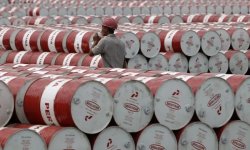
This image shows oil barrels at a storage depot in Jakarta. — Reuters

The cargoes were mostly high-sulphur fuel oil (HSFO) and added mainly to marine fuel supply, while some volumes went to refineries as feedstock, market sources said.

“Pakistan primarily exports HSFO to Asia which have been seeing an excess in supply post-summer season and have depressed cracks in the region,” said Valerie Panopio, vice president for oil commodity markets at Rystad Energy.

Pakistani refiners sold more fuel oil via tenders this year after the government raised taxes for domestic fuel oil consumption, while power generators gravitate towards alternatives such as coal and solar.

The leading Pakistan fuel oil exporter was Pak-Arab Refinery, according to traders, while other exporters included Cnergyico, Attock Refinery, National Refinery and Pakistan Refinery.


Cnergyico, which is the country’s largest oil refiner, has said it aims to boost exports. The company exported about 247,000 tonnes of fuel oil in 2024-25, its vice-chairman Usama Qureshi said.

Mr Qureshi added that he expects at least 50pc growth this fiscal year, supported by increased use of light-sweet crude that lifted its output of very low sulphur fuel oil.

The company has partnered up with global trading house Vitol to supply more low-sulphur marine fuel from Pakistani ports.

“The trend in furnace oil exports is only going to increase going forward in 2026,” said Syed Nazir Abbas Zaidi, secretary general of Pakistan’s oil companies advisory council. “Fuel oil is no longer viable in electricity generation, and no longer profitable to sell in the domestic market, following the last budget,” he said.
 

Pakistan fuel oil exports scale fresh high in 2025, to hold in 2026

  • Pakistan's exports have breached 1.4 million metric tons this year
Reuters
Published November 27, 2025


1764345505613.jpeg

SINGAPORE/KARACHI: Pakistan’s annual fuel oil exports hit an all-time high this year and are expected to trend steady to higher next year, as higher domestic taxes deterred purchases while power plants are switching to cleaner alternatives, industry sources said.

The uptick in Pakistan’s fuel oil exports has added to supply in Asia, weighing further on prices in a market that is already well-supplied, traders and analysts said.

Fuel oil exports from Pakistan reached a fresh high this year, shipping data from Kpler and LSEG showed.

Exports so far this year have breached 1.4 million metric tons (about 8.9 million barrels), up over 16% from the full-year volume in 2024, the data from Kpler showed, with most of these exports ending up in Southeast Asia and the Middle East.

LSEG data showed exports at 1.33 million tons so far in 2025, up from 1.11 million tons last year.

The cargoes were mostly high-sulphur fuel oil (HSFO) and added mainly to the marine fuel supply, while some volumes went to refineries as feedstock, market sources said.

“Pakistan primarily exports HSFO to Asia, which has been seeing an excess in supply post-summer season and has depressed cracks in the region,” said Valerie Panopio, vice president for oil commodity markets at Rystad Energy.

Pakistani refiners sold more fuel oil via tenders this year after the government raised taxes for domestic fuel oil consumption, while power generators gravitate towards alternatives such as coal and solar.

The leading Pakistan fuel oil exporter was Pak-Arab Refinery, according to traders, while other exporters included Cnergyico, Attock Refinery, National Refinery and Pakistan Refinery.

Cnergyico, which is the country’s largest oil refiner, has said it aims to boost exports.

The company exported about 247,000 tons of fuel oil in fiscal year 2024–25, its vice-chairman Usama Qureshi said.

Qureshi added that he expects at least 50% growth this fiscal year, supported by increased use of light-sweet crude that lifted its output of very low sulphur fuel oil.

The company has partnered up with global trading house Vitol to supply more low-sulphur marine fuel from Pakistan ports.

“The increase in fuel oil exports in the past years have helped ensure that refinery runs are not constrained by inventory limits, something that was an issue in the previous years,” said Xin Shuai Huang, oil market analyst at FGE.

Next year, the exports are likely to maintain or climb further, according to Pakistan industry sources.

“The trend in furnace oil exports is only going to increase going forward in 2026,” said Syed Nazir Abbas Zaidi, secretary general of Pakistan’s oil companies advisory council.

“Fuel oil is no longer viable in electricity generation, and no longer profitable to sell in the domestic market, following the last budget,” Zaidi said.

Pakistan turned from a net importer into a net exporter of fuel oil in 2023.


Pakistan’s fuel oil exports scale fresh high in 2025

Reuters
Published November 28, 2025

View attachment 162322
This image shows oil barrels at a storage depot in Jakarta. — Reuters

The cargoes were mostly high-sulphur fuel oil (HSFO) and added mainly to marine fuel supply, while some volumes went to refineries as feedstock, market sources said.

“Pakistan primarily exports HSFO to Asia which have been seeing an excess in supply post-summer season and have depressed cracks in the region,” said Valerie Panopio, vice president for oil commodity markets at Rystad Energy.

Pakistani refiners sold more fuel oil via tenders this year after the government raised taxes for domestic fuel oil consumption, while power generators gravitate towards alternatives such as coal and solar.

The leading Pakistan fuel oil exporter was Pak-Arab Refinery, according to traders, while other exporters included Cnergyico, Attock Refinery, National Refinery and Pakistan Refinery.


Cnergyico, which is the country’s largest oil refiner, has said it aims to boost exports. The company exported about 247,000 tonnes of fuel oil in 2024-25, its vice-chairman Usama Qureshi said.

Mr Qureshi added that he expects at least 50pc growth this fiscal year, supported by increased use of light-sweet crude that lifted its output of very low sulphur fuel oil.

The company has partnered up with global trading house Vitol to supply more low-sulphur marine fuel from Pakistani ports.

“The trend in furnace oil exports is only going to increase going forward in 2026,” said Syed Nazir Abbas Zaidi, secretary general of Pakistan’s oil companies advisory council. “Fuel oil is no longer viable in electricity generation, and no longer profitable to sell in the domestic market, following the last budget,” he said.
Please don't change the article headline
 

Pakistan’s largest private LPG producer sends first shipment after 5.5 years


Long-awaited restart marks a major milestone for the company and the country’s LPG supply chain

BR Web Desk
November 28, 2025

Jamshoro Joint Ventures Limited (JJVL), Pakistan’s largest private-sector LPG producer, has resumed operations after more than five and a half years, dispatching its first LPG (liquefied petroleum gas) shipment on Thursday.

LSE Capital Limited disclosed the development in a notice to the Pakistan Stock Exchange (PSX) on Friday.

“Please be informed that Jamshoro Joint Ventures Limited (JJVL) - an investee company of LSE Capital Limited (LSECL/Company), has shipped the first load of LPG yesterday after the restart of the plant after 5 years and 6 months,” read the notice.

The long-awaited restart marks a major milestone for the company and the country’s LPG supply chain.

Incorporated and existing under the laws of Pakistan, JJVL is an unlisted public limited company with its headquarters in Lahore and its gas-processing facilities at Jamshoro, Sindh. Its state-of-the-art 200mmscfd LPG extraction plant was commissioned in March 2005, and its 125mmscfd plant in October 2014.

JJVL was the first LPG producer in Pakistan to import and utilise patented Ortloff technology that guarantees it the highest propane recovery rate in the country, which makes its facilities among the most efficient in the world.

The gas-processing plants were engineered, procured, constructed, and commissioned by Houston-based Exterran (formerly The Hanover Company), which is listed on the New York Stock Exchange. Exterran also operates and maintains the plants.

Earlier in July, Sui Southern Gas Company Limited (SSGC) approved a key agreement with JJVL for the extraction of LPG and NGL (natural gas liquids).
 

TPOC enters Pakistan's upstream sector; SOCAR team due as gas sector rebounds​

Top Story
By Khalid Mustafa
December 05, 2025


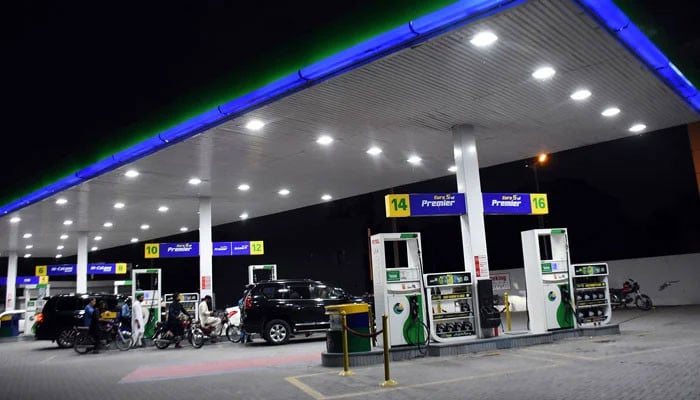
A view of petrol pump in Federal Capital. — Online/File
ISLAMABAD: Pakistan’s petroleum sector is witnessing renewed investor confidence and operational revival following decisive government interventions aimed at stabilising the gas industry.

Over the past seven months, gas utilities have resumed payments to exploration and production (E&P) companies against their latest invoices, while the government has also secured the diversion of 11 LNG cargoes worth USD 230 million for 2025 and 35 more valued at $1 billion in 2026.

These measures, officials say, have significantly strengthened the liquidity of the gas sector and enabled E&P companies to restart exploration activities that had slowed in recent years. The longstanding gas curtailment of over 300 mmcfd is also expected to end by January 2026, marking a major turnaround in the domestic energy supply outlook.

This improved climate has attracted fresh foreign investment. Turkish Petroleum Overseas Company (TPOC), a subsidiary of the Turkish state-owned giant Turkish Petroleum (TPAO), has entered Pakistan’s upstream sector through the signing of five new petroleum concession agreements. These include three offshore and two onshore blocks, negotiated purely on commercial terms with leading Pakistani E&P firms—OGDCL, PPL, GHPL, Mari Energies and Prime Pakistan.

The cumulative investment for these blocks is estimated at around USD300 million. TPOC has set up an office in Islamabad, staffed with 15-20 Turkish professionals, and will register its operations in compliance with Pakistani regulations. The company is expected to spearhead seismic surveys and drilling operations, particularly in the Indus Block C, alongside its Pakistani partners.

The offshore portfolio includes the strategically significant Eastern Offshore Indus-C Block, where TPOC holds operatorship and a 25 per cent working interest, with PPL holding 35 per cent and OGDCL and Mari Energies sharing 20 per cent each. The block carries a minimum work commitment of USD 3.45 million.

TPOC is also part of the Offshore Deep-F and Offshore Deep-C Blocks, both operated by Mari Energies in partnership with Fatima Petroleum, with combined minimum commitments exceeding USD 6 million. Onshore, TPOC has acquired stakes in the Sukhpur-II Block, operated by Prime Pakistan, and the Ziarat North Block, overseen by Mari Petroleum with participation from major national E&P companies. Both onshore blocks require combined investments of over USD 12 million.

The sector’s momentum is expected to receive further boost when a technical delegation from Azerbaijan’s state-owned oil company SOCAR arrives in Pakistan on December 8. The team will hold a week-long series of meetings at OGDCL to review opportunities for collaboration in upstream exploration. Discussions will cover both onshore and offshore prospects, exploration licensing, and potential joint ventures. SOCAR is already involved in Pakistan’s strategic Machikey-Taru Jabba white-oil pipeline project, where it is working alongside FWO and PSO.

Officials from the Petroleum Division highlighted that the improved gas sector outlook has emerged after years of challenges stemming from under-utilisation of expensive imported LNG. Pakistan had long-term LNG supply agreements—priced at up to 13.37 per cent of Brent—signed on a take-or-pay basis for power plants in Punjab. However, since 2019, the power sector consumed significantly less RLNG than contracted, forcing the government to divert imported gas to domestic users at a massive financial loss. The cumulative fiscal impact has now crossed Rs1 trillion, including Rs242 billion in the last fiscal year alone.

The planned diversion of 35 LNG cargoes in 2026 to the international market is expected to reduce the import bill by more than USD 1 billion, ensure domestic consumers use cheaper local gas priced at Rs 1,000 per MMBTU instead of imported gas at Rs3,300 per MMBTU, and ease pressure on the circular debt, which currently stands at Rs2.6 trillion.


Pakistan and Qatar agree to divert LNG Cargoes, saving Rs1,000bn in 2026​


Qatar strikes deal to supply gas to other destinations due to thin demand in Pakistan

ZAFAR BHUTTA
December 05, 2025

ISLAMABAD: The government has claimed that it has been able to save over Rs1,000 billion by diverting 24 liquefied natural gas (LNG) cargoes from Qatar in 2026. Under its reform agenda, the government is also reviewing multiple options to clear a huge circular debt of Rs2.6 trillion in the gas sector.

Pakistan and Qatar have struck a deal to divert and ship LNG cargoes to other destinations next year because of low domestic demand. "By diverting 24 cargoes, the government will save more than Rs1,000 billion as no subsidy will be required for lifeline gas consumers," an official said.

According to officials, the government's policy reforms and administrative actions have not only attracted investment from state-owned oil and gas companies in Turkiye and Azerbaijan, but have also been instrumental in settling outstanding invoices and halting the growth of circular debt within the gas sector.

Pakistan has been curtailing indigenous gas supply due to LNG imports. Additionally, the government is working on different initiatives under its reform agenda to bring investment to the energy sector.

Sui Northern Gas Pipelines Limited (SNGPL) and Pakistan State Oil (PSO) had initially estimated that 177 cargoes would be surplus during the period July 2025 to December 2031, translating into 24 cargoes per year.

Sources told The Express Tribune that Pakistan and Qatar had reached a deal to divert 24 LNG cargoes in 2026 due to thin demand in Pakistan under a net proceeds differential formula. As part of this mechanism, Pakistan will have to bear loss if Qatar sells the LNG meant for Pakistan in the open market below contract price.
 
An elaborate tight gas monetisation programme is already underway. OGDC is fast-tracking a shale pilot project while Schlumberger and Baker Hughes have been engaged for technical and technological assistance.

The pilot programme has been designed to establish technical and commercial viability of shale reserves in Pakistan. Horizontal fracking will commence in early 2026. Recently, Turkish companies have shown interest in joint ventures and technical collaborations. According to an agreement, Turkish Petroleum will spearhead seismic and drilling operations in Indus Block-C in partnership with OGDC, Pakistan Petroleum and Mari Energies.
 

Pakistan’s OGDCL ramps up unconventional gas plans

https://whatsapp.com/channel/0029VaMc238IiRov8okfYy3n
The state-run Oil & Gas Development Company Limited (OGDCL) is planning a major expansion of unconventional gas developments from early next year, aiming to boost production and reduce reliance on imported liquefied natural gas.

Pakistan has long been viewed as having potential in both tight and shale gas, which are trapped in rock and can only be released with specialised drilling, but commercial output has yet to be proved.

Managing Director Ahmed Lak told Reuters that OGDCL had tripled its tight-gas study area to 4,500 square kilometres after new seismic and reservoir analysis indicated larger potential. Phase two of a technical evaluation will finish by the end of January, followed by full development plans.

The renewed push comes after US President Donald Trump said Pakistan held “massive” oil reserves in July, a statement analysts said lacked credible geological evidence, but which prompted Islamabad to underscore that it is pursuing its own efforts to unlock unconventional resources.

“We started with 85 wells, but the footprint has expanded massively,” Lak said, adding that OGDCL’s next five-year plan would look “drastically different”.

Early results point to a “significant” resource across parts of Sindh and Balochistan, where multiple reservoirs show tight-gas characteristics, he said.

OGDCL is also fast-tracking its shale programme, shifting from a single test well to a five-to-six-well plan in 2026-27, with expected flows of 34 million standard cubic feet per day (mmcfd) per well. If successful, the development could scale to hundreds or even more than 1,000 wells, Lak said.

He said shale alone could eventually add 600 mmcfd to 1 billion standard cubic feet per day of incremental supply, though partners would be needed if the pilot proves viable.

The company is open to partners “on a reciprocal basis”, potentially exchanging acreage abroad for participation in Pakistan, he said.

A 2015 US Energy Information Administration study estimated Pakistan had 9.1 billion barrels of technically recoverable shale oil, the largest such resource outside China and the United States.

A 2022 assessment found parts of the Indus Basin geologically comparable to North American shale plays, though analysts say commercial viability still hinges on better geomechanical data, expanded fracking capacity and water availability.

OGDCL plans to begin drilling a deep-water offshore well in the Indus Basin in the fourth quarter of 2026, Lak said. In October, Turkey’s TPAO, with PPL and its consortium partners, including OGDCL, were awarded a block for offshore exploration.

A combination of weak gas demand, rising solar uptake and a rigid LNG import schedule has created a surplus of gas that forced OGDCL to curb output and pushed Pakistan to divert cargoes from Italy’s ENI and seek revised terms with Qatar.
 

Pakistan to sell excess gas in international markets from January 1: petroleum minister


Petroleum Minister Ali Pervaiz Malik said on Sunday that Pakistan would begin selling excess liquefied natural gas (LNG) in international markets from January 1.

Malik’s statement during a press conference in Lahore came months after it was reported that Pakistan was exploring ways to sell excess LNG cargoes amid a gas supply glut that could cost domestic producers millions in annual losses.

He noted that Pakistan had been importing gas from “our friend” Qatar and Italian energy company Eni. But, he continued, there was an excess of this imported gas as the use of this fuel for power generation had reduced in the country during the past few months.

Resultantly, “we were compelled to divert it to domestic consumers, due to which circular debt was increasing in the gas sector”, he said, adding that it also caused a loss of around Rs1,000 billion to Pakistan from 2018-19 till now.


“From January 1, we will sell this excess fuel in international markets and reduce our burden while limiting the loss caused by it,” he added.

Moreover, he said, the measure would also allow Pakistan’s state-owned enterprises in the sector to operate on their full capacity and generate profit.

Last month, it was reported that Pakistan had struck a deal to cancel 21 LNG cargoes under its long-term contract with Eni as part of a plan to curb excess imports that have flooded its gas network. Meanwhile, sources also said that Pakistan was in talks with Qatar about gas supplies from the Gulf state, with options including deferring some cargoes or reselling them under existing contract clauses.

During his press conference, Malik also outlined the expected investment in the petroleum sector by foreign companies.

He recalled that Turkiye’s energy minister had visited Pakistan recently and “after 20 years, Turkish Petroleum, in collaboration with Pakistani companies”, would be taking part in onshore and offshore exploration activities.

“Turkish Petroleum will also open its office in Islamabad, where 10 to 15 Turkish nationals will be working,” he said, adding that Pakistanis would also get employment there.


“We are moving towards decreasing our reliance on imported oil and gas,” the minister further stated.

He said a delegation of the State Oil Company of Azerbaijan Republic (SOCAR) would be visiting Pakistan in the coming week, adding that it was also expected to collaborate with local companies for oil and gas exploration.

The minister said SOCAR was also opening its office in Pakistan. “It will also invest millions of dollars in the construction of an oil pipeline from Machike to Thalian in collaboration with the PSO (Pakistan State Oil) and FWO (Frontier Works Organisation).”

He said the pipeline’s construction would begin in a month or month and a half.

Malik said private fundraising of $3.5 billion for the Reko Diq project had been finalised, and now the banks were finalising the agreements. In addition, he said, local companies and Canadian mining giant Barrick Gold would invest more than $3.5bn in the project.

In total, $6-7bn would be invested in the first phase of the project, following which “you will see the face of Chaghi (the site of the project) changing”, he added.

The minister said Reko Diq’s signing ceremony was expected to take place in a month or two at the Prime Minister’s House.

Additional input from Reuters
 

OGDCL discovers oil & gas in Khyber Pakhtunkhwa

  • Says well flowed at a rate of 2,280 Barrels per Day (BPD) of Oil
https://defencepk.com/forums/javascript:void(0)
Follow us
The Oil and Gas Development Company Limited (OGDCL) announced on Wednesday that it had discovered oil and gas at its exploratory well Baragzai X-01 (Slant) in Nashpa Block, district Kohat, Khyber Pakhtunkhwa.

This was shared in a notice to the Pakistan Stock Exchange (PSX) today.

The company said that this was the first oil and gas discovery from Kingriali Formation in Nashpa Block.


“The well flowed at a rate of 2,280 Barrels per Day (BPD) of Oil and 5.6 Million Standard Cubic Feet per Day (MMSCFD) of Gas, through choke size 32/64“at wellhead flowing pressure (WHFP) of 2400 psi.”

The OGDCL shared that Baragzai X-01 (Slant) well was spud-in on December 24, 2024 as an exploratory well and drilled to a depth of 5,170 meters into the Kingriali Formation, where a 90-meter-thick interval (Triassic age) was encountered.

“Based on encouraging hydrocarbon shows and interpretation of open hole wireline logs, a successful cased hole drill stem test (DST) was carried out.

This notable discovery has further de-risked deeper exploration in the area and will contribute toward mitigating the energy supply-demand gap through indigenous resources, while adding to the hydrocarbon reserves base of the Company, its joint venture partners, and the country.”

OGDCL is the operator of the Nashpa Exploration License, holding a 65% working interest, along with its joint venture partners: Pakistan Petroleum Limited (PPL) with a 30% working interest and Government Holdings (Private) Limited (GHPL) with a 5% carried interest, added the company.
 

OGDCL discovers oil & gas in Khyber Pakhtunkhwa

  • Says well flowed at a rate of 2,280 Barrels per Day (BPD) of Oil
https://defencepk.com/forums/javascript:void(0)
Follow us
The Oil and Gas Development Company Limited (OGDCL) announced on Wednesday that it had discovered oil and gas at its exploratory well Baragzai X-01 (Slant) in Nashpa Block, district Kohat, Khyber Pakhtunkhwa.

This was shared in a notice to the Pakistan Stock Exchange (PSX) today.

The company said that this was the first oil and gas discovery from Kingriali Formation in Nashpa Block.


“The well flowed at a rate of 2,280 Barrels per Day (BPD) of Oil and 5.6 Million Standard Cubic Feet per Day (MMSCFD) of Gas, through choke size 32/64“at wellhead flowing pressure (WHFP) of 2400 psi.”

The OGDCL shared that Baragzai X-01 (Slant) well was spud-in on December 24, 2024 as an exploratory well and drilled to a depth of 5,170 meters into the Kingriali Formation, where a 90-meter-thick interval (Triassic age) was encountered.

“Based on encouraging hydrocarbon shows and interpretation of open hole wireline logs, a successful cased hole drill stem test (DST) was carried out.

This notable discovery has further de-risked deeper exploration in the area and will contribute toward mitigating the energy supply-demand gap through indigenous resources, while adding to the hydrocarbon reserves base of the Company, its joint venture partners, and the country.”

OGDCL is the operator of the Nashpa Exploration License, holding a 65% working interest, along with its joint venture partners: Pakistan Petroleum Limited (PPL) with a 30% working interest and Government Holdings (Private) Limited (GHPL) with a 5% carried interest, added the company.

$100m annual savings of FX. Well done OGDCL.
 

Users who are viewing this thread

Country Watch Latest

Back
Top