Oil, Gas and Refinery Sectors - updates

Govt hikes petrol price to Rs458 per litre, HSD price to Rs520 per litre

News Desk
April 2, 2026

Petroleum Minister Ali Pervaiz Malik announced on Thursday that the price of petrol was being raised to Rs458.4 per litre and that of high speed diesel to Rs520.35 per litre.

He made the announcement while addressing a press conference alongside Finance Minister Muhammad Aurangzeb.

Soon after the announcement, the energy ministry also notified the new prices, with petrol price being raised by Rs137.24 per litre and diesel price by Rs184.49 per litre.

The government also increased kerosene prices by Rs34.08 per litre to Rs457.80 per litre.

Malik said the new prices will be effective from Friday.

The latest hike comes amid a global fuel crisis resulting from the US-Israeli war on Iran, which began on February 28.

It was announced around a week after Prime Minister Shehbaz Sharif announced he had rejected a third recommendation for an increase of Rs95 per litre in the price of petrol and Rs203 per litre in that of HSD.
 

Sindh announces Rs2,000 for bikers as part of fuel subsidy; Punjab makes public transportation free

News Desk Zulqernain Tahir
April 3, 2026

1775214667983.png

A man works on a price board at a petrol station, as fuel prices in Pakistan rise, amid the US-Israeli conflict with Iran, in Karachi on April 3, 2026. — Reuters

The Sindh and Punjab governments announced relief measures on Friday, a day after the Centre announced an unprecedented increase of 43 per cent and 55pc in the prices of petrol and high-speed diesel (HSD), respectively, to cushion the impact of global oil price shocks amid the US-Israel war on Iran.

At the same time, public transport in the federal capital was also made free for the next 30 days, starting from Saturday.
 

Sindh announces fuel subsidy for motorcyclists​

In a press conference in Karachi, Sindh Chief Minister Murad Ali Shah announced the Sindh government will provide motorcycle owners Rs2,000 in fuel subsidy under a scheme unveiled by the federal government a day earlier.

“For three weeks, the prime minister did not increase the cost of fuel; however, the policy had both benefits and some harms,” CM Murad said, noting that the blanket subsidy was benefiting the “rich and poor alike”.

He recalled that the International Monetary Fund (IMF) also highlighted the need for “targeted subsidies”.

He said the federal government, along with the provincial governments, held consultations and developed a “one-month regimen, which has four components,” he said.

Under one of the components, he said it was decided that motorcycle owners should be “shielded from the hike,” resulting in the Rs100 subsidy, which was announced a day earlier.

In that regard, the chief minister said that the provincial government will be providing registered motorcycle owners Rs2,000 per month as part of the fuel subsidy.
 
It means the petrol is 9.5 dollar a gallon in Pakistan.
 
Pakistan currently holds about 590,000 tonnes of petrol and 480,000 tonnes of diesel in stock, equivalent to roughly 26 days of petrol coverage and 20 days of diesel. A petrol cargo of about 70,000 tonnes and two diesel cargoes totalling 140,000 tonnes are in transit, though the balance of payments remains a growing concern.

Officials also said discussions on reviving diesel imports from Kuwait progressed last week, but shipments have yet to begin despite Iran allowing 20 Pakistan-flagged vessels to pass through the Strait of Hormuz.

In response to another query, an official said Ogra has implemented a mechanism for settling Price Differential Claims. Under this system, 10pc of claims are retained until cross-verification with the Federal Board of Revenue and monthly third-party audits of stock positions conducted by PricewaterhouseCoopers.
 
Pakistan’s petrol consumption currently averages around 660,000 tonnes per month.
 
To view this content we will need your consent to set third party cookies.
For more detailed information, see our cookies page.
 

Centre, provinces close ranks on targeted relief​


Freight vehicles will get Rs100 per litre support, alongside fixed monthly assistance

In a rare display of coordinated fiscal firefighting, the Centre and provinces have moved in lockstep to roll out a sweeping targeted subsidy regime, shifting from blanket relief to precision support, as the country grapples with a steep fuel price shock driven by global turmoil.

With petrol surging to Rs458.40 per litre and high-speed diesel to Rs520.35, the federal government, after consultations with provincial leadership, has offloaded the execution of relief onto provinces, which will administer subsidised fuel quotas to motorcyclists, farmers and transporters at an estimated monthly cost of Rs65–70 billion.

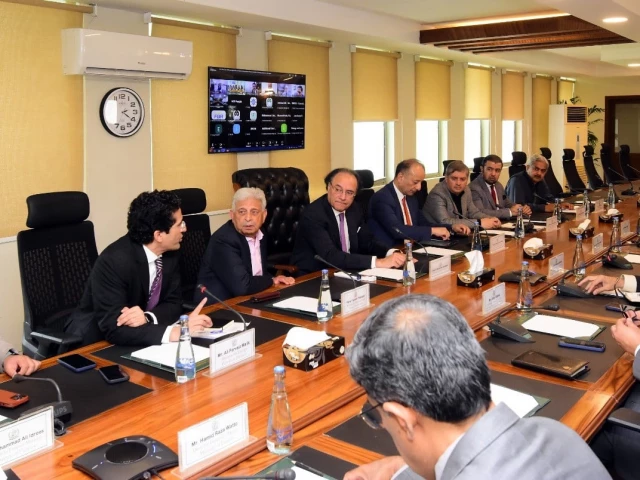
Finance Minister Senator Muhammad Aurangzeb, flanked by Petroleum Minister Ali Pervaiz Malik, said the leadership has decided "that we are announcing a targeted subsidy programme so that relief is not a blanket one, but reaches those who are truly deserving".

Relief architecture: who gets what

Under the federal framework, a Rs100 per litre subsidy will be extended to two-wheeler motorcycles, capped at 20 litres per month for three months. Small farmers will receive Rs1,500 per acre as a one-time support during the harvesting season, when diesel consumption peaks.

Freight vehicles will get Rs100 per litre support, alongside fixed monthly assistance of Rs70,000 for trucks, Rs80,000 for large transport vehicles and Rs100,000 for public service buses, initially for one month, subject to review.

Pakistan Railways will also receive support to keep fares affordable for low-income passengers.
 
Provinces step in

Meanwhile, the provinces have pooled nearly Rs200 billion over three months under their NFC shares, with Punjab contributing around Rs100bn, Sindh Rs51–52 billion, Khyber Pakhtunkhwa Rs15 billion and Balochistan Rs8–9 billion.

Punjab alone is expected to spend Rs35 billion per month, covering 22 million bikers, over 765,000 transport vehicles, and more than one million farmers.

Sindh will extend support to 6–7 million bikers through digital transfers of Rs2,000 per month, alongside assistance to farmers via Hari Cards.

Khyber-Pakhtunkhwa has already entered the implementation phase, offering Rs2,000 monthly to over 1.6 million bikers, while Balochistan faces data constraints, with limited vehicle registration coverage and reliance on BISP data for outreach.

Both Punjab and Sindh had pushed for passing on international fuel prices to consumers, arguing that targeted subsidies would allow more efficient support to vulnerable segments rather than across-the-board relief.
 

Users who are viewing this thread

Pakistan Defence Latest

Back
Top