Oil, Gas and Refinery Sectors - updates

'Difficult decision'

In Karachi, Sindh Chief Minister Murad Ali Shah defended the difficult choices, saying the government had to take "difficult decisions" and noting that blanket subsidies had benefited the "rich and poor alike".

He said a "one-month regimen, which has four components" had been developed jointly with the Centre.

Under this plan, motorcyclists will be "shielded from the hike," with Rs2,000 monthly transfers beginning between April 15–20.

Farmers with landholdings under 25 acres will receive Rs1,500 per acre, with the chief minister expressing confidence that the subsidy would "compensate for the cost of diesel".

On the other hand, Punjab unveiled a parallel but more expansive relief push. Chief Minister Maryam Nawaz announced free public transport across intra-city routes, covering metro, bus and train services, while also rolling out fuel subsidies for bikers and farmers.

"Citizens will not have to purchase tickets while travelling on public transport - Orange Line Train, Metro Bus Service, Speedo Bus and Green Electric Bus," she said, calling it a major relief measure under Prime Minister Shehbaz Sharif's austerity programme.
 

Fuel costs and fiscal realities: Pakistan’s tightrope walk​


Khurram Khan

Pakistan faces rising fuel costs due to imports; govt balances price hikes with targeted subsidies and relief measures

fuel costs and fiscal realities pakistan s tightrope walk

..............................​

pump owners threaten nationwide shutdown over commission dispute​


Naeem Asghar

Accuses government of not inviting in meetings, says commission should increase when fuel prices rise

petrol pump owners threaten nationwide shutdown over commission dispute

,,,,,,,,,,,,,,,,,,,,,,,,,,,​

2,800 Sindh residents have received motorcycle fuel subsidy: Sharjeel Memon​

Saleem Jhandir

Approximately 6.7 million people will receive Rs2,000 per account, says senior Sindh minister
 
Extract Your Shale Gas And Gasify Your Coal, Promote Solar and EV And Buy Cheap Iranian Oil.Many Problems Soved
 

Fuel costs and fiscal realities: Pakistan’s tightrope walk​

Pakistan faces rising fuel costs due to imports; govt balances price hikes with targeted subsidies and relief measures

Khurram Khan
April 07, 2026

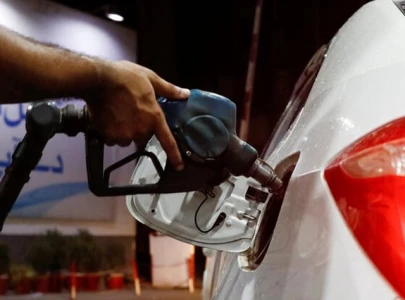
photo reuters


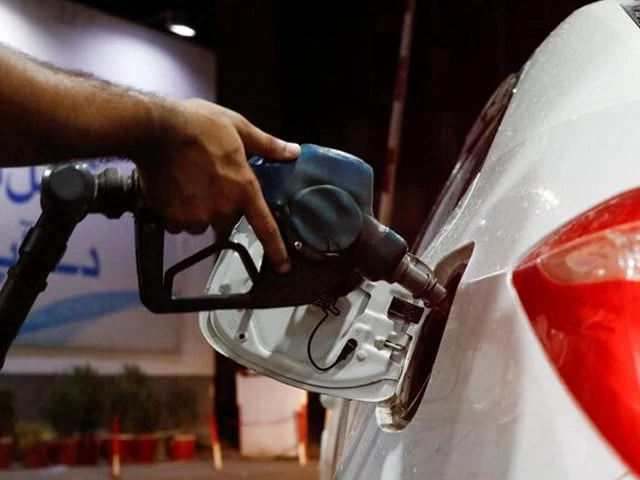
KARACHI: Fuel price increases in Pakistan almost always trigger a strong public reaction. That response is understandable, given the direct impact on household budgets. But these recurring adjustments, and the policy responses that follow, are best understood in the context of a deeper structural reality: Pakistan’s significant reliance on imported energy.

The figures illustrate the point clearly. Domestic refineries meet roughly 30 per cent of the country’s petrol demand, while the remaining 70 per cent is fulfilled through imported refined fuel. When crude imports are included, Pakistan sources nearly 80 per cent of its oil requirements from abroad. This is not a temporary imbalance but a longstanding feature of the country’s energy economy.
 
One important consequence of this dependence is the way fuel prices are determined. Even locally refined products are priced on import parity.

In effect, whether petrol is produced domestically or imported, its price is linked to international oil benchmarks and the rupee’s exchange rate against the dollar.

This limits the extent to which domestic policy alone can shield consumers from global market movements.

At the same time, Pakistan’s fuel consumption patterns make these price changes particularly impactful. The country uses an estimated 50 to 75 million litres of fuel daily.

While petrol is widely used, diesel plays an equally vital role in supporting transport, agriculture, and logistics. As a result, any increase in fuel prices tends to ripple through the broader economy, affecting transport costs, food prices, and overall inflation.
 
The recent price adjustment can be seen as part of a broader effort to align domestic prices with international realities. The initial increase of Rs137 per litre — from Rs321 to Rs458 — reflected the scale of external pressures.

Shortly thereafter, however, the government revisited the decision. Following intervention by Prime Minister Shehbaz Sharif, the increase was moderated by Rs80, bringing the final price to Rs378 per litre.

While the revised price still represents an increase, the adjustment indicates a willingness to respond to public concerns while navigating fiscal and external constraints.

As Shehbaz Sharif has emphasised, the government is seeking to balance economic necessity with social protection, particularly in the context of rising global uncertainty.
 
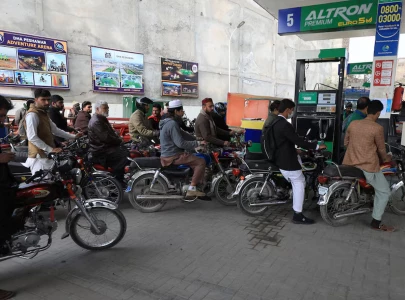
In Punjab and Islamabad, public transport has been made free to support daily commuters. In Sindh, a proposal has been put forward to provide registered motorcycle owners with Rs2,000 per month, helping offset basic fuel expenses.

At the federal level, targeted measures have been designed to reach both individuals and productive sectors. Motorcycle users are to receive a subsidy of Rs100 per litre, capped at 20 litres per month for an initial period.

Small farmers will benefit from a one-time payment of Rs1,500 per acre, recognising the importance of diesel in agricultural activity.

Particular attention has also been given to the transport and logistics sector, where fuel costs have broader economic implications. Goods transport vehicles are set to receive Rs70,000 per month, with additional support for those carrying essential commodities.
 
As long as Pakistan continues to import the majority of its fuel, it will remain sensitive to global price movements, exchange rate fluctuations, and external supply conditions. In that sense, recent developments serve as a reminder of the structural nature of the issue.

Looking ahead, the path forward involves both immediate management and longer-term reform. In the short term, a combination of calibrated price adjustments and targeted relief measures remains a practical approach given existing constraints.

Over the medium to long term, however, reducing this vulnerability will be key. Expanding domestic refining capacity, diversifying the energy mix, and strengthening macroeconomic stability to support the rupee can all play a role in easing exposure to external shocks.

These are gradual processes rather than quick fixes. Yet they are essential if Pakistan is to move toward a more resilient energy framework.
 
To view this content we will need your consent to set third party cookies.
For more detailed information, see our cookies page.
 
To view this content we will need your consent to set third party cookies.
For more detailed information, see our cookies page.
 
Prime Minister Shehbaz Sharif on Friday announced a reduction of Rs135 per litre in the price of high-speed diesel (HSD) and a cut of Rs12 per litre for petrol.

A press release from the finance ministry said the new prices were Rs385.54 for HSD and Rs366.58 for petrol.

Meanwhile, the prices for kerosene and light diesel oil were reduced to Rs450.15 and Rs369.72 with cuts of Rs17.33 and Rs25.31, respectively.
 
Hopes were running high that Pakistan and Iran may revive their gas and oil pipeline projects following peace talks between Iran and the United States.

Pakistan and Iran had signed a commercial agreement during the tenure of Pakistan Peoples Party (PPP) in 2009 and later then Iranian president Mahmoud Ahmadinejad and Pakistan's former president Asif Ali Zardari inaugurated the gas pipeline project in 2013.

Iran has completed its portion of the pipeline, while Pakistan has yet to kick off construction on its side. Officials say Iran is willing to extend the gas sale agreement for another decade, but Pakistan wants to shelve the project due to US sanctions on Tehran and weak domestic demand.

Over the years, Pakistan has explored a few alternative options. Under a plan, it proposed the laying of a liquefied natural gas (LNG) pipeline to Gwadar with an 80km extension to the Iranian border.

A Chinese company expressed interest in building the pipeline, but sanctions remained a hurdle.
 
What is the implication for oil flows?

Blocking Iranian shipments would disconnect a significant source of oil from the world's markets. Iran exported 1.84 million barrels per day (bpd) of crude in March and has shipped 1.71 million bpd thus far in April, compared with a full-year average of 1.68 million bpd in 2025, according to Kpler data.

However, a surge in Iranian output before the war started on February 28 has led to near-record levels of Iranian oil loaded on ships, with more than 180 million barrels floating as of ‌earlier this ⁠month, according to Kpler data.

What about oil flows from other Gulf producers?

Shipping traffic through the Strait of Hormuz, which has been severely curtailed by an Iranian blockade since the start of the war, remains nearly halted despite last week's two-week ceasefire agreement between Washington and Tehran.

Oil tankers were steering clear of the strait on Monday.

On Sunday, two Pakistan-flagged tankers, Shalamar and Khairpur, entered the Gulf to load cargoes from the United Arab Emirates and Kuwait; a third ship, the Liberia-flagged very large crude carrier (VLCC) Mombasa B, also transited the strait ⁠earlier on Sunday and was ballasting in the Gulf.
 

OGDC announces major oil, gas discovery in K-P's Kohat​

Says discovery in Bazgai X-1 well in Nashpa block is producing 15,005 barrels of oil, 45.36 MMSCFD of gas per day

Web Desk
April 15, 2026

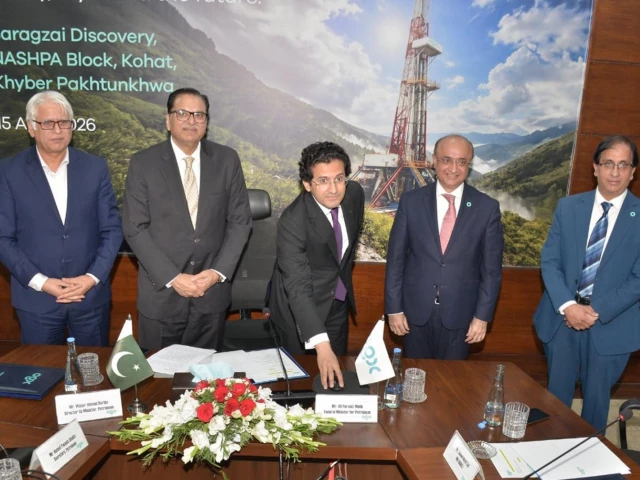
minister for petroleum ali pervaiz malik inaugurates commercial production from ogdc s baragzai x 01 well in the nashpa block kohat on tuesday photo app


Minister for Petroleum Ali Pervaiz Malik inaugurates commercial production from OGDC’s Baragzai X-01 well in the Nashpa block, Kohat, on Tuesday. Photo: APP

In a major development amid the ongoing energy crisis, the Oil and Gas Development Company Limited (OGDC) announced on Wednesday what it termed as the "largest oil and gas discovery in the country’s history" at the Bazgai X-1 well in the Nashpa block.

According to an OGDC spokesperson, the discovery in Kohat district of Khyber-Pakhtunkhwa was being described as a significant exploration success for Pakistan.

The spokesperson said the Bazgai X-1 well was currently producing 15,005 barrels of oil per day and 45.36 million standard cubic feet of gas.
 

Users who are viewing this thread

Back
Top