Oil, Gas and Refinery Sectors - updates

They were asking for sales tax exemption on capital goods for the refinery upgrade project which had made the whole brown field refinery policy ineffective.

Once the upgrade happens which will make these refineries deep conversion type in about 4-5 years, they will be able to convert most of the crude into positive margin products instead of 30-40% RFO.

This will also spur (hopefully) downstream industries like polypropylene manufacturing and pharma API production.
What you are saying is partially correct , HSD and gasoline products being imported don't pay sales tax on their inputs.... Google zero rating taxes to understand what I am saying.
 
What you are saying is partially correct , HSD and gasoline products being imported don't pay sales tax on their inputs.... Google zero rating taxes to understand what I am saying.
That’s a distortion. it should have been addressed. This is the same case with textile value chain.

But that’s odd as there is now VAT regime in all gulf countries. Of course it might be lower or may fall in exempt category.
 
Last edited:
To view this content we will need your consent to set third party cookies.
For more detailed information, see our cookies page.
 
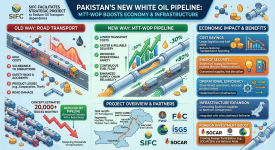
Pakistan's plans to expand its oil transportation network received a boost this week as the Special Investment Facilitation Council (SIFC) announced progress on the Machike–Thallian–Tarru Jabba White Oil Pipeline (MTT-WOP), a major infrastructure project intended to strengthen the country's fuel supply chain and reduce dependence on road-based transport.

The project is expected to move closer to execution after SIFC facilitated approvals from multiple ministries and government departments, helping remove procedural hurdles that had delayed progress.

Stretching 477 kilometres from Machike near Lahore to Tarru Jabba near Peshawar, the pipeline forms part of a broader effort to create a more integrated and energy-efficient petroleum transportation system linking southern supply sources with consumption centres in northern Pakistan.


Officials view the project as a strategic addition to the country's existing white oil pipeline network, which currently transports petroleum products from Karachi to Machike. The new corridor would effectively extend that network further north, creating a continuous route for the movement of Motor Gasoline and High-Speed Diesel towards Khyber Pakhtunkhwa.

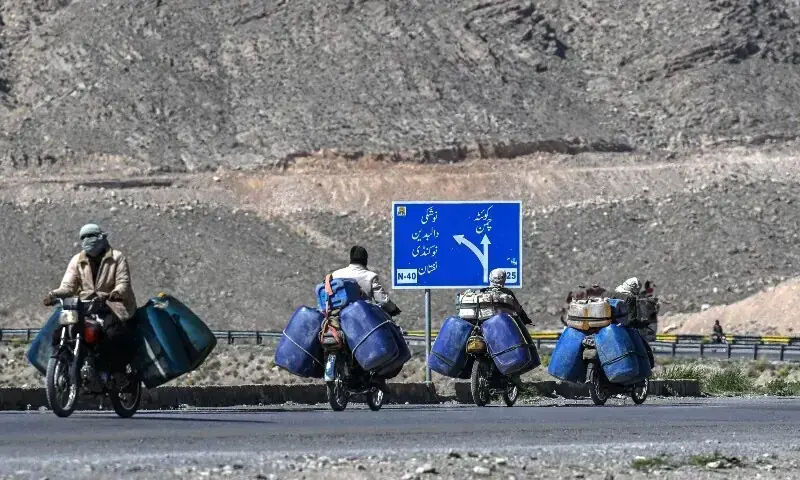
The reliance on oil tankers for transporting fuel to northern parts of the country has long been viewed as costly, inefficient and vulnerable to disruptions. By shifting a larger share of fuel movement to pipelines, authorities expect to reduce transportation costs, improve operational safety, minimise product losses and enhance the overall reliability of fuel supplies.

According to SIFC, the project has remained on its priority agenda since the signing of a Memorandum of Understanding under its platform. The council said its engagement with stakeholders helped facilitate the approvals required to advance the scheme and underscored its role in coordinating investment and infrastructure initiatives across government institutions.

The pipeline will comprise two segments: Machike–Thallian and Thallian–Tarru Jabba. Running largely alongside the motorway network, the route will also provide potential connectivity to Attock Refinery, Chakpirana and Faqirabad, expanding integration across Pakistan's petroleum infrastructure.


The development is being spearheaded by the Frontier Works Organisation (FWO) through Frontier Oil Company (FOC), the special-purpose company established for the project. The consortium was formed through a partnership involving FWO, Pakistan State Oil (PSO) and Inter-State Gas Systems (ISGS).

Adding an international dimension to the venture, Azerbaijan's state-owned energy company SOCAR holds a 25% stake in Frontier Oil Company, reflecting growing foreign participation in Pakistan's energy infrastructure sector.

SIFC said the progress achieved on the White Oil Pipeline demonstrates how coordinated facilitation can help unlock investment and accelerate projects considered critical to economic development, energy security and long-term infrastructure expansion.
 
Pakistan's plans to expand its oil transportation network received a boost this week as the Special Investment Facilitation Council (SIFC) announced progress on the Machike–Thallian–Tarru Jabba White Oil Pipeline (MTT-WOP), a major infrastructure project intended to strengthen the country's fuel supply chain and reduce dependence on road-based transport.

The project is expected to move closer to execution after SIFC facilitated approvals from multiple ministries and government departments, helping remove procedural hurdles that had delayed progress.

Stretching 477 kilometres from Machike near Lahore to Tarru Jabba near Peshawar, the pipeline forms part of a broader effort to create a more integrated and energy-efficient petroleum transportation system linking southern supply sources with consumption centres in northern Pakistan.


Officials view the project as a strategic addition to the country's existing white oil pipeline network, which currently transports petroleum products from Karachi to Machike. The new corridor would effectively extend that network further north, creating a continuous route for the movement of Motor Gasoline and High-Speed Diesel towards Khyber Pakhtunkhwa.

The reliance on oil tankers for transporting fuel to northern parts of the country has long been viewed as costly, inefficient and vulnerable to disruptions. By shifting a larger share of fuel movement to pipelines, authorities expect to reduce transportation costs, improve operational safety, minimise product losses and enhance the overall reliability of fuel supplies.

According to SIFC, the project has remained on its priority agenda since the signing of a Memorandum of Understanding under its platform. The council said its engagement with stakeholders helped facilitate the approvals required to advance the scheme and underscored its role in coordinating investment and infrastructure initiatives across government institutions.

The pipeline will comprise two segments: Machike–Thallian and Thallian–Tarru Jabba. Running largely alongside the motorway network, the route will also provide potential connectivity to Attock Refinery, Chakpirana and Faqirabad, expanding integration across Pakistan's petroleum infrastructure.


The development is being spearheaded by the Frontier Works Organisation (FWO) through Frontier Oil Company (FOC), the special-purpose company established for the project. The consortium was formed through a partnership involving FWO, Pakistan State Oil (PSO) and Inter-State Gas Systems (ISGS).

Adding an international dimension to the venture, Azerbaijan's state-owned energy company SOCAR holds a 25% stake in Frontier Oil Company, reflecting growing foreign participation in Pakistan's energy infrastructure sector.

SIFC said the progress achieved on the White Oil Pipeline demonstrates how coordinated facilitation can help unlock investment and accelerate projects considered critical to economic development, energy security and long-term infrastructure expansion.
Source is dubious
 
Source is dubious
This project has been announced “started” for years if not a whole decade. Including announcements that Azerbaijan is going to build it a couple of years ago.
 

Iranian oil option returns for Pakistan

Aamir Shafaat Khan
June 26, 2026

KARACHI: Pakistan could once again tap Iranian crude oil supplies following a temporary easing of US sanctions on Tehran, reopening the possibility of sourcing discounted crude and refining it locally to produce higher-value petroleum products.

While industry experts say local refineries are technically capable of processing Iranian crude, commercial and operational challenges remain, particularly due to the high furnace oil yield and the absence of significant domestic demand for the fuel.

Pakistan Refinery Ltd (PRL) had previously imported Iranian crude under a long-term contract with the National Iranian Oil Company, but purchases halted after US sanctions were imposed. Since then, no Iranian oil has been imported into the country.

Commenting on the prospects for refining Iranian crude oil, a former head of a leading refinery in Karachi told Dawn that the scenarios are changing and sanctions are being lifted temporarily. The outcome remains uncertain over the next two months.
 

Pakistan approves final link in 1,600-km national oil pipeline​


Lahore-Peshawar project to lower fuel transport costs as tanker drivers fear for jobs
20260630 Pakistan oil tankers

Oil tankers parked in Karachi in September 2023. Tanker drivers are worrying about the future of their jobs ahead of a planned oil pipeline extension. © Reuters

ADNAN AAMIR
July 1, 2026 13:22 JST


To view this content we will need your consent to set third party cookies.
For more detailed information, see our cookies page.
 

Pakistan approves final link in 1,600-km national oil pipeline​


Lahore-Peshawar project to lower fuel transport costs as tanker drivers fear for jobs
20260630 Pakistan oil tankers

Oil tankers parked in Karachi in September 2023. Tanker drivers are worrying about the future of their jobs ahead of a planned oil pipeline extension. © Reuters

ADNAN AAMIR
July 1, 2026 13:22 JST


To view this content we will need your consent to set third party cookies.
For more detailed information, see our cookies page.


I like what SIFC is doing. Working to fast track projects that will save Pakistan $.


Need to speed up work on ML1 upgradation and increase railway freight business that will cost 4x less. Using trucks from Karachi-Peshawar is stupid and waste of resources.
 
To view this content we will need your consent to set third party cookies.
For more detailed information, see our cookies page.
 
ISLAMABAD:Pakistan could produce an estimated 800 to 900 million cubic feet of shale gas daily after Oil and Gas Development Company Limited (OGDCL) successfully completed the first phase of the country's maiden shale gas pilot project, paving the way for commercial viability testing.

According to industry sources, the progress of the landmark project was reviewed during a meeting chaired by Federal Minister for Petroleum Ali Pervaiz Malik, where an OGDCL delegation led by Managing Director and Chief Executive Officer Ahmed Hayat Lak briefed the minister on the latest developments and the project's future roadmap.

During the briefing, the OGDCL team informed the minister that Pakistan possesses substantial shale gas resources and that the pilot project is aimed at exploring and exploiting these reserves in a sustainable and technically viable manner.


Sources said the first phase of the pilot project, involving vertical drilling, has been successfully completed, confirming both the presence of shale formations and the technical feasibility of their exploitation.

The company has now finalized plans for the second phase, which will determine the commercial viability of shale gas production through horizontal drilling and hydraulic fracturing (fracking). The phase has been designed by a team of OGDCL experts with support from external technical specialists.

According to the project timeline, deployment of the drilling rig is scheduled for September 2026, while hydraulic fracturing operations are expected to commence in December 2026.

The pilot wells will be drilled in the Hyderabad and Sanghar districts, where the company aims to evaluate the commercial potential of Pakistan's shale gas resources.


OGDCL informed the minister that, if the pilot project proves commercially successful, Pakistan would enter the full-scale development phase, the industry sources said.

During the development stage, the company plans to drill 60 to 70 wells annually to achieve optimum production levels estimated at 800 to 900 million standard cubic feet per day (MMscfd), a volume that could substantially increase indigenous gas supplies and help reduce reliance on imported energy.

Petroleum Minister Ali Pervaiz Malik appreciated the efforts of OGDCL's technical professionals in advancing the country's first shale gas initiative and described the project as a potentially transformative development for Pakistan's energy sector.

He observed that successful commercial production of shale gas would contribute significantly to the country's energy security by utilizing indigenous resources while opening an entirely new segment of Pakistan's upstream petroleum industry.


The minister also directed the OGDCL management to prepare and present a comprehensive roadmap for the development of the country's tight gas resources, signaling the government's broader focus on accelerating exploration and production of unconventional hydrocarbons.

Industry sources also said that the successful development of shale gas resources could diversify Pakistan's domestic energy mix, strengthen long-term gas supplies and support the country's strategy to reduce dependence on costly imported fuels.
 
This is game changer for Pakistan economy. Pakistan already produces 3000 MMscfd gas. Taking it to 4000 mean no need for imported gas anymore.

And you know what? Pakistan can take it to 8000 MMscfd and start exporting. Because Pakistan shale gas reserves are staggering 105 Tcf!
 

Users who are viewing this thread

Country Watch Latest

Back
Top