Oil, Gas and Refinery Sectors - updates

Govt’s shareholding in OGDCL rises to 77.53% after BESOS share transfer​

OGDCL says 432.19 million shares held by Employees Empowerment Trust have been transferred back to the Government of Pakistan


Oil and Gas Development Company Limited has informed the Pakistan Stock Exchange and the London Stock Exchange that 432,189,039 ordinary shares held by the OGDCL Employees Empowerment Trust have been transferred back to the Government of Pakistan.

In a notice dated July 9, 2026, the company said the transfer was made in line with the Supreme Court of Pakistan’s decision in cases relating to the Benazir Employees Stock Option Scheme.

Following the transfer, the Government of Pakistan’s direct shareholding in OGDCL has increased from 67.48% to 77.53%.


According to the notice, the shares were transferred to the President of the Islamic Republic of Pakistan on July 8, 2026, at a price of Rs 0 per share.

The government’s cumulative holding after the transfer stands at 3,334,337,220 shares, representing 77.53% of the company.
 

Port Qasim executes historic monsoon operation to avert national power crisis

  • Operation involved guiding S K Resolute through 49-km-long navigational channel
July 12, 2026
BR Web Desk

1783867301133.png

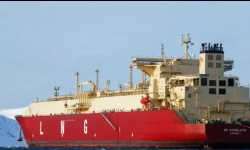
The Port Qasim Authority (PQA) has successfully navigated and berthed a massive liquefied natural gas (LNG) carrier under severe monsoon conditions, averting a looming national energy shortfall.

The high-risk emergency operation involved guiding the S K Resolute through a 49-kilometre-long navigational channel amid extreme weather on Saturday.

The crisis arose after escalating regional tensions forced two scheduled QatarEnergy vessels to cancel their deliveries under Force Majeure. Facing a severe fuel deficit during peak summer demand, Pakistan LNG Limited (PLL) managed to secure an emergency spot cargo already in transit, PQA Public Relations Officer Asad Altaf Hussain Warsi said in a statement.

Operating at the absolute limits of the port’s navigational capacity, the PQA operations team executed a highly complex maneuver to safely dock the vessel. The S K Resolute arrived carrying 171,951 cubic metres of LNG, making it the largest single LNG cargo ever handled at the PGPCL terminal. With a beam width of 47.8 metres, it also stands as the widest LNG carrier ever managed at Port Qasim during the monsoon season.

The PQA said this landmark maritime achievement has secured an uninterrupted supply of critical gas to the national transmission system. The successful operation has stabilised the country’s power grid, ensuring continued electricity supply to millions of households and industrial units across Pakistan.

Bloomberg on July 9 reported that Pakistan was urgently seeking to secure an LNG cargo after renewed hostilities in the Strait of Hormuz disrupted supplies from Qatar, forcing the country back into the costly spot market.

State-owned Pakistan LNG Ltd (PLL) had issued a tender to purchase an LNG cargo for delivery on July 15-16, with bids due on Friday, according to a notice published on the company’s website
 

The $6 Billion Fix: How Upgrading Refineries Will Transform Pakistan's Economy


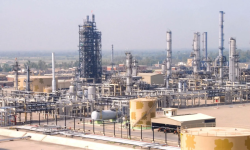
Pakistan’s energy sector is at a critical juncture. Despite having an installed oil refining capacity of 21 to 23 million tonnes annually, the country spends billions of dollars importing refined petroleum products. The root of this paradox lies in outdated technology: domestic plants are largely traditional hydro-skimming facilities forced to operate at less than 50% capacity due to the overproduction of unwanted furnace oil.


1. Eliminating the Furnace Oil Bottleneck

Currently, domestic refineries are trapped in a cycle of inefficiency. Producing basic fuels leaves them burdened with excess furnace oil, a byproduct for which domestic demand has virtually disappeared due to shifts in power generation.

The $6 billion upgrade will convert these aging plants into deep-conversion refineries. This technological leap allows refineries to extract maximum high-value petrol and diesel from every barrel of raw crude, effectively eradicating the furnace oil bottleneck and allowing plants to run at nearly 100% capacity.


2. From Import Reliance to Exporting Surplus

By upgrading to deep-conversion technology and expanding physical capacity, Pakistan will drastically alter its fuel supply dynamics. The modernization will double domestic petrol output and increase diesel production by nearly half, completely covering domestic demand.
Projected Production vs. Consumption (Post-Upgrade)


ProductFY26 ConsumptionPost-Upgrade CapacityNet Balance
High-Speed Diesel (HSD)~6.85 million MT~11.42 million MT+ 4.57 million MT (Surplus)
Motor Spirit (MS/Petrol)~7.68 million MT~7.76 million MT+ 0.08 million MT (Surplus)
Total Refined Imports Needed6.70 million MT0 MT100% Import Substitution


3. Massive Foreign Exchange Savings

In recent years, Pakistan has spent upwards of $16 billion annually on fuel imports. A large portion of this goes toward paying the premium for pre-refined Euro-V fuels.

The economic windfall from this upgrade comes from keeping the "refining margin" inside the country:


  • Import Substitution: By importing cheaper raw crude instead of expensive refined diesel and petrol, Pakistan will wipe out millions of tonnes of refined imports.
  • Export Revenue: The massive 4.5+ million MT surplus of Euro-V diesel becomes a highly lucrative export commodity.
  • Total Financial Impact: Based on average historical refining margins (crack spreads), shifting from importing refined products to refining crude domestically—plus exporting the surplus—is projected to yield approximately $1.7 billion in net foreign exchange savings annually.

4. Long-Term Energy Security

Beyond immediate financial relief, the upgrade program creates a resilient energy buffer.


  • Future-Proofing Capacity: While the initial upgrade targets the existing 21–23 million MT base, ongoing expansions mapped out in the policy framework are projected to push Pakistan's total refining capacity to 33 million tons per year by 2035.
  • Shielding from Geopolitics: By reducing the necessity to import refined products, Pakistan isolates its domestic fuel supply from global supply chain shocks, such as those triggered by the recent US-Iran conflicts.
  • Environmental Upgrades: The mandatory shift to Euro-V standards aligns Pakistan with global environmental compliance, drastically improving urban air quality and reducing long-term public health and vehicle maintenance costs.
The Bottom Line: The $6 billion modernization is not merely a structural upgrade; it is a macroeconomic necessity. By resolving outstanding tax frameworks and executing these expansions, Pakistan can successfully stop hemorrhaging foreign exchange reserves, eliminate fuel import dependency, and establish itself as a net exporter of high-grade petroleum products.
 

The $6 Billion Fix: How Upgrading Refineries Will Transform Pakistan's Economy


Pakistan’s energy sector is at a critical juncture. Despite having an installed oil refining capacity of 21 to 23 million tonnes annually, the country spends billions of dollars importing refined petroleum products. The root of this paradox lies in outdated technology: domestic plants are largely traditional hydro-skimming facilities forced to operate at less than 50% capacity due to the overproduction of unwanted furnace oil.


1. Eliminating the Furnace Oil Bottleneck

Currently, domestic refineries are trapped in a cycle of inefficiency. Producing basic fuels leaves them burdened with excess furnace oil, a byproduct for which domestic demand has virtually disappeared due to shifts in power generation.

The $6 billion upgrade will convert these aging plants into deep-conversion refineries. This technological leap allows refineries to extract maximum high-value petrol and diesel from every barrel of raw crude, effectively eradicating the furnace oil bottleneck and allowing plants to run at nearly 100% capacity.


2. From Import Reliance to Exporting Surplus

By upgrading to deep-conversion technology and expanding physical capacity, Pakistan will drastically alter its fuel supply dynamics. The modernization will double domestic petrol output and increase diesel production by nearly half, completely covering domestic demand.
Projected Production vs. Consumption (Post-Upgrade)


ProductFY26 ConsumptionPost-Upgrade CapacityNet Balance
High-Speed Diesel (HSD)~6.85 million MT~11.42 million MT+ 4.57 million MT (Surplus)
Motor Spirit (MS/Petrol)~7.68 million MT~7.76 million MT+ 0.08 million MT (Surplus)
Total Refined Imports Needed6.70 million MT0 MT100% Import Substitution


3. Massive Foreign Exchange Savings

In recent years, Pakistan has spent upwards of $16 billion annually on fuel imports. A large portion of this goes toward paying the premium for pre-refined Euro-V fuels.

The economic windfall from this upgrade comes from keeping the "refining margin" inside the country:


  • Import Substitution: By importing cheaper raw crude instead of expensive refined diesel and petrol, Pakistan will wipe out millions of tonnes of refined imports.
  • Export Revenue: The massive 4.5+ million MT surplus of Euro-V diesel becomes a highly lucrative export commodity.
  • Total Financial Impact: Based on average historical refining margins (crack spreads), shifting from importing refined products to refining crude domestically—plus exporting the surplus—is projected to yield approximately $1.7 billion in net foreign exchange savings annually.

4. Long-Term Energy Security

Beyond immediate financial relief, the upgrade program creates a resilient energy buffer.


  • Future-Proofing Capacity: While the initial upgrade targets the existing 21–23 million MT base, ongoing expansions mapped out in the policy framework are projected to push Pakistan's total refining capacity to 33 million tons per year by 2035.
  • Shielding from Geopolitics: By reducing the necessity to import refined products, Pakistan isolates its domestic fuel supply from global supply chain shocks, such as those triggered by the recent US-Iran conflicts.
  • Environmental Upgrades: The mandatory shift to Euro-V standards aligns Pakistan with global environmental compliance, drastically improving urban air quality and reducing long-term public health and vehicle maintenance costs.
The Bottom Line: The $6 billion modernization is not merely a structural upgrade; it is a macroeconomic necessity. By resolving outstanding tax frameworks and executing these expansions, Pakistan can successfully stop hemorrhaging foreign exchange reserves, eliminate fuel import dependency, and establish itself as a net exporter of high-grade petroleum products.

Finally $6bn upgradation policy is approved. Pakistan would have been exporter of refined petrol now if this was done early. Watch out India, we are coming for your share.
 

Users who are viewing this thread

Latest Posts

Back
Top