Oil, Gas and Refinery Sectors - updates

LNG shortages hit Pakistan badly​

Khaleeq Kiani
September 18, 2026

1789736659059.png

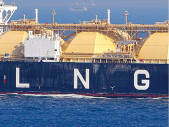
A vessel carrying liquefied natural gas (LNG). —

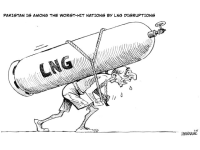
BANGKOK: Pakistan is among the worst-hit nations by liquefied natural gas (LNG) disruptions due to the closure of the Strait of Hormuz and could future-proof its domestic energy and power supply by increasing its focus on renewables and coal.

“Qatar and the UAE together supply about 99pc of Pakistan’s LNG — mostly for power generation, fertiliser production and industrial use. LNG accounts for about 30pc of total gas supply,” said the Gastech Conferences in its report ‘The Outlook for Gas and LNG Markets in Asia’ released at its 54th annual event.

It said that beyond addressing immediate challenges, policymakers in Asia may now be reviewing how to future-proof domestic energy and power systems with renewed focus on energy security. This could be done by accelerating renewables, such as swift-build, utility-scale solar, wind farms and commercial rooftop solar, plus storage deployment.

They would also be looking at speeding up investment in long-term infrastructure, including gas storage and updating power generation mixes and giving gas plants better flexibility.
 
Gastech report notes US-Iran war has redrawn global energy maps

This is where Pakistan’s Universal Gas Distribution Company (UGDC) held discussions with several international firms on potential projects, including gas storage, long-term LNG supplies and gas distribution in overseas markets, its Chief Executive Officer Ghiyas Abdullah Paracha said.

The Gastech report said the countries were also examining options for expanding operating reserves to ensure grid agility for unexpected events and rethinking fuel stockpiles by expanding strategic stocks for transport fuels and power generation. The nations may also be looking at boosting cross-border power export/import options to share shortages.

The report said the Middle East’s fluid landscape — as demonstrated by the conflict involving Israel, the United States and Iran which began in February and the resultant bottleneck in the Strait of Hormuz — has redrawn global energy maps in real time and further highlighted the geopolitical sensitivity of gas and LNG markets.

Gastech noted that gas supply disruptions have prompted Pakistan’s government to look to coal, hydropower, and nuclear power, while price volatility and shipping uncertainty are likely to sharply increase power costs.

Ghiyas Paracha told journalists that his company received a greater-than-anticipated response at the conference. “We have got understanding with some companies that have shown interest in building gas storage facilities in Pakistan. Some companies have shown keen interest in long-term LNG contracts with UGDC,” Paracha said.

Paracha said UGDC’s participation at Gastech was also significant because the company was presenting Pakistan’s gas-sector reforms and the opening of the country’s gas market to private-sector participation at an international energy forum.
 
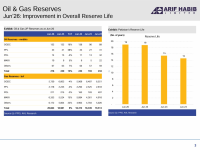
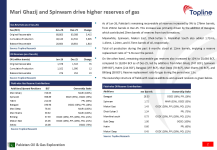
Pakistan natural gas reserves hit 21 TCF. Oil reserves 276m barrels.

1790065140414.png

1790065547318.png
 
power sector may be allowed lng import

​

Power sector may be allowed LNG import​


Govt mulls policy changes to allocate idle capacity of LNG terminals to power plants
 

Petrol Price in Pakistan Rises to Rs. 390.66, Diesel Falls to Rs. 399.34​


Sindh-Announces-Free-Petrol-for-Motorcycle-Riders-Until-Eid.webp


The federal government has revised petroleum prices for October 2, 2026, increasing the price of petrol while reducing the rate of high-speed diesel (HSD).

According to the Petroleum Division notification, the price of petrol has been increased by Rs3.26 per litre, taking it from Rs387.40 to Rs. 390.66 per litre. Meanwhile, the price of high-speed diesel has been reduced by Rs1.01, from Rs400.35 to Rs. 399.34 per litre.

The revised rates are effective from Friday, October 2.

This latest adjustment falls under Pakistan’s daily petroleum pricing mechanism, in which the Oil and Gas Regulatory Authority (OGRA) sets fuel prices based on movements in international oil prices and related import costs.
 

Govt weighs phase-out of gas geysers, putting millions of households on notice​

Proposal could affect around seven million consumers as authorities consider shifting households towards electric alternatives

In what could become one of the most significant changes to household energy use in Pakistan in decades, the government is working on a plan to phase out conventional gas geysers and halt their manufacture and sale, potentially forcing millions of households to switch to electric or other alternatives.

The proposal is being actively discussed by several government institutions and has moved beyond an initial policy idea, with officials involved in the process holding regular meetings to work out its regulatory and implementation mechanism, multiple officials familiar with the discussions told Profit.

Manufacturers of conventional gas geysers have already been informally conveyed the government’s intention to discontinue production and have been asked to consider shifting towards electric appliances, according to officials and industry sources. Manufacturers, however, have expressed reservations over the proposed move.

The proposed transition could affect around seven million consumers currently using gas geysers across the country, particularly in Punjab, Khyber Pakhtunkhwa, Islamabad, Azad Kashmir and colder northern and upper regions, where geysers have been a routine household appliance for decades.

The impact on consumers could be substantial. While the government is considering electric appliances as a replacement for conventional gas geysers, households switching to electricity could face significantly higher energy costs, particularly given the difference between household gas and electricity tariffs.

The additional expense could be particularly difficult for lower- and middle-income households that rely on gas geysers for hot water during winter.

The proposal is being considered as part of a broader effort to reduce household consumption of increasingly scarce indigenous gas and redirect available supplies towards industry and other productive sectors.


Officials said the National Coordination and Management Council (NCMC), a high-level body constituted at the Prime Minister’s Office, has held several meetings on the proposal. The Ministry of Energy, Pakistan Standards and Quality Control Authority (PSQCA) and National Energy Efficiency and Conservation Authority (NEECA) have been asked to examine steps required to discontinue the manufacture of conventional gas geysers.

According to officials familiar with the discussions, the immediate proposal is to stop the production and marketing of new conventional gas geysers, while the longer-term objective is to gradually remove the appliances from the market. Restrictions on the use of existing geysers could subsequently come under consideration as part of the transition.

Proposed regulatory measures include delisting gas geysers from PSQCA’s compulsory-items regime and withdrawing relevant licences and no-objection certificates issued by NEECA. Such changes could make the continued manufacture and marketing of conventional gas geysers increasingly difficult and eventually remove new units from the formal market.

The move would mark a sharp departure from the government’s earlier policy of making gas geysers more efficient rather than eliminating them. In recent years, authorities have promoted measures including conical baffles, timers and other efficiency devices to reduce gas consumption by existing appliances.

The proposed phase-out is being discussed against the backdrop of declining indigenous gas production and a persistent gap between supply and demand. Household gas consumption rises sharply during winter as consumers increase the use of geysers and space heaters, putting additional pressure on the system.

Officials involved in the process believe reducing the use of gas geysers could generate significant savings in winter gas consumption and make additional supplies available for industry and other productive sectors.

Replacing gas geysers with electric appliances, however, could create a new challenge for consumers by shifting rather than eliminating energy costs. Households would have to bear the cost of purchasing new appliances as well as potentially higher electricity bills, while manufacturers and retailers would also have to restructure an established market built around gas-fired appliances.

The proposed policy could therefore have implications beyond the energy sector. The domestic geyser industry includes manufacturers, distributors, retailers, technicians and workers whose businesses have developed around the widespread use of gas appliances.


Industry sources said manufacturers had invested heavily in production facilities and maintained stocks of finished products and components. An abrupt policy change could leave them with unsold inventory and stranded investments, besides affecting businesses and workers associated with the sector.

At present, storage gas water heaters and geysers remain covered by Pakistan Standard PS 4858 and are included in PSQCA’s compulsory-items regime, under which manufacturers are required to comply with prescribed standards and conformity requirements.

NEECA’s mandate also provides for measures aimed at improving energy efficiency and restricting inefficient energy-consuming products. Any move to phase out conventional gas geysers would therefore require changes to the existing regulatory and licensing framework.

For millions of households, however, the central question would be what replaces an appliance that has been part of everyday life for generations.

In colder parts of the country, where winter temperatures remain low for prolonged periods, gas geysers are often considered a basic household necessity rather than a discretionary appliance. A transition to electric water heating without affordable alternatives or targeted support could therefore place an additional financial burden on consumers.

Officials said consultations with relevant ministries, regulatory authorities, gas utilities and manufacturers were continuing and that the final mechanism could still change.
 

PPL is Moving Entire Business With 500+ Staff to Islamabad​

By Ahsan Gardezi | Published Oct 7, 2026 | 7:18 pm


Pakistan Petroleum Limited (PPL) is relocating more than 500 employees from Karachi to a new head office in Islamabad. This is a big and brutal shift for a company that has operated from Karachi for more than 70 years, ProPakistani has learnt.
​

The move has raised concerns among employees about its benefits, particularly as a big portion of PPL’s business and assets remain in Sindh and Balochistan.

Sources alleged that the decision was taken by senior management and members of the board. Employees have to move as well. As a corporate entity, PPL has the authority to determine the location of its head office and restructure its operations according to its business requirements.

Staff Worried​

Sources said employees were allegedly not consulted before the relocation decision and that some are considering resigning because moving their families to Islamabad would create huge financial and personal difficulties.

Their main concerns also include education, healthcare, family commitments and other personal circumstances.

Sources further alleged that senior management warned employees of possible legal action if they resign.


On the staff side, normal work has been affected, with employees in depression and not working properly for almost two weeks since the announcement.

Relocation Cost​

The financial cost of moving more than 500 employees and their families has been estimated the total relocation cost at between Rs. 600 million and Rs. 1 billion.

A relocation package for an employee with a family of four could allegedly cost around Rs. 1 million, including travel, temporary accommodation and baggage expenses.


Shifting office records, vehicles, warehouse material and other assets could add around Rs. 100 million, sources added.

What Is the Business Case?​

PPL could potentially benefit from having its head office in Islamabad through closer access to federal ministries, regulators, policymakers, investors and other agencies.

But there is no clear evidence yet showing that the relocation would generate sufficient operational or financial benefits to justify the cost.


ALSO READ
Rupee Devaluation Cannot Fix Economy: FBR Chairman
PPL’s extensive operations in Sindh and Balochistan also raise questions about whether the company expects any operational advantage from having its central administration closer to Islamabad. For most observers, this move makes absolutely no sense.

ProPakistani reached out to PPL for details about the rationale behind the relocation, its benefits, estimated costs and employee relocation arrangements. The company’s response will be added when received.
 

Users who are viewing this thread

Latest Posts

Back
Top