Old pictures of Pakistani Cities

1784026872132.png

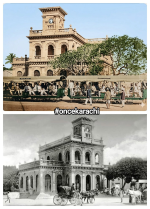
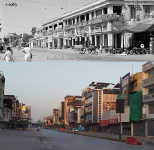
Eduljee Dinshaw Charitable Dispensary — Saddar, Karachi,,,

Dating back to the late 19th century, the Eduljee Dinshaw Charitable Dispensary stands as one of Karachi’s oldest and most significant medical institutions. Located near Empress Market in Saddar, it was established in 1882 to serve the growing population of the city.

Founded by the prominent Parsi philanthropist Seth Eduljee Dinshaw, who generously funded half of its construction, the building is notable for being Karachi’s first Italianate-style structure, designed by architect James Strachan.

From its earliest days, the dispensary played a vital role in public welfare, providing affordable healthcare and treating over a hundred patients daily. More than a century later, it continues to function — a rare example of a historic institution still serving the community.

Inside the building, a bust of Eduljee Dinshaw overlooks one of the windows — a quiet tribute to his generosity and vision.

Today, the dispensary remains a powerful testament to the Parsi community’s immense contribution to Karachi’s development — particularly in healthcare, architecture, and civic infrastructure during the 19th century.
 
1784026988565.png

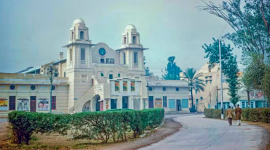
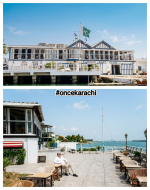
KARACHI BOAT CLUB....

Located in the peaceful Lalazar area along the seafront, beside scenic Chinna Creek and next to the iconic Beach Luxury Hotel, the Karachi Boat Club is one of the oldest and most prestigious institutions in the city.

The club was formally established on 19 July 1881 during the British era by officers and sportsmen including H. E. J. Le Mesurier and H. B. Turner. However, the roots of boating activities in this area go back even earlier.

After the completion of Napier Mole Bridge (Native Jetty Bridge) in 1854 and the development of Karachi harbour as a functioning port, this area became a center for boating, rowing and swimming activities.

What began as a modest rowing club with wooden boathouses gradually evolved into an iconic landmark of Karachi’s colonial and modern heritage. From the elegant regattas of the British era to present-day rowing championships, the club continues to glide gracefully through time.

Today, the Karachi Boat Club remains a symbol of the city’s tradition, sporting spirit, and timeless charm.
 
1784298860378.png

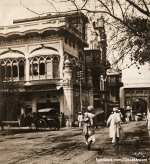
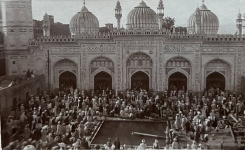
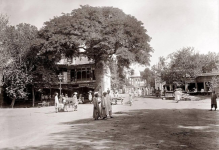
𝐏𝐞𝐬𝐡𝐚𝐰𝐚𝐫'𝐬 𝐂𝐡𝐨𝐰𝐤 𝐘𝐚𝐚𝐝𝐠𝐚𝐫: This view shows a tonga in front of a building at 𝐶ℎ𝑜𝑤𝑘 𝑌𝑎𝑎𝑑𝑔𝑎𝑟. The white relief work, with its twin minarets and arched design, formed a decorative façade on the northern and southern approaches to the Remembrance Square (𝐶ℎ𝑜𝑤𝑘 𝑌𝑎𝑎𝑑𝑔𝑎𝑟).

These architectural details were created in the same style and incorporated the same design elements as the ornate platform of the Hastings Memorial with which they formed a unified commemorative ensemble.

In the distance stand the 𝐓𝐨𝐰𝐧 𝐇𝐚𝐥𝐥 and the 𝐊𝐚𝐜𝐡𝐞𝐫𝐢 𝐆𝐚𝐭𝐞 at the northern end of Chowk Yaadgar.
(c.1930s)
 
🕰️ Karachi, 1900 — This rare view from the Trinity Church tower showcases the serene beauty of Karachi from that era. On the left, the Free Hall is prominent, while according to historical records, the sea was much closer to it at that time compared to today.
1784384567774.png
 
The Karachi Port Trust is a public body under the administration of the federal government, which oversees the management of Karachi Port and all its port activities. It functions independently of the federal government and is administered through the Board of Trustees.

From 1880 to 1887, the management of Karachi Port was entrusted to the Karachi Harbour Board. Later, under Act No. IV, the Karachi Port Trust was established, which came into effect on 1 April 1887.

The management of the Karachi Port Trust is carried out through the Board of Trustees, which includes one chairman and ten trustees. The chairman is appointed by the federal government and also serves as the chief executive officer (CEO) of the Karachi Port Trust. Half of the ten trustees are from the public sector, while the other half are from the private sector.

Trustees from the public sector are appointed by the federal government, while those from the private sector are selected. Their term of office is two years, during which the term of representatives from the public sector can also be extended.

The administration of Karachi Port Trust consists of six important divisions. Operations, Planning and Development, Finance, Administration, Engineering, and Civil Works & State Estate. Each division is headed by a General Manager, who is assisted by the heads of the relevant departments or Deputy Managers.

In addition to these six divisions, six staff departments also report directly to the Chairman. They assist the Chairman and Board in Internal Audit and Board of Trustees/Secretary of Administrative Affairs, while other staff depar
tments provide services to the entire institution.

At the moment, three modern container terminals are operating at Karachi Port. Karachi International Container Terminal (KICT) and South Asia Pakistan Terminal Limited (SAPTL) are both operated under the management of Hutchison Ports.

The new ports Karachi Multi-Purpose Terminal (formerly KGTL) and Abu Dhabi ADP are under the management of ADP. These three terminals are established under the private sector investment model of the Bulk, Operation and Transfer (BOT) model. In the same way, the handling of bulk cargo is carried out through Karachi Multi-Purpose Terminal.

1785272266214.png

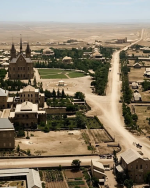
This image of Karachi Port was taken in 1951.
 

Users who are viewing this thread

Pakistan Defence Latest

Back
Top